Department of Neurology, Gucheng Hospital, Hengshui 253800, China.
Department of Neurosurgery, Gucheng Hospital, Hengshui 253800, China.
J Healthc Eng. 2022 Mar 28;2022:2209070. doi: 10.1155/2022/2209070. eCollection 2022.
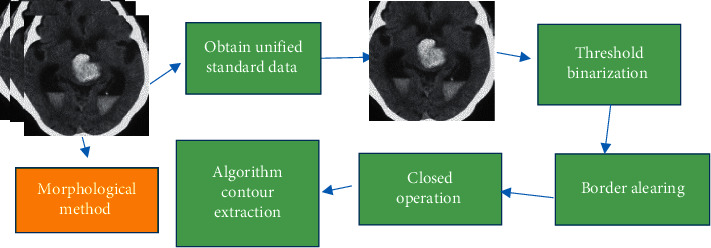
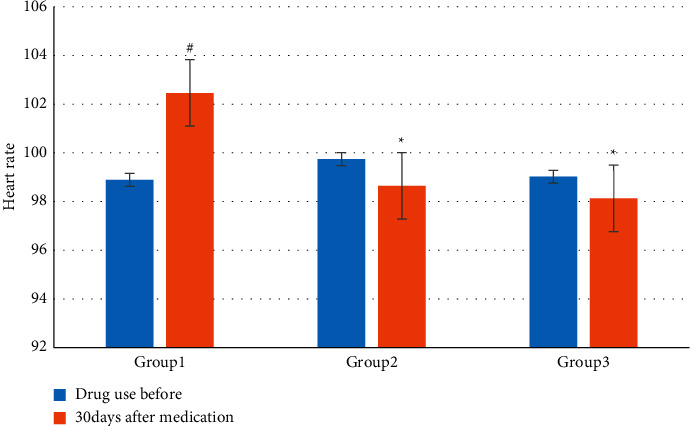
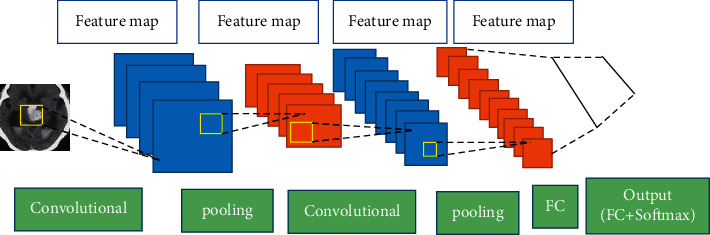
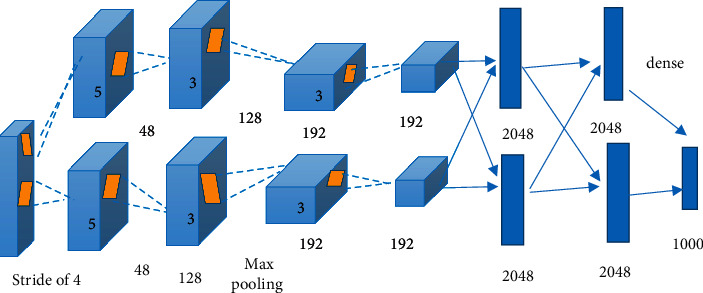
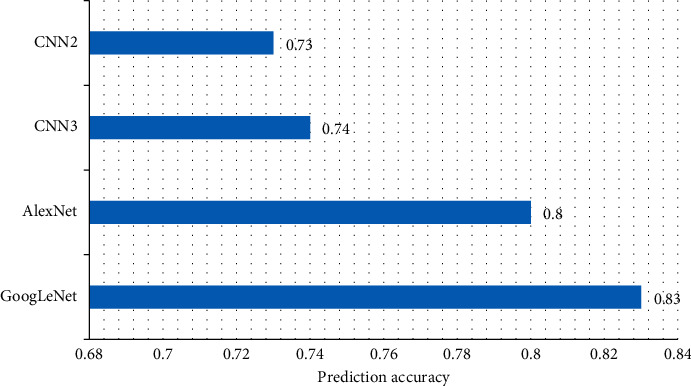
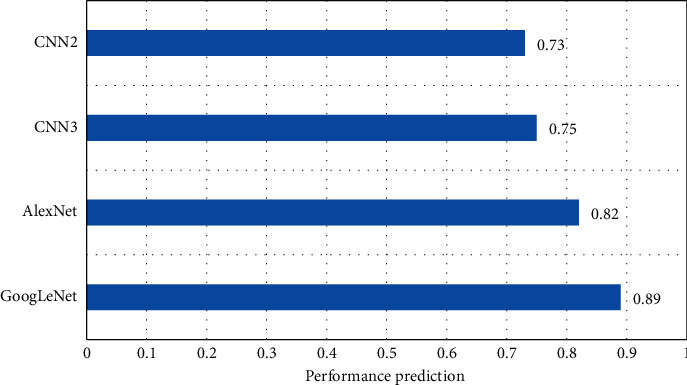
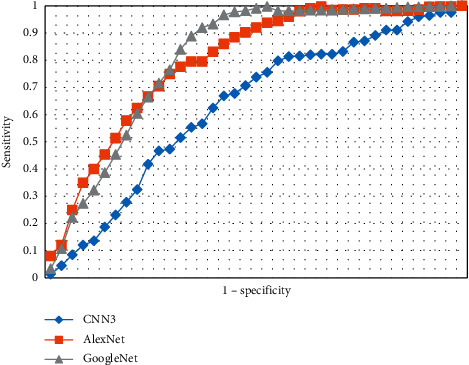
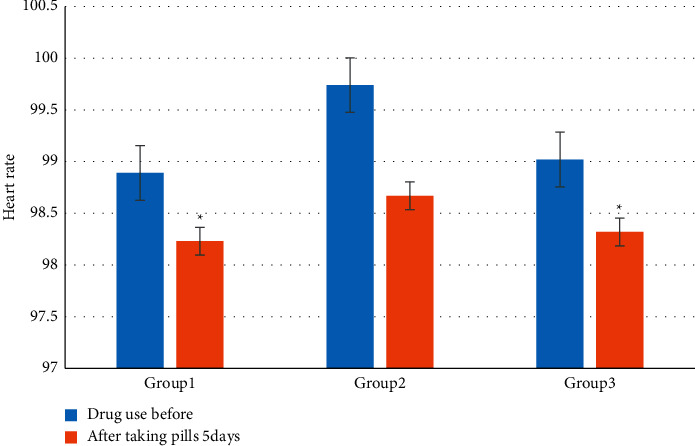
This paper mainly studies the clinical efficacy of sodium nitroprusside and urapidil in the treatment of acute hypertensive intracerebral hemorrhage and analyzes the brain CT image detection based on a deep learning algorithm. A total of 132 cases of acute hypertension admitted to XXX hospital from XX 2019 to XX 2020 were retrospectively analyzed. The diseases of all patients were clinically confirmed, and patients were divided into groups according to the differences in treatment methods. Urapidil was used for group 1; sodium nitroprusside was used for group 2; and urapidil combined with sodium nitroprusside was used for group 3. A convolutional neural network in deep learning is used to construct intelligent processing to classify brain CT images of patients. The network performance of AlexNet, GoogLeNet, and CNN3 is predicted. The results show that GoogLeNet has the highest prediction accuracy of 0.83, followed by AlexNet with 0.80 and CNN3 with 0.74. The results of the performance parameter curve show that the GoogLeNet has the highest performance parameter of 0.89, followed by AlexNet and CNN3 network. The performance parameter curve of machine learning is above 0.80. After five weeks of drug treatment, the hematoma volume was (3.8 ± 2.6) mL in group1, (7.6 ± 2.8) mL in group 2, and (2.8 ± 1.5) mL in group 3. After 5 days of treatment, the patients' heart rate changed compared with before treatment. Compared with group 2, there were significant differences between groups 1 and 3 ( < 0.01), indicating that the therapeutic effect of the combination group was significantly better than that of the other groups alone. In summary, the combination of sodium nitroprusside and urapidil has a significantly better effect than that of urapidil alone. A convolutional neural network based on deep learning improves the recognition accuracy of medical images.
本文主要研究硝普钠和乌拉地尔治疗急性高血压性脑出血的临床疗效,并基于深度学习算法分析脑 CT 图像检测。回顾性分析 2019 年 XX 月至 2020 年 XX 月 XXX 医院收治的 132 例急性高血压患者。所有患者的疾病均经临床确诊,并根据治疗方法的不同将患者分为三组。一组使用乌拉地尔;二组使用硝普钠;三组使用乌拉地尔联合硝普钠。利用深度学习中的卷积神经网络构建智能处理,对患者的脑 CT 图像进行分类。预测 AlexNet、GoogLeNet 和 CNN3 的网络性能。结果显示,GoogLeNet 的预测准确率最高,为 0.83,其次是 AlexNet,为 0.80,CNN3 为 0.74。性能参数曲线的结果表明,GoogLeNet 的性能参数最高,为 0.89,其次是 AlexNet 和 CNN3 网络。机器学习的性能参数曲线均高于 0.80。五周的药物治疗后,组 1 的血肿量为(3.8±2.6)mL,组 2 的血肿量为(7.6±2.8)mL,组 3 的血肿量为(2.8±1.5)mL。治疗 5 天后,与治疗前相比,患者心率发生变化。与组 2 相比,组 1 和组 3 之间有显著差异(<0.01),表明联合组的疗效明显优于其他两组单独治疗。综上所述,硝普钠与乌拉地尔联合应用的效果明显优于单独应用乌拉地尔。基于深度学习的卷积神经网络提高了医学图像的识别准确率。