From the Department of Orthopaedic Surgery at the Medical College of Wisconsin, Wauwatosa, WI (Mr. Dasari, Dr. Hadro, and Dr. Neilson), and the Department of Pathology at the Medical College of Wisconsin, Wauwatosa, WI (Dr. Singh).
J Am Acad Orthop Surg Glob Res Rev. 2022 Apr 7;6(4):e21.00183. doi: 10.5435/JAAOSGlobal-D-21-00183.
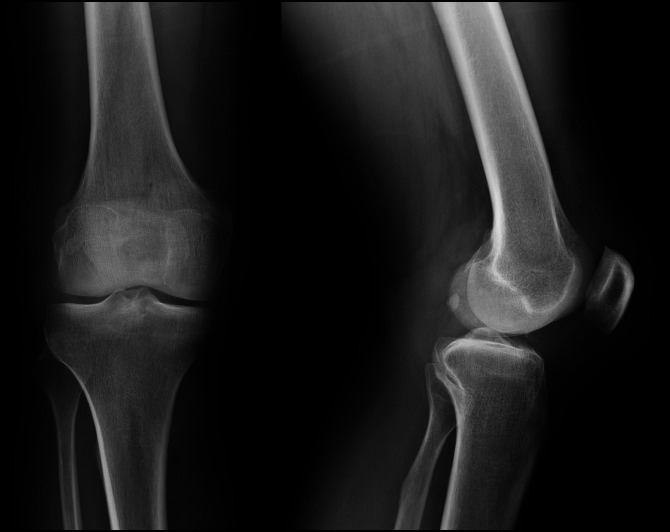
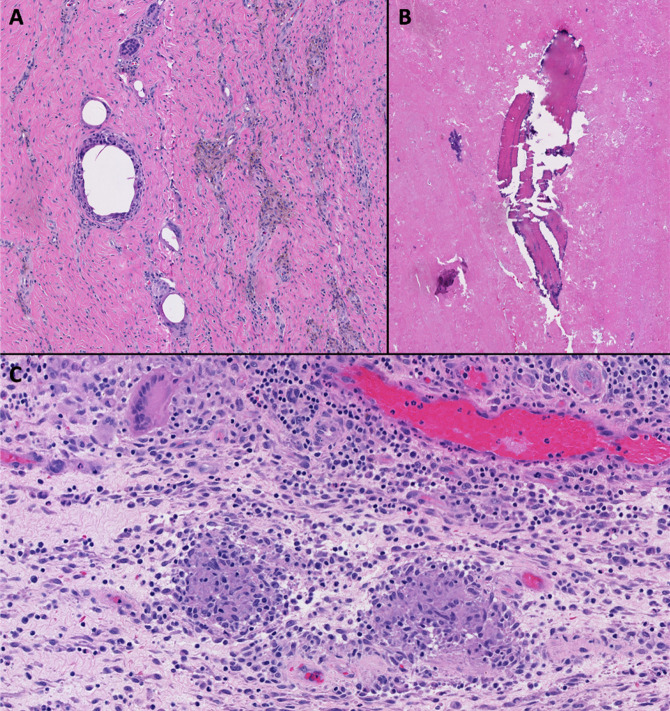
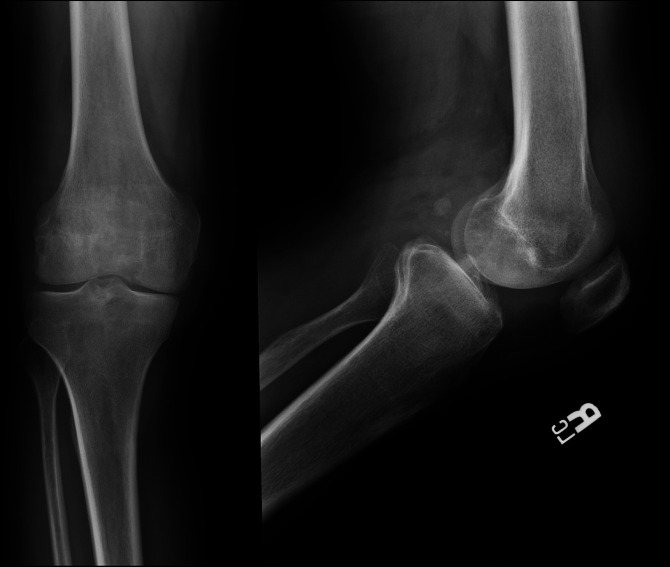
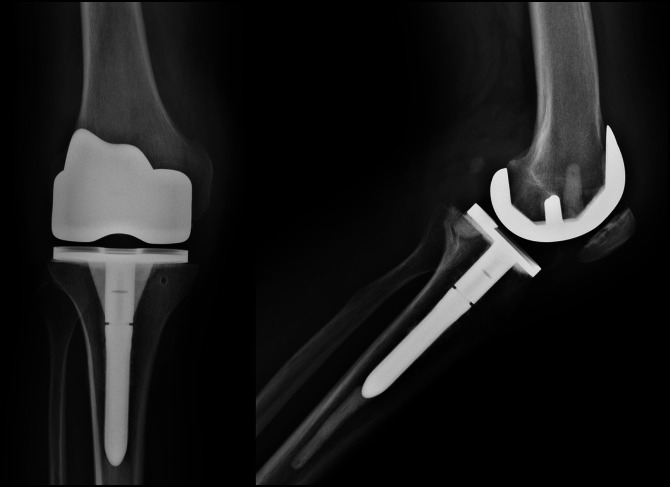
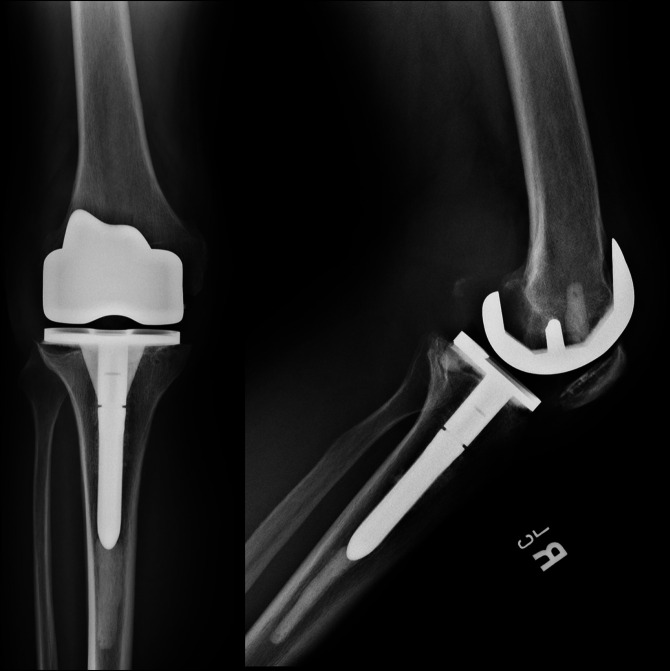
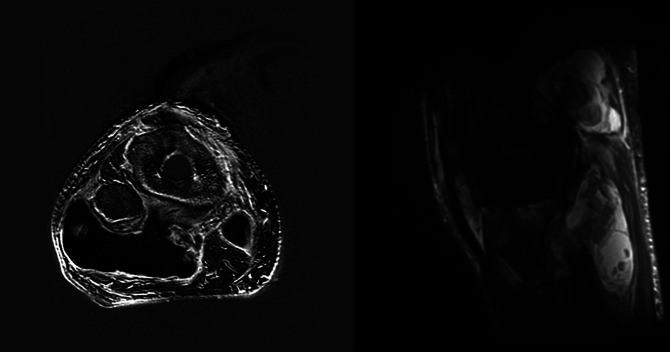
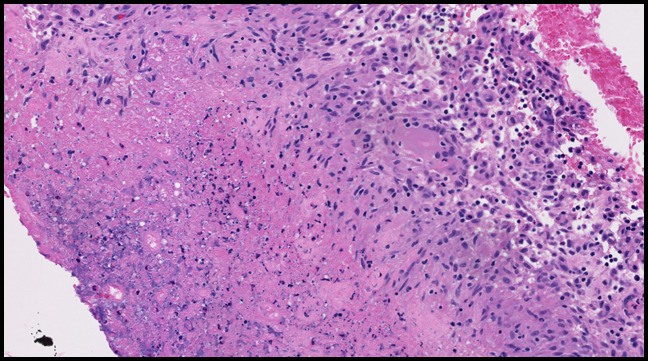
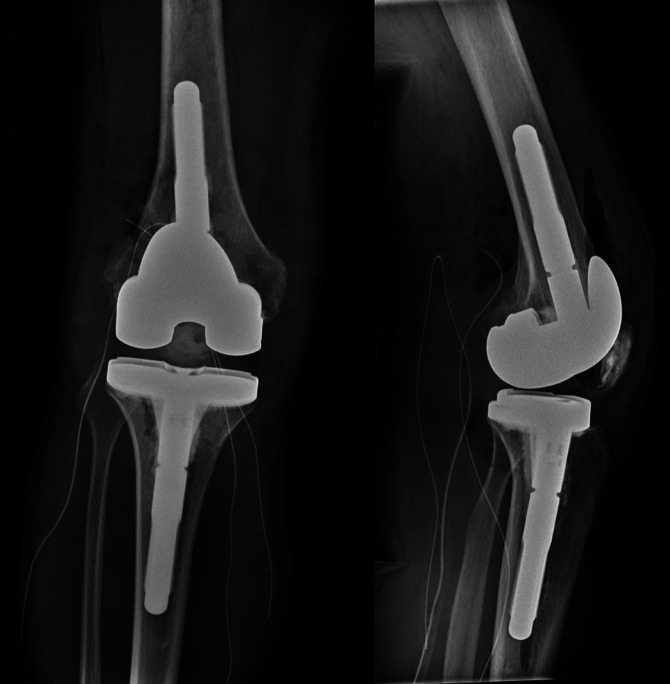
Mycobacterium kansasii is a nontuberculous mycobacterium that is a rare cause of prosthetic joint infections (PJIs). This case report presents a 58-year-old man who developed rapidly progressive arthritis after exposing his right knee to an unknown fluid at a microbial pharmaceutical company. Within a year, he underwent a right total knee arthroplasty (TKA). At 5 months postoperatively, he presented with pain and swelling of that knee. Imaging revealed extensive periprosthetic osteolysis with diffuse intracapsular and posterior extracapsular fluid collections. Multiple knee aspirates had negative cultures, and infectious laboratory test results were equivocal. Two years after his primary arthroplasty, the patient underwent posterior débridement and one-stage revision TKA with antibiotic cement. Synovial fluid mycobacterial cultures aspirated 2 weeks before the revision surgery became positive on postoperative day 1. PCR identified M kansasii. At 3 weeks postoperatively, intraoperative periprosthetic cultures grew mycobacterium. M kansasii was confirmed using mass spectrometry. Once susceptibilities returned, the patient was treated with targeted antimycobacterial therapy. This case report demonstrates the importance of considering atypical PJI in painful TKA with negative cultures and equivocal laboratory results. In the future, when there is concern for an atypical PJI, molecular diagnostic tools and mycobacterial cultures should be used before surgical intervention.
堪萨斯分枝杆菌是一种非结核分枝杆菌,是假体关节感染(PJI)的罕见病因。本病例报告介绍了一位 58 岁男性,他在微生物制药公司接触到一种未知液体后,右膝迅速出现关节炎。一年内,他接受了右全膝关节置换术(TKA)。术后 5 个月,他出现右膝疼痛和肿胀。影像学显示广泛的假体周围骨溶解,伴有弥漫性囊内和囊外后腔积液。多次膝关节抽吸均无培养阳性,感染性实验室检查结果也不确定。初次关节置换后 2 年,患者接受了后清创和一期翻修 TKA 联合抗生素骨水泥固定术。在翻修手术前 2 周的关节滑液分枝杆菌培养物在术后第 1 天转为阳性。PCR 鉴定为 M kansasii。术后 3 周,术中假体周围培养物生长分枝杆菌。使用质谱法确认了 M kansasii。一旦药敏结果返回,患者就接受了靶向抗分枝杆菌治疗。本病例报告表明,在阴性培养和不确定的实验室结果的情况下,对于疼痛性 TKA,考虑非典型 PJI 非常重要。将来,如果怀疑存在非典型 PJI,应在手术干预前使用分子诊断工具和分枝杆菌培养物。