Necker-Enfants Malades Institute, Inserm U1151, Université de Paris, Department of Nephrology and Kidney Transplantation, Necker Hospital, AP-HP, Paris, France.
Department of Renal Pathology, Necker Hospital, AP-HP, Paris, France.
Front Immunol. 2022 Mar 22;13:864730. doi: 10.3389/fimmu.2022.864730. eCollection 2022.
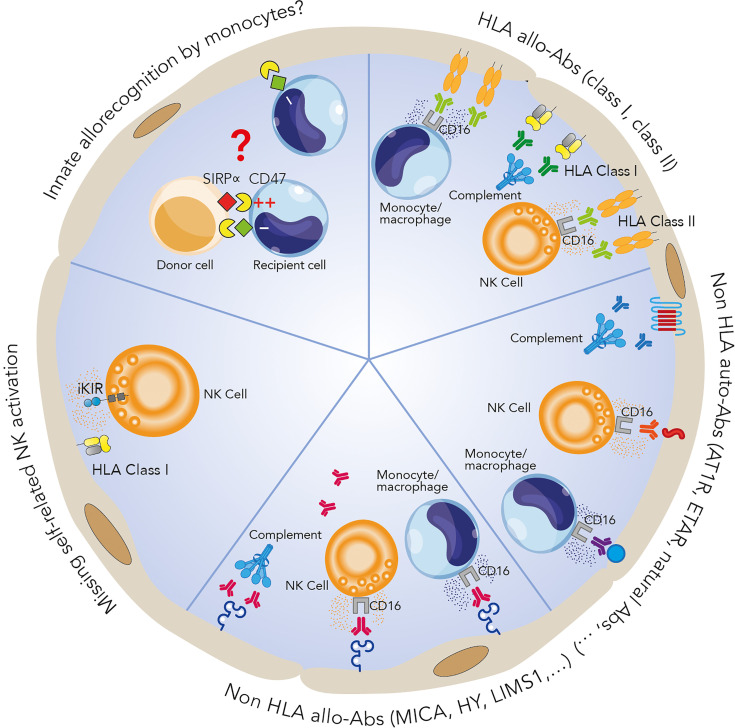
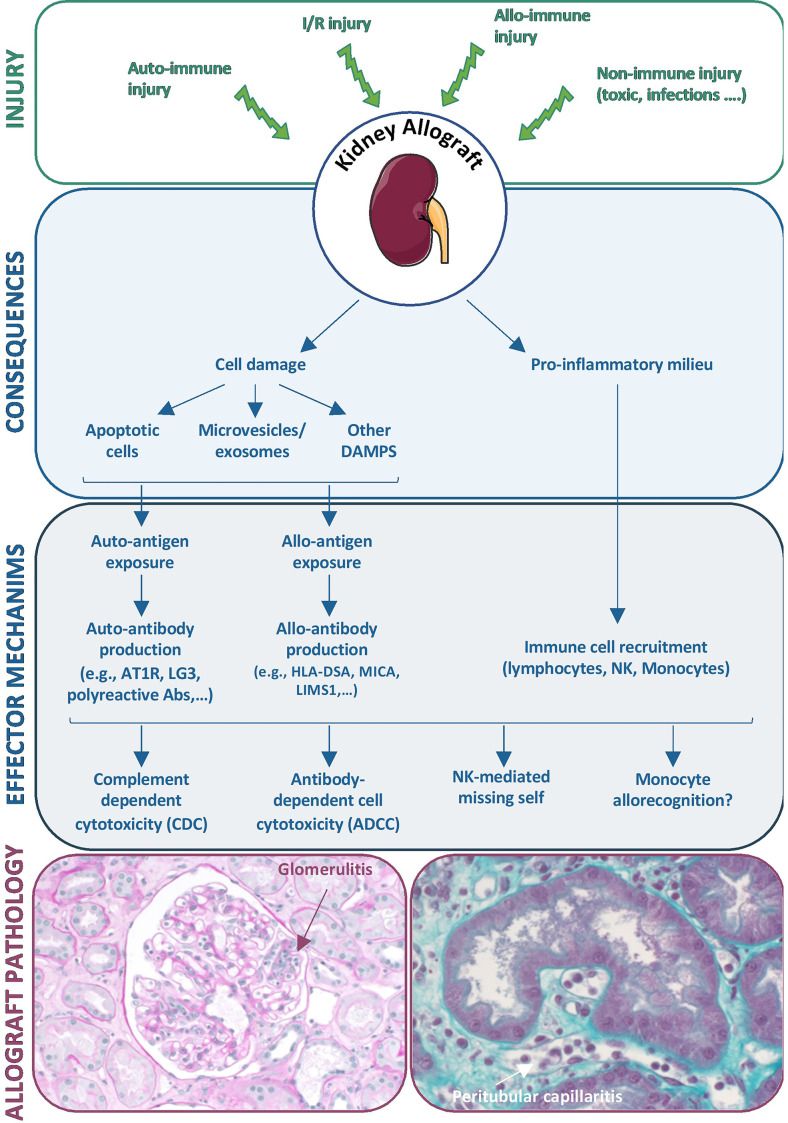
Antibody-mediated rejection (ABMR) is associated with poor transplant outcomes and was identified as a leading cause of graft failure after kidney transplantation. Although the hallmark histological features of ABMR (ABMRh), i.e., microvascular inflammation (MVI), usually correlate with the presence of anti-human leukocyte antigen donor-specific antibodies (HLA-DSAs), it is increasingly recognized that kidney transplant recipients can develop ABMRh in the absence of HLA-DSAs. In fact, 40-60% of patients with overt MVI have no circulating HLA-DSAs, suggesting that other mechanisms could be involved. In this review, we provide an update on the current understanding of the different pathogenic processes underpinning MVI. These processes include both antibody-independent and antibody-dependent mechanisms of endothelial injury and ensuing MVI. Specific emphasis is placed on non-HLA antibodies, for which we discuss the ontogeny, putative targets, and mechanisms underlying endothelial toxicity in connection with their clinical impact. A better understanding of these emerging mechanisms of allograft injury and all the effector cells involved in these processes may provide important insights that pave the way for innovative diagnostic tools and highly tailored therapeutic strategies.
抗体介导的排斥反应 (ABMR) 与较差的移植结果相关,并且被确定为肾移植后移植物失功的主要原因。尽管 ABMR 的标志性组织学特征(ABMRh),即微血管炎症(MVI),通常与存在抗人类白细胞抗原供体特异性抗体(HLA-DSAs)相关,但越来越多的证据表明,肾移植受者在没有 HLA-DSAs 的情况下也可能发生 ABMRh。事实上,40-60% 有明显 MVI 的患者没有循环 HLA-DSAs,这表明可能涉及其他机制。在这篇综述中,我们提供了对目前理解支持 MVI 的不同发病机制的最新认识。这些过程包括内皮损伤和随之发生的 MVI 的抗体非依赖性和抗体依赖性机制。特别强调非 HLA 抗体,我们讨论了它们的发生、潜在靶点和与内皮毒性相关的机制,以及它们的临床影响。对这些同种异体移植物损伤的新兴机制以及这些过程中涉及的所有效应细胞有更好的理解,可能会为创新的诊断工具和高度针对性的治疗策略提供重要的见解。