Department of Cell Biology, Centro de Investigación y de Estudios Avanzados del Instituto Politécnico Nacional (Cinvestav-IPN), México City, México.
Department of Pharmacology-Physiology, Faculty of Medicine and Health Sciences, Université de Sherbrooke, Sherbrooke, Canada.
Mol Psychiatry. 2022 May;27(5):2425-2438. doi: 10.1038/s41380-022-01537-3. Epub 2022 Apr 7.
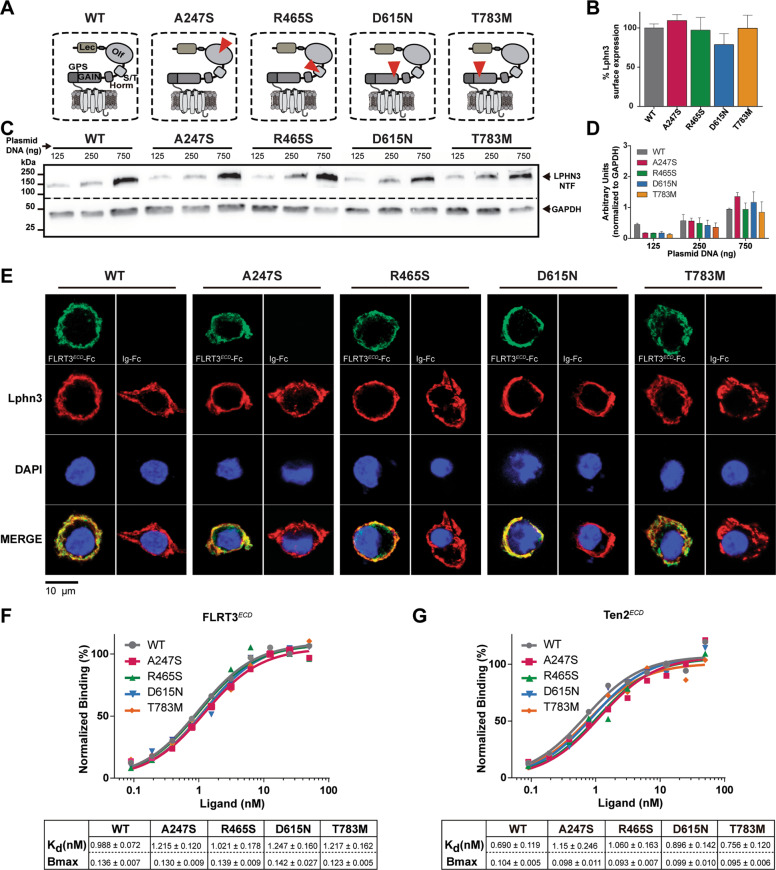
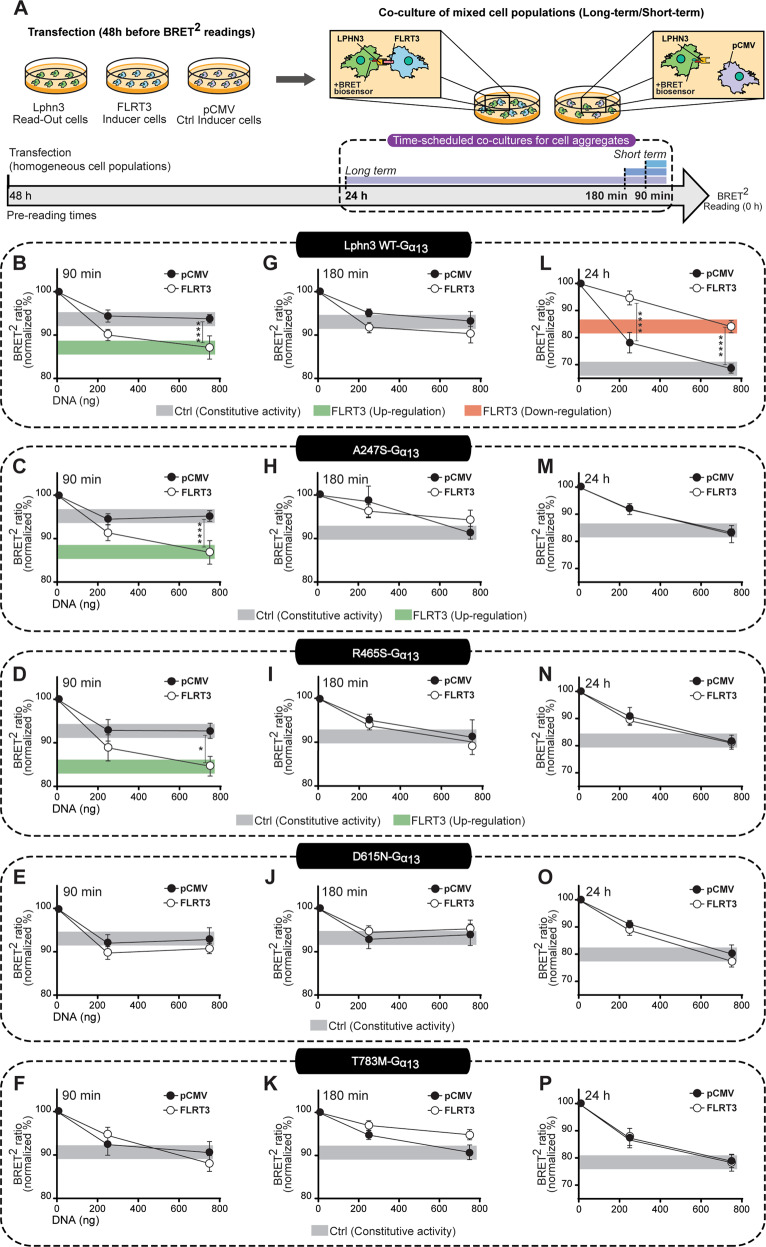
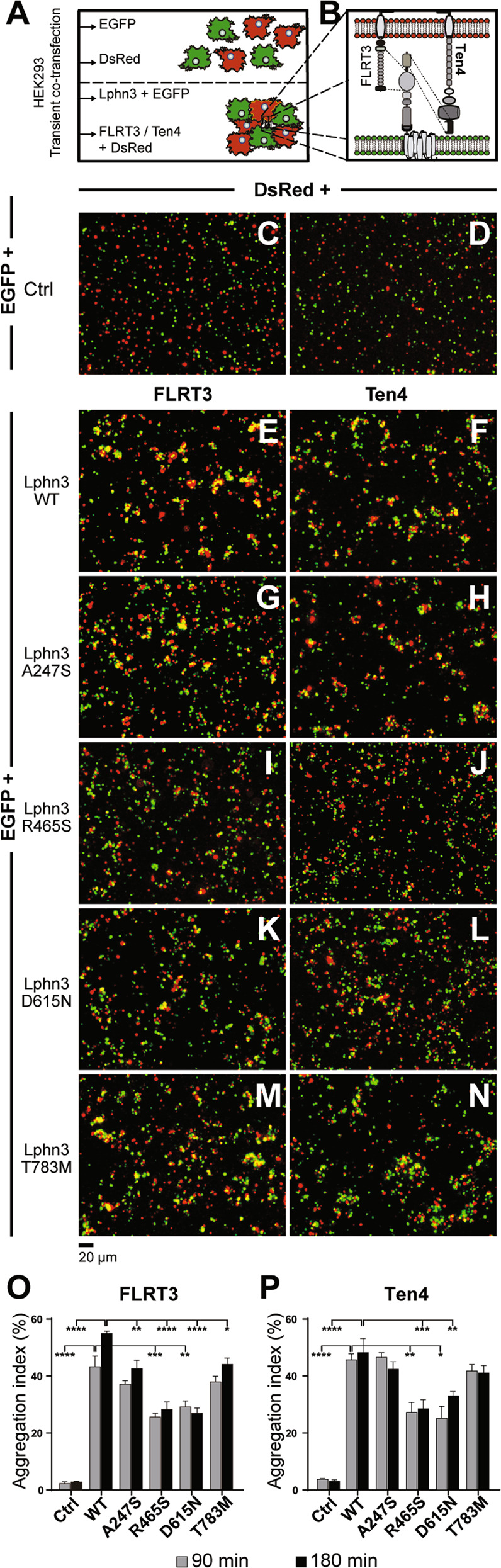
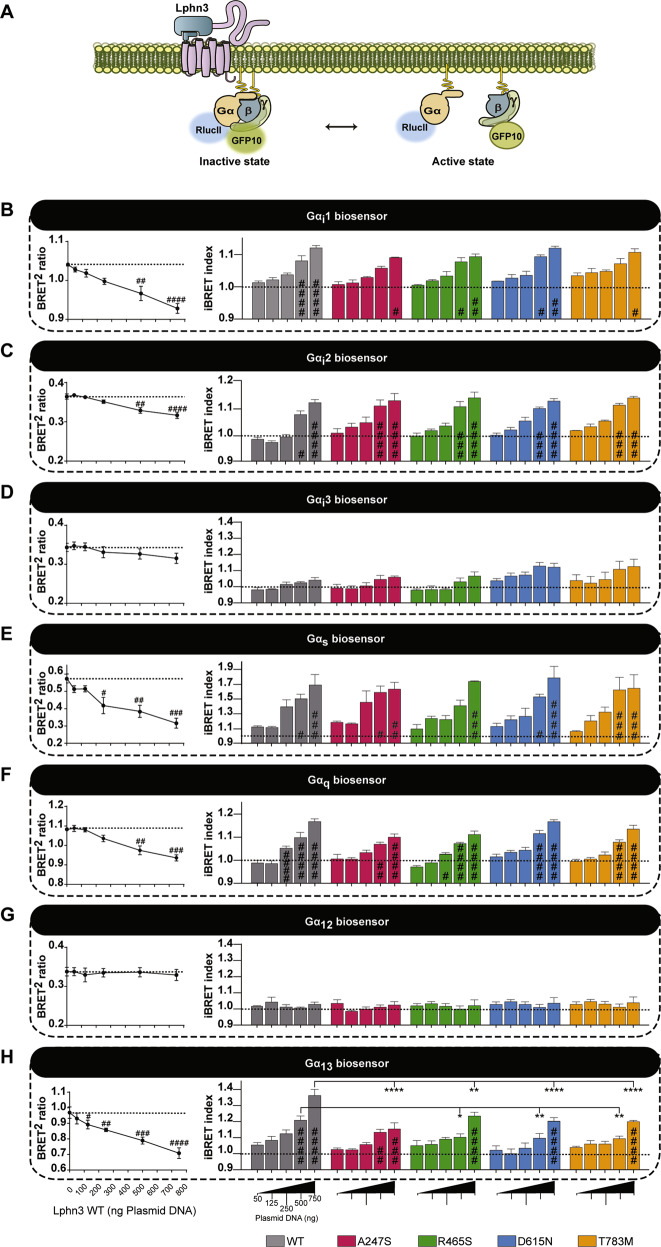
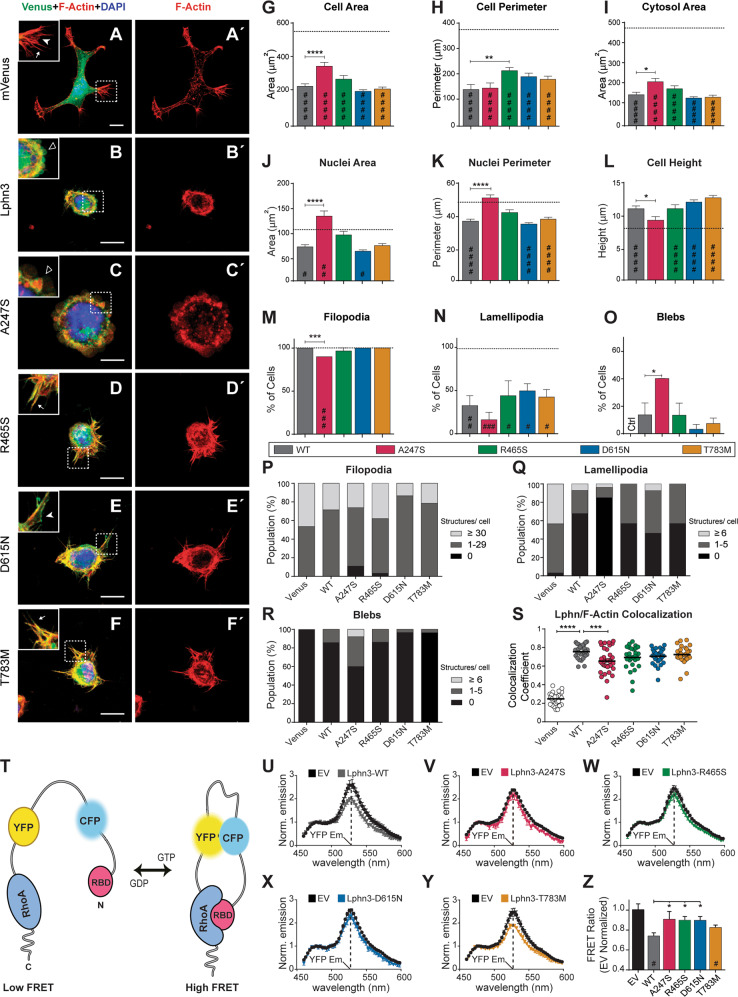
Latrophilin-3 (Lphn3; also known as ADGRL3) is a member of the adhesion G Protein Coupled Receptor subfamily, which participates in the stabilization and maintenance of neuronal networks by mediating intercellular adhesion through heterophilic interactions with transmembrane ligands. Polymorphisms modifying the Lphn3 gene are associated with attention-deficit/hyperactivity disorder (ADHD) in children and its persistence into adulthood. How these genetic alterations affect receptor function remains unknown. Here, we conducted the functional validation of distinct ADHD-related Lphn3 variants bearing mutations in the receptor's adhesion motif-containing extracellular region. We found that all variants tested disrupted the ability of Lphn3 to stabilize intercellular adhesion in a manner that was distinct between ligands classes, but which did not depend on ligand-receptor interaction parameters, thus pointing to altered intrinsic receptor signaling properties. Using G protein signaling biosensors, we determined that Lphn3 couples to Gαi1, Gαi2, Gαs, Gαq, and Gα13. However, all ADHD-related receptor variants consistently lacked intrinsic as well as ligand-dependent Gα13 coupling efficiency while maintaining unaltered coupling to Gαi, Gαs, and Gαq. Consistent with these alterations, actin remodeling functions as well as actin-relevant RhoA signaling normally displayed by the constitutively active Lphn3 receptor were impeded by select receptor variants, thus supporting additional signaling defects. Taken together, our data point to Gα13 selective signaling impairments as representing a disease-relevant pathogenicity pathway that can be inherited through Lphn3 gene polymorphisms. This study highlights the intricate interplay between Lphn3 GPCR functions and the actin cytoskeleton in modulating neurodevelopmental cues related to ADHD etiology.
拉普罗林-3(Lphn3;也称为 ADGRL3)是黏附 G 蛋白偶联受体亚家族的成员,通过与跨膜配体的异源相互作用介导细胞间黏附,参与稳定和维持神经网络。改变 Lphn3 基因的多态性与儿童注意缺陷多动障碍(ADHD)及其持续到成年有关。这些遗传改变如何影响受体功能仍不清楚。在这里,我们对具有受体黏附基序的不同 ADHD 相关 Lphn3 变体进行了功能验证,该变体含有细胞外区域的突变。我们发现,所有测试的变体都以配体类之间不同的方式破坏了 Lphn3 稳定细胞间黏附的能力,但不依赖于配体-受体相互作用参数,从而指向改变的内在受体信号特性。使用 G 蛋白信号生物传感器,我们确定 Lphn3 与 Gαi1、Gαi2、Gαs、Gαq 和 Gα13 偶联。然而,所有与 ADHD 相关的受体变体都一致缺乏内在的和配体依赖性的 Gα13 偶联效率,同时保持对 Gαi、Gαs 和 Gαq 的不变偶联。与这些改变一致的是,选择的受体变体阻碍了组成性激活的 Lphn3 受体通常显示的肌动蛋白重塑功能以及与肌动蛋白相关的 RhoA 信号,从而支持额外的信号缺陷。总之,我们的数据表明,Gα13 选择性信号缺陷是一种与疾病相关的致病性途径,可以通过 Lphn3 基因多态性遗传。这项研究强调了 Lphn3 GPCR 功能与肌动蛋白细胞骨架之间的复杂相互作用,在调节与 ADHD 病因相关的神经发育线索方面。