Institute for Marine and Antarctic Studies, University of Tasmania, Newnham, TAS, Australia.
Bird Group, Department of Life Sciences, The Natural History Museum, Hertfordshire, UK.
J Anim Ecol. 2022 Jun;91(6):1266-1289. doi: 10.1111/1365-2656.13699. Epub 2022 Apr 15.
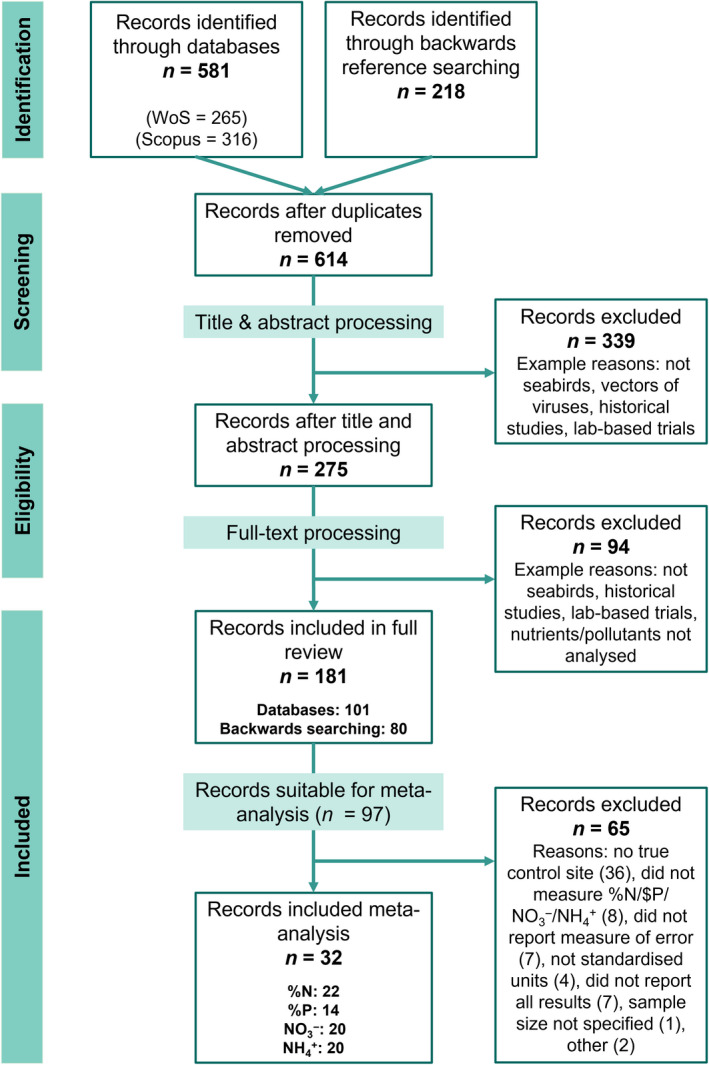
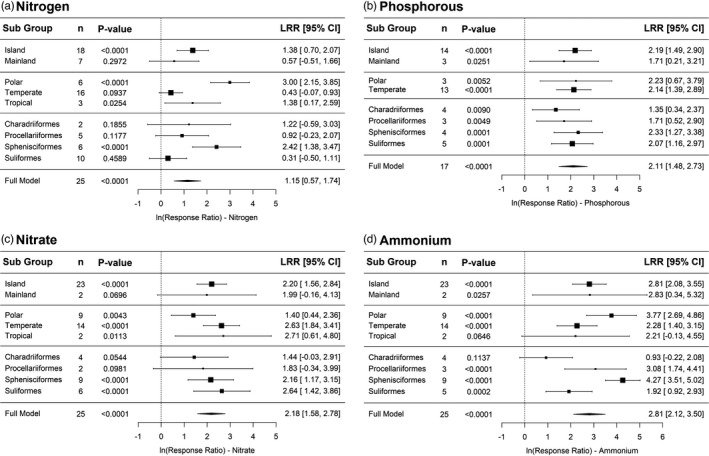
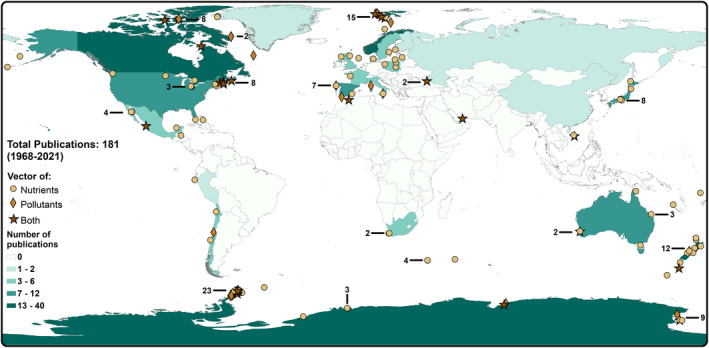
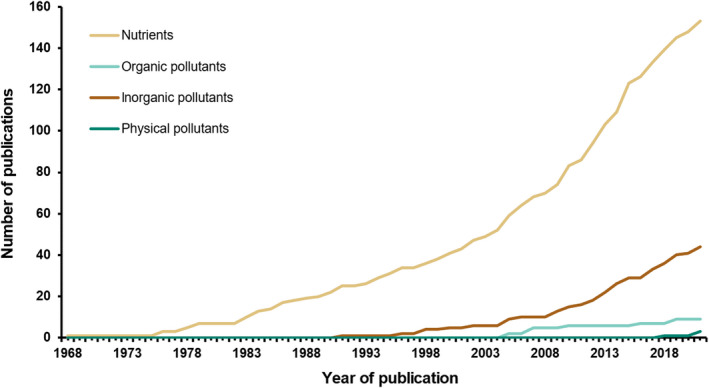
Seabird species world-wide are integral to both marine and terrestrial environments, connecting the two systems by transporting vast quantities of marine-derived nutrients and pollutants to terrestrial breeding, roosting and nesting grounds via the deposition of guano and other allochthonous inputs (e.g. eggs, feathers). We conducted a systematic review and meta-analysis and provide insight into what types of nutrients and pollutants seabirds are transporting, the influence these subsidies are having on recipient environments, with a particular focus on soil, and what may happen if seabird populations decline. The addition of guano to colony soils increased nutrient levels compared to control soils for all seabirds studied, with cascading positive effects observed across a range of habitats. Deposited guano sometimes led to negative impacts, such as guanotrophication, or guano-induced eutrophication, which was often observed where there was an excess of guano or in areas with high seabird densities. While the literature describing nutrients transported by seabirds is extensive, literature regarding pollutant transfer is comparatively limited, with a focus on toxic and bioaccumulative metals. Research on persistent organic pollutants and plastics transported by seabirds is likely to increase in coming years. Studies were limited geographically, with hotspots of research activity in a few locations, but data were lacking from large regions around the world. Studies were also limited to seabird species listed as Least Concern on the IUCN Red List. As seabird populations are impacted by multiple threats and steep declines have been observed for many species world-wide, gaps in the literature are particularly concerning. The loss of seabirds will impact nutrient cycling at localized levels and potentially on a global scale as well, yet it is unknown what may truly happen to areas that rely on seabirds if these populations disappear.
海鸟是全球海洋和陆地环境不可分割的一部分,通过将大量海洋来源的营养物质和污染物通过粪便和其他外来物质(如卵、羽毛)的沉积,将两个系统连接起来,从而将海洋输送到陆地繁殖、栖息和筑巢地。我们进行了系统的回顾和荟萃分析,并深入了解海鸟正在运输哪些类型的营养物质和污染物,这些补贴对受纳环境的影响,特别是对土壤的影响,如果海鸟种群减少可能会发生什么。与对照土壤相比,所有研究的海鸟的群体土壤中的粪便增加了营养水平,在一系列栖息地中观察到了级联的正效应。沉积的粪便有时会导致负面影响,如粪便营养化或粪便诱导的富营养化,这种情况通常发生在粪便过多或海鸟密度高的地方。虽然描述海鸟运输的营养物质的文献很多,但关于污染物转移的文献相对较少,主要集中在有毒和生物累积金属上。未来几年,关于海鸟运输的持久性有机污染物和塑料的研究可能会增加。研究在地理上受到限制,只有少数几个地点的研究活动非常活跃,但全球范围内的许多大区域都缺乏数据。这些研究也仅限于被列入世界自然保护联盟红色名录中的“低危”海鸟物种。由于海鸟种群受到多种威胁的影响,许多物种在全球范围内都出现了急剧下降,因此文献中的空白尤其令人担忧。海鸟的丧失将影响局部水平的养分循环,并可能在全球范围内产生影响,但如果这些种群消失,依赖海鸟的地区可能会发生什么,目前还不得而知。