Stunz Elizabeth, Fetcher Ned, Lavretsky Philip, Mohl Jonathon E, Tang Jianwu, Moody Michael L
Department of Biological Sciences, University of Texas at El Paso, El Paso, TX, United States.
Institute for Environmental Science and Sustainability, Wilkes University, Wilkes-Barre, PA, United States.
Front Plant Sci. 2022 Mar 24;13:860439. doi: 10.3389/fpls.2022.860439. eCollection 2022.
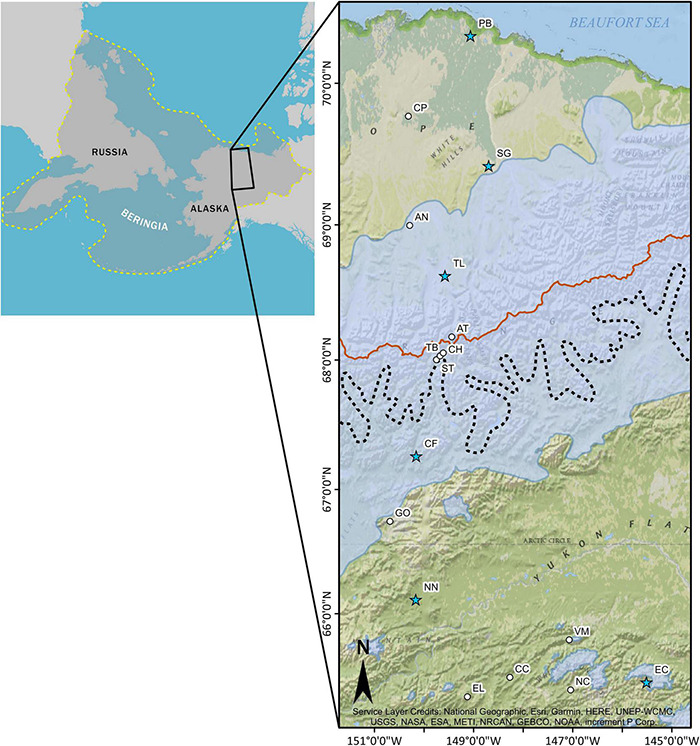
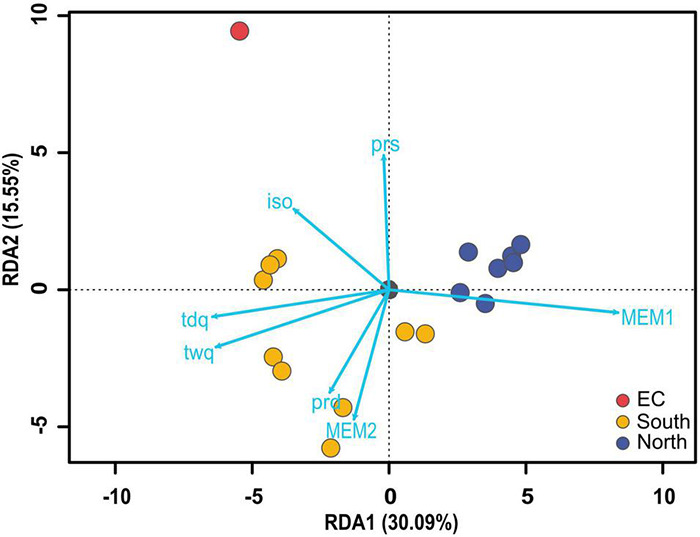
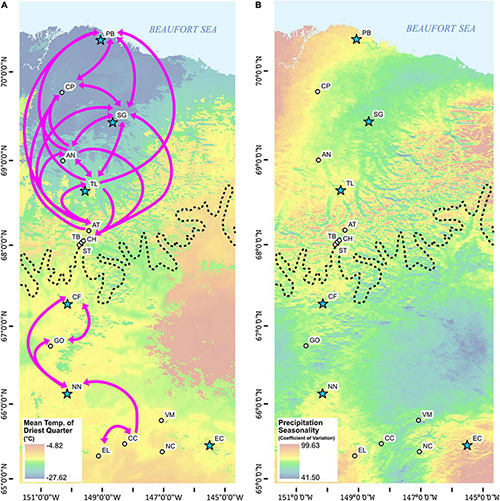
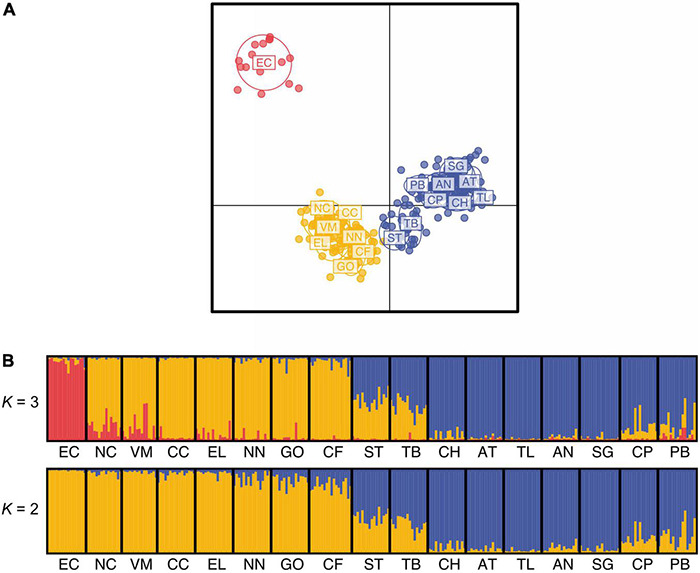
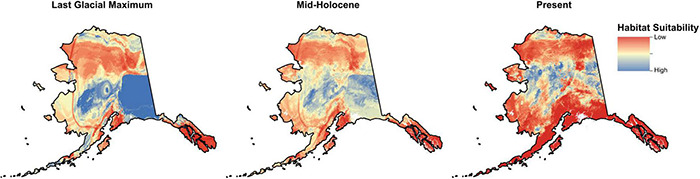
Global climate change has resulted in geographic range shifts of flora and fauna at a global scale. Extreme environments, like the Arctic, are seeing some of the most pronounced changes. This region covers 14% of the Earth's land area, and while many arctic species are widespread, understanding ecotypic variation at the genomic level will be important for elucidating how range shifts will affect ecological processes. Tussock cottongrass ( L.) is a foundation species of the moist acidic tundra, whose potential decline due to competition from shrubs may affect ecosystem stability in the Arctic. We used double-digest Restriction Site-Associated DNA sequencing to identify genomic variation in 273 individuals of from 17 sites along a latitudinal gradient in north central Alaska. These sites have been part of 30 + years of ecological research and are inclusive of a region that was part of the Beringian refugium. The data analyses included genomic population structure, demographic models, and genotype by environment association. Genome-wide SNP investigation revealed environmentally associated variation and population structure across the sampled range of , including a genetic break between populations north and south of treeline. This structure is likely the result of subrefugial isolation, contemporary isolation by resistance, and adaptation. Forty-five candidate loci were identified with genotype-environment association (GEA) analyses, with most identified genes related to abiotic stress. Our results support a hypothesis of limited gene flow based on spatial and environmental factors for , which in combination with life history traits could limit range expansion of southern ecotypes northward as the tundra warms. This has implications for lower competitive attributes of northern plants of this foundation species likely resulting in changes in ecosystem productivity.
全球气候变化已导致动植物在全球范围内发生地理分布范围的转移。极端环境,如北极地区,正在经历一些最为显著的变化。该地区覆盖了地球陆地面积的14%,虽然许多北极物种分布广泛,但在基因组水平上理解生态型变异对于阐明分布范围的转移将如何影响生态过程至关重要。苔草是潮湿酸性冻原的基础物种,由于来自灌木的竞争,其数量可能减少,这可能会影响北极地区的生态系统稳定性。我们使用双酶切限制性位点关联DNA测序技术,对阿拉斯加中北部沿纬度梯度的17个地点的273株苔草个体的基因组变异进行了鉴定。这些地点是30多年生态研究的一部分,涵盖了曾是白令陆桥避难所一部分的区域。数据分析包括基因组群体结构、人口统计学模型以及基因型与环境的关联分析。全基因组单核苷酸多态性研究揭示了苔草采样范围内与环境相关的变异和群体结构,包括树线南北种群之间的遗传间断。这种结构可能是亚避难所隔离、当代抗性隔离和适应性的结果。通过基因型-环境关联(GEA)分析鉴定出45个候选基因座,其中大多数鉴定出的基因与非生物胁迫相关。我们的结果支持了基于空间和环境因素的苔草基因流有限的假设,这与生活史特征相结合,可能会限制随着冻原变暖南方生态型向北的分布范围扩展。这对该基础物种北方植物较低的竞争属性具有影响,可能导致生态系统生产力的变化。