Hasuike Yuhei, Mochizuki Hideki, Nakamori Masayuki
Department of Neurology, Osaka University Graduate School of Medicine, Osaka, Japan.
Front Genet. 2022 Mar 25;13:865811. doi: 10.3389/fgene.2022.865811. eCollection 2022.
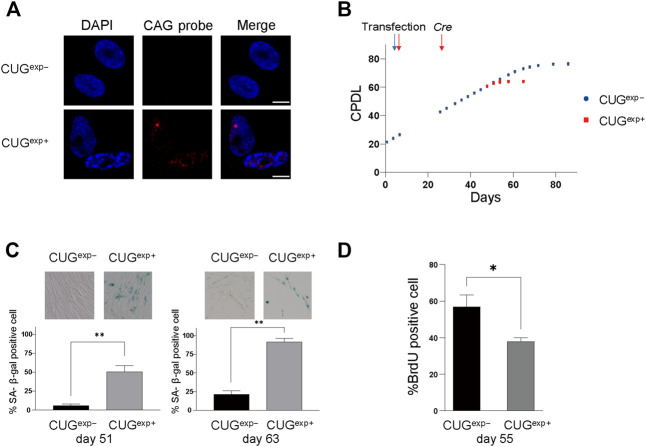
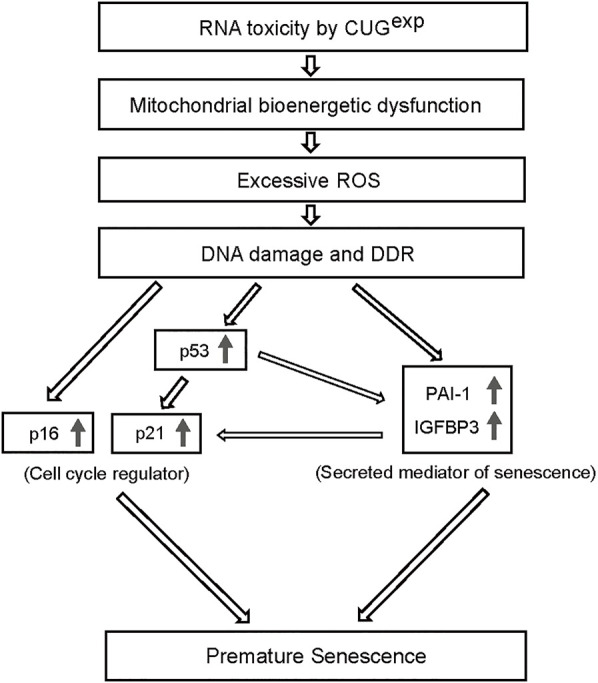
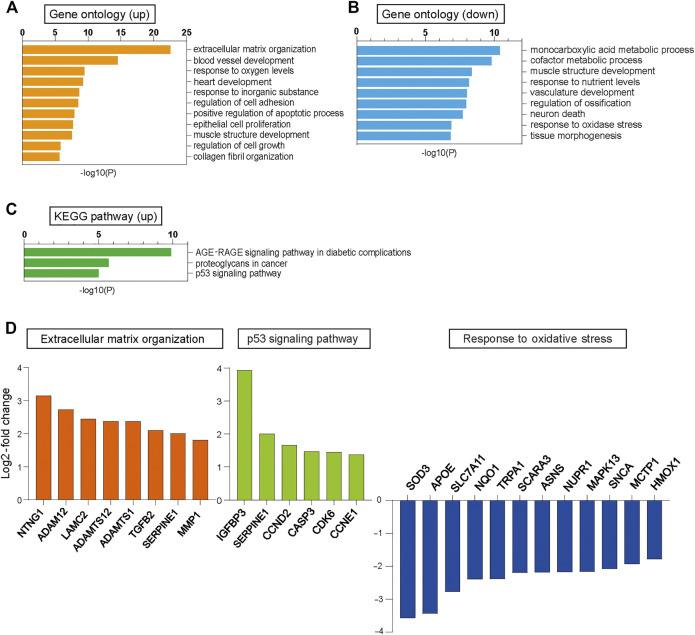
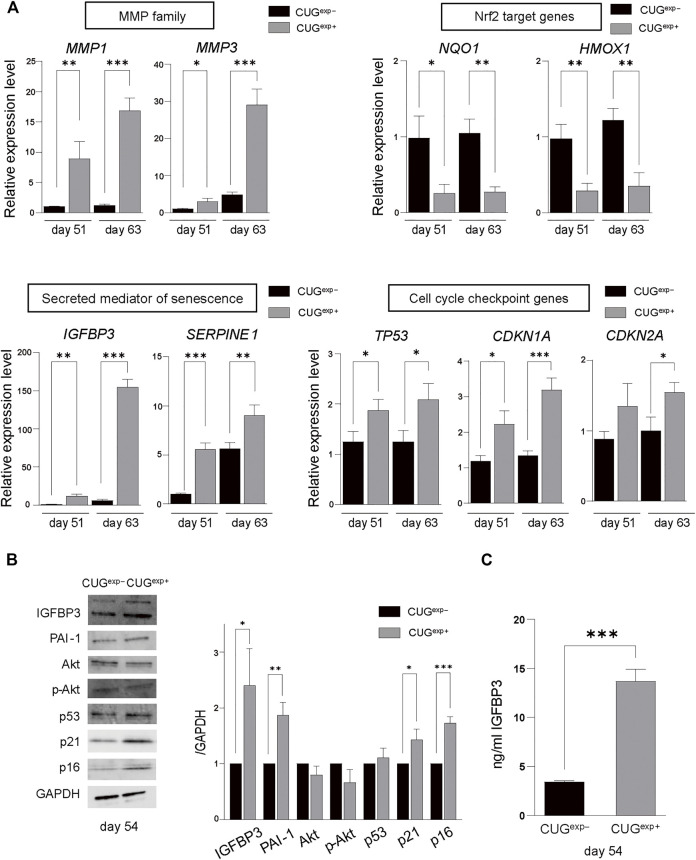
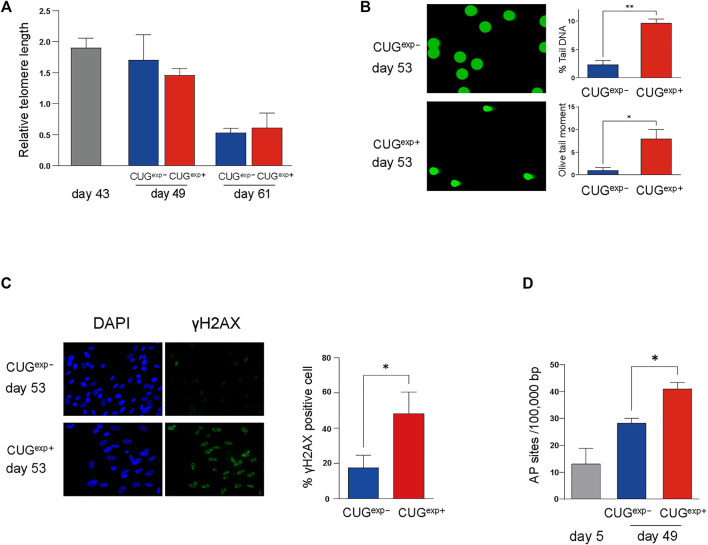
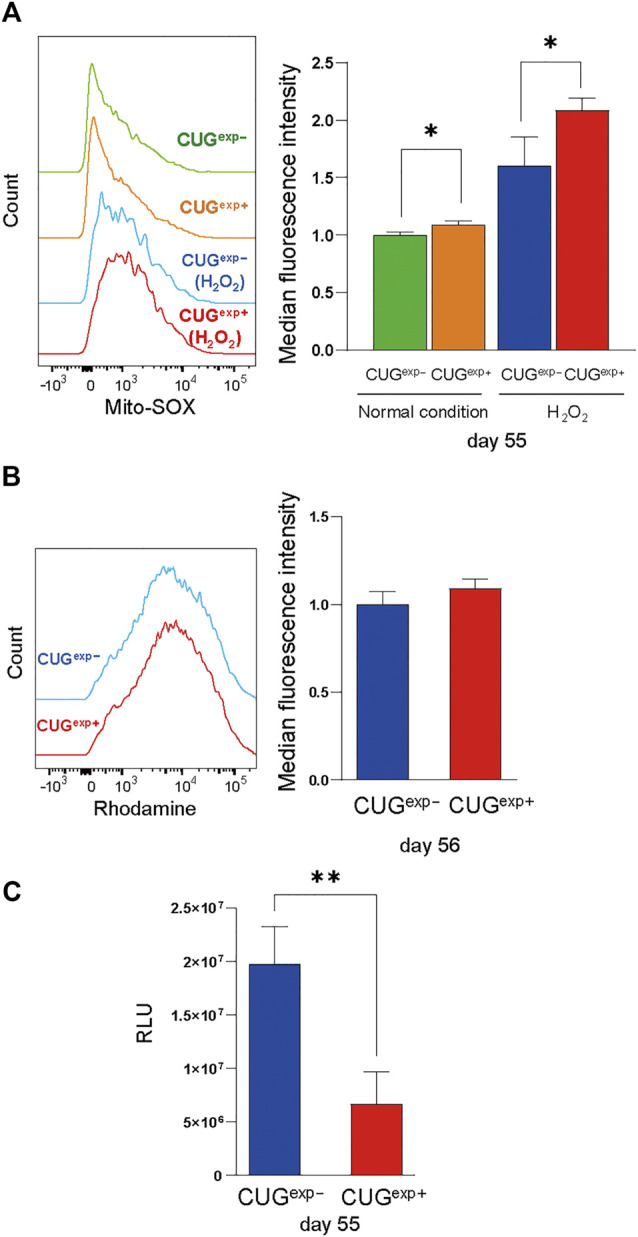
Myotonic dystrophy type 1 (DM1) is a dominantly inherited disorder due to a toxic gain of function of RNA transcripts containing expanded CUG repeats (CUG). Patients with DM1 present with multisystemic symptoms, such as muscle wasting, cognitive impairment, cataract, frontal baldness, and endocrine defects, which resemble accelerated aging. Although the involvement of cellular senescence, a critical component of aging, was suggested in studies of DM1 patient-derived cells, the detailed mechanism of cellular senescence caused by CUG RNA remains unelucidated. Here, we developed a DM1 cell model that conditionally expressed CUG RNA in human primary cells so that we could perform a detailed assessment that eliminated the variability in primary cells from different origins. Our DM1 model cells demonstrated that CUG RNA expression induced cellular senescence by a telomere-independent mechanism. Furthermore, the toxic RNA expression caused mitochondrial dysfunction, excessive reactive oxygen species production, and DNA damage and response, resulting in the senescence-associated increase of cell cycle inhibitors p21 and p16 and secreted mediators insulin-like growth factor binding protein 3 (IGFBP3) and plasminogen activator inhibitor-1 (PAI-1). This study provides unequivocal evidence of the induction of premature senescence by CUG RNA in our DM1 model cells.
1型强直性肌营养不良症(DM1)是一种常染色体显性遗传性疾病,由含有扩展CUG重复序列(CUG)的RNA转录本功能获得性毒性所致。DM1患者表现出多系统症状,如肌肉萎缩、认知障碍、白内障、前额秃发和内分泌缺陷,这些症状类似于加速衰老。尽管在对DM1患者来源细胞的研究中提示细胞衰老(衰老的一个关键组成部分)参与其中,但由CUG RNA导致细胞衰老的详细机制仍不清楚。在此,我们构建了一种DM1细胞模型,该模型可在人原代细胞中条件性表达CUG RNA,以便我们能够进行详细评估,消除不同来源原代细胞的变异性。我们的DM1模型细胞表明,CUG RNA表达通过一种不依赖端粒的机制诱导细胞衰老。此外,毒性RNA表达导致线粒体功能障碍、过量活性氧生成以及DNA损伤和反应,从而导致细胞周期抑制剂p21和p16以及分泌介质胰岛素样生长因子结合蛋白3(IGFBP3)和纤溶酶原激活物抑制剂-1(PAI-1)与衰老相关的增加。本研究为我们的DM1模型细胞中CUG RNA诱导早衰提供了明确证据。