Department of Biochemistry, Sri Venkateswara College, University of Delhi, New Delhi, India.
Center for Infectious Diseases and Vaccinology, Biodesign Institute, Arizona State University, Tempe, Arizona, USA.
Microbiol Spectr. 2022 Apr 27;10(2):e0135421. doi: 10.1128/spectrum.01354-21. Epub 2022 Apr 11.
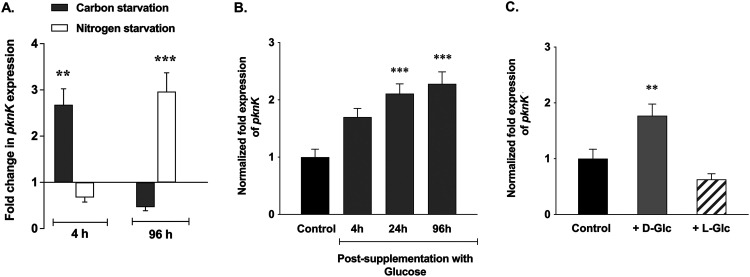
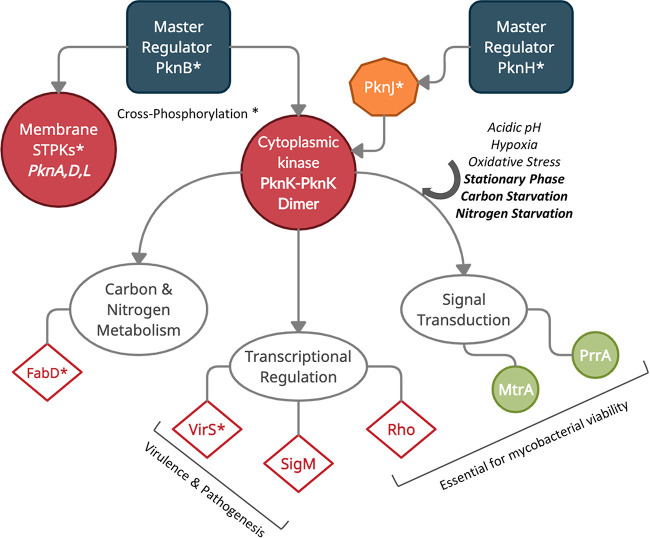
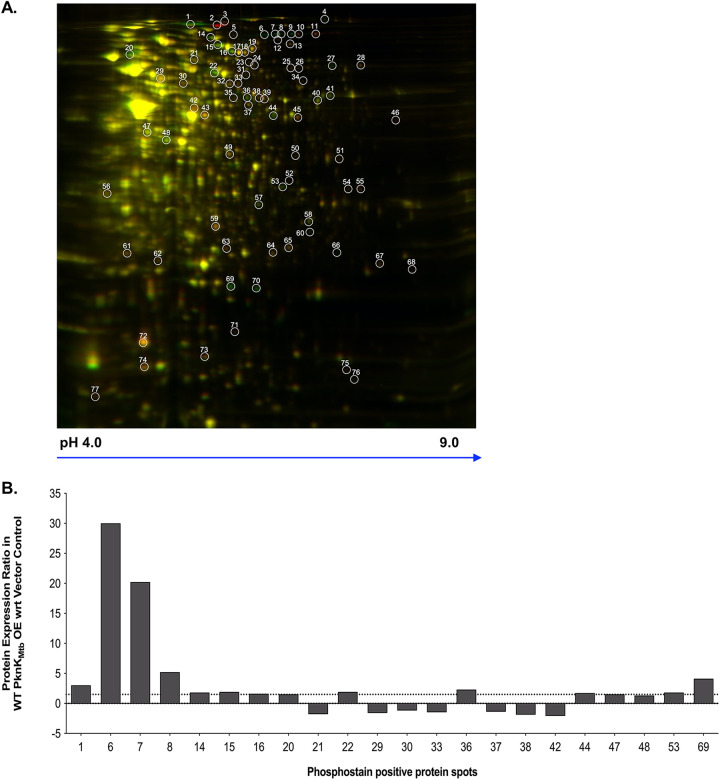
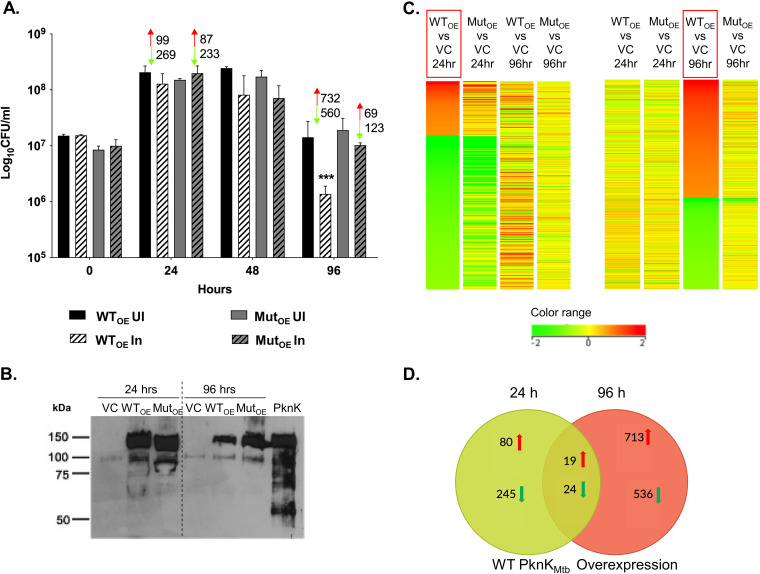
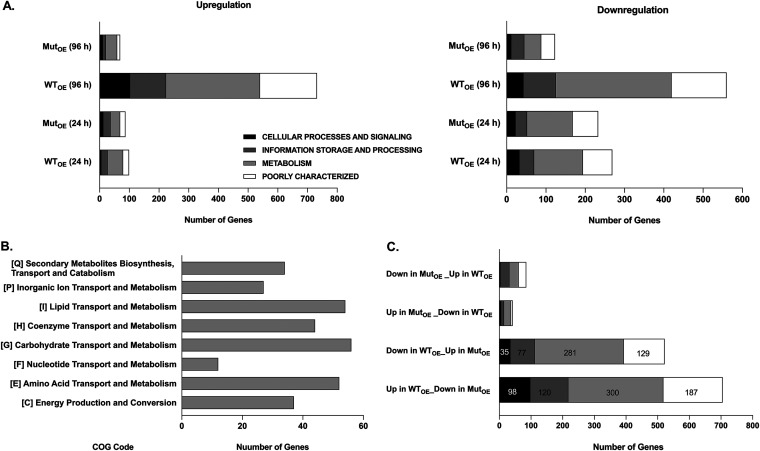
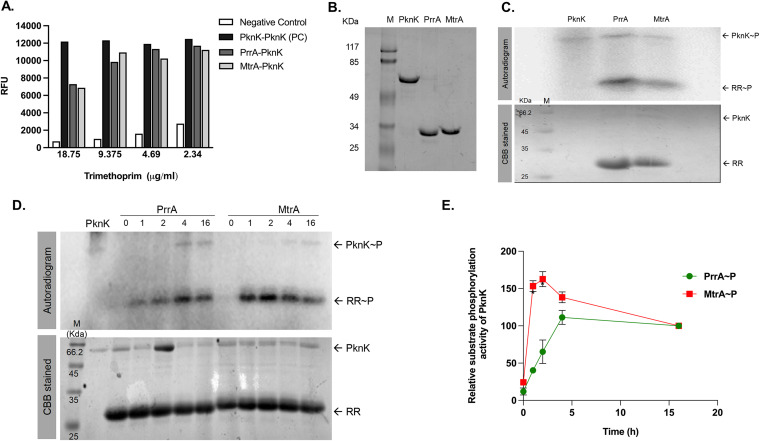
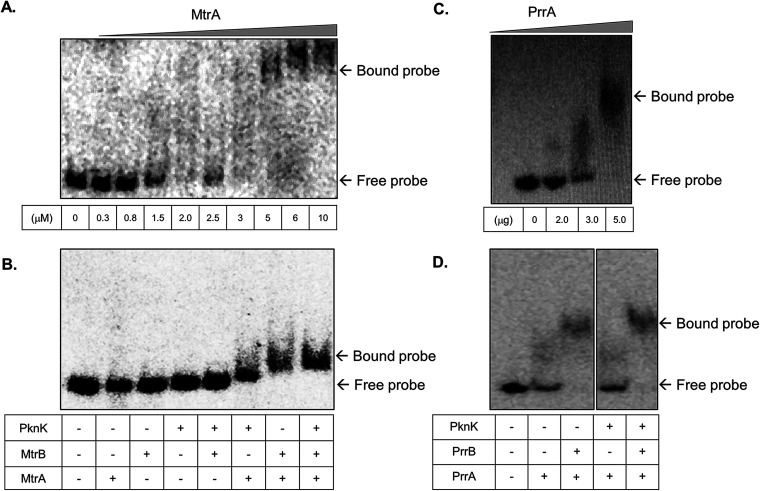
The Mycobacterium tuberculosis protein kinase K regulates growth adaptation by facilitating mycobacterial survival in response to a variety of and stress conditions. Here, we further add that transcription is responsive to carbon and nitrogen starvation signals. The increased survival of an M. tuberculosis Δ mutant strain under carbon- and nitrogen-limiting growth conditions compared to the wild-type (WT) H37Rv suggests an integral role of PknK in regulating growth during metabolic stress. To identify the downstream targets of PknK-mediated signaling, we compared phosphoproteomic and transcription profiles of mycobacterial strains overexpressing WT and phosphorylation-defective PknK. Results implicate PknK as a signaling protein that can regulate several enzymes involved in central metabolism, transcription regulation, and signal transduction. A key finding of this study was the identification of two essential two-component response regulator (RR) proteins, PrrA and MtrA, and Rho transcription terminator, as unique targets for PknK. We confirm that PknK interacts with and phosphorylates PrrA, MtrA, and Rho . PknK-mediated phosphorylation of MtrA appears to increase binding of the RR to the cognate probe DNA. However, dual phosphorylation of MtrA and PrrA response regulators by PknK and their respective cognate sensor kinases showed nominal additive effect on the mobility of the protein-DNA complex, suggesting the presence of a potential fine-tuning of the signal transduction pathway which might respond to multiple cues. Networks of gene regulation and signaling cascades are fundamental to the pathogenesis of Mycobacterium tuberculosis in adapting to the continuously changing intracellular environment in the host. M. tuberculosis protein kinase K is a transcription regulator that responds to diverse environmental signals and facilitates stress-induced growth adaptation in culture and during infection. This study identifies multiple signaling interactions of PknK and provides evidence that PknK can change the transcriptional landscape during growth transitions by connecting distinctly different signal transduction and regulatory pathways essential for mycobacterial survival.
结核分枝杆菌蛋白激酶 K 通过促进分枝杆菌在应对各种 和 应激条件下的存活来调节生长适应性。在这里,我们进一步添加了 转录对碳氮饥饿信号有反应。与野生型(WT)H37Rv 相比,结核分枝杆菌Δ突变株在碳氮限制生长条件下的存活增加表明 PknK 在代谢应激期间调节生长中起重要作用。为了确定 PknK 介导的信号转导的下游靶标,我们比较了过表达 WT 和磷酸化缺陷型 PknK 的分枝杆菌菌株的磷酸蛋白质组学和转录谱。结果表明,PknK 是一种信号蛋白,可以调节参与中心代谢、转录调节和信号转导的几种酶。这项研究的一个关键发现是鉴定了两个必需的双组分反应调节蛋白(RR)蛋白 PrrA 和 MtrA 以及 Rho 转录终止子,它们是 PknK 的独特靶标。我们证实 PknK 与 PrrA、MtrA 和 Rho 相互作用并磷酸化它们。PknK 介导的 MtrA 磷酸化似乎增加了 RR 与同源探针 DNA 的结合。然而,PknK 和它们各自的同源传感器激酶对 MtrA 和 PrrA RR 的双重磷酸化对蛋白-DNA 复合物的迁移没有明显的加性效应,这表明信号转导途径存在潜在的微调,可能对多种信号做出反应。基因调控和信号级联网络是结核分枝杆菌适应宿主内不断变化的细胞内环境从而导致发病的基础。结核分枝杆菌蛋白激酶 K 是一种转录调节剂,可响应多种环境信号并促进培养和感染过程中的应激诱导生长适应。本研究确定了 PknK 的多种信号相互作用,并提供了证据表明,PknK 可以通过连接对分枝杆菌存活至关重要的截然不同的信号转导和调节途径来改变生长转换期间的转录景观。