Institute for Infection and Immunity, St. George's, University of London, London, UK.
NIHR Health Protection Research Unit in Respiratory Infections, National Heart and Lung Institute, Imperial College London, London, UK.
Clin Exp Immunol. 2022 Jun 23;208(3):301-315. doi: 10.1093/cei/uxac032.
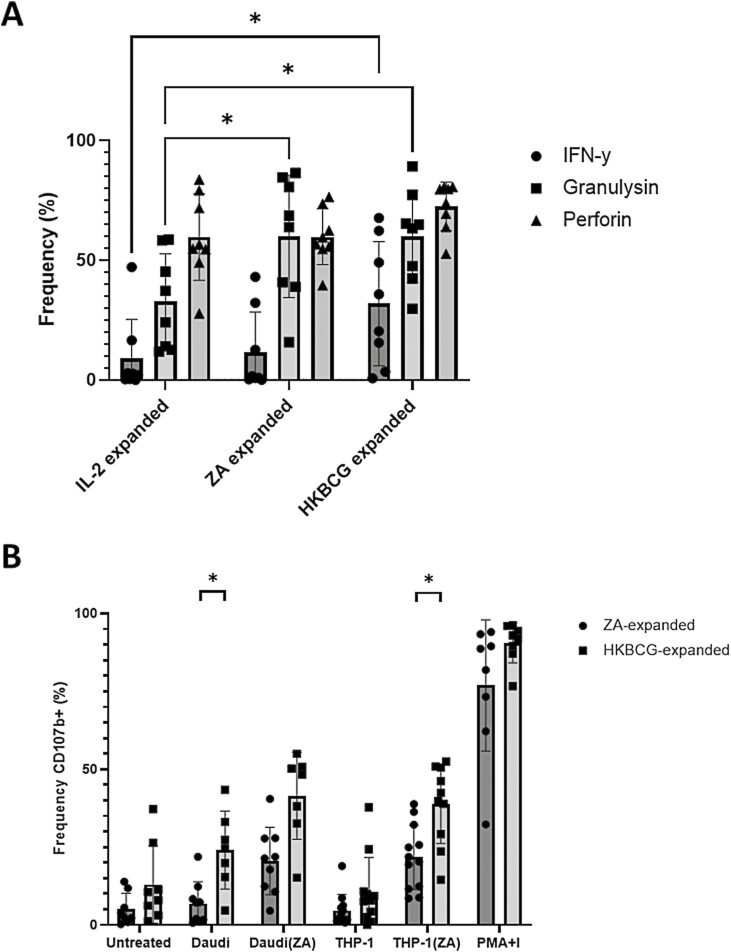
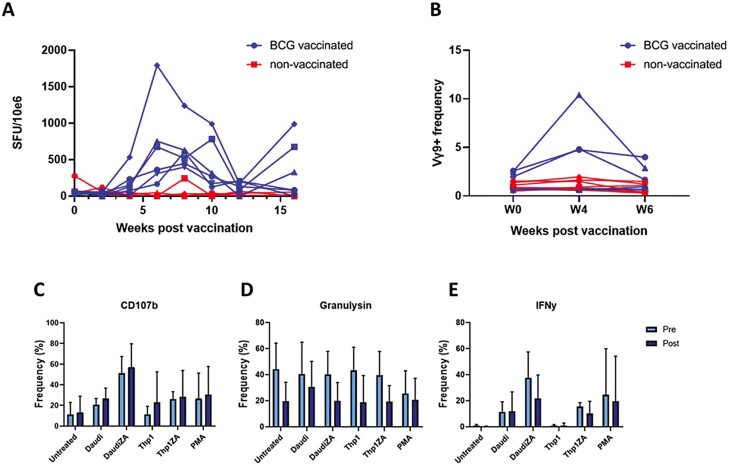
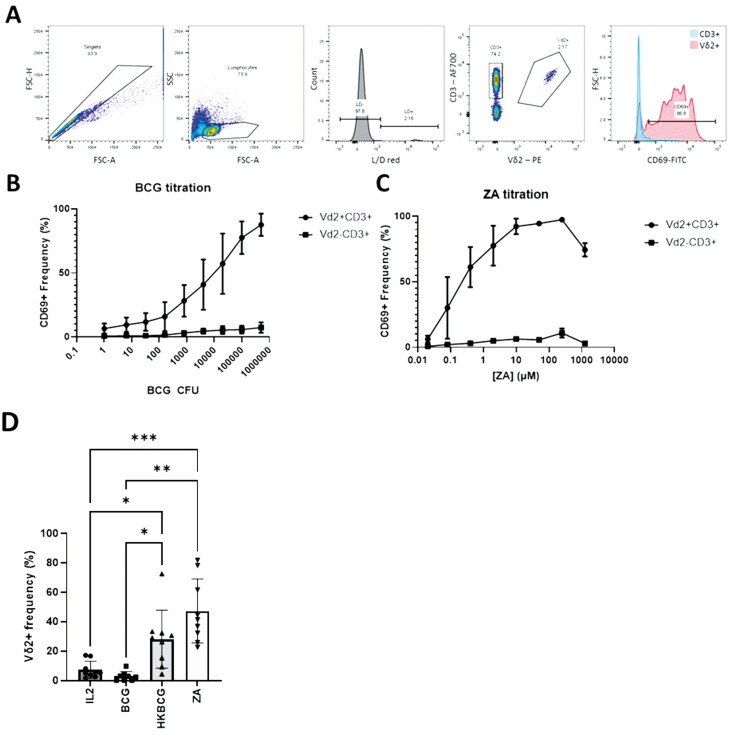
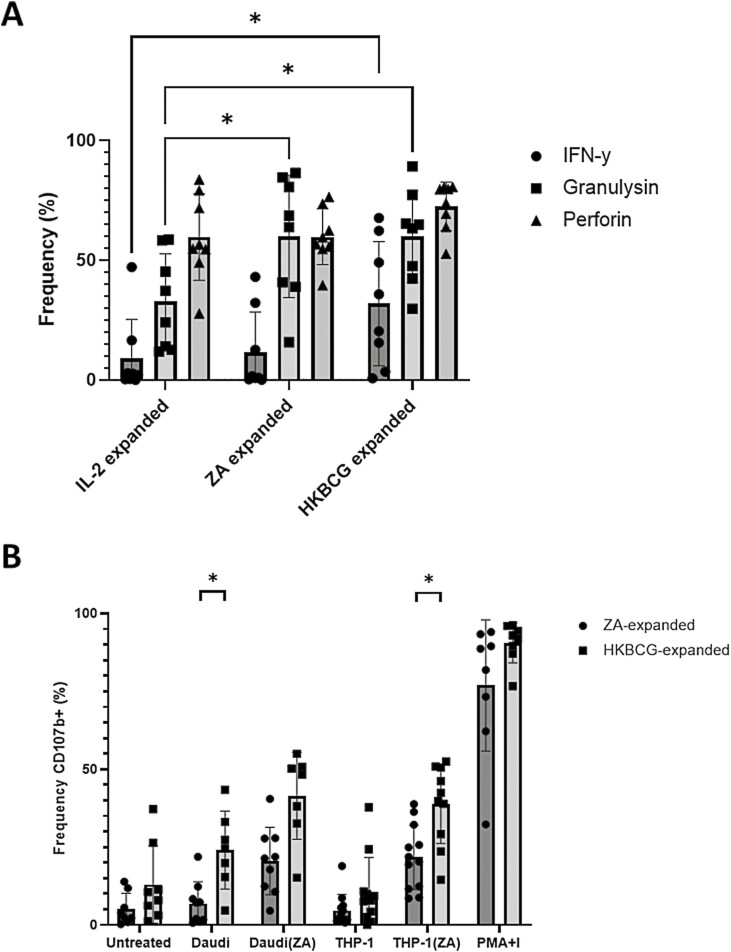
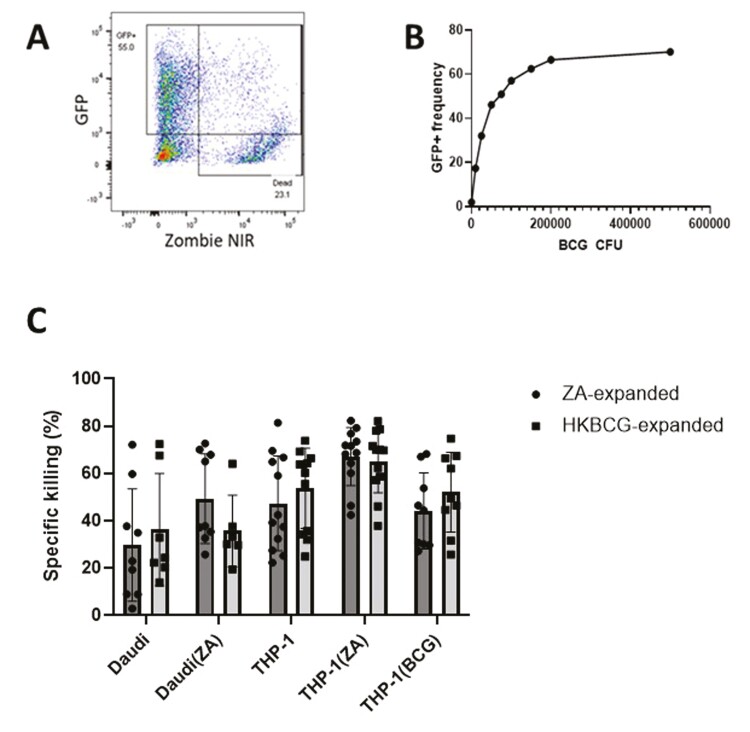
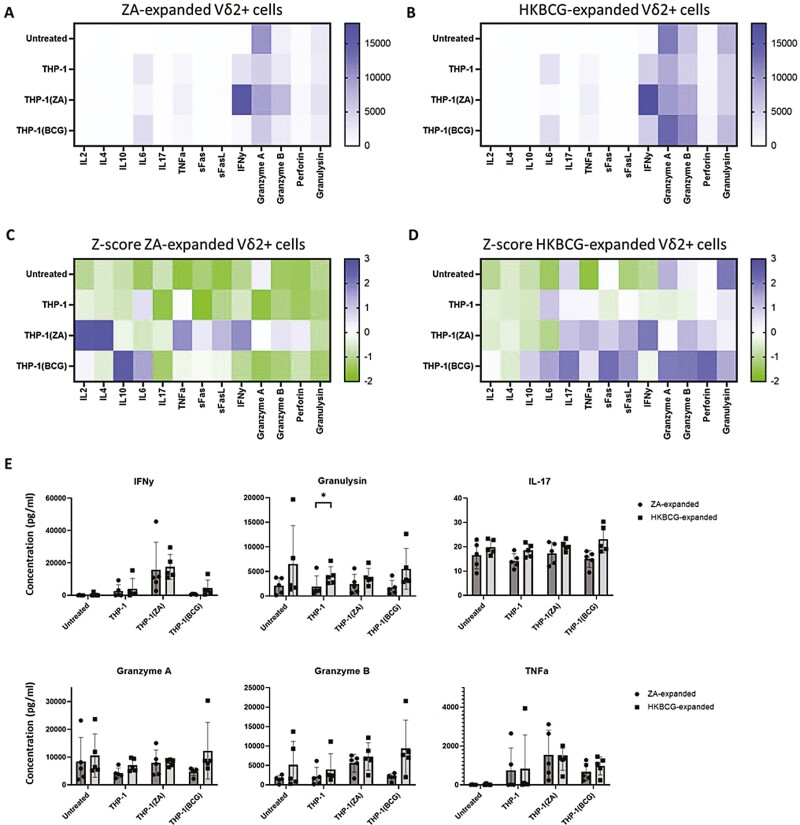
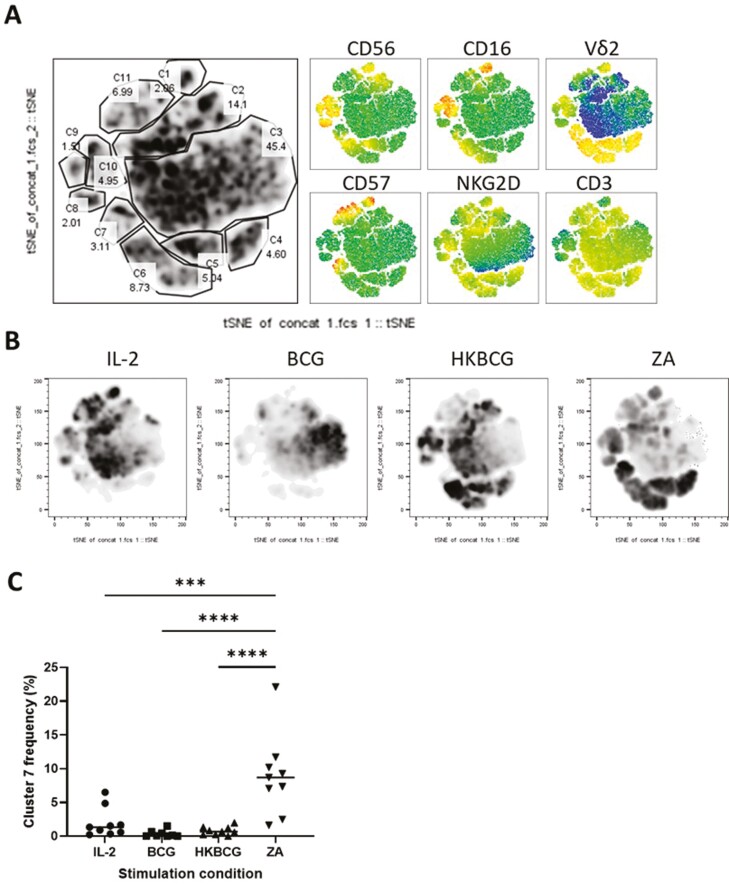
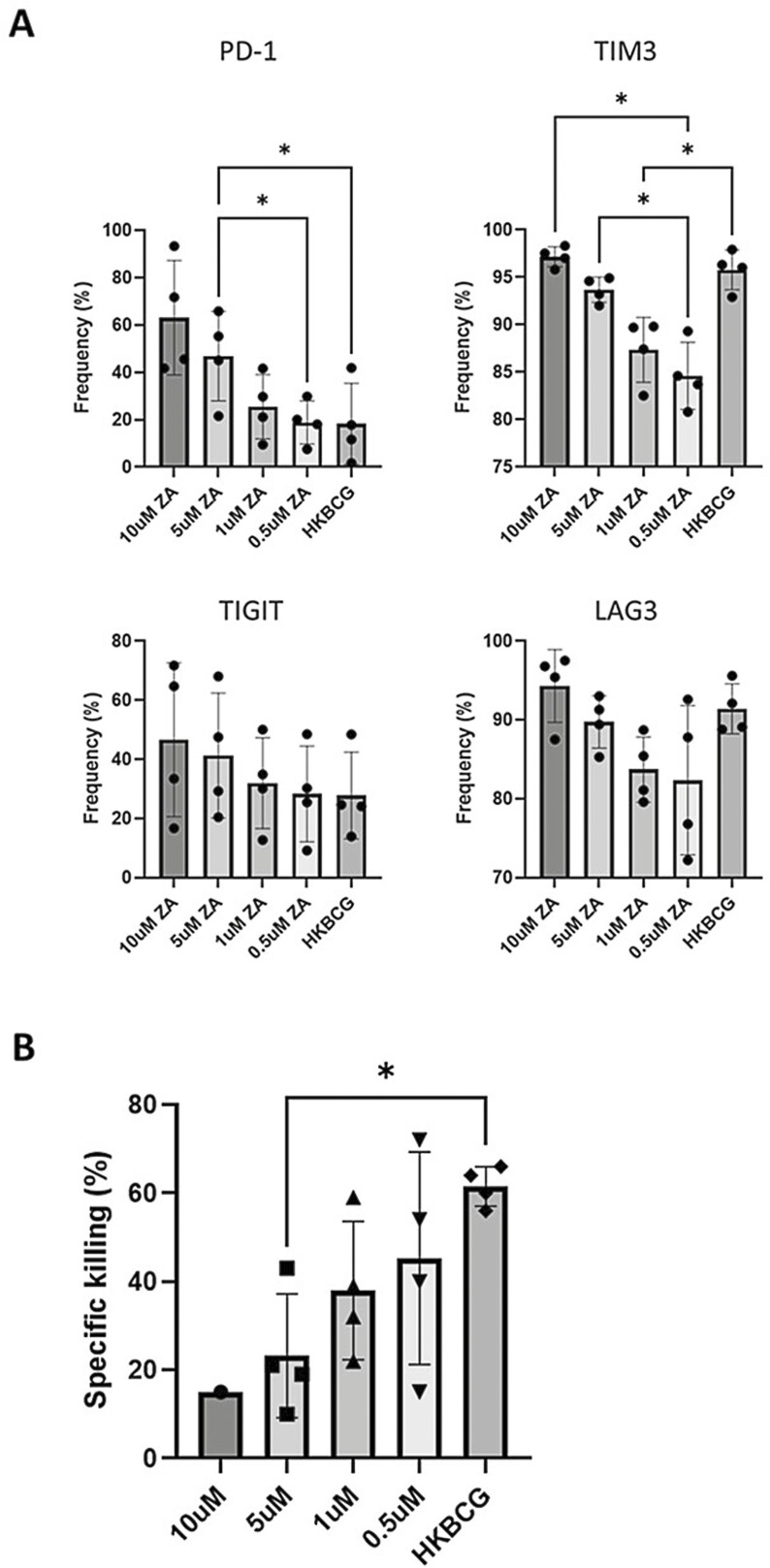
Vδ2+ T cells can recognize malignantly transformed cells as well as those infected with mycobacteria. This cross-reactivity supports the idea of using mycobacteria to manipulate Vδ2+ T cells in cancer immunotherapy. To date, therapeutic interventions using Vδ2+ T cells in cancer have involved expanding these cells in or ex vivo using zoledronic acid (ZA). Here, we show that the mycobacterium Bacillus Calmette-Guérin (BCG) also causes Vδ2+ T-cell expansion in vitro and that resulting Vδ2+ cell populations are cytotoxic toward tumour cell lines. We show that both ZA and BCG-expanded Vδ2+ cells effectively killed both Daudi and THP-1 cells. THP-1 cell killing by both ZA and BCG-expanded Vδ2+ cells was enhanced by treatment of targets cells with ZA. Although no difference in cytotoxic activity between ZA- and BCG-expanded Vδ2+ cells was observed, BCG-expanded cells degranulated more and produced a more diverse range of cytokines upon tumour cell recognition compared to ZA-expanded cells. ZA-expanded Vδ2+ cells were shown to upregulate exhaustion marker CD57 to a greater extent than BCG-expanded Vδ2+ cells. Furthermore, ZA expansion was associated with upregulation of inhibitory markers PD-1 and TIM3 in a dose-dependent manner whereas PD-1 expression was not increased following expansion using BCG. Intradermal BCG vaccination of rhesus macaques caused in vivo expansion of Vδ2+ cells. In combination with the aforementioned in vitro data, this finding suggests that BCG treatment could induce expansion of Vδ2+ T cells with enhanced anti-tumour potential compared to ZA treatment and that either ZA or BCG could be used intratumourally as a means to potentiate stronger anti-tumour Vδ2+ T-cell responses.
Vδ2+ T 细胞可以识别恶性转化细胞以及感染分枝杆菌的细胞。这种交叉反应支持使用分枝杆菌在癌症免疫治疗中操纵 Vδ2+ T 细胞的想法。迄今为止,使用 Vδ2+ T 细胞进行癌症治疗的治疗干预包括使用唑来膦酸(ZA)在体内或体外扩增这些细胞。在这里,我们表明分枝杆菌卡介苗(BCG)也会导致 Vδ2+ T 细胞在体外扩增,并且由此产生的 Vδ2+细胞群体对肿瘤细胞系具有细胞毒性。我们表明,ZA 和 BCG 扩增的 Vδ2+细胞均有效地杀死了 Daudi 和 THP-1 细胞。ZA 和 BCG 扩增的 Vδ2+细胞对靶细胞用 ZA 处理可增强对 THP-1 细胞的杀伤作用。尽管在 ZA 和 BCG 扩增的 Vδ2+细胞之间未观察到细胞毒性活性的差异,但与 ZA 扩增的细胞相比,BCG 扩增的细胞脱颗粒更多,并且在识别肿瘤细胞时产生更多种类的细胞因子。与 BCG 扩增的 Vδ2+细胞相比,ZA 扩增的 Vδ2+细胞显示出更大程度地上调耗竭标志物 CD57。此外,ZA 扩增与以剂量依赖性方式上调抑制性标记物 PD-1 和 TIM3 有关,而在用 BCG 扩增后 PD-1 表达没有增加。恒河猴皮内 BCG 疫苗接种导致体内 Vδ2+细胞扩增。结合上述体外数据,这一发现表明,与 ZA 治疗相比,BCG 治疗可能会诱导具有增强的抗肿瘤潜力的 Vδ2+ T 细胞扩增,并且 ZA 或 BCG 都可以作为一种在肿瘤内使用的方法来增强更强的抗肿瘤 Vδ2+ T 细胞反应。