Zhan Feili, Sun Lingxia, Zhao Gaiming, Li Miaoyun, Zhu Chaozhi
College of Food Science and Technology, Henan Agricultural University, Zhengzhou 450002, China.
Key Laboratory of Meat Processing and Quality and Safety Control of Henan Province, Zhengzhou 450002, China.
Foods. 2022 Mar 26;11(7):963. doi: 10.3390/foods11070963.
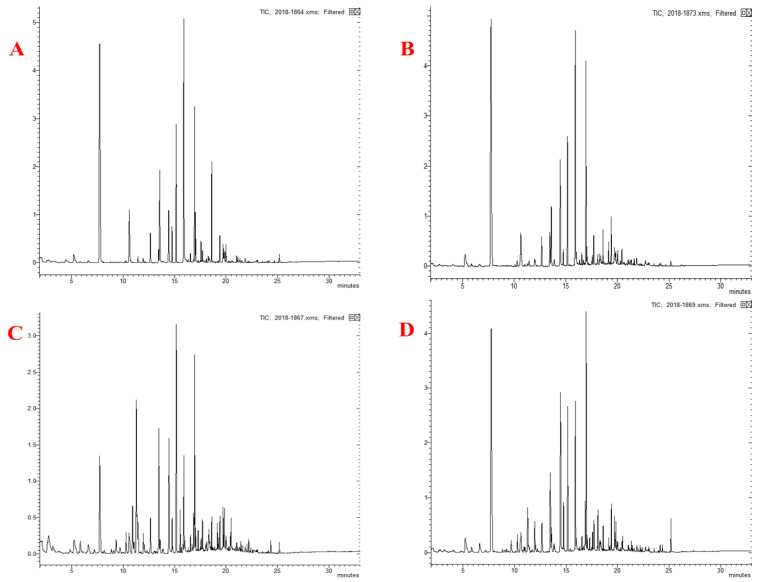
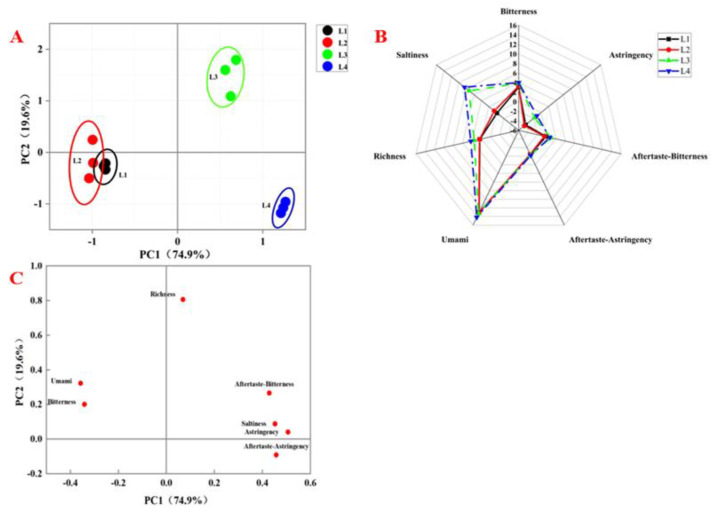
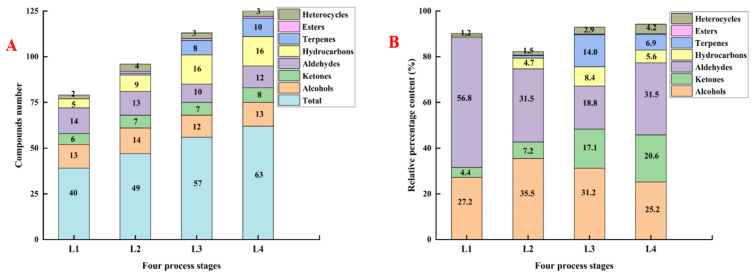
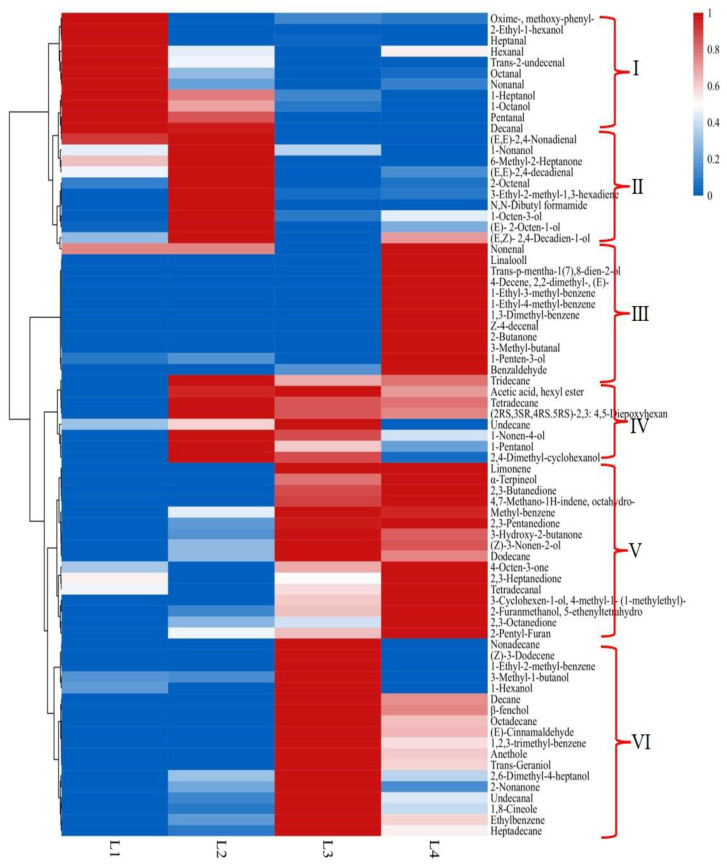
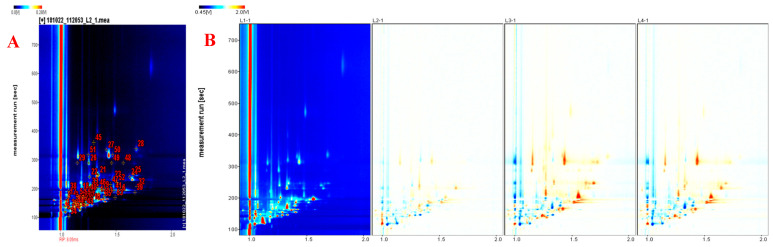
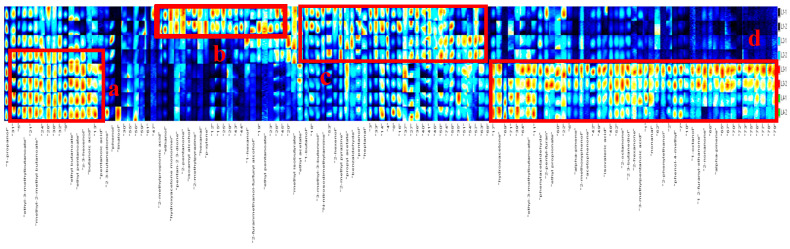
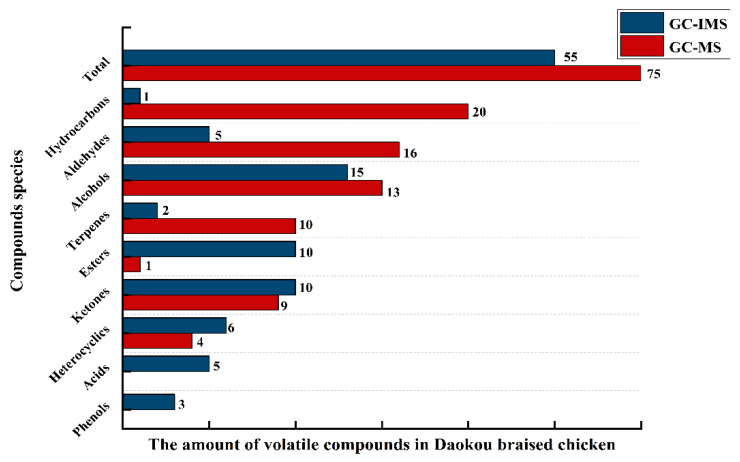
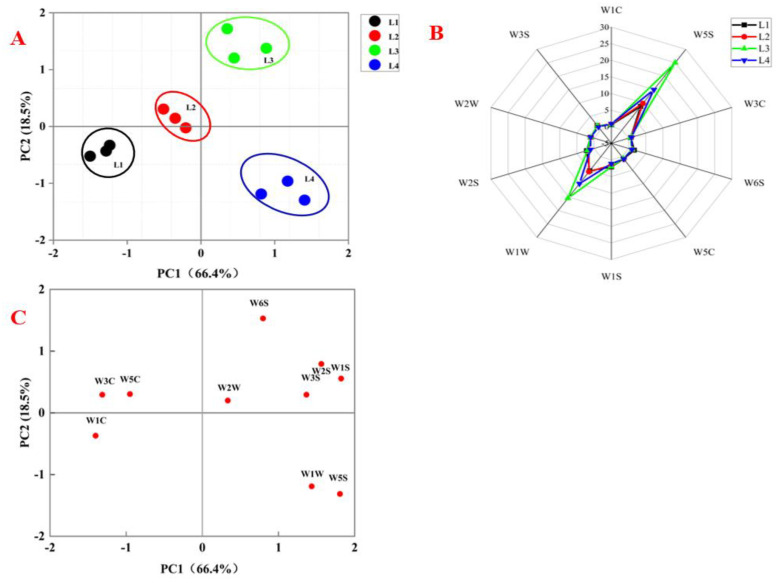
This study analyzed the changes of odor and taste in Daokou braised chicken during processing by GC-MS, GC-IMS, e-nose and e-tongue. The 75 and 55 volatile compounds identified in Daokou braised chicken by GC-MS and GC-IMS, respectively, included hydrocarbons, aldehydes, alcohols, terpenes, ketones, heterocyclics, esters, acids and phenols; among them, aldehydes, alcohols and ketones were the most abundant. The number and proportion of volatile compounds in Daokou braised chicken changed significantly (p < 0.05) in the process. The proportion of volatile compounds with animal fatty odor, such as aldehydes and alcohols, decreased, while that of esters, ketones and terpenes from spices with fruity fragrance increased, especially in the braising stage. An e-nose showed that the odor intensities of sulfur-containing and nitrogen oxide compounds were higher (p < 0.05) after the braising stage, but weakened after 2 h braising. An e-tongue showed that saltiness and richness increased significantly (p < 0.05) after braising. The results of these four techniques showed that braising promoted the release of flavor compounds, and was beneficial to salt penetration and umami release. However, long braising could lead to weakened flavor intensity and the introduction of bitterness and astringency. This study also found that GC-IMS and e-nose were more sensitive to trace compounds such as sulfur-containing and nitrogen oxide compounds, esters, acids and phenolics in Daokou braised chicken than GC-MS. The use of multiple technologies could provide more comprehensive flavor profiles for Daokou braised chicken during processing. This study provides insights into the control of flavor of Daokou braised chicken, and may be of practical relevance for the poultry industry.
本研究通过气相色谱-质谱联用仪(GC-MS)、气相色谱-离子迁移谱仪(GC-IMS)、电子鼻和电子舌分析道口烧鸡加工过程中的气味和味道变化。GC-MS和GC-IMS分别在道口烧鸡中鉴定出75种和55种挥发性化合物,包括烃类、醛类、醇类、萜类、酮类、杂环类、酯类、酸类和酚类;其中,醛类、醇类和酮类含量最为丰富。道口烧鸡中挥发性化合物的数量和比例在加工过程中发生了显著变化(p<0.05)。具有动物脂肪气味的挥发性化合物(如醛类和醇类)的比例下降,而来自香料的具有果香的酯类、酮类和萜类的比例增加,尤其是在炖煮阶段。电子鼻显示,炖煮阶段后含硫和氮氧化物化合物的气味强度较高(p<0.05),但炖煮2小时后减弱。电子舌显示,炖煮后咸味和丰富度显著增加(p<0.05)。这四种技术的结果表明,炖煮促进了风味化合物的释放,有利于盐分渗透和鲜味释放。然而,长时间炖煮会导致风味强度减弱,并引入苦味和涩味。本研究还发现,GC-IMS和电子鼻比GC-MS对道口烧鸡中的痕量化合物(如含硫和氮氧化物化合物、酯类和酚类)更敏感。多种技术的使用可以为道口烧鸡加工过程提供更全面的风味特征。本研究为道口烧鸡风味的控制提供了见解,可能对家禽行业具有实际意义。