College of Chemistry and Materials Engineering, Hunan University of Arts and Science, Changde 415000, China.
College of Chemistry and Chemical Engineering, Henan Institute of Science and Technology, Xinxiang 453000, China.
Molecules. 2022 Apr 6;27(7):2353. doi: 10.3390/molecules27072353.
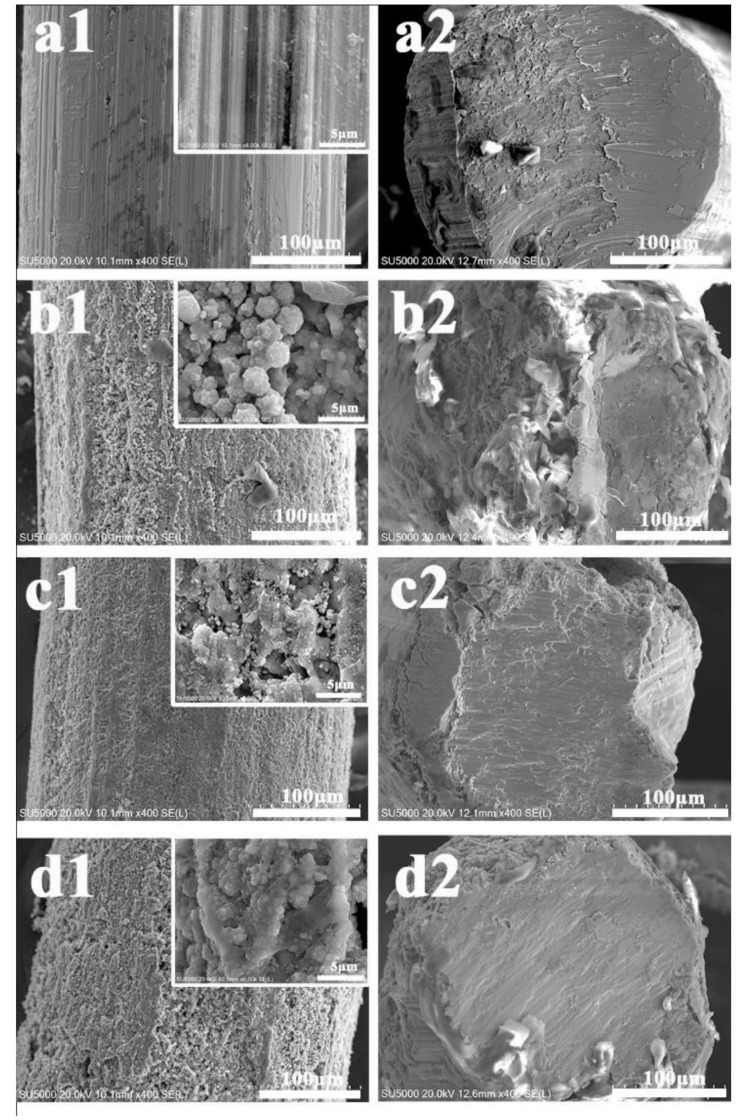
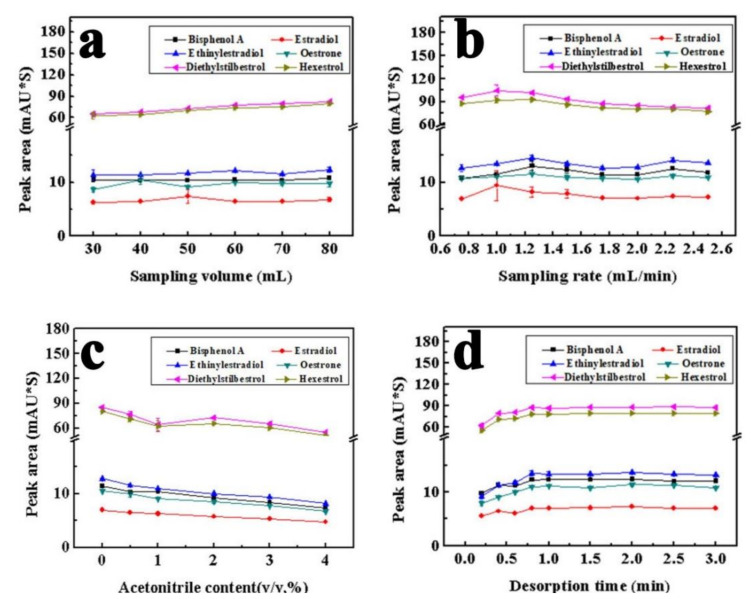
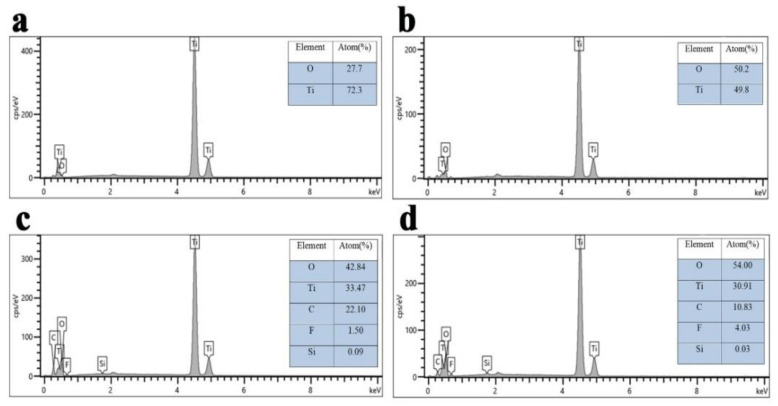
Evaluation of the hydrophobic/hydrophilic interaction individually between the sorbent and target compounds in sample pretreatment is a big challenge. Herein, a smart titanium substrate with switchable surface wettability was fabricated and selected as the sorbent for the solution. The titanium wires and meshes were fabricated by simple hydrothermal etching and chemical modification so as to construct the superhydrophilic and superhydrophobic surfaces. The micro/nano hierarchical structures of the formed TiO nanoparticles in situ on the surface of Ti substrates exhibited the switchable surface wettability. After UV irradiation for about 15.5 h, the superhydrophobic substrates became superhydrophilic. The morphologies and element composition of the wires were observed by SEM, EDS, and XRD, and their surface wettabilities were measured using the Ti mesh by contact angle goniometer. The pristine hydrophilic wire, the resulting superhydrophilic wire, superhydrophobic wire, and the UV-irradiated superhydrophilic wire were filled into a stainless tube as the sorbent instead of the sample loop of a six-port valve for on-line in-tube solid-phase microextraction. When employed in conjunction with HPLC, four kinds of wires were comparatively applied to extract six estrogens in water samples. The optimal conditions for the preconcentration and separation of target compounds were obtained with a sample volume of 60 mL, an injection rate of 2 mL/min, a desorption time of 2 min, and a mobile phase of acetonile/water (47/53, ). The results showed that both the superhydrophilic wire and UV-irradiated wire had the highest extraction efficiency for the polar compounds of estrogens with the enrichment factors in the range of 20-177, while the superhydrophobic wire exhibited the highest extraction efficiency for the non-polar compounds of five polycyclic aromatic hydrocarbons (PAHs). They demonstrated that extraction efficiency was mainly dependent on the surface wettability of the sorbent and the polarity of the target compounds, which was in accordance with the molecular theory of like dissolves like.
评价样品预处理中吸附剂与目标化合物之间的疏水/亲水相互作用是一个巨大的挑战。本文制备了一种智能钛基,具有可切换表面润湿性,并将其选为溶液中的吸附剂。钛丝和网通过简单的水热蚀刻和化学修饰来制造,以构建超亲水和超疏水表面。钛基表面原位形成的 TiO 纳米粒子的微/纳分级结构表现出可切换的表面润湿性。经约 15.5 h 的紫外光照射后,超疏水基底变为超亲水。用 SEM、EDS 和 XRD 观察丝的形貌和元素组成,用接触角测角仪测量 Ti 网的表面润湿性。原始亲水丝、所得超亲水丝、超疏水丝和经紫外光照射的超亲水丝被填充到不锈钢管中作为吸附剂,而不是六通阀的样品环,用于在线内管固相微萃取。当与 HPLC 结合使用时,将这四种丝分别用于提取水样中的六种雌激素。通过优化,在 60 mL 样品体积、2 mL/min 进样速度、2 min 洗脱时间和乙腈/水(47/53,)的流动相条件下,目标化合物的预浓缩和分离达到最佳条件。结果表明,亲水丝和经紫外光照射的丝对雌激素的极性化合物具有最高的萃取效率,其富集因子在 20-177 范围内,而超疏水丝对 5 种多环芳烃(PAHs)的非极性化合物具有最高的萃取效率。这表明萃取效率主要取决于吸附剂的表面润湿性和目标化合物的极性,这与相似相溶的分子理论一致。