Hou Xuanxuan, Chen Moxian, Chen Yinke, Hou Xin, Jia Zichang, Yang Xue, Zhang Jianhua, Liu Yinggao, Ye Nenghui
College of Agriculture, Hunan Agricultural University, Changsha 410128, China.
Co-Innovation Center for Sustainable Forestry in Southern China & Key Laboratory of National Forestry and Grassland Administration on Subtropical Forest Biodiversity Conservation, College of Biology and the Environment, Nanjing Forestry University, Nanjing 210037, China.
Int J Mol Sci. 2022 Mar 24;23(7):3526. doi: 10.3390/ijms23073526.
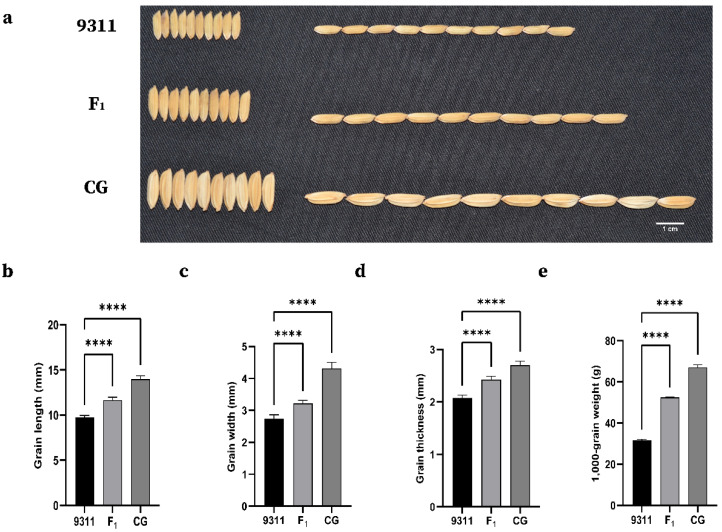
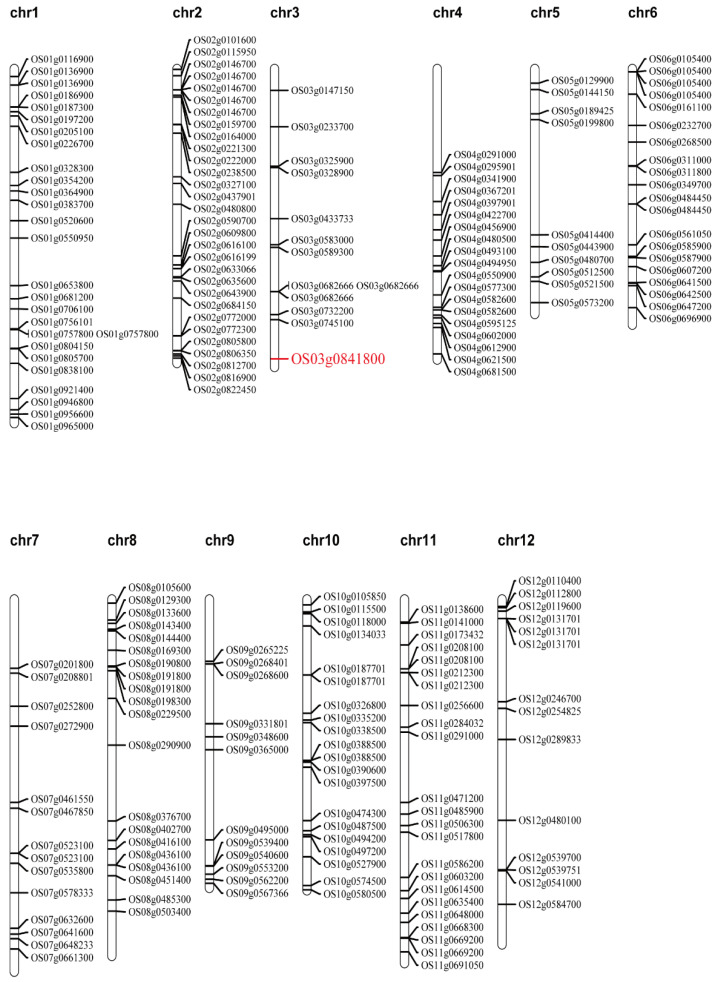
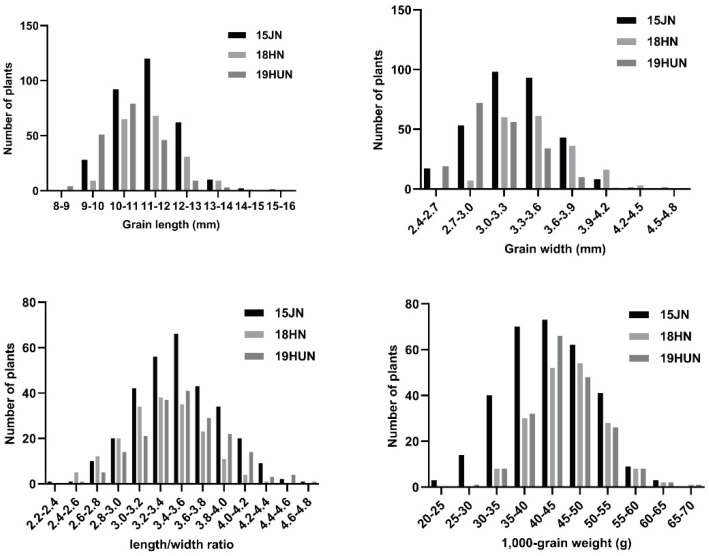
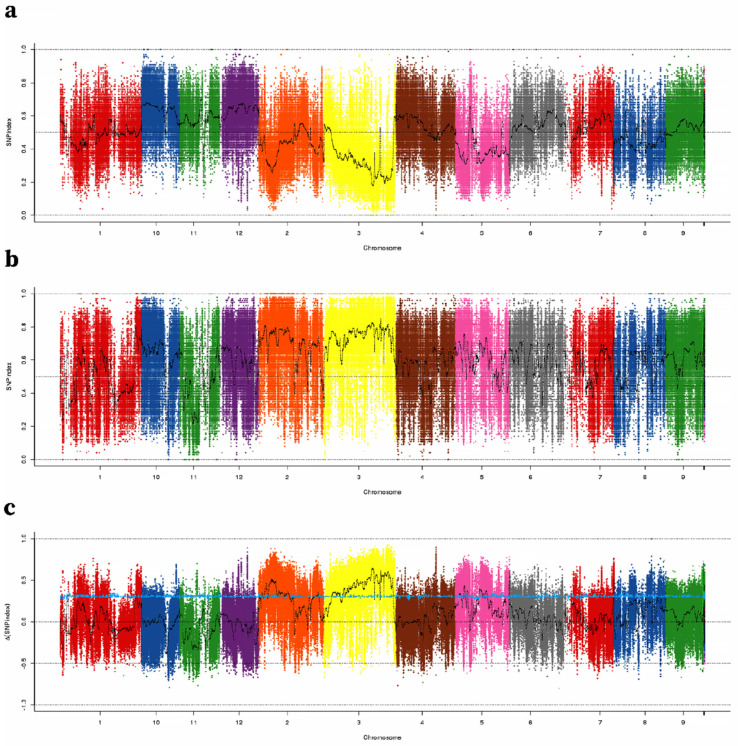
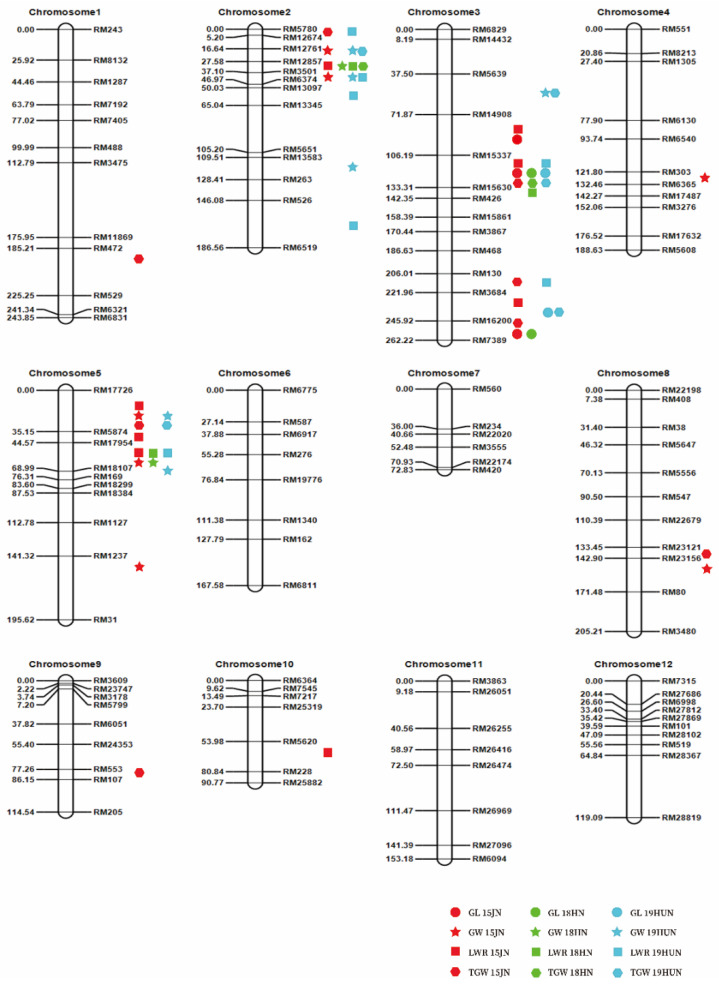
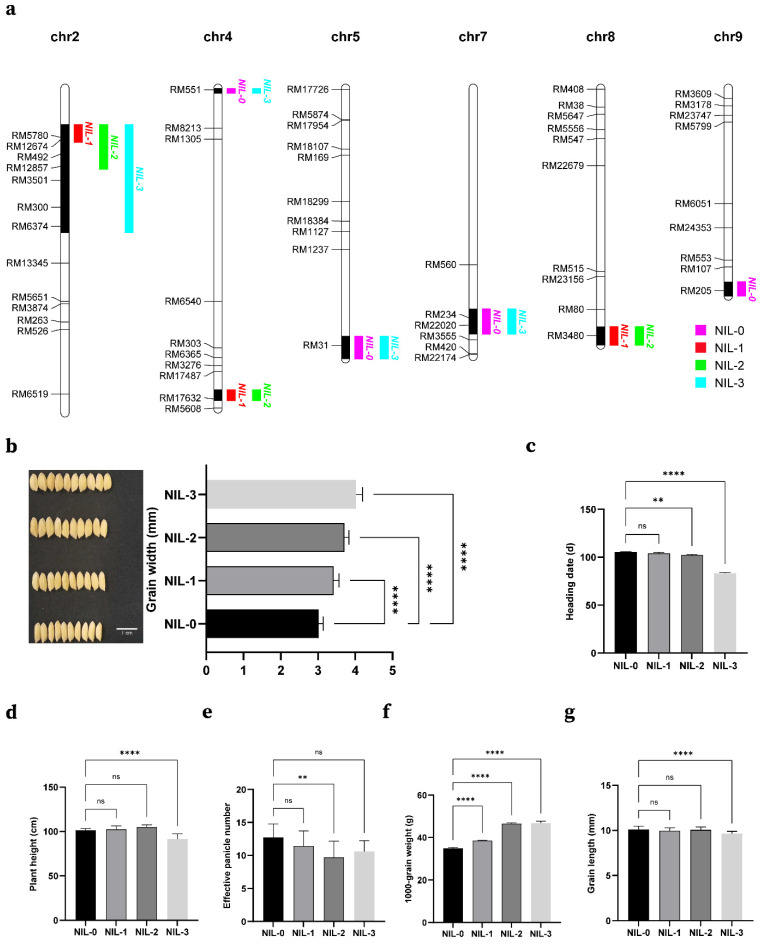
Grain size is an important component of quality and harvest traits in the field of rice breeding. Although numerous quantitative trait loci (QTLs) of grain size in rice have been reported, the molecular mechanisms of these QTLs remain poorly understood, and further research on QTL observation and candidate gene identification is warranted. In our research, we developed a suite of F2 intercross populations from a cross of 9311 and CG. These primary populations were used to map QTLs conferring grain size, evaluated across three environments, and then subjected to bulked-segregant analysis-seq (BSA-seq). In total, 4, 11, 12 and 14 QTLs for grain length (GL), grain width (GW), 1000-grain weight (TGW), and length/width ratio (LWR), respectively, were detected on the basis of a single-environment analysis. In particular, over 200 splicing-related sites were identified by whole-genome sequencing, including one splicing-site mutation with G>A at the beginning of intron 4 on Os03g0841800 (qGL3.3), producing a smaller open reading frame, without the third and fourth exons. A previous study revealed that the loss-of-function allele caused by this splicing site can negatively regulate rice grain length. Furthermore, qTGW2.1 and qGW2.3 were new QTLs for grain width. We used the near-isogenic lines (NILs) of these GW QTLs to study their genetic effects on individuals and pyramiding, and found that they have additive effects on GW. In summary, these discoveries provide a valuable genetic resource, which will facilitate further study of the genetic polymorphism of new rice varieties in rice breeding.
粒型是水稻育种领域品质和收获性状的重要组成部分。尽管已报道了许多水稻粒型的数量性状位点(QTL),但这些QTL的分子机制仍知之甚少,因此有必要对QTL观察和候选基因鉴定进行进一步研究。在我们的研究中,我们从9311和CG的杂交中开发了一套F2杂交群体。这些初级群体用于定位控制粒型的QTL,在三种环境中进行评估,然后进行混合分组分析法测序(BSA-seq)。基于单环境分析,总共检测到分别控制粒长(GL)、粒宽(GW)、千粒重(TGW)和长宽比(LWR)的4个、11个、12个和14个QTL。特别是,通过全基因组测序鉴定了200多个与剪接相关的位点,包括在Os03g0841800(qGL3.3)第4内含子起始处发生G>A的一个剪接位点突变,产生了一个较小的开放阅读框,缺少第三和第四外显子。先前的一项研究表明,由该剪接位点引起的功能缺失等位基因可负调控水稻粒长。此外,qTGW2.1和qGW2.3是控制粒宽的新QTL。我们利用这些粒宽QTL的近等基因系(NIL)研究它们对个体和聚合的遗传效应,发现它们对粒宽具有加性效应。总之,这些发现提供了宝贵的遗传资源,将有助于在水稻育种中进一步研究新水稻品种的遗传多态性。