Baldanzi Gianluca
Department of Translational Medicine, University of Piemonte Orientale, 28100 Novara, Italy.
Center for Translational Research on Allergic and Autoimmune Diseases (CAAD), University of Piemonte Orientale, 28100 Novara, Italy.
Int J Mol Sci. 2022 Mar 24;23(7):3529. doi: 10.3390/ijms23073529.
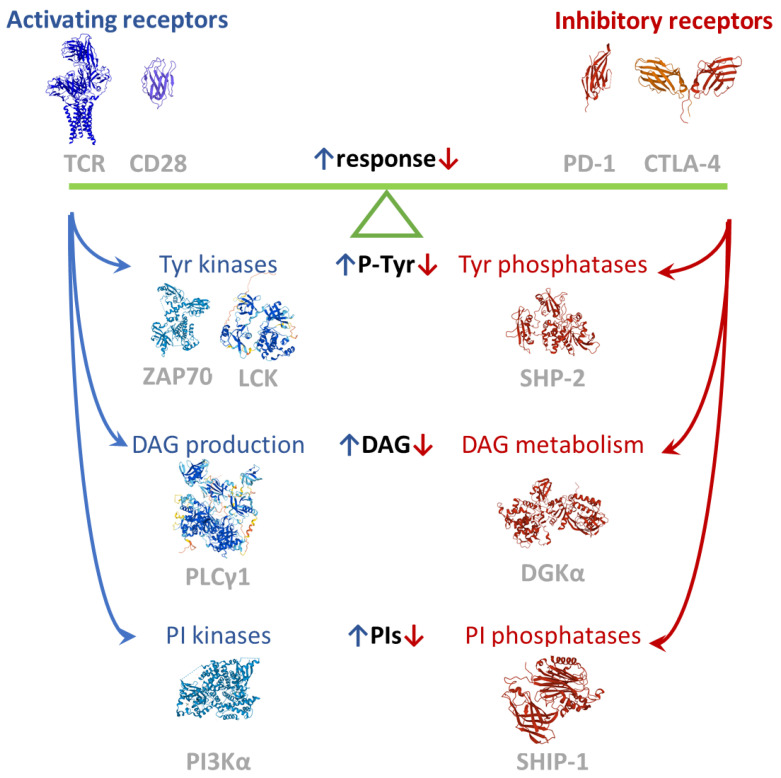
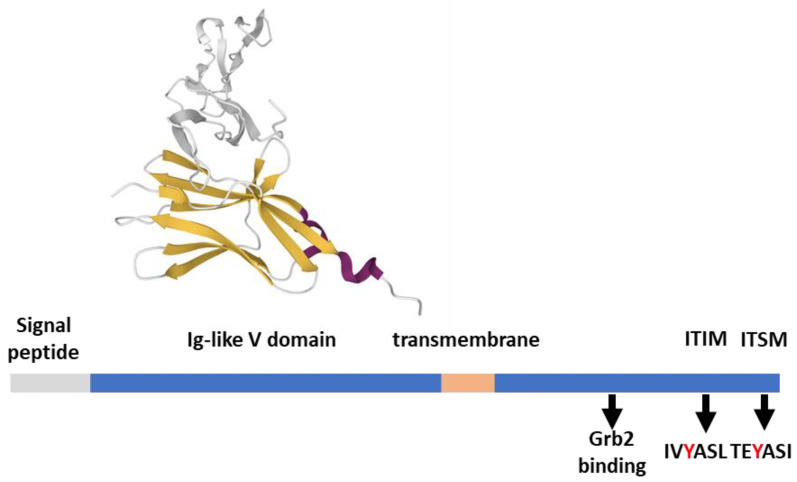
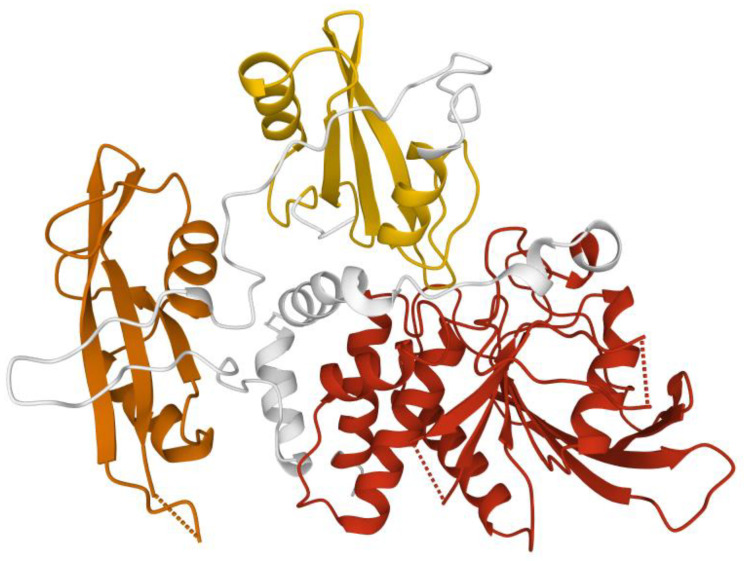
The characterization of the receptors negatively modulating lymphocyte function is rapidly advancing, driven by success in tumor immunotherapy. As a result, the number of immune checkpoint receptors characterized from a functional perspective and targeted by innovative drugs continues to expand. This review focuses on the less explored area of the signaling mechanisms of these receptors, of those expressed in T cells. Studies conducted mainly on PD-1, CTLA-4, and BTLA have evidenced that the extracellular parts of some of the receptors act as decoy receptors for activating ligands, but in all instances, the tyrosine phosphorylation of their cytoplasmatic tail drives a crucial inhibitory signal. This negative signal is mediated by a few key signal transducers, such as tyrosine phosphatase, inositol phosphatase, and diacylglycerol kinase, which allows them to counteract TCR-mediated activation. The characterization of these signaling pathways is of great interest in the development of therapies for counteracting tumor-infiltrating lymphocyte exhaustion/anergy independently from the receptors involved.
在肿瘤免疫治疗取得成功的推动下,对负向调节淋巴细胞功能的受体的表征正在迅速发展。因此,从功能角度表征并被创新药物靶向的免疫检查点受体的数量持续增加。本综述聚焦于这些受体(尤其是在T细胞中表达的受体)信号传导机制中较少被探索的领域。主要针对PD-1、CTLA-4和BTLA开展的研究表明,某些受体的胞外部分充当激活配体的诱饵受体,但在所有情况下,其胞质尾的酪氨酸磷酸化驱动关键的抑制信号。这个负向信号由一些关键信号转导分子介导,如酪氨酸磷酸酶、肌醇磷酸酶和二酰基甘油激酶,这使它们能够抵消TCR介导的激活。这些信号通路的表征对于开发独立于相关受体来对抗肿瘤浸润淋巴细胞耗竭/无反应性的疗法具有重要意义。