Department of Neurosciences, Science of Reproduction and Odontostomatology, University of Naples Federico II, 80131 Naples, Italy.
Division of Urology, AORN "San Giuseppe Moscati", 83100 Avellino, Italy.
Int J Mol Sci. 2022 Mar 24;23(7):3535. doi: 10.3390/ijms23073535.
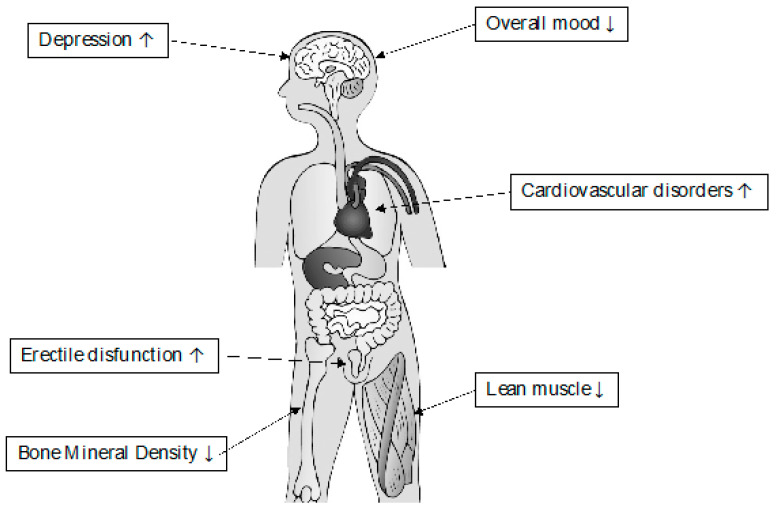
Testosterone is the most important hormone in male health. Aging is characterized by testosterone deficiency due to decreasing testosterone levels associated with low testicular production, genetic factors, adiposity, and illness. Low testosterone levels in men are associated with sexual dysfunction (low sexual desire, erectile dysfunction), reduced skeletal muscle mass and strength, decreased bone mineral density, increased cardiovascular risk and alterations of the glycometabolic profile. Testosterone replacement therapy (TRT) shows several therapeutic effects while maintaining a good safety profile in hypogonadal men. TRT restores normal levels of serum testosterone in men, increasing libido and energy level and producing beneficial effects on bone density, strength and muscle as well as yielding cardioprotective effects. Nevertheless, TRT could be contraindicated in men with untreated prostate cancer, although poor findings are reported in the literature. In addition, different potential side effects, such as polycythemia, cardiac events and obstructive sleep apnea, should be monitored. The aim of our review is to provide an updated background regarding the pros and cons of TRT, evaluating its role and its clinical applicability in different domains.
睾酮是男性健康中最重要的激素。随着睾丸产生的睾酮水平下降、遗传因素、肥胖和疾病等原因,男性会出现睾酮缺乏,这是衰老的特征。男性的低睾酮水平与性功能障碍(性欲低下、勃起功能障碍)、骨骼肌质量和力量减少、骨密度降低、心血管风险增加以及糖代谢谱改变有关。睾酮替代疗法(TRT)在维持低睾酮男性良好安全性的同时,具有多种治疗效果。TRT 可恢复男性血清睾酮的正常水平,提高性欲和能量水平,并对骨密度、强度和肌肉产生有益影响,还具有心脏保护作用。然而,未经治疗的前列腺癌患者可能不适合接受 TRT,尽管文献中报告了不良结果。此外,还应监测潜在的不良反应,如红细胞增多症、心脏事件和阻塞性睡眠呼吸暂停。我们的综述旨在提供有关 TRT 的优缺点的最新背景信息,评估其在不同领域的作用及其临床适用性。