State Key Laboratory of Subtropical Silviculture, College of Forestry and Biotechnology, Zhejiang A & F University, Hangzhou 311300, China.
Int J Mol Sci. 2022 Apr 1;23(7):3945. doi: 10.3390/ijms23073945.
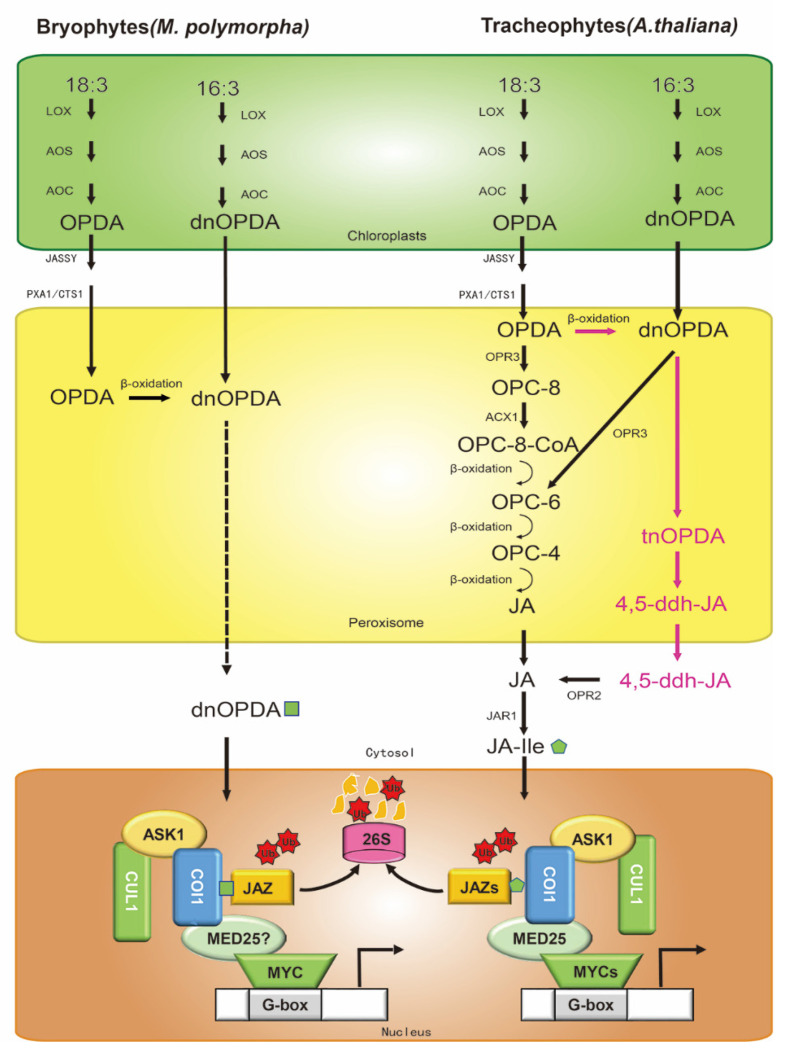
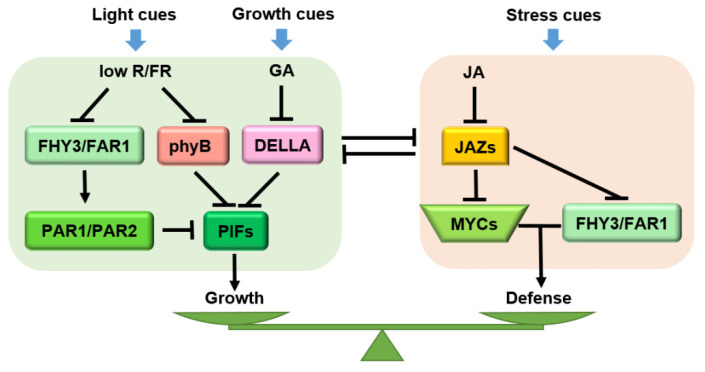
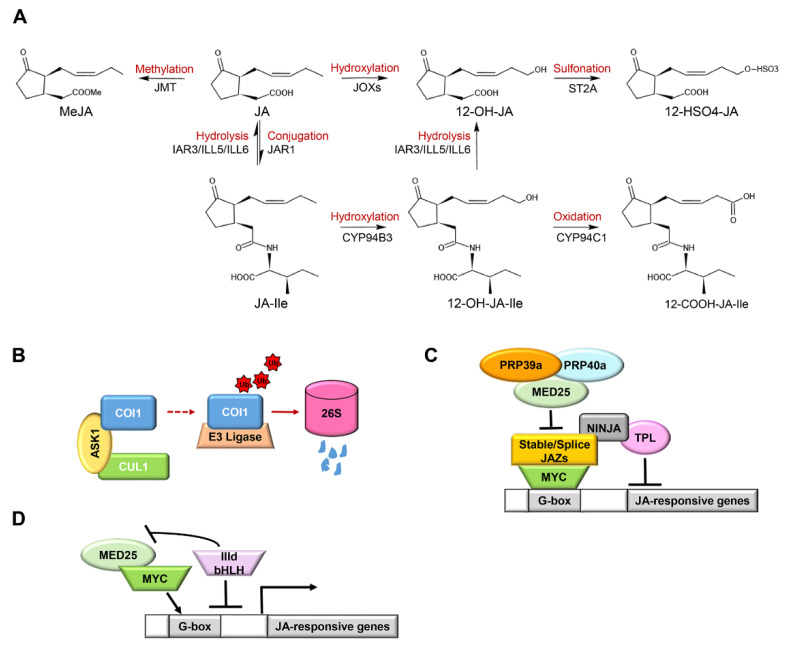
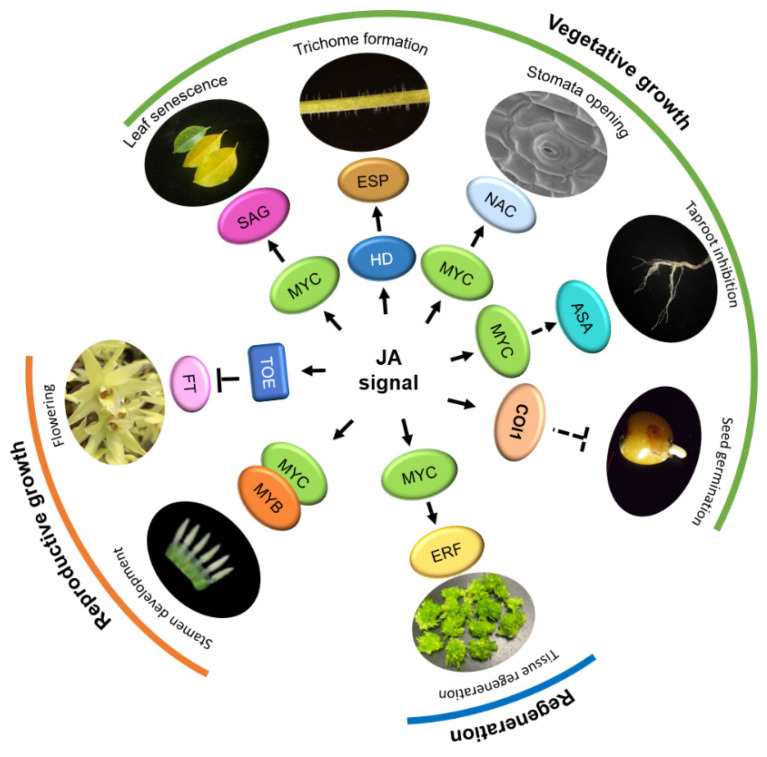
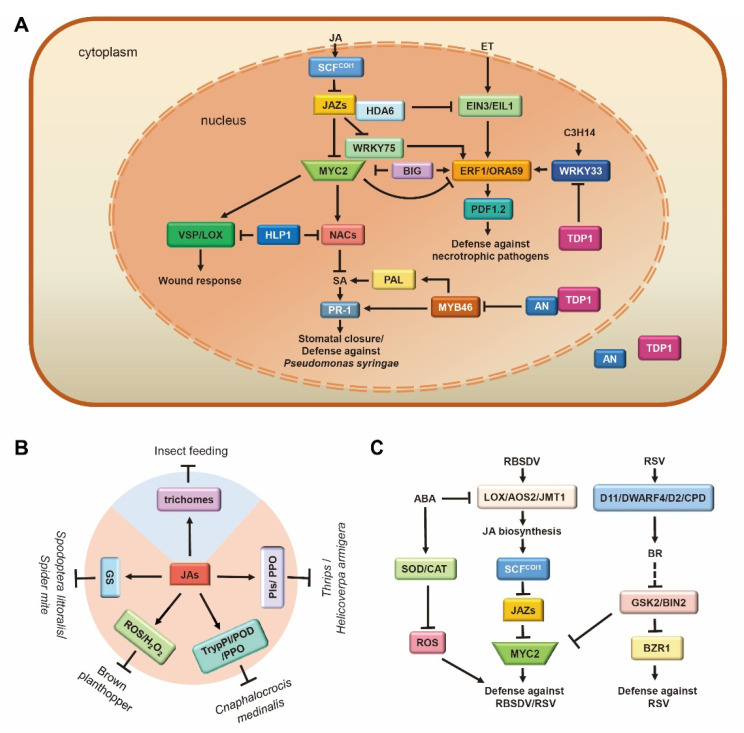
Lipid-derived jasmonates (JAs) play a crucial role in a variety of plant development and defense mechanisms. In recent years, significant progress has been made toward understanding the JA signaling pathway. In this review, we discuss JA biosynthesis, as well as its core signaling pathway, termination mechanisms, and the evolutionary origin of JA signaling. JA regulates not only plant regeneration, reproductive growth, and vegetative growth but also the responses of plants to stresses, including pathogen as well as virus infection, herbivore attack, and abiotic stresses. We also focus on the JA signaling pathway, considering its crosstalk with the gibberellin (GA), auxin, and phytochrome signaling pathways for mediation of the trade-offs between growth and defense. In summary, JA signals regulate multiple outputs of plant defense and growth and act to balance growth and defense in order to adapt to complex environments.
脂衍生茉莉酸(JAs)在植物发育和防御机制的多个方面发挥着关键作用。近年来,人们在理解 JA 信号通路方面取得了重大进展。在这篇综述中,我们讨论了 JA 的生物合成以及其核心信号通路、终止机制和 JA 信号的进化起源。JA 不仅调节植物再生、生殖生长和营养生长,还调节植物对胁迫的反应,包括病原体和病毒感染、食草动物攻击以及非生物胁迫。我们还重点关注 JA 信号通路,考虑其与赤霉素(GA)、生长素和光敏色素信号通路的串扰,以介导生长和防御之间的权衡。总之,JA 信号调节植物防御和生长的多种输出,并作用于平衡生长和防御,以适应复杂的环境。