Poche Centre for Indigenous Health, School of Indigenous Studies, The University of Western Australia, Crawley, WA 6009, Australia.
Relationships Australia WA, West Leederville, WA 6007, Australia; Langford Aboriginal Association, Langford, WA 6147, Australia.
Int J Environ Res Public Health. 2022 Mar 29;19(7):4078. doi: 10.3390/ijerph19074078.
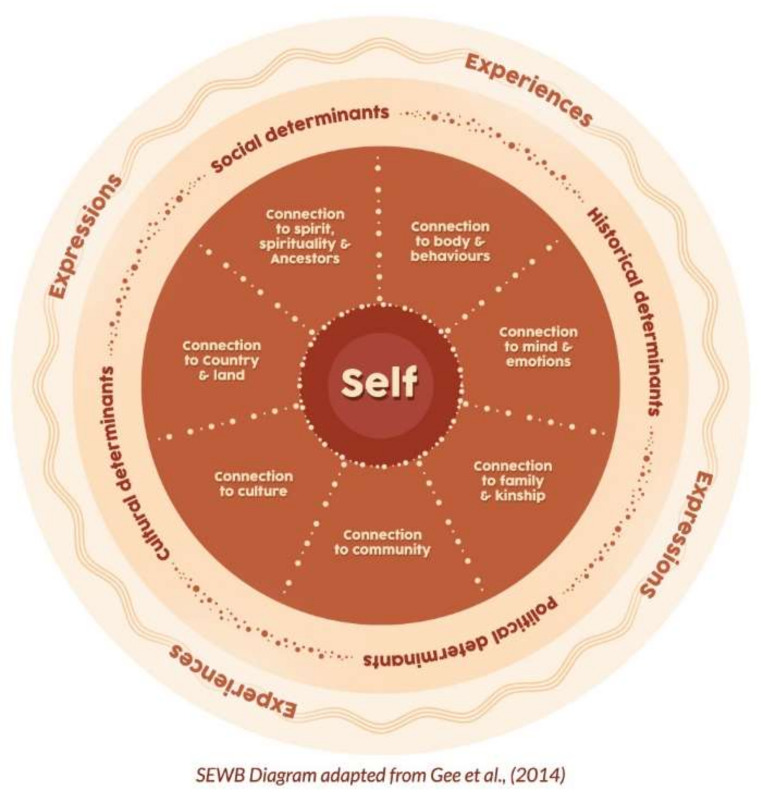
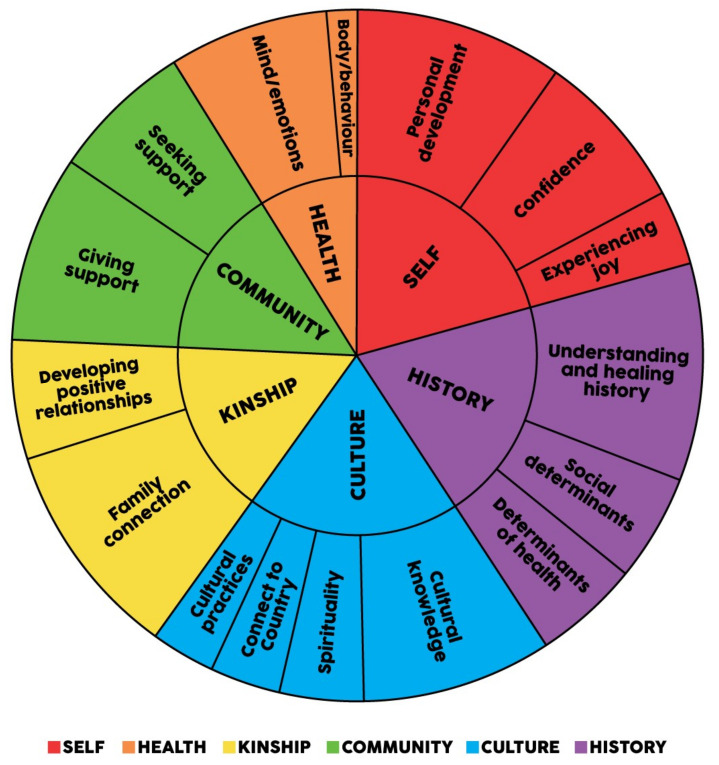
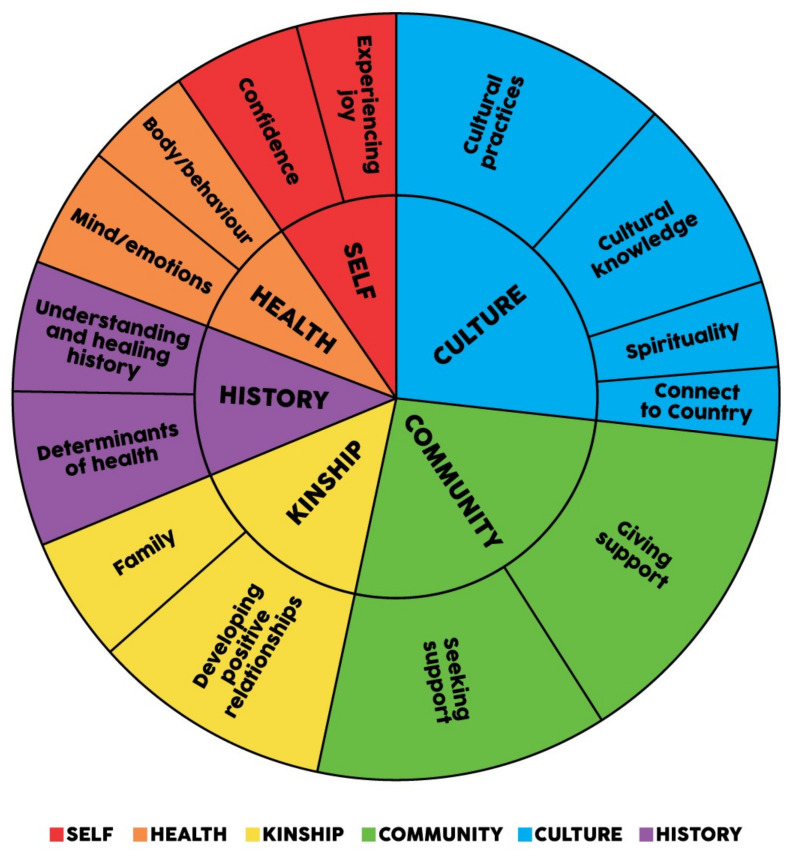
Culturally safe and responsive interventions that acknowledge Aboriginal models of selfhood are needed. Such interventions empower Aboriginal peoples and communities by increasing self-determination over individual and community social and emotional wellbeing (SEWB). In response to this need, the National Empowerment Project developed the Cultural, Social, and Emotional Wellbeing Program (CSEWB). The CSEWB aims to strengthen SEWB and cultural identity and subsequently reduce psychological distress in Aboriginal peoples. An Aboriginal Participatory Action Research approach ensured community ownership and engagement. Seven research questions and a culturally modified adaption of the Most Significant Change technique informed a thematic analysis of the evaluation content. Aboriginal adults ( = 49; 53% ≥50 years, 66% female, 34% male) from three Western Australian urban communities participated in the program evaluation workshops. Participants reported the benefits of enhanced SEWB and reduced psychological distress. This research reaffirms the need for culturally safe programs that acknowledge social determinants of health and are guided by the SEWB framework. Long-term commitment from the government is needed to support such programs.
需要采用文化安全且有针对性的干预措施,承认原住民的自我模式。这种干预措施通过增强个人和社区的社会和情感幸福感(SEWB)的自决权,赋予原住民权力和社区权力。为了满足这一需求,国家赋权项目开发了文化、社会和情感健康计划(CSEWB)。CSEWB 的目的是加强 SEWB 和文化认同,从而减少原住民的心理困扰。原住民参与式行动研究方法确保了社区的所有权和参与度。七个研究问题和对最重要变化技术的文化修正改编为评估内容的主题分析提供了信息。来自西澳大利亚三个城市社区的 49 名原住民成年人(=49;53%≥50 岁,66%女性,34%男性)参加了该项目评估研讨会。参与者报告说,SEWB 得到了增强,心理困扰得到了减轻。这项研究再次证实,需要有文化安全性的项目来承认健康的社会决定因素,并以 SEWB 框架为指导。政府需要长期承诺来支持这些项目。