Division of Inflammatory Stress in Stem Cells, German Cancer Research Center (DKFZ), Heidelberg, Germany.
Heidelberg Institute for Stem Cell Technology and Experimental Medicine (HI-STEM gGMBH), Heidelberg, Germany.
Blood Adv. 2022 Jun 14;6(11):3513-3528. doi: 10.1182/bloodadvances.2021006088.
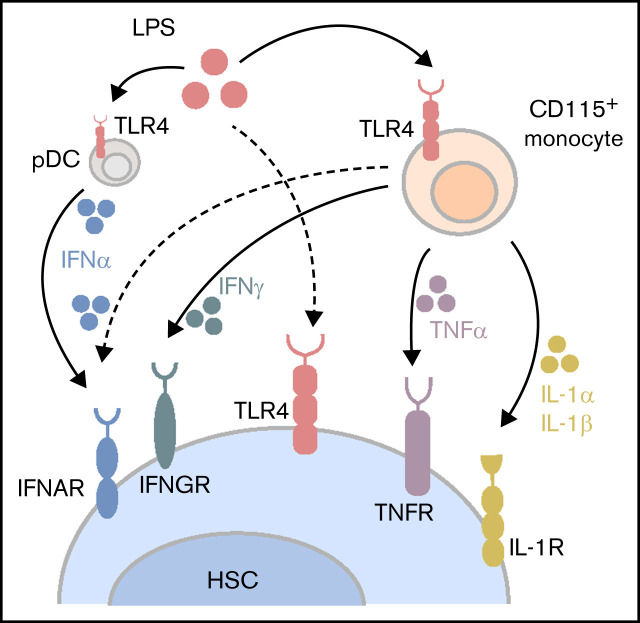
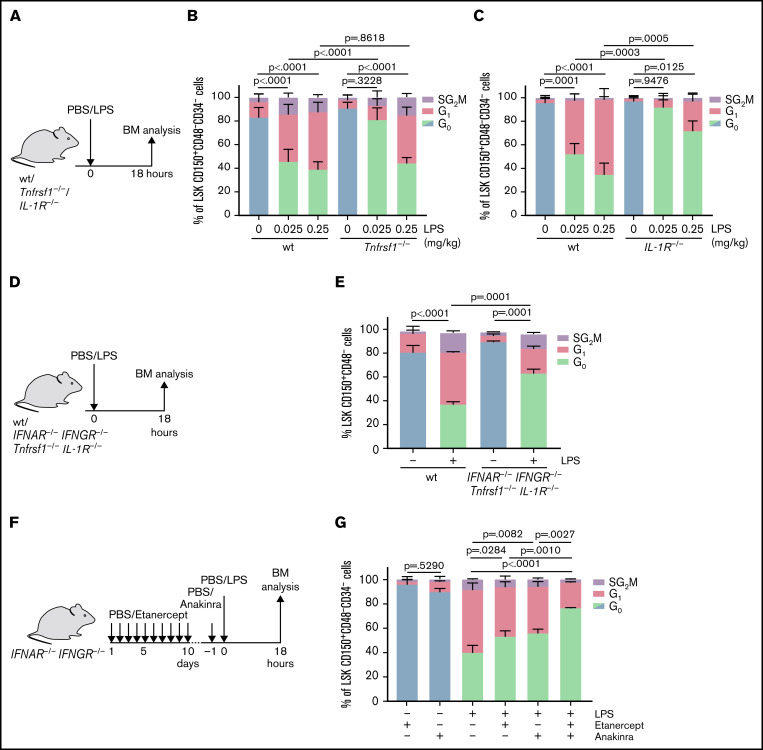
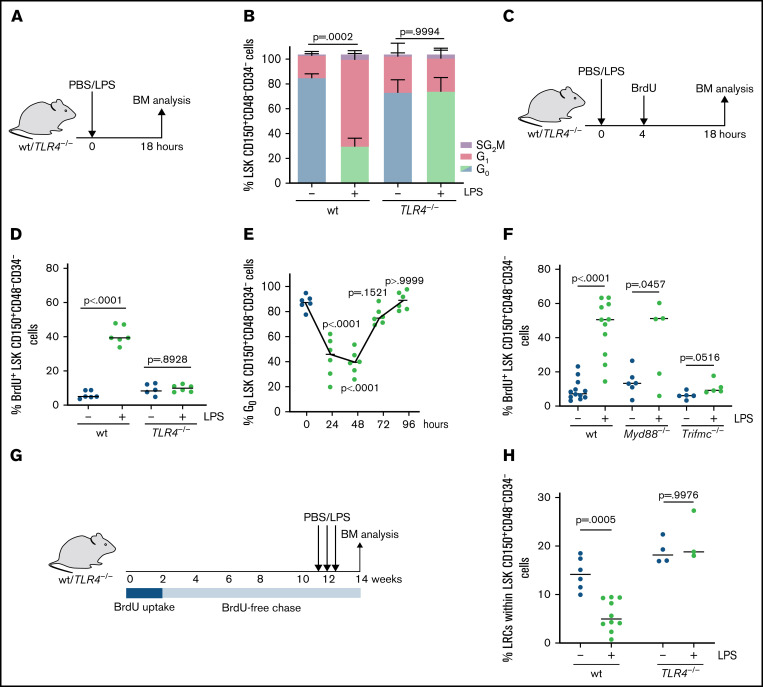
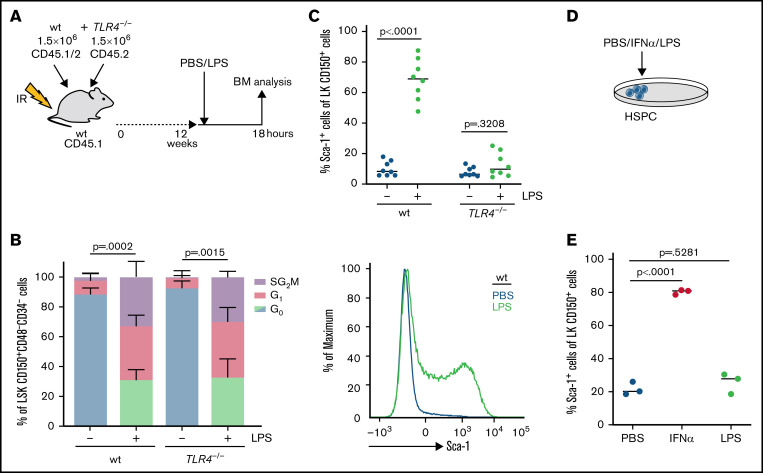
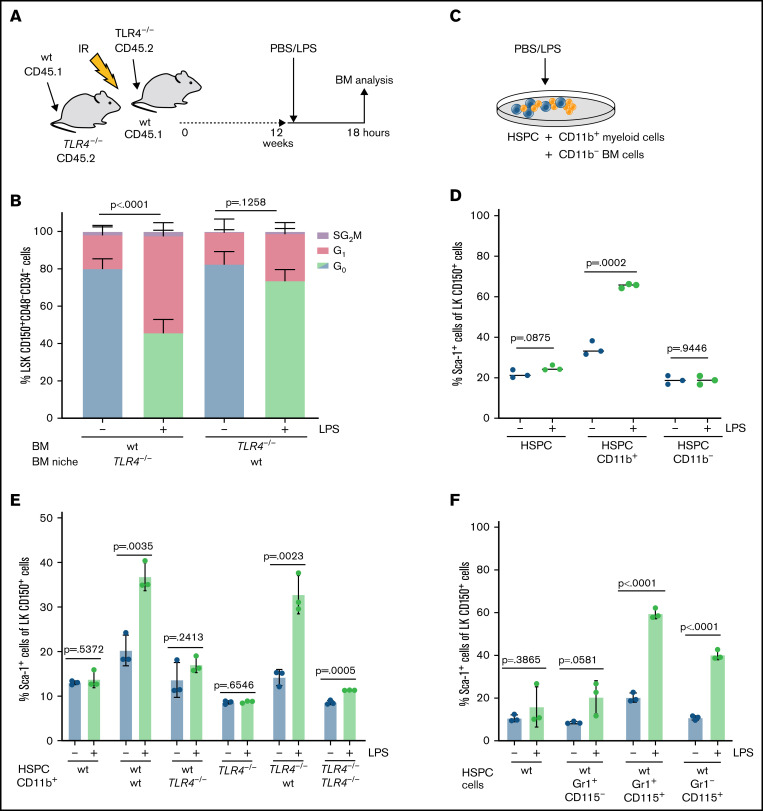
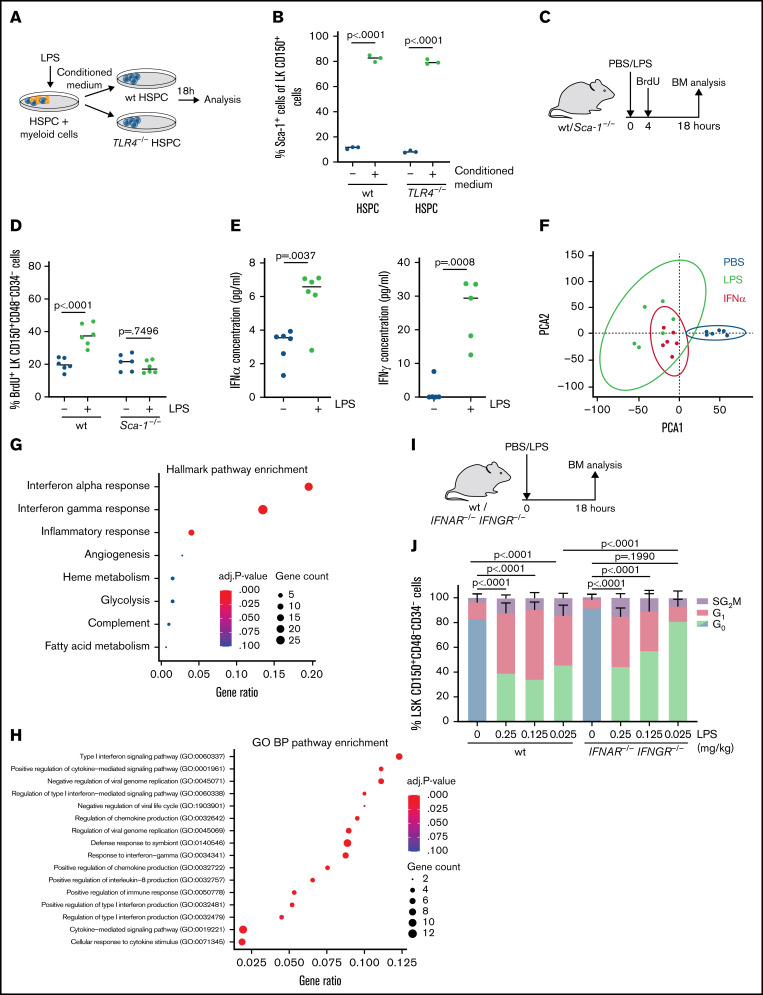
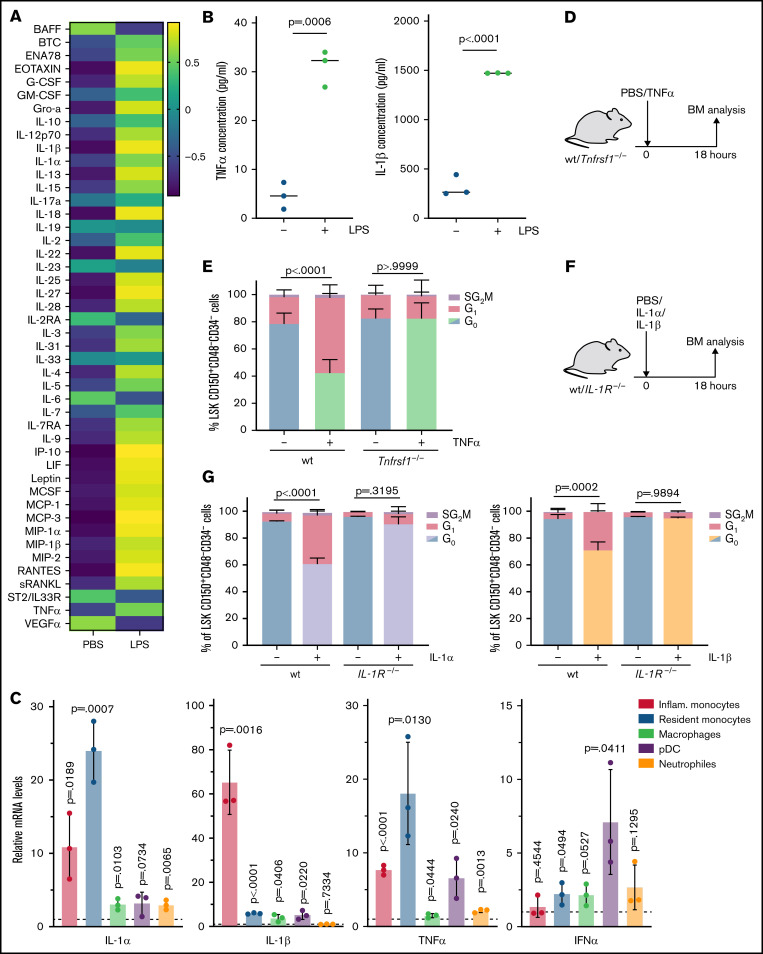
Infections are a key source of stress to the hematopoietic system. While infections consume short-lived innate immune cells, their recovery depends on quiescent hematopoietic stem cells (HSCs) with long-term self-renewal capacity. Both chronic inflammatory stress and bacterial infections compromise competitive HSC capacity and cause bone marrow (BM) failure. However, our understanding of how HSCs act during acute and contained infections remains incomplete. Here, we used advanced chimeric and genetic mouse models in combination with pharmacological interventions to dissect the complex nature of the acute systemic response of HSCs to lipopolysaccharide (LPS), a well-established model for inducing inflammatory stress. Acute LPS challenge transiently induced proliferation of quiescent HSCs in vivo. This response was not only mediated via direct LPS-TLR4 conjugation on HSCs but also involved indirect TLR4 signaling in CD115+ monocytic cells, inducing a complex proinflammatory cytokine cascade in BM. Downstream of LPS-TLR4 signaling, the combined action of proinflammatory cytokines such as interferon (IFN)α, IFNγ, tumor necrosis factor-α, interleukin (IL)-1α, IL-1β, and many others is required to mediate full HSC activation in vivo. Together, our study reveals detailed mechanistic insights into the interplay of proinflammatory cytokine-induced molecular pathways and cell types that jointly orchestrate the complex process of emergency hematopoiesis and HSC activation upon LPS exposure in vivo.
感染是造血系统的一个主要应激源。虽然感染会消耗寿命短暂的先天免疫细胞,但它们的恢复依赖于具有长期自我更新能力的静止造血干细胞(HSCs)。慢性炎症应激和细菌感染都会损害竞争 HSC 能力并导致骨髓(BM)衰竭。然而,我们对于 HSCs 在急性和受控制的感染期间如何发挥作用的理解仍不完整。在这里,我们使用先进的嵌合和遗传小鼠模型,并结合药理学干预,来剖析 HSCs 对脂多糖(LPS)的急性全身反应的复杂性质,LPS 是诱导炎症应激的成熟模型。急性 LPS 挑战会在体内短暂诱导静止 HSCs 的增殖。这种反应不仅通过 HSCs 上的 LPS-TLR4 直接缀合介导,还涉及 CD115+单核细胞中的间接 TLR4 信号,在 BM 中诱导复杂的促炎细胞因子级联反应。在 LPS-TLR4 信号下游,需要促炎细胞因子(如干扰素(IFN)α、IFNγ、肿瘤坏死因子-α、白细胞介素(IL)-1α、IL-1β 和许多其他细胞因子)的共同作用来介导体内 HSC 的完全激活。总之,我们的研究揭示了促炎细胞因子诱导的分子途径和细胞类型之间相互作用的详细机制见解,这些途径和细胞类型共同协调了 LPS 暴露时体内紧急造血和 HSC 激活的复杂过程。