Centre for Immunobiology, Institute of Infection, Immunity and Inflammation, University of Glasgow, Glasgow, UK.
Wellcome Centre for Integrative Parasitology, Institute of Infection, Immunity and Inflammation, University of Glasgow, Glasgow, UK.
Mucosal Immunol. 2022 Jun;15(6):1257-1269. doi: 10.1038/s41385-022-00513-y. Epub 2022 Apr 15.
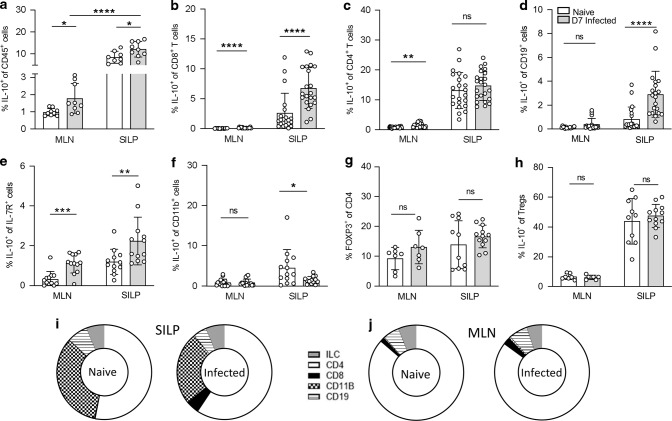
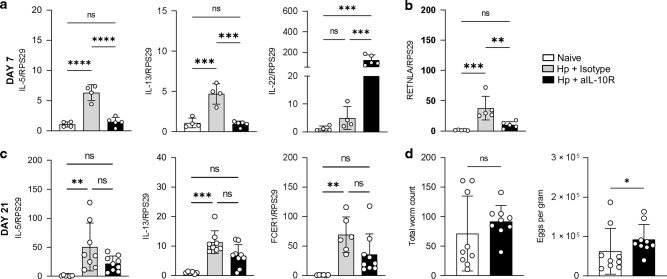
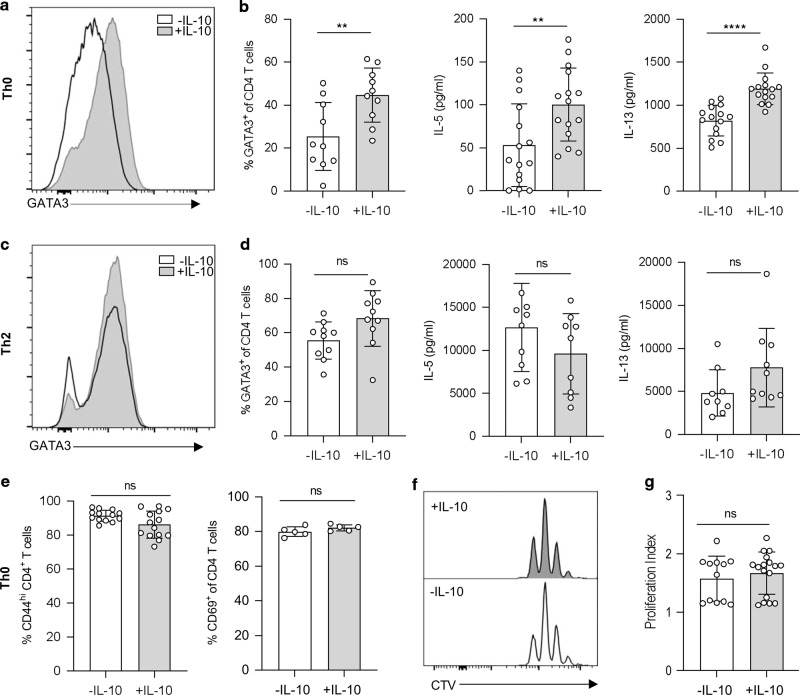
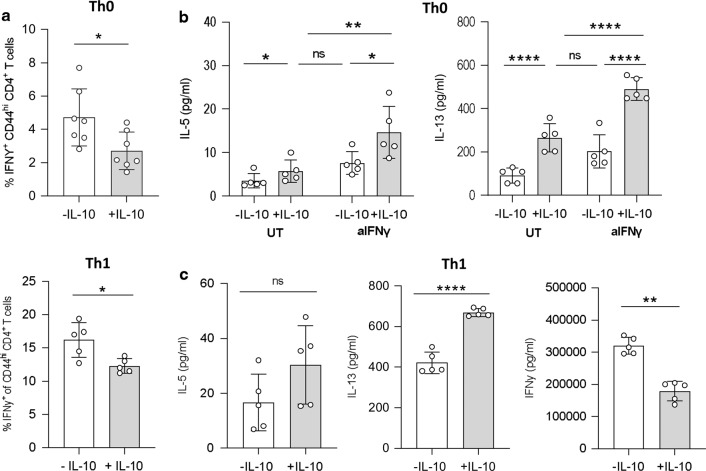
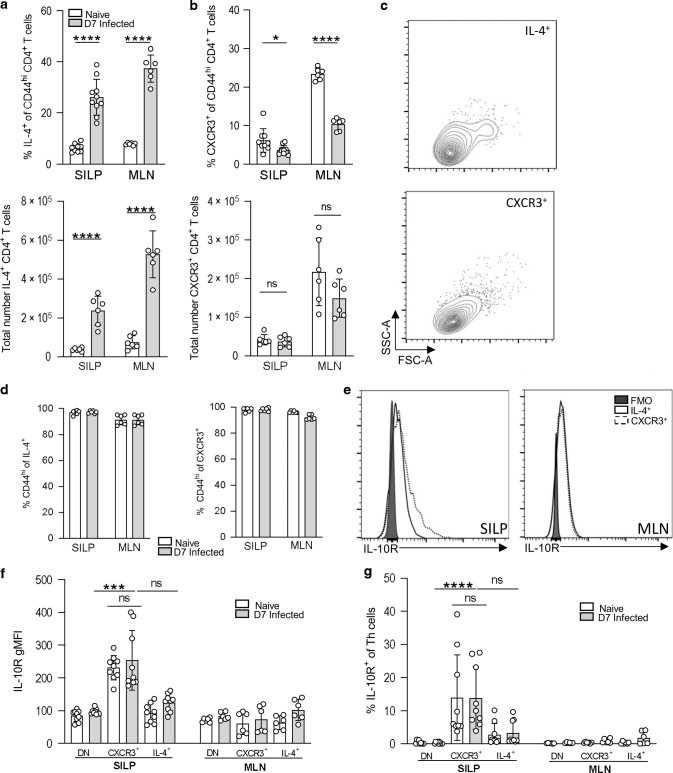
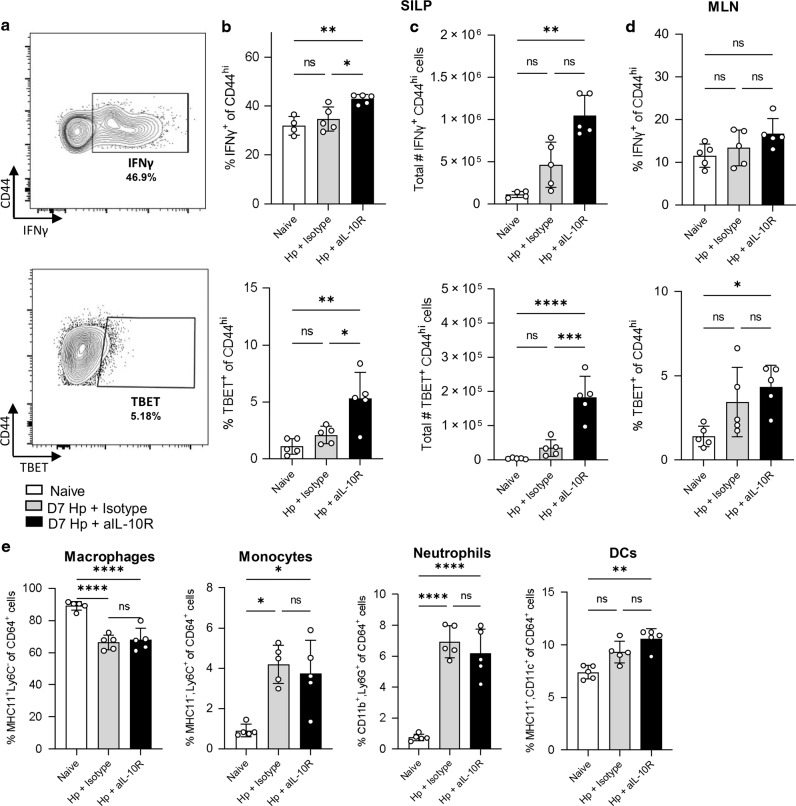
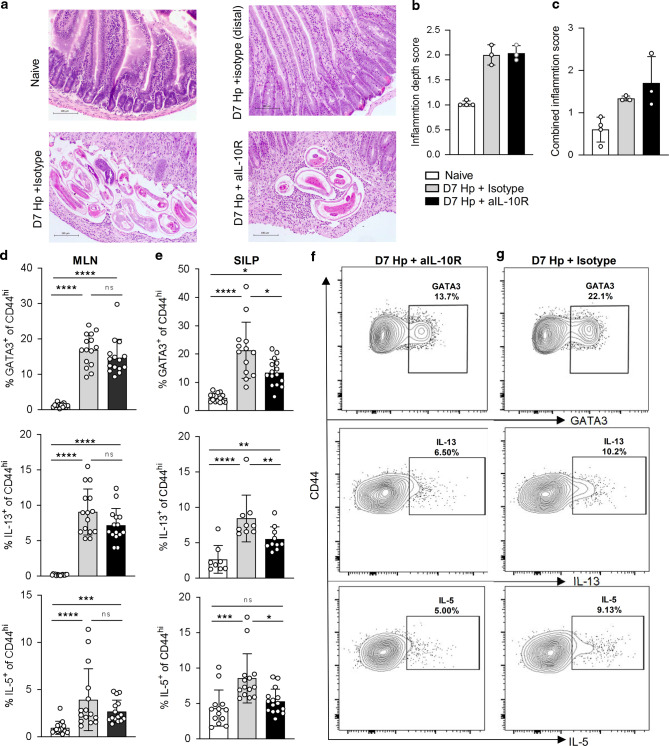
Type 2 immunity is activated in response to both allergens and helminth infection. It can be detrimental or beneficial, and there is a pressing need to better understand its regulation. The immunosuppressive cytokine IL-10 is known as a T helper 2 (Th2) effector molecule, but it is currently unclear whether IL-10 dampens or promotes Th2 differentiation during infection. Here we show that helminth infection in mice elicits IL-10 expression in both the intestinal lamina propria and the draining mesenteric lymph node, with higher expression in the infected tissue. In vitro, exogenous IL-10 enhanced Th2 differentiation in isolated CD4 T cells, increasing expression of GATA3 and production of IL-5 and IL-13. The ability of IL-10 to amplify the Th2 response coincided with its suppression of IFNγ expression and in vivo we found that, in intestinal helminth infection, IL-10 receptor expression was higher on Th1 cells in the small intestine than on Th2 cells in the same tissue, or on any Th cell in the draining lymph node. In vivo blockade of IL-10 signalling during helminth infection resulted in an expansion of IFNγ and Tbet Th1 cells in the small intestine and a coincident decrease in IL-13, IL-5 and GATA3 expression by intestinal T cells. These changes in Th2 cytokines correlated with reduced expression of type 2 effector molecules, such as RELMα, and increased parasite egg production. Together our data indicate that IL-10 signalling promotes Th2 differentiation during helminth infection at least in part by regulating competing Th1 cells in the infected tissue.
2 型免疫是对过敏原和寄生虫感染的反应。它可能有害也可能有益,因此迫切需要更好地了解其调节机制。抑制性细胞因子 IL-10 被认为是辅助性 T 细胞 2(Th2)效应分子,但目前尚不清楚在感染过程中,IL-10 是抑制还是促进 Th2 分化。在这里,我们发现,在小鼠中,寄生虫感染会引起肠道固有层和引流肠系膜淋巴结中 IL-10 的表达,在感染组织中表达更高。在体外,外源性 IL-10 增强了分离的 CD4 T 细胞中的 Th2 分化,增加了 GATA3 的表达和 IL-5 和 IL-13 的产生。IL-10 增强 Th2 反应的能力与其抑制 IFNγ 表达相吻合,我们发现,在肠道寄生虫感染中,IL-10 受体在小肠中的 Th1 细胞上的表达高于同一组织中的 Th2 细胞,或在引流淋巴结中的任何 Th 细胞上。在寄生虫感染期间,体内阻断 IL-10 信号会导致小肠中 IFNγ 和 Tbet Th1 细胞的扩增,同时肠道 T 细胞中 IL-13、IL-5 和 GATA3 的表达下降。这些 Th2 细胞因子的变化与 2 型效应分子(如 RELMα)的表达降低以及寄生虫卵产量增加相关。综上所述,我们的数据表明,IL-10 信号在寄生虫感染期间促进 Th2 分化,至少部分是通过调节感染组织中的竞争 Th1 细胞来实现的。