Zheng Hui, Xu Nannan, Zhang Zihao, Wang Fen, Xiao Jie, Ji Xiaoping
The Key Laboratory of Cardiovascular Remodeling and Function Research, Chinese Ministry of Education, Chinese National Health Commission and Chinese Academy of Medical Sciences, The State and Shandong Province Joint Key Laboratory of Translational Cardiovascular Medicine, Department of Cardiology, Qilu Hospital, Cheeloo College of Medicine, Shandong University, Jinan, China.
Department of Infectious Diseases, Qilu Hospital, Cheeloo College of Medicine, Shandong University, Jinan, China.
Front Pharmacol. 2022 Apr 4;13:823975. doi: 10.3389/fphar.2022.823975. eCollection 2022.
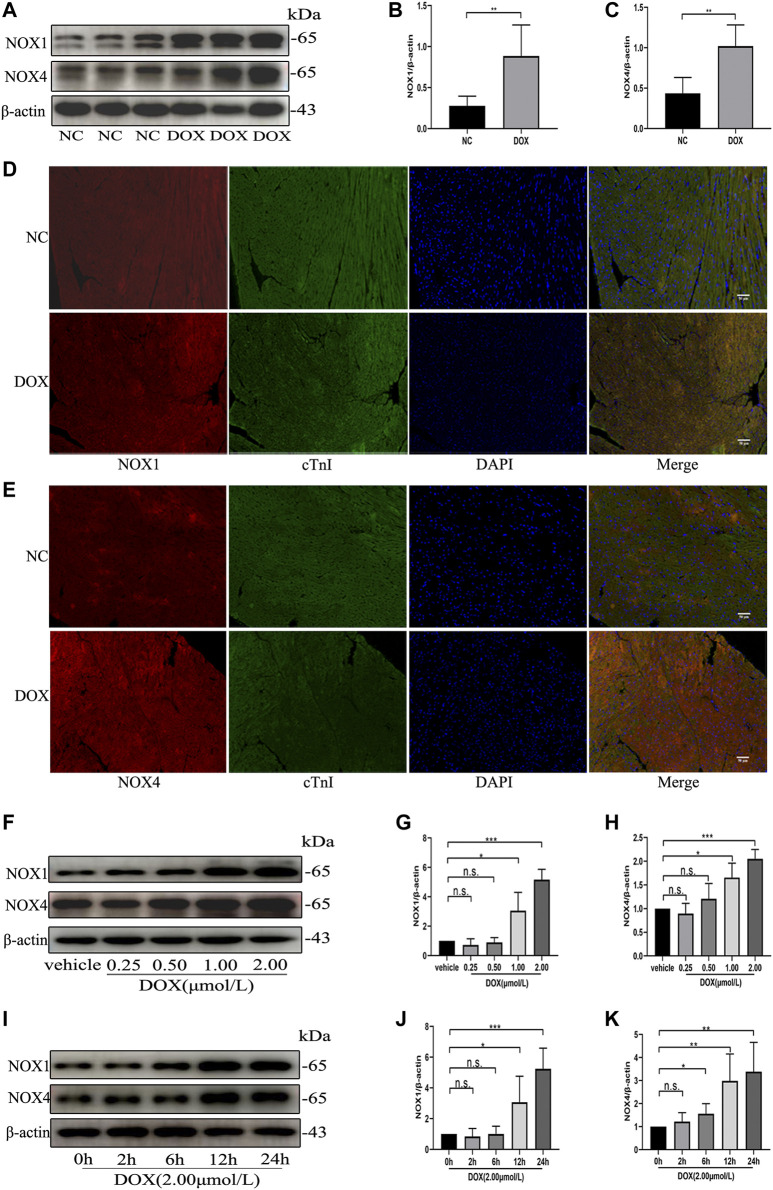
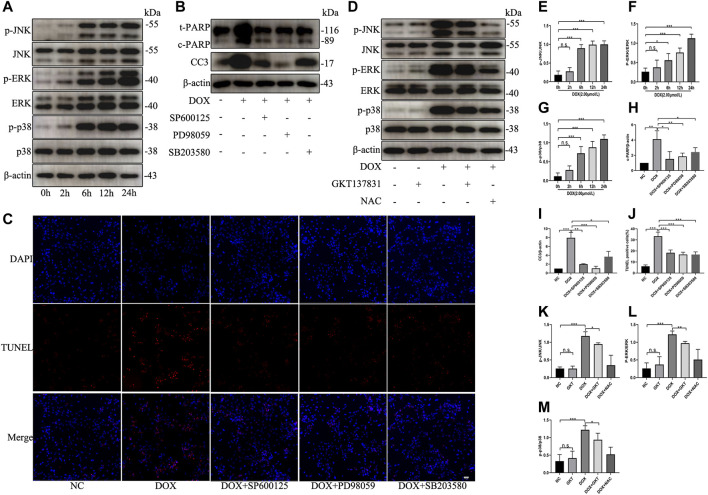
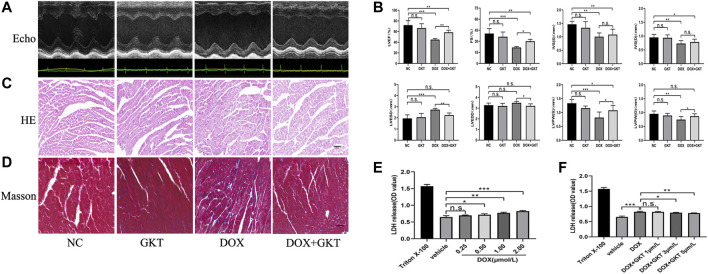
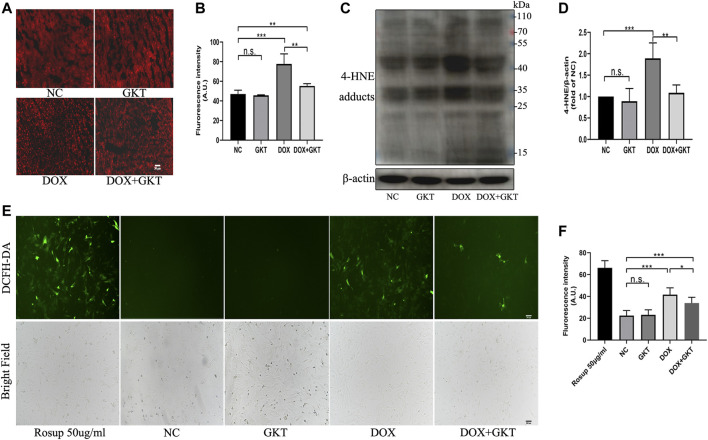
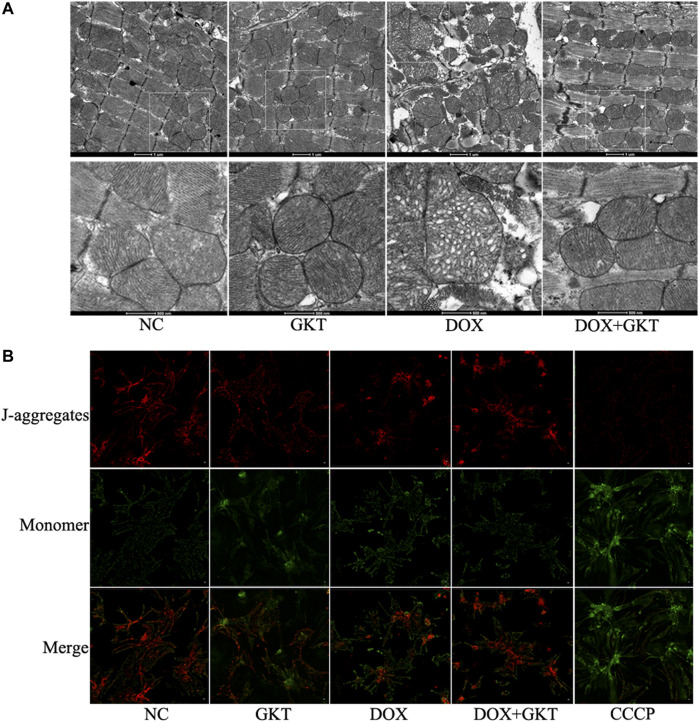
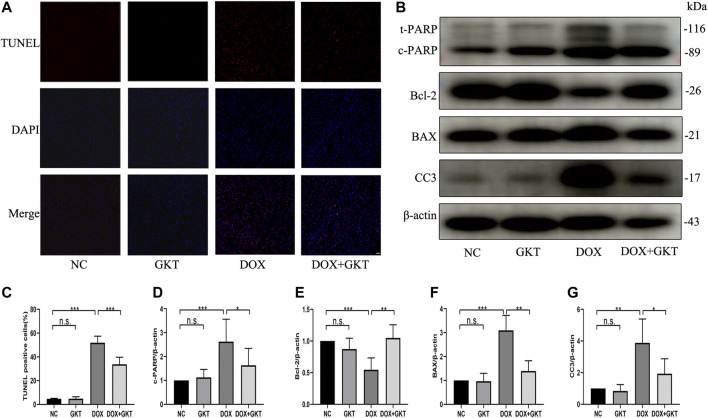
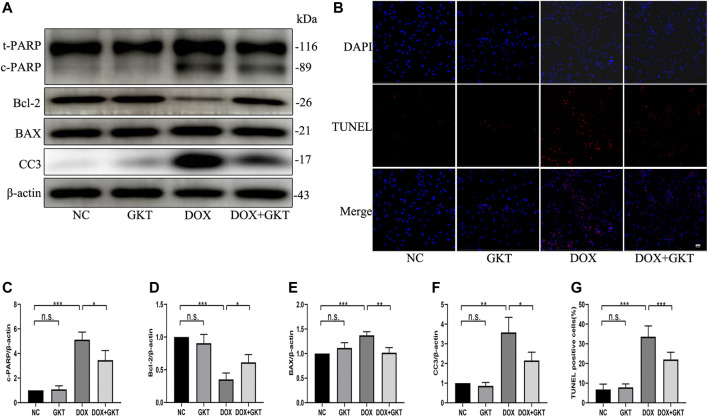
Doxorubicin (DOX)-induced cardiotoxicity is a highly concerning issue, and the mechanism by which DOX induces cardiotoxicity is likely to be multifactorial. NADPH oxidase (NOX) is associated with DOX-induced cardiotoxicity. Setanaxib (GKT137831), a preferential direct inhibitor of NOX1 and NOX4, can delay or prevent the progression of many cardiovascular disorders by inhibiting reactive oxygen species (ROS) generation. In this study, we investigated the role of GKT137831 in ameliorating DOX-induced cardiotoxicity and the potential mechanisms of its action. The mice model of cardiotoxicity induced by DOX was established, and GKT137831 treatment was performed at the same time. Neonatal rat cardiomyocytes (NRCMs) were treated with DOX or GKT137831 for experiments. We found that DOX administration impaired cardiac function , reflected by decreased left ventricular ejection fraction (LVEF) and fractional shortening (FS%). DOX also impaired the viability of NRCMs . In addition, DOX increased the levels of NOX1 and NOX4 expression and ROS production and the cardiomyocyte apoptosis rate, both and . GKT137831 improved cardiac function, as indicated by the increased LVEF and FS%. GKT137831 improved NRCM viability. It also decreased ROS production and the cardiomyocyte apoptosis rate. Apoptotic indices, such as cleaved PARP (c-PARP), cleaved caspase 3 (CC3) and BAX expression levels, were decreased, and the antiapoptotic index of Bcl-2 expression was increased. DOX markedly activated phosphorylated JNK, ERK and p38 proteins in NRCMs. Specific inhibitors of JNK (SP600125), ERK (PD98059) or p38 (SB203580) inhibited DOX-induced apoptosis of NRCMs. GKT137831 pretreatment inhibited excessive DOX-induced MAPK pathway activation. This study revealed that GKT137831 can alleviate DOX-induced cardiomyocyte apoptosis by inhibiting NOX1/4-driven ROS production. The upregulation of MAPK pathway induced by NOX1/4-derived ROS production may be the potential mechanism of GKT137831 action. GKT137831 may be a potential drug candidate to ameliorate DOX-induced cardiotoxicity.
阿霉素(DOX)诱导的心脏毒性是一个备受关注的问题,DOX诱导心脏毒性的机制可能是多因素的。NADPH氧化酶(NOX)与DOX诱导的心脏毒性有关。Setanaxib(GKT137831)是一种优先直接抑制NOX1和NOX4的抑制剂,可通过抑制活性氧(ROS)生成来延缓或预防许多心血管疾病的进展。在本研究中,我们研究了GKT137831在改善DOX诱导的心脏毒性中的作用及其潜在作用机制。建立了DOX诱导的心脏毒性小鼠模型,并同时进行GKT137831治疗。用DOX或GKT137831处理新生大鼠心肌细胞(NRCMs)进行实验。我们发现,给予DOX会损害心脏功能,表现为左心室射血分数(LVEF)和缩短分数(FS%)降低。DOX还损害了NRCMs的活力。此外,DOX增加了NOX1和NOX4的表达水平、ROS生成以及心肌细胞凋亡率。GKT137831改善了心脏功能,表现为LVEF和FS%增加。GKT137831提高了NRCMs的活力。它还降低了ROS生成和心肌细胞凋亡率。凋亡指标,如裂解的PARP(c-PARP)、裂解的半胱天冬酶3(CC3)和BAX表达水平降低,而Bcl-2表达的抗凋亡指标增加。DOX显著激活了NRCMs中磷酸化的JNK、ERK和p38蛋白。JNK(SP600125)、ERK(PD98059)或p38(SB203580)的特异性抑制剂抑制了DOX诱导的NRCMs凋亡。GKT137831预处理抑制了DOX诱导的MAPK途径过度激活。本研究表明,GKT137831可通过抑制NOX1/4驱动的ROS生成来减轻DOX诱导的心肌细胞凋亡。由NOX1/4衍生的ROS生成诱导的MAPK途径上调可能是GKT137831作用的潜在机制。GKT137831可能是一种改善DOX诱导的心脏毒性的潜在候选药物。