Chen Ting, Deng Zhiyong, Zhao Ruilian, Shen Hongmei, Li Wenhui
Department of Nuclear Medicine, Tumor Hospital of Yunnan Province, The Third Affiliated Hospital of Kunming Medical College, Kunming, China.
Department of Combination of Chinese Traditional and Western Medicine, Tumor Hospital of Yunnan Province, The Third Affiliated Hospital of Kunming Medical College, Kunming, China.
Evid Based Complement Alternat Med. 2018 Aug 26;2018:2581031. doi: 10.1155/2018/2581031. eCollection 2018.
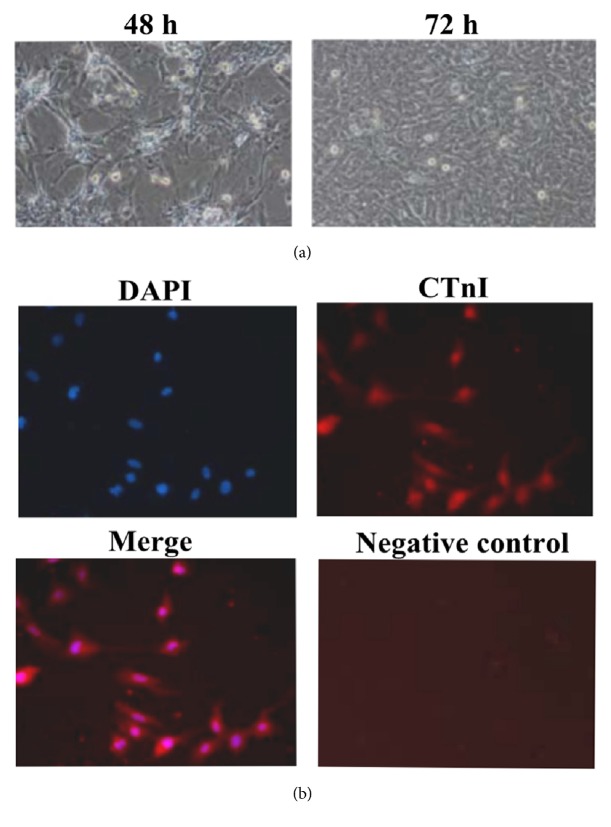
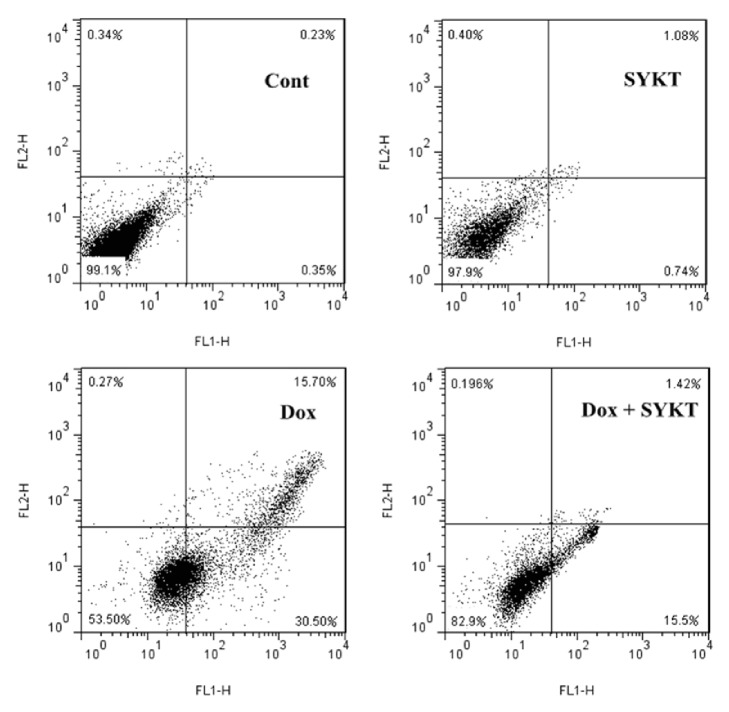
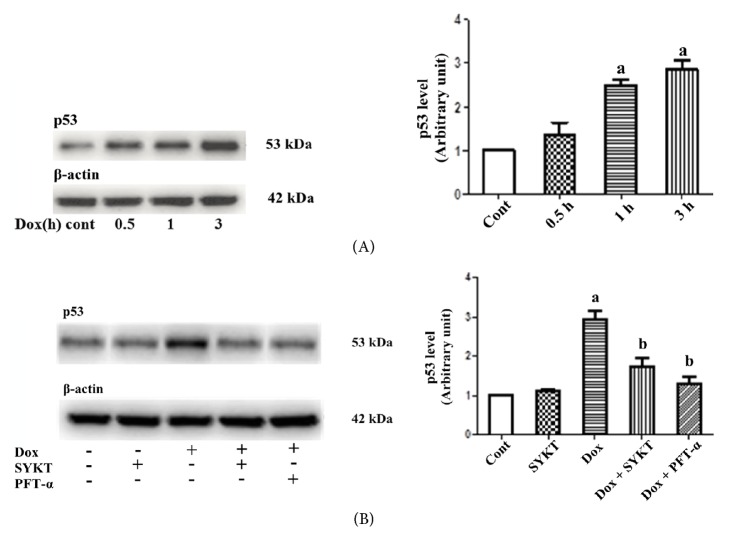
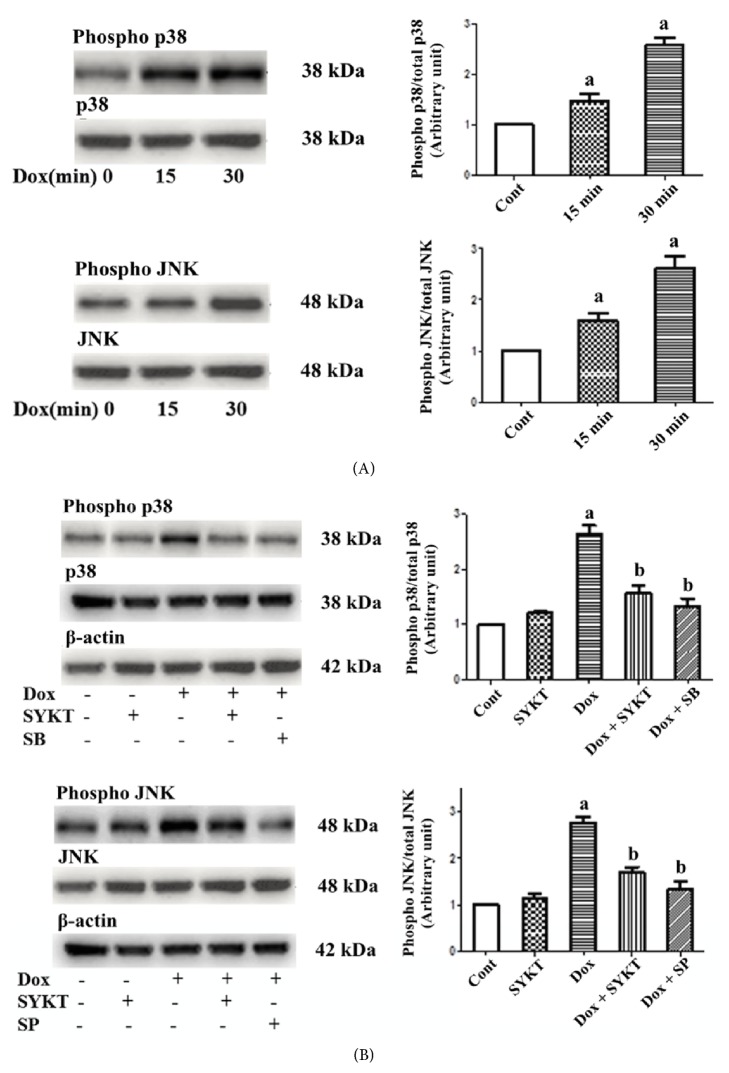
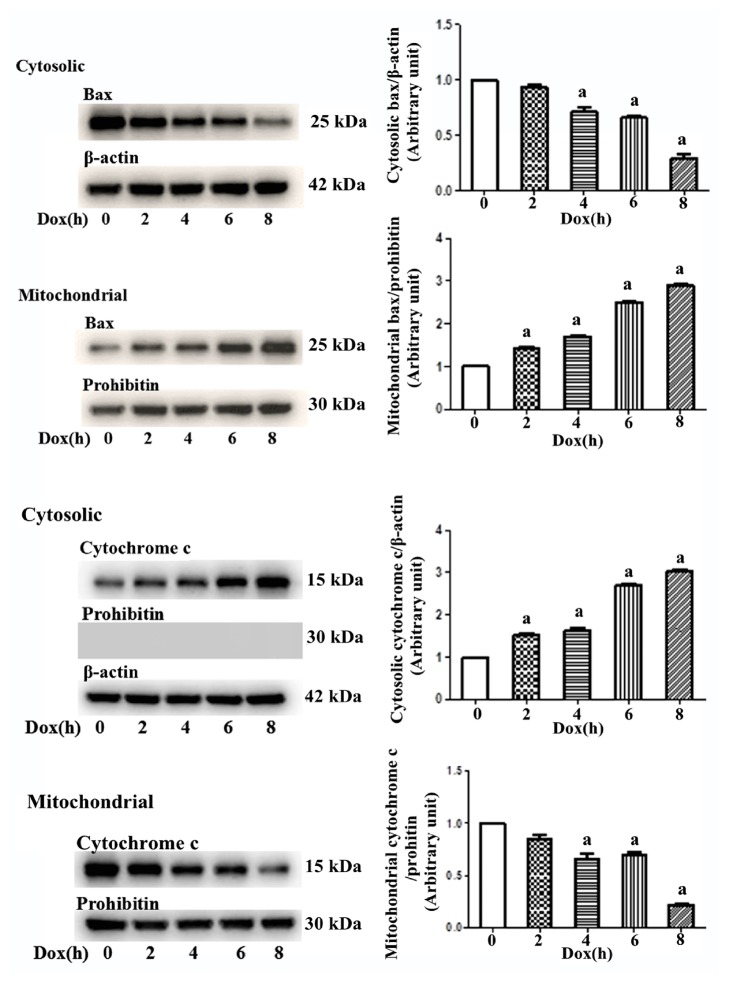
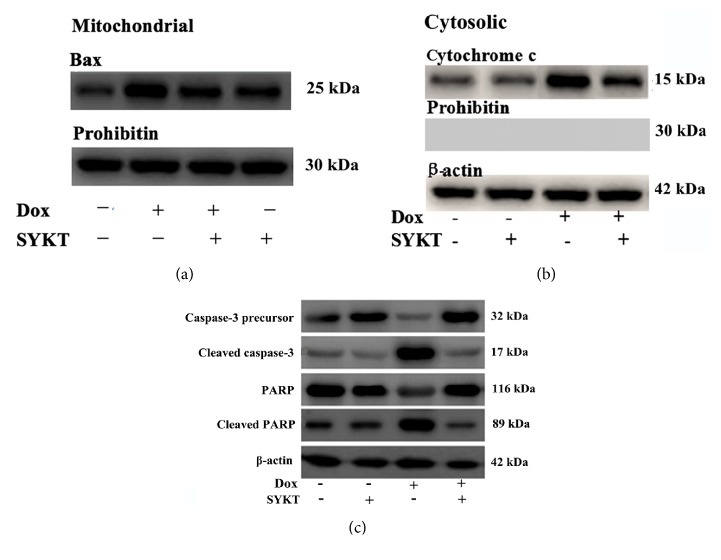
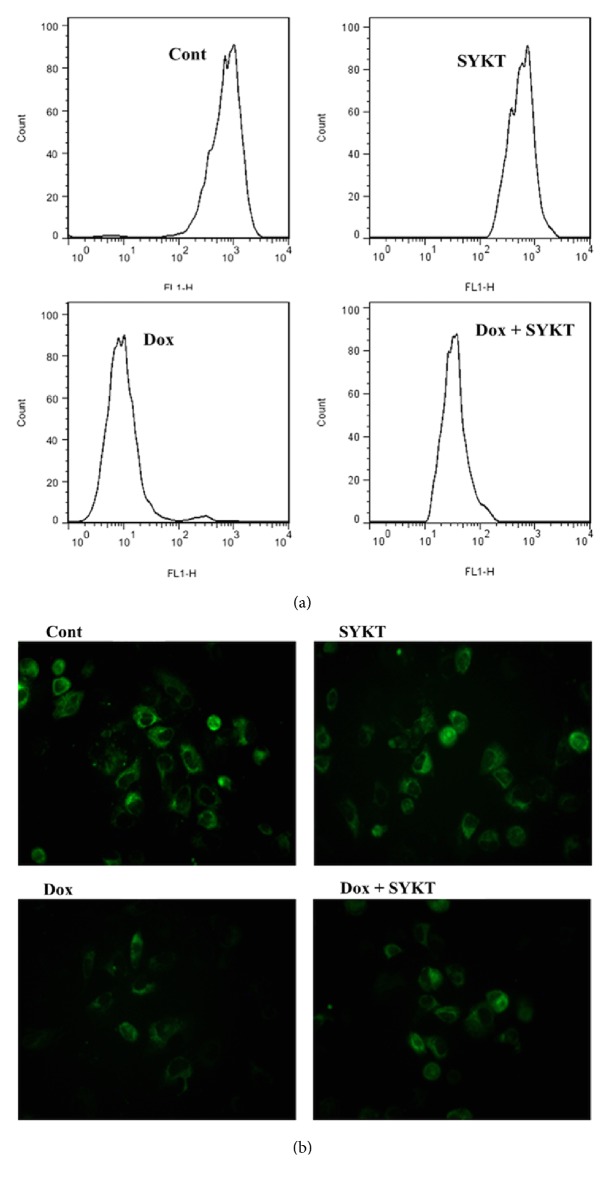
Doxorubicin (DOX) is an effective therapeutic drug for malignant tumors; however, its clinical applications were limited by its side effects, especially the cardiotoxicity caused by ROS-mediated p53 and MAPK signal pathways' activation-induced cell apoptosis. Sanyang Xuedai mixture (SYKT) has been reported as an antioxidant agent and attenuated DOX-induced cardiotoxicity by targeting ROS-mediated apoptosis, but the mechanisms are still not fully delineated. This study aimed at investigating whether SYKT alleviated DOX-induced cardiotoxicity by inhibiting ROS-mediated apoptosis and elucidating the role of ROS-mediated p53 and MAPK signal pathways' activation in this process. Identification, separation, and culture of mouse primary cardiomyocytes. Cells were treated with DOX (1 M), SYKT (30 mg/mL), or SYKT coupled with DOX. The p53 inhibitor Pifithrin- (PFT-), p38/MAPK inhibitor SB203583 (SB), and JNK inhibitor SP600125 (SP) were used as positive control. Western blot was employed to detected p53 and p38 as well as JNK expressions and the activation and translocation of Bax and cytochrome C. Flow cytometer (FCM) was used to detect the mitochondrial membrane potential and cell apoptosis. After separation and culture, 95% of cells showed positive cTnI expression, which indicated that mouse primary cardiomyocytes were successfully identified in our research. DOX activated p53 and MAPK signal pathways in a time-dependent manner, which were inactivated by being cotreated with SYKT, PFT-, or SB, respectively. DOX significantly decreased Bax and increased cytochrome c expressions in the cytoplasm, whereas Bax was upregulated and cytochrome c was downregulated in the mitochondria, which were reversed by SYKT treatment. Besides, DOX reduced mitochondria membrane potential (MMP) in cardiomyocytes compared to the control group; SYKT recovered its MMP and attenuated DOX-induced cardiomyocyte injury. Of note, DOX increased the expression levels of cleaved caspase-3 as well as poly ADP-ribose polymerase (PARP) and promoted cell apoptosis, which were also reversed by SYKT treatment. Our results indicated that SYKT alleviated DOX-induced cardiotoxicity by inhibiting p53 and MAPK signal pathways' activation-mediated apoptosis, and it might serve as a potential therapeutic agent for DOX-induced cardiotoxicity.
阿霉素(DOX)是一种治疗恶性肿瘤的有效药物;然而,其临床应用受到副作用的限制,尤其是由活性氧(ROS)介导的p53和丝裂原活化蛋白激酶(MAPK)信号通路激活诱导的细胞凋亡所导致的心脏毒性。三阳血黛合剂(SYKT)已被报道为一种抗氧化剂,可通过靶向ROS介导的细胞凋亡减轻DOX诱导的心脏毒性,但其机制仍未完全阐明。本研究旨在探讨SYKT是否通过抑制ROS介导的细胞凋亡来减轻DOX诱导的心脏毒性,并阐明ROS介导的p53和MAPK信号通路激活在此过程中的作用。小鼠原代心肌细胞的鉴定、分离和培养。细胞分别用DOX(1 μM)、SYKT(30 mg/mL)或SYKT与DOX联合处理。p53抑制剂Pifithrin-α(PFT-α)、p38/MAPK抑制剂SB203583(SB)和JNK抑制剂SP600125(SP)用作阳性对照。采用蛋白质免疫印迹法检测p53、p38以及JNK的表达,以及Bax和细胞色素C的激活和转位。使用流式细胞仪(FCM)检测线粒体膜电位和细胞凋亡。分离培养后,95%的细胞cTnI表达呈阳性,这表明在我们的研究中小鼠原代心肌细胞被成功鉴定。DOX以时间依赖性方式激活p53和MAPK信号通路,而分别与SYKT、PFT-α或SB共同处理可使其失活。DOX显著降低细胞质中Bax的表达并增加细胞色素c的表达,而线粒体中Bax上调且细胞色素c下调,SYKT处理可使其逆转。此外,与对照组相比,DOX降低了心肌细胞的线粒体膜电位(MMP);SYKT恢复了其MMP并减轻了DOX诱导的心肌细胞损伤。值得注意的是,DOX增加了裂解的半胱天冬酶-3以及聚ADP核糖聚合酶(PARP)的表达水平并促进细胞凋亡,SYKT处理也使其逆转。我们的结果表明,SYKT通过抑制p53和MAPK信号通路激活介导的细胞凋亡来减轻DOX诱导的心脏毒性,它可能作为DOX诱导的心脏毒性的潜在治疗药物。