Zhang Chao, Chang Wei, Li Xiaodong, Yang Bo, Zhang Liyuan, Xiao Zhongchun, Li Jiana, Lu Kun
Chongqing Rapeseed Engineering Research Center, College of Agronomy and Biotechnology, Southwest University, Chongqing, China.
Academy of Agricultural Sciences, Southwest University, Chongqing, China.
Front Plant Sci. 2022 Apr 4;13:855486. doi: 10.3389/fpls.2022.855486. eCollection 2022.
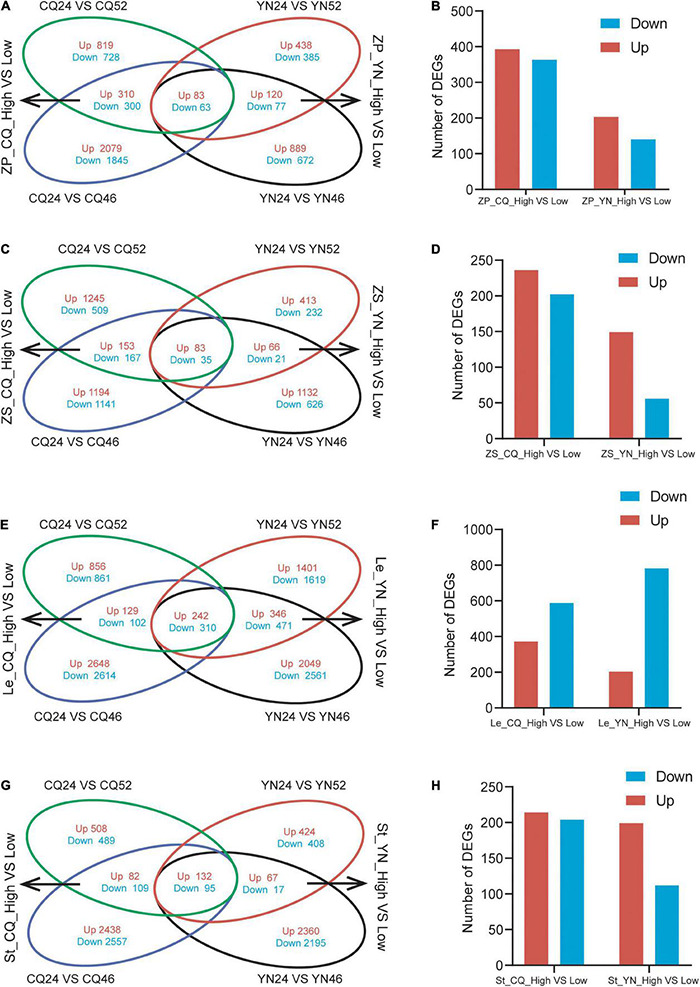
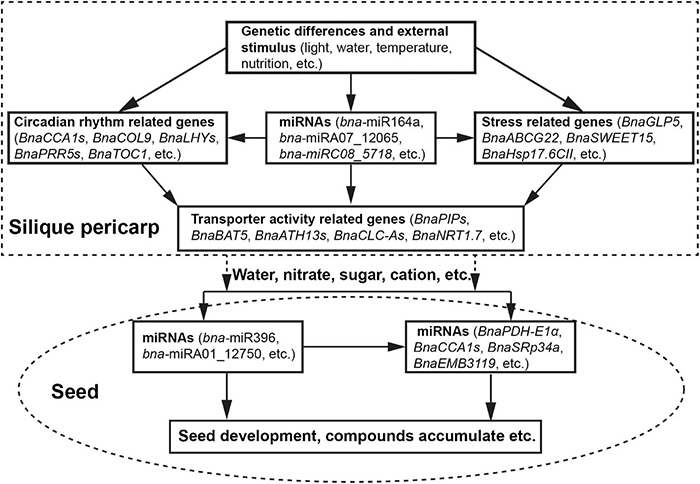
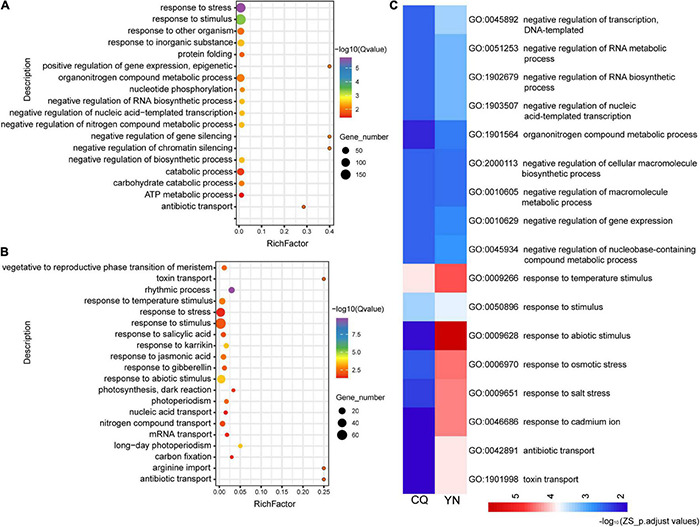
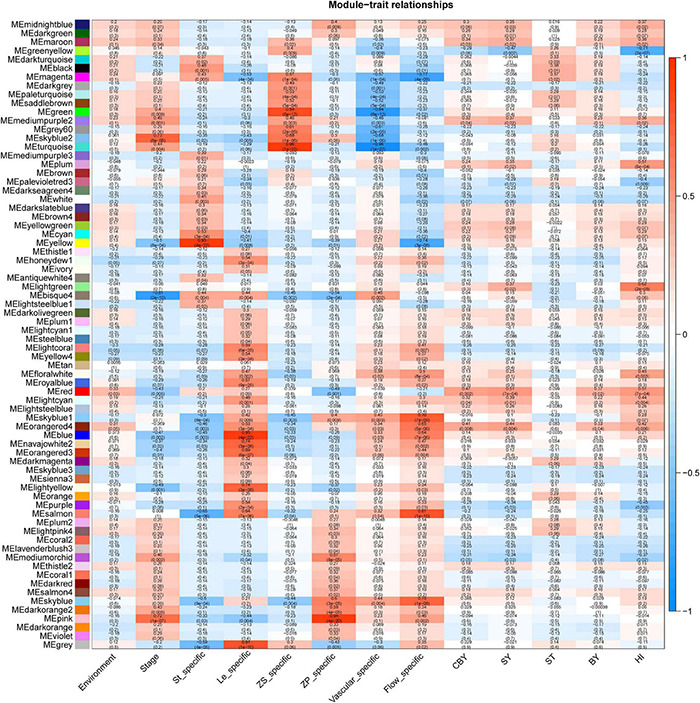
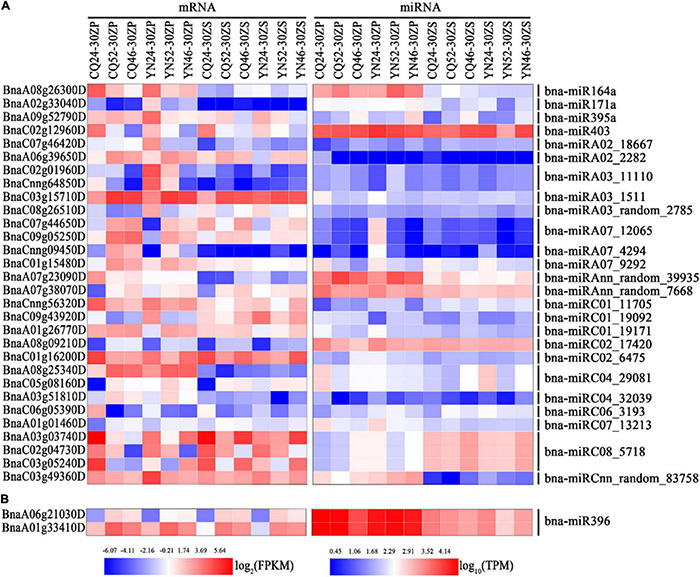
Harvest index (HI), the ratio of harvested seed weight to total aboveground biomass weight, is an economically critical value reflecting the convergence of complex agronomic traits. HI values in rapeseed () remain much lower than in other major crops, and the underlying regulatory network is largely unknown. In this study, we performed mRNA and small RNA sequencing to reveal the mechanisms shaping HI in during the seed-filling stage. A total of 8,410 differentially expressed genes (DEGs) between high-HI and low-HI accessions in four tissues (silique pericarp, seed, leaves, and stem) were identified. Combining with co-expression network, 72 gene modules were identified, and a key gene was found to participate in retarded establishment of photosynthetic capacity to influence HI. Further research found that the genes involved in circadian rhythms and response to stimulus may play important roles in HI and that their transcript levels were modulated by differentially expressed microRNAs (DEMs), and we identified 903 microRNAs (miRNAs), including 46 known miRNAs and 857 novel miRNAs. Furthermore, transporter activity-related genes were critical to enhancing HI in good cultivation environments. Of 903 miRNAs, we found that the bna-miR396-Bna.A06SRp34a/Bna.A01EMB3119 pair may control the seed development and the accumulation of storage compounds, thus contributing to higher HI. Our findings uncovered the underlying complex regulatory network behind HI and offer potential approaches to rapeseed improvement.
收获指数(HI)是收获种子重量与地上部总生物量重量之比,是反映复杂农艺性状聚合的一个经济关键值。油菜的收获指数值仍远低于其他主要作物,其潜在调控网络很大程度上未知。在本研究中,我们进行了mRNA和小RNA测序,以揭示种子灌浆期油菜收获指数形成的机制。在四个组织(角果皮、种子、叶片和茎)的高收获指数和低收获指数材料间共鉴定出8410个差异表达基因(DEG)。结合共表达网络,鉴定出72个基因模块,发现一个关键基因参与光合能力延迟建立以影响收获指数。进一步研究发现,参与昼夜节律和刺激响应的基因可能在收获指数中发挥重要作用,且其转录水平受差异表达的微小RNA(DEM)调控,我们鉴定出903个微小RNA(miRNA),包括46个已知miRNA和857个新miRNA。此外,转运蛋白活性相关基因在良好栽培环境下对提高收获指数至关重要。在903个miRNA中,我们发现bna-miR396-Bna.A06SRp34a/Bna.A01EMB3119对可能控制种子发育和贮藏化合物积累,从而有助于提高收获指数。我们的研究结果揭示了收获指数背后潜在的复杂调控网络,并为油菜改良提供了潜在途径。