Gargallo Pablo, Molero Merche, Bilbao Cristina, Stuckey Ruth, Carrillo-Cruz Estrella, Hermosín Lourdes, Pérez-López Olga, Jiménez-Velasco Antonio, Soria Elena, Lázaro Marián, Carbonell Paula, Yáñez Yania, Gómez Iria, Izquierdo-García Marta, Valero-García Jennifer, Ruiz Carlos, Such Esperanza, Calabria Inés
Health In Code Group, Oncology Department, 46980 Paterna, Spain.
Servicio de Hematología, Hospital Universitario de Gran Canaria Dr. Negrín, 35010 Las Palmas de Gran Canaria, Spain.
Cancers (Basel). 2022 Apr 14;14(8):1986. doi: 10.3390/cancers14081986.
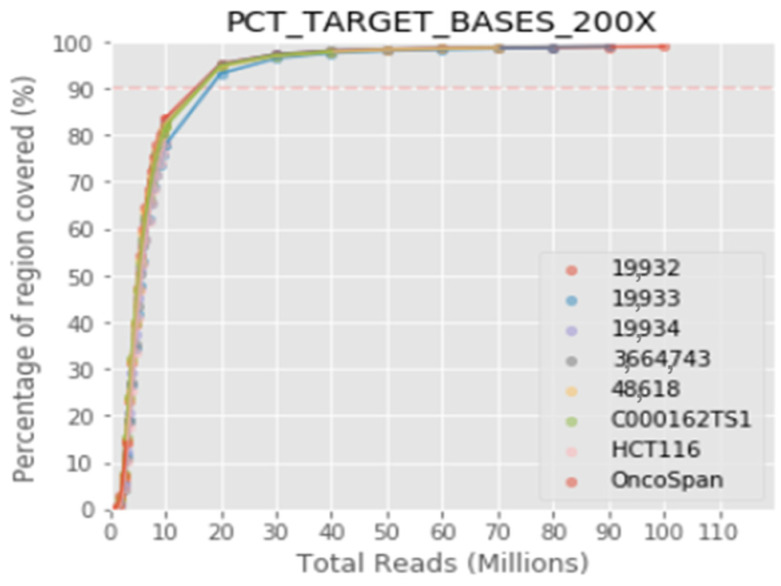
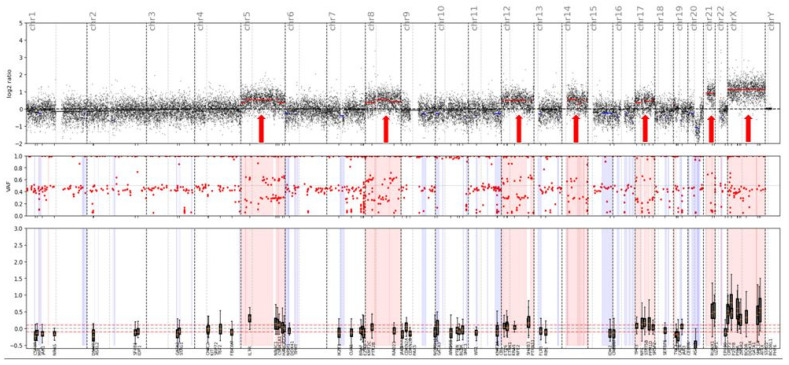
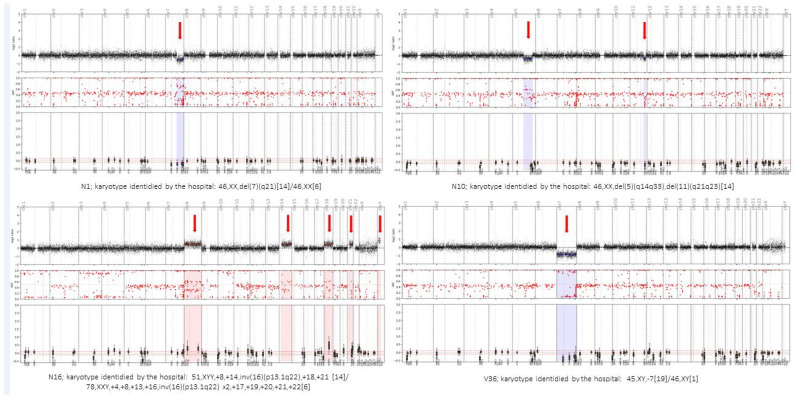
A suitable diagnostic classification of myeloid neoplasms and acute leukemias requires testing for a large number of molecular biomarkers. Next-generation sequencing is a technology able to integrate identification of the vast majority of them in a single test. This manuscript includes the design, analytical validation and clinical feasibility evaluation of a molecular diagnostic kit for onco-hematological diseases. It is based on sequencing of the coding regions of 76 genes (seeking single-nucleotide variants, small insertions or deletions and CNVs), as well as the search for fusions in 27 target genes. The kit has also been designed to detect large CNVs throughout the genome by including specific probes and employing a custom bioinformatics approach. The analytical and clinical feasibility validation of the Haematology OncoKitDx panel has been carried out from the sequencing of 170 patient samples from 6 hospitals (in addition to the use of commercial reference samples). The analytical validation showed sensitivity and specificity close to 100% for all the parameters evaluated, with a detection limit of 2% for SNVs and SVs, and 20% for CNVs. Clinically relevant mutations were detected in 94% of all patients. An analysis of the correlation between the genetic risk classification of AML (according to ELN 2017) established by the hospitals and that obtained by the Haematology OncoKitDx panel showed an almost perfect correlation (K = 0.94). Among the AML samples with a molecular diagnosis, established by the centers according to the WHO, the Haematology OncoKitDx analysis showed the same result in 97% of them. The panel was able to adequately differentiate between MPN subtypes and also detected alterations that modified the diagnosis (-). Likewise, the cytogenetic risk derived from the CNV plot generated by the NGS panel correlated substantially with the results of the conventional karyotype (K = 0.71) among MDS samples. In addition, the panel detected the main biomarkers of prognostic value among patients with ALL. This validated solution enables a reliable analysis of a large number of molecular biomarkers from a DNA sample in a single assay.
髓系肿瘤和急性白血病的合适诊断分类需要检测大量分子生物标志物。下一代测序是一种能够在单次检测中整合绝大多数此类标志物鉴定的技术。本手稿包括一种肿瘤血液学疾病分子诊断试剂盒的设计、分析验证和临床可行性评估。它基于对76个基因编码区的测序(寻找单核苷酸变异、小插入或缺失以及拷贝数变异),以及对27个靶基因融合情况的检测。该试剂盒还通过纳入特定探针并采用定制生物信息学方法,设计用于检测全基因组范围内的大片段拷贝数变异。血液肿瘤诊断试剂盒(Haematology OncoKitDx)的分析和临床可行性验证是通过对来自6家医院的170例患者样本进行测序完成的(除使用商业参考样本外)。分析验证显示,对于所有评估参数,灵敏度和特异性接近100%,单核苷酸变异和结构变异的检测限为2%,拷贝数变异的检测限为20%。在所有患者中,94%检测到临床相关突变。对医院确定的急性髓系白血病(根据2017年欧洲白血病网络标准)基因风险分类与血液肿瘤诊断试剂盒获得的分类之间的相关性分析显示,两者几乎完全相关(K = 0.94)。在各中心根据世界卫生组织标准进行分子诊断的急性髓系白血病样本中,血液肿瘤诊断试剂盒分析结果与之相同的占97%。该检测板能够充分区分骨髓增殖性肿瘤亚型,还能检测到改变诊断结果的改变(-)。同样,在骨髓增生异常综合征样本中,由二代测序检测板生成的拷贝数变异图得出的细胞遗传学风险与传统核型分析结果高度相关(K = 0.71)。此外,该检测板还检测到急性淋巴细胞白血病患者中具有预后价值的主要生物标志物。这种经过验证的解决方案能够在单次检测中对DNA样本中的大量分子生物标志物进行可靠分析。