Leisch Michael, Jansko Bettina, Zaborsky Nadja, Greil Richard, Pleyer Lisa
Department of Internal Medicine III with Haematology, Medical Oncology, Haemostaseology, Infectiology and Rheumatology, Oncologic Center, Salzburg Cancer Research Institute-Laboratory of Immunological and Molecular Cancer Research (SCRI-LIMCR), Salzburg 5020, Austria.
Paracelsus Medical University, Salzburg 5020, Austria.
Cancers (Basel). 2019 Feb 21;11(2):252. doi: 10.3390/cancers11020252.
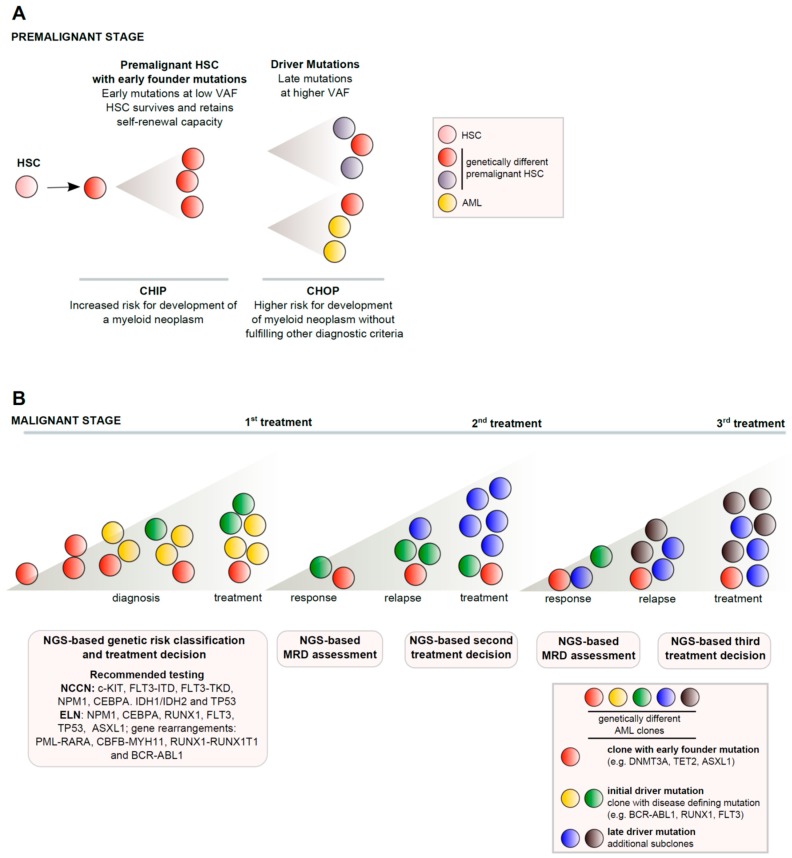
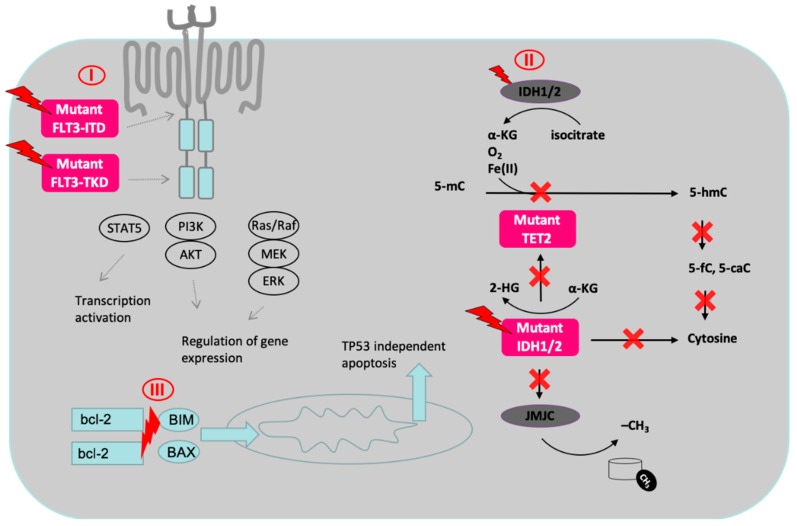
Acute myeloid leukemia (AML) is a clonal disease caused by genetic abberations occurring predominantly in the elderly. Next generation sequencing (NGS) analysis has led to a deeper genetic understanding of the pathogenesis and the role of recently discovered genetic precursor lesions (clonal hematopoiesis of indeterminate/oncogenic potential (CHIP/CHOP)) in the evolution of AML. These advances are reflected by the inclusion of certain mutations in the updated World Health Organization (WHO) 2016 classification and current treatment guidelines by the European Leukemia Net (ELN) and National Comprehensive Cancer Network (NCCN) and results of mutational testing are already influencing the choice and timing of (targeted) treatment. Genetic profiling and stratification of patients into molecularly defined subgroups are expected to gain ever more weight in daily clinical practice. Our aim is to provide a concise summary of current evidence regarding the relevance of NGS for the diagnosis, risk stratification, treatment planning and response assessment in AML, including minimal residual disease (MRD) guided approaches. We also summarize recently approved drugs targeting genetically defined patient populations with risk adapted- and individualized treatment strategies.
急性髓系白血病(AML)是一种主要由老年人群中发生的基因畸变引起的克隆性疾病。下一代测序(NGS)分析使人们对AML发病机制以及最近发现的基因前体病变(具有不确定/致癌潜能的克隆性造血(CHIP/CHOP))在AML演变中的作用有了更深入的基因层面理解。这些进展体现在更新后的2016年世界卫生组织(WHO)分类中纳入了某些突变,以及欧洲白血病网(ELN)和美国国立综合癌症网络(NCCN)的现行治疗指南中,并且突变检测结果已经在影响(靶向)治疗的选择和时机。对患者进行基因谱分析并将其分层到分子定义的亚组,预计在日常临床实践中将变得越来越重要。我们的目的是简要总结当前关于NGS在AML诊断、风险分层、治疗规划和反应评估(包括微小残留病(MRD)指导方法)方面相关性的证据。我们还总结了最近批准的针对基因定义患者群体的药物,以及风险适应性和个体化治疗策略。