Corbacho-Alonso Nerea, Sastre-Oliva Tamara, Corros Cecilia, Tejerina Teresa, Solis Jorge, López-Almodovar Luis F, Padial Luis R, Mourino-Alvarez Laura, Barderas Maria G
Department of Vascular Physiopathology, Hospital Nacional de Paraplejicos, SESCAM, 45071 Toledo, Spain.
Department of Cardiology, Hospital Universitario 12 de Octubre, Instituto de Investigación Sanitaria Hospital 12 de Octubre (imas12), 28041 Madrid, Spain.
J Pers Med. 2022 Apr 15;12(4):642. doi: 10.3390/jpm12040642.
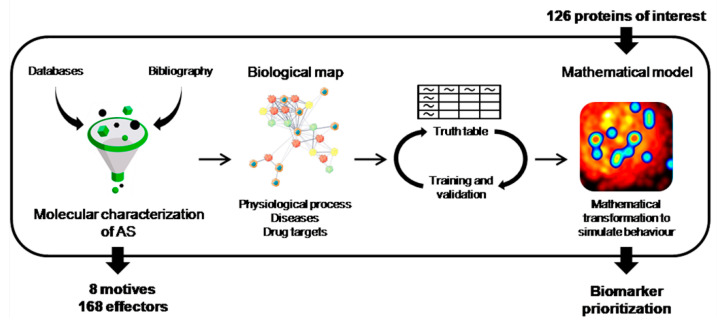
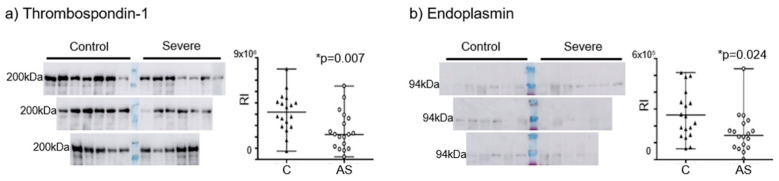
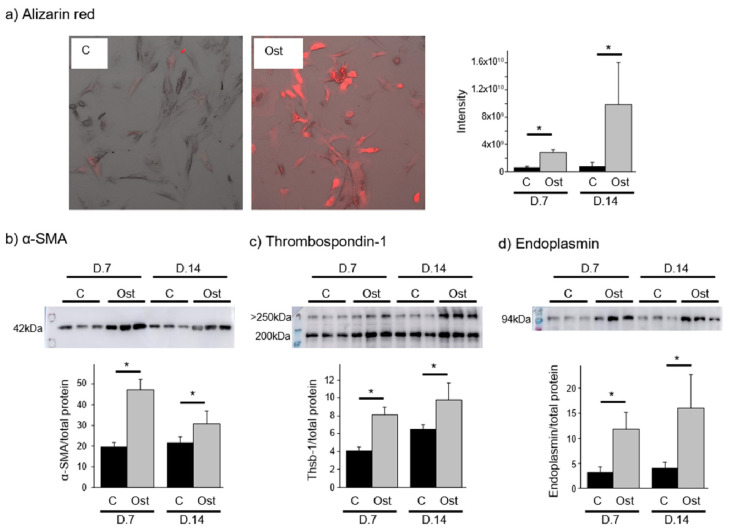
Degenerative aortic stenosis is the most common valve disease in the elderly and is usually confirmed at an advanced stage when the only treatment is surgery. This work is focused on the study of previously defined biomarkers through systems biology and artificial neuronal networks to understand their potential role within aortic stenosis. The goal was generating a molecular panel of biomarkers to ensure an accurate diagnosis, risk stratification, and follow-up of aortic stenosis patients. We used in silico studies to combine and re-analyze the results of our previous studies and, with information from multiple databases, established a mathematical model. After this, we prioritized two proteins related to endoplasmic reticulum stress, thrombospondin-1 and endoplasmin, which have not been previously validated as markers for aortic stenosis, and analyzed them in a cell model and in plasma from human subjects. Large-scale bioinformatics tools allow us to extract the most significant results after using high throughput analytical techniques. Our results could help to prevent the development of aortic stenosis and open the possibility of a future strategy based on more specific therapies.
退行性主动脉瓣狭窄是老年人中最常见的瓣膜疾病,通常在疾病晚期才得以确诊,此时唯一的治疗方法是手术。这项工作聚焦于通过系统生物学和人工神经网络对先前定义的生物标志物进行研究,以了解它们在主动脉瓣狭窄中的潜在作用。目标是生成一个生物标志物分子面板,以确保对主动脉瓣狭窄患者进行准确诊断、风险分层和随访。我们利用计算机模拟研究来整合和重新分析我们先前研究的结果,并结合多个数据库的信息,建立了一个数学模型。在此之后,我们将与内质网应激相关的两种蛋白质——血小板反应蛋白-1和内质网蛋白作为优先研究对象,这两种蛋白质此前尚未被确认为主动脉瓣狭窄的标志物,我们在细胞模型和人类受试者的血浆中对它们进行了分析。大规模生物信息学工具使我们能够在使用高通量分析技术后提取最重要的结果。我们的研究结果可能有助于预防主动脉瓣狭窄的发展,并为未来基于更特异性疗法的策略开辟可能性。