Department of Clinical Oncology and Chemotherapy, Medical University of Lublin, 20-090 Lublin, Poland.
Cells. 2022 Apr 14;11(8):1338. doi: 10.3390/cells11081338.
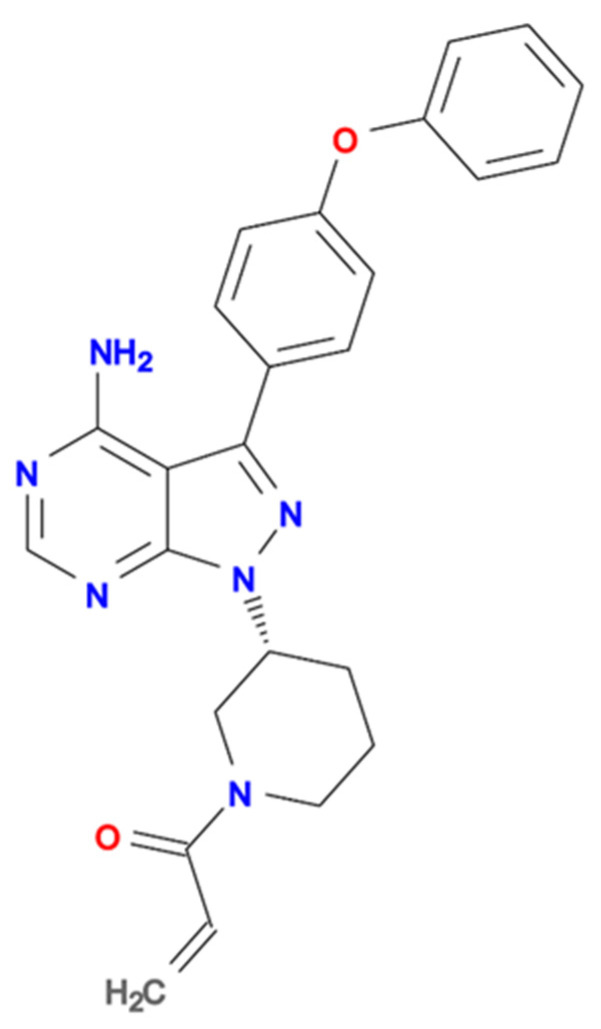
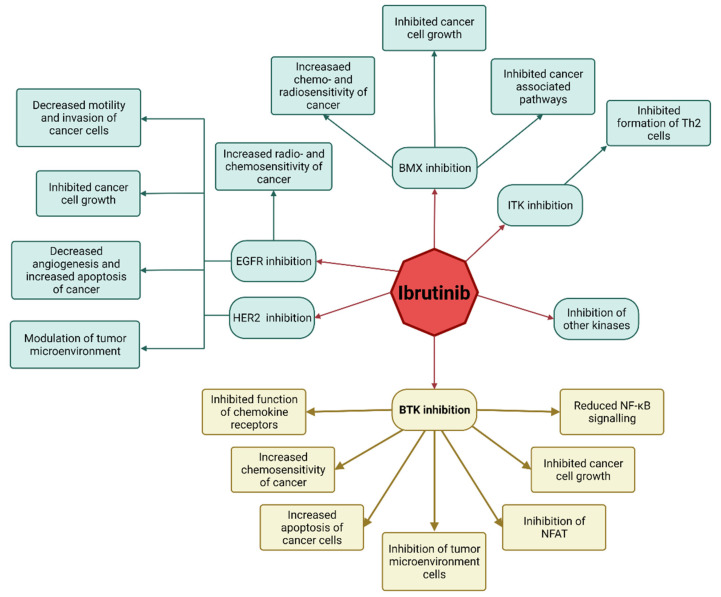
Bruton's Tyrosine Kinase (BTK) is considered crucial in the activation and survival of both physiological and malignant B-cells. In recent years, ibrutinib, an oral BTK inhibitor, became a breakthrough therapy for hematological malignancies, such as chronic lymphocytic. However, ibrutinib's feasibility might not end there. Several other kinases with established involvement with solid malignancies (i.e., EGFR, HER2) have been found to be inhibited by this agent. Recent discoveries indicate that BTK is a potential anti-solid tumor therapy target. Consequently, ibrutinib, a BTK-inhibitor, has been studied as a therapeutic option in solid malignancies. While most preclinical studies indicate ibrutinib to be an effective therapeutic option in some specific indications, such as NSCLC and breast cancer, clinical trials contradict these observations. Nevertheless, while ibrutinib failed as a monotherapy, it might become an interesting part of a multidrug regime: not only has a synergism between ibrutinib and other compounds, such as trametinib or dactolisib, been observed in vitro, but this BTK inhibitor has also been established as a radio- and chemosensitizer. This review aims to describe the milestones in translating BTK inhibitors to solid tumors in order to understand the future potential of this agent better.
布鲁顿酪氨酸激酶(BTK)被认为在生理和恶性 B 细胞的激活和存活中至关重要。近年来,一种口服 BTK 抑制剂伊布替尼成为治疗血液恶性肿瘤(如慢性淋巴细胞白血病)的突破性疗法。然而,伊布替尼的可行性可能不止于此。其他几种已确定与实体恶性肿瘤(即 EGFR、HER2)有关的激酶也被发现被该药物抑制。最近的发现表明,BTK 是一种潜在的治疗实体肿瘤的靶点。因此,BTK 抑制剂伊布替尼已被研究作为实体恶性肿瘤的治疗选择。虽然大多数临床前研究表明伊布替尼在某些特定适应症(如 NSCLC 和乳腺癌)中是一种有效的治疗选择,但临床试验与这些观察结果相矛盾。然而,尽管伊布替尼作为单一疗法失败,但它可能成为多药治疗方案的一个有趣部分:不仅在体外观察到伊布替尼与其他化合物(如 trametinib 或 dactolisib)之间存在协同作用,而且这种 BTK 抑制剂也已被确立为放射增敏剂和化疗增敏剂。本综述旨在描述将 BTK 抑制剂转化为实体瘤的里程碑,以更好地了解该药物的未来潜力。