
机械生长因子通过靶向 Rac1-PAK1/2 和 RhoA-ROCK1 通路加速 ACL 修复并改善机械损伤的人 ACL 成纤维细胞的细胞迁移。
Mechano Growth Factor Accelerates ACL Repair and Improves Cell Mobility of Mechanically Injured Human ACL Fibroblasts by Targeting Rac1-PAK1/2 and RhoA-ROCK1 Pathways.
机构信息
Center for Precision Medicine, School of Medicine and School of Biomedical Sciences, Huaqiao University, Xiamen 361021, China.
National Innovation and Attracting Talents "111" Base, Key Laboratory of Biorheological Science and Technology, Ministry of Education, College of Bioengineering, Chongqing University, Chongqing 400030, China.
出版信息
Int J Mol Sci. 2022 Apr 14;23(8):4331. doi: 10.3390/ijms23084331.
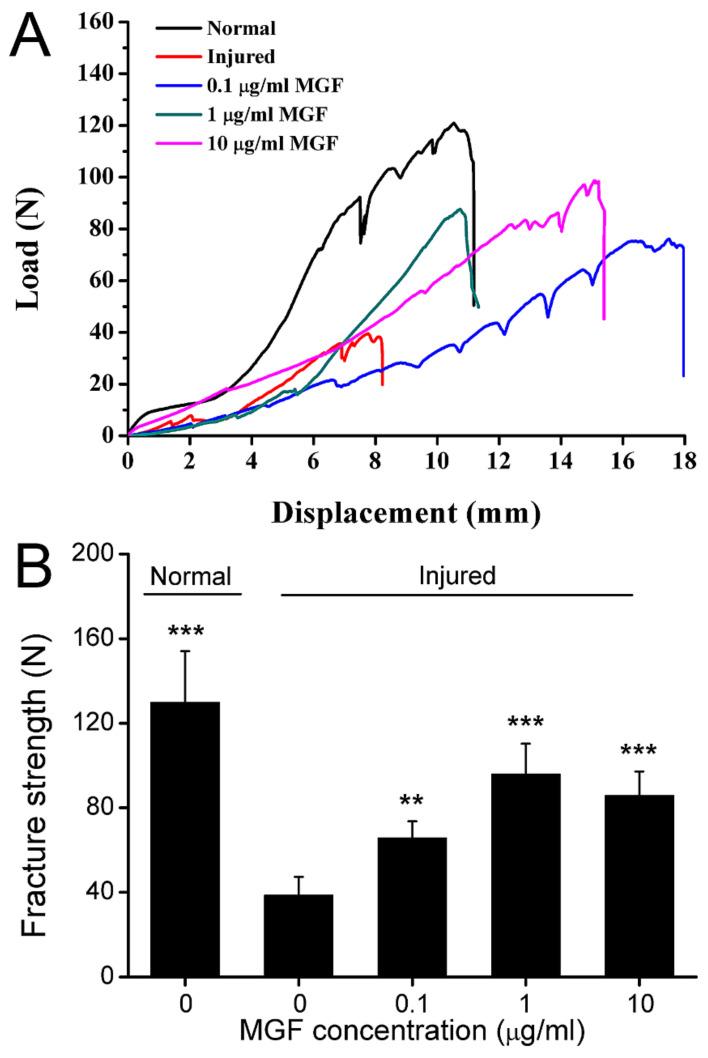
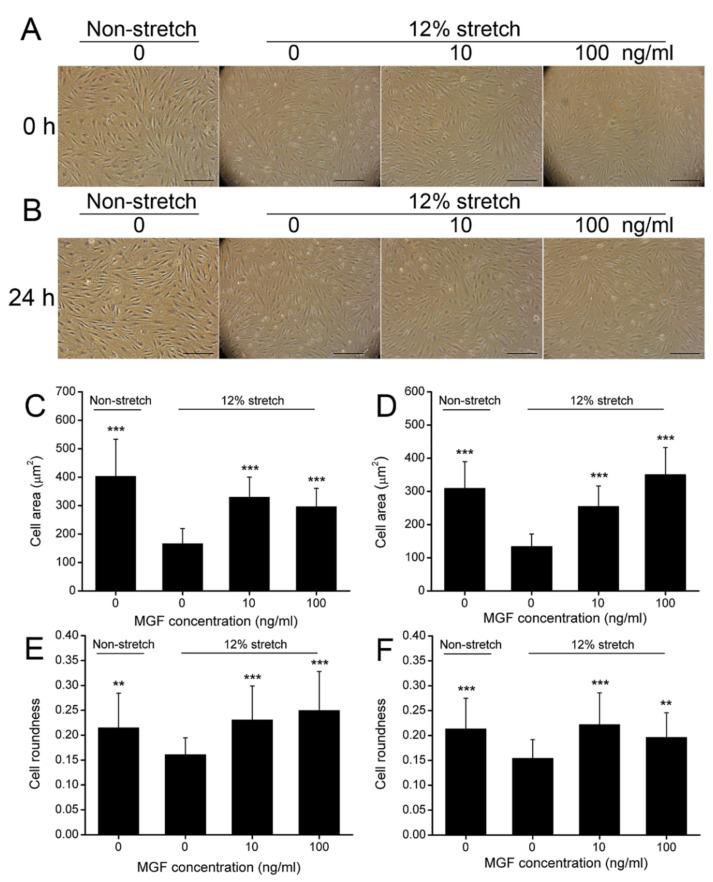
Exceeded mechanical stress leads to a sublethal injury to anterior cruciate ligament (ACL) fibroblasts, and it will hinder cell mobility and ACL regeneration, and even induce osteoarthritis. The mechano growth factor (MGF) could be responsible for mechanical stress and weakening its negative effects on cell physiological behaviors. In this study, effects of MGF on cell mobility and relevant molecules expression in injured ACL fibroblasts were detected. After an injurious mechanical stretch, the analysis carried out, at 0 and 24 h, respectively, showed that the cell area, roundness, migration, and adhesion of ACL fibroblasts were reduced. MGF (10, 100 ng/mL) treatment could improve cell area, roundness and promote cell migration and adhesion capacity compared with the injured group without MGF. Further study indicated that cell mobility-relevant molecules (PAK1/2, Cdc42, Rac1, RhoA, and ROCK1) expression in ACL fibroblasts was down-regulated at 0 or 24 h after injurious stretch (except Rac1 and RhoA at 0 h). Similarly, MGF improved cell mobility-relevant molecule expression, especially the ROCK1 expression level in ACL fibroblasts at 0 or 24 h after injurious stretch. Protein expression of ROCK1 in injured ACL fibroblasts was also reduced and could be recovered by MGF treatment. In a rabbit partial ACL transection (ACLT) model, ACL exhibited poor regenerative capacity in collagen and extracellular matrix (ECM) synthesis after partial ACLT for 2 or 4 weeks, and MGF remarkably accelerated ACL regeneration and restored its mechanical loading capacity after partial ACLT for four weeks. Our findings suggest that MGF weakens the effects of pathological stress on cell mobility of ACL fibroblasts and accelerates ACL repair, and might be applied as a future treatment approach to ACL rupture in the clinic.
机械应力过大可导致前交叉韧带 (ACL) 成纤维细胞亚致死损伤,从而阻碍细胞迁移和 ACL 再生,甚至诱发骨关节炎。机械生长因子 (MGF) 可能与机械应力有关,并减弱其对细胞生理行为的负面影响。在本研究中,检测了 MGF 对损伤的 ACL 成纤维细胞的细胞迁移能力和相关分子表达的影响。在损伤性机械拉伸后,分别在 0 和 24 小时进行分析,结果显示 ACL 成纤维细胞的细胞面积、圆度、迁移和黏附能力降低。与未用 MGF 处理的损伤组相比,MGF(10、100ng/ml)处理可改善细胞面积、圆度,并促进细胞迁移和黏附能力。进一步研究表明,损伤性拉伸后 0 或 24 小时(除 Rac1 和 RhoA 在 0 小时外)ACL 成纤维细胞中与细胞迁移相关的分子(PAK1/2、Cdc42、Rac1、RhoA 和 ROCK1)表达下调。同样,MGF 可改善损伤性拉伸后 0 或 24 小时 ACL 成纤维细胞中与细胞迁移相关的分子表达,特别是 ROCK1 表达水平。损伤的 ACL 成纤维细胞中 ROCK1 的蛋白表达减少,MGF 处理可恢复其表达。在兔部分 ACL 横断 (ACLT) 模型中,部分 ACLT 后 2 或 4 周,ACL 在胶原和细胞外基质 (ECM) 合成方面表现出较差的再生能力,而 MGF 可显著加速 ACL 修复,并在部分 ACLT 后 4 周恢复其机械加载能力。我们的研究结果表明,MGF 可减弱病理应激对 ACL 成纤维细胞迁移能力的影响,并加速 ACL 修复,有望成为未来临床 ACL 断裂的治疗方法。



 Zotero 插件