• 文献检索
  • 文档翻译
  • 深度研究
  • 学术资讯
  • Suppr Zotero 插件Zotero 插件
  • 邀请有礼
  • 套餐&价格
  • 历史记录
应用&插件
Suppr Zotero 插件Zotero 插件浏览器插件Mac 客户端Windows 客户端微信小程序
定价
高级版会员购买积分包购买API积分包
服务
文献检索文档翻译深度研究API 文档MCP 服务
关于我们
关于 Suppr公司介绍联系我们用户协议隐私条款
关注我们

Suppr 超能文献

核心技术专利:CN118964589B侵权必究
粤ICP备2023148730 号-1Suppr @ 2026

文献检索

告别复杂PubMed语法,用中文像聊天一样搜索,搜遍4000万医学文献。AI智能推荐,让科研检索更轻松。

立即免费搜索

文件翻译

保留排版,准确专业,支持PDF/Word/PPT等文件格式,支持 12+语言互译。

免费翻译文档

深度研究

AI帮你快速写综述,25分钟生成高质量综述,智能提取关键信息,辅助科研写作。

立即免费体验

SARS-CoV-2 Mpro 抑制剂研发进展。

Advances in the Development of SARS-CoV-2 Mpro Inhibitors.

机构信息

Departament de Química Inorgànica i Orgànica, Universitat Jaume I, 12080 Castelló, Spain.

Departament de Química Física i Analítica, Universitat Jaume I, 12080 Castelló, Spain.

出版信息

Molecules. 2022 Apr 14;27(8):2523. doi: 10.3390/molecules27082523.

DOI:10.3390/molecules27082523
PMID:35458721
原文链接:https://pmc.ncbi.nlm.nih.gov/articles/PMC9026863/
Abstract

Since the outbreak of COVID-19, one of the strategies used to search for new drugs has been to find inhibitors of the main protease (Mpro) of the virus SARS-CoV-2. Initially, previously reported inhibitors of related proteases such as the main proteases of SARS-CoV and MERS-CoV were tested. A huge effort was then carried out by the scientific community to design, synthesize and test new small molecules acting as inactivators of SARS-CoV-2 Mpro. From the chemical structure view, these compounds can be classified into two main groups: one corresponds to modified peptides displaying an adequate sequence for high affinity and a reactive warhead; and the second is a diverse group including chemical compounds that do not have a peptide framework. Although a drug including a SARS-CoV-2 main protease inhibitor has already been commercialized, denoting the importance of this field, more compounds have been demonstrated to be promising potent inhibitors as potential antiviral drugs.

摘要

自 COVID-19 爆发以来,寻找新药的策略之一是寻找病毒 SARS-CoV-2 的主要蛋白酶(Mpro)抑制剂。最初,测试了先前报道的相关蛋白酶抑制剂,如 SARS-CoV 和 MERS-CoV 的主要蛋白酶抑制剂。然后,科学界进行了巨大的努力来设计、合成和测试新的小分子,作为 SARS-CoV-2 Mpro 的失活剂。从化学结构的角度来看,这些化合物可以分为两大类:一类是修饰肽,具有高亲和力的适当序列和反应性弹头;另一类是包括不具有肽骨架的化学化合物的多样化基团。尽管已经有一种包含 SARS-CoV-2 主要蛋白酶抑制剂的药物实现商业化,这表明该领域的重要性,但更多的化合物已被证明是有前途的强效抑制剂,可作为潜在的抗病毒药物。
https://cdn.ncbi.nlm.nih.gov/pmc/blobs/ca97/9026863/aefbc03d5afc/molecules-27-02523-g021.jpg
https://cdn.ncbi.nlm.nih.gov/pmc/blobs/ca97/9026863/cd68122b0207/molecules-27-02523-g001.jpg
https://cdn.ncbi.nlm.nih.gov/pmc/blobs/ca97/9026863/9d0f0092b495/molecules-27-02523-g002.jpg
https://cdn.ncbi.nlm.nih.gov/pmc/blobs/ca97/9026863/dec6826e0cea/molecules-27-02523-g003.jpg
https://cdn.ncbi.nlm.nih.gov/pmc/blobs/ca97/9026863/76177c951283/molecules-27-02523-g004.jpg
https://cdn.ncbi.nlm.nih.gov/pmc/blobs/ca97/9026863/e2ab0b448125/molecules-27-02523-g005.jpg
https://cdn.ncbi.nlm.nih.gov/pmc/blobs/ca97/9026863/92bf9fd1c65c/molecules-27-02523-g006.jpg
https://cdn.ncbi.nlm.nih.gov/pmc/blobs/ca97/9026863/cdca8afb86a0/molecules-27-02523-g007.jpg
https://cdn.ncbi.nlm.nih.gov/pmc/blobs/ca97/9026863/95488aceab69/molecules-27-02523-g008.jpg
https://cdn.ncbi.nlm.nih.gov/pmc/blobs/ca97/9026863/978fc321ad45/molecules-27-02523-g009.jpg
https://cdn.ncbi.nlm.nih.gov/pmc/blobs/ca97/9026863/18d5a37d5d11/molecules-27-02523-g010.jpg
https://cdn.ncbi.nlm.nih.gov/pmc/blobs/ca97/9026863/af25fab3bdfe/molecules-27-02523-g011.jpg
https://cdn.ncbi.nlm.nih.gov/pmc/blobs/ca97/9026863/0422a79be7f8/molecules-27-02523-g012.jpg
https://cdn.ncbi.nlm.nih.gov/pmc/blobs/ca97/9026863/5ce9762dfde0/molecules-27-02523-g013.jpg
https://cdn.ncbi.nlm.nih.gov/pmc/blobs/ca97/9026863/ccde30f04586/molecules-27-02523-g014.jpg
https://cdn.ncbi.nlm.nih.gov/pmc/blobs/ca97/9026863/789cc1a0707c/molecules-27-02523-g015.jpg
https://cdn.ncbi.nlm.nih.gov/pmc/blobs/ca97/9026863/ab721df619bf/molecules-27-02523-g016.jpg
https://cdn.ncbi.nlm.nih.gov/pmc/blobs/ca97/9026863/98bc53f2fcad/molecules-27-02523-g017.jpg
https://cdn.ncbi.nlm.nih.gov/pmc/blobs/ca97/9026863/a659d50a0366/molecules-27-02523-g018.jpg
https://cdn.ncbi.nlm.nih.gov/pmc/blobs/ca97/9026863/9d041709ca7b/molecules-27-02523-g019.jpg
https://cdn.ncbi.nlm.nih.gov/pmc/blobs/ca97/9026863/c1accebc9bff/molecules-27-02523-g020.jpg
https://cdn.ncbi.nlm.nih.gov/pmc/blobs/ca97/9026863/aefbc03d5afc/molecules-27-02523-g021.jpg
https://cdn.ncbi.nlm.nih.gov/pmc/blobs/ca97/9026863/cd68122b0207/molecules-27-02523-g001.jpg
https://cdn.ncbi.nlm.nih.gov/pmc/blobs/ca97/9026863/9d0f0092b495/molecules-27-02523-g002.jpg
https://cdn.ncbi.nlm.nih.gov/pmc/blobs/ca97/9026863/dec6826e0cea/molecules-27-02523-g003.jpg
https://cdn.ncbi.nlm.nih.gov/pmc/blobs/ca97/9026863/76177c951283/molecules-27-02523-g004.jpg
https://cdn.ncbi.nlm.nih.gov/pmc/blobs/ca97/9026863/e2ab0b448125/molecules-27-02523-g005.jpg
https://cdn.ncbi.nlm.nih.gov/pmc/blobs/ca97/9026863/92bf9fd1c65c/molecules-27-02523-g006.jpg
https://cdn.ncbi.nlm.nih.gov/pmc/blobs/ca97/9026863/cdca8afb86a0/molecules-27-02523-g007.jpg
https://cdn.ncbi.nlm.nih.gov/pmc/blobs/ca97/9026863/95488aceab69/molecules-27-02523-g008.jpg
https://cdn.ncbi.nlm.nih.gov/pmc/blobs/ca97/9026863/978fc321ad45/molecules-27-02523-g009.jpg
https://cdn.ncbi.nlm.nih.gov/pmc/blobs/ca97/9026863/18d5a37d5d11/molecules-27-02523-g010.jpg
https://cdn.ncbi.nlm.nih.gov/pmc/blobs/ca97/9026863/af25fab3bdfe/molecules-27-02523-g011.jpg
https://cdn.ncbi.nlm.nih.gov/pmc/blobs/ca97/9026863/0422a79be7f8/molecules-27-02523-g012.jpg
https://cdn.ncbi.nlm.nih.gov/pmc/blobs/ca97/9026863/5ce9762dfde0/molecules-27-02523-g013.jpg
https://cdn.ncbi.nlm.nih.gov/pmc/blobs/ca97/9026863/ccde30f04586/molecules-27-02523-g014.jpg
https://cdn.ncbi.nlm.nih.gov/pmc/blobs/ca97/9026863/789cc1a0707c/molecules-27-02523-g015.jpg
https://cdn.ncbi.nlm.nih.gov/pmc/blobs/ca97/9026863/ab721df619bf/molecules-27-02523-g016.jpg
https://cdn.ncbi.nlm.nih.gov/pmc/blobs/ca97/9026863/98bc53f2fcad/molecules-27-02523-g017.jpg
https://cdn.ncbi.nlm.nih.gov/pmc/blobs/ca97/9026863/a659d50a0366/molecules-27-02523-g018.jpg
https://cdn.ncbi.nlm.nih.gov/pmc/blobs/ca97/9026863/9d041709ca7b/molecules-27-02523-g019.jpg
https://cdn.ncbi.nlm.nih.gov/pmc/blobs/ca97/9026863/c1accebc9bff/molecules-27-02523-g020.jpg
https://cdn.ncbi.nlm.nih.gov/pmc/blobs/ca97/9026863/aefbc03d5afc/molecules-27-02523-g021.jpg

相似文献

1
Advances in the Development of SARS-CoV-2 Mpro Inhibitors.SARS-CoV-2 Mpro 抑制剂研发进展。
Molecules. 2022 Apr 14;27(8):2523. doi: 10.3390/molecules27082523.
2
An automated positive selection screen in yeast provides support for boron-containing compounds as inhibitors of SARS-CoV-2 main protease.酵母中的自动正向筛选实验为含硼化合物作为 SARS-CoV-2 主蛋白酶抑制剂提供了支持。
Microbiol Spectr. 2024 Oct 3;12(10):e0124924. doi: 10.1128/spectrum.01249-24. Epub 2024 Aug 20.
3
Biflavonoids from as probable natural inhibitors against SARS-CoV-2: a molecular docking and molecular dynamics approach.从 中提取的双黄酮类化合物可能是对抗 SARS-CoV-2 的天然抑制剂:一种分子对接和分子动力学方法。
J Biomol Struct Dyn. 2022 Jul;40(10):4376-4388. doi: 10.1080/07391102.2020.1858165. Epub 2020 Dec 10.
4
Covalent small-molecule inhibitors of SARS-CoV-2 Mpro: Insights into their design, classification, biological activity, and binding interactions.SARS-CoV-2 Mpro 的共价小分子抑制剂:设计、分类、生物活性和结合相互作用的见解。
Eur J Med Chem. 2024 Nov 5;277:116704. doi: 10.1016/j.ejmech.2024.116704. Epub 2024 Aug 8.
5
Identification of potent COVID-19 main protease inhibitors by loading of favipiravir on MgO and ZnO nanoclusters: an strategy for COVID-19 treatment.通过将法匹拉韦加载到 MgO 和 ZnO 纳米团簇上来鉴定有效的 COVID-19 主蛋白酶抑制剂:一种治疗 COVID-19 的策略。
J Biomol Struct Dyn. 2023;41(21):11437-11449. doi: 10.1080/07391102.2022.2162967. Epub 2023 Jan 2.
6
Conserved interactions required for inhibition of the main protease of severe acute respiratory syndrome coronavirus 2 (SARS-CoV-2).抑制严重急性呼吸综合征冠状病毒 2 (SARS-CoV-2) 主蛋白酶所需的保守相互作用。
Sci Rep. 2020 Nov 30;10(1):20808. doi: 10.1038/s41598-020-77794-5.
7
screening of phytopolyphenolics for the identification of bioactive compounds as novel protease inhibitors effective against SARS-CoV-2.筛选植物多酚类化合物,以鉴定新型蛋白酶抑制剂,有效对抗 SARS-CoV-2。
J Biomol Struct Dyn. 2022;40(20):10437-10453. doi: 10.1080/07391102.2021.1944909. Epub 2021 Jun 28.
8
Depicting the inhibitory potential of polyphenols from root against the main protease of SARS CoV-2 using computational approaches.利用计算方法描绘根多酚对 SARS CoV-2 主要蛋白酶的抑制潜力。
J Biomol Struct Dyn. 2022 Jun;40(9):4110-4121. doi: 10.1080/07391102.2020.1858164. Epub 2020 Dec 9.
9
In-silico guided design, screening, and molecular dynamic simulation studies for the identification of potential SARS-CoV-2 main protease inhibitors for the targeted treatment of COVID-19.基于计算机的设计、筛选和分子动力学模拟研究,以鉴定针对 COVID-19 的潜在 SARS-CoV-2 主蛋白酶抑制剂,用于靶向治疗。
J Biomol Struct Dyn. 2024 Feb-Mar;42(4):1733-1750. doi: 10.1080/07391102.2023.2202247. Epub 2023 Apr 28.
10
Inhibitors of SARS-CoV-2 Main Protease (Mpro) as Anti-Coronavirus Agents.SARS-CoV-2 主蛋白酶(Mpro)抑制剂作为抗冠状病毒药物。
Biomolecules. 2024 Jul 4;14(7):797. doi: 10.3390/biom14070797.

引用本文的文献

1
Structural basis for varying drug resistance of SARS-CoV-2 M E166 variants.新冠病毒M E166变体不同耐药性的结构基础
mBio. 2025 Jul 9;16(7):e0262424. doi: 10.1128/mbio.02624-24. Epub 2025 Jun 2.
2
Computational and Experimental Study of the Conformational Variation of the Catalytic Residue His41 of the SARS-CoV-2 Main Protease.新型冠状病毒主要蛋白酶催化残基His41构象变化的计算与实验研究
J Phys Chem B. 2025 May 29;129(21):5198-5206. doi: 10.1021/acs.jpcb.5c01718. Epub 2025 May 19.
3
Discovering broad-spectrum inhibitors for SARS-CoV-2 variants: a cheminformatics and biophysical approach targeting the main protease.

本文引用的文献

1
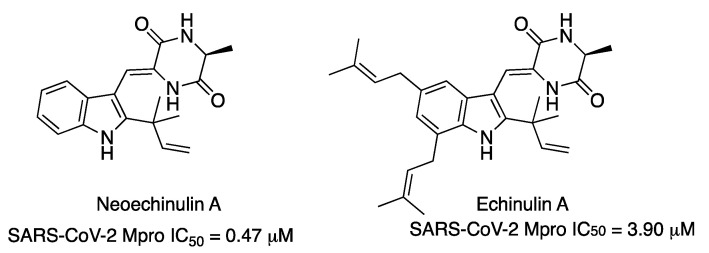
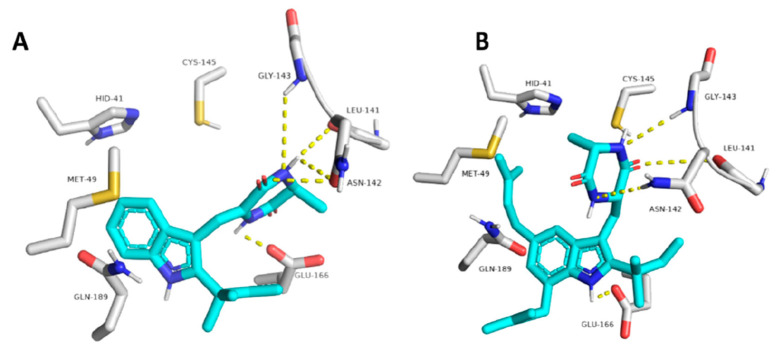
Neoechinulin A as a Promising SARS-CoV-2 M Inhibitor: In Vitro and In Silico Study Showing the Ability of Simulations in Discerning Active from Inactive Enzyme Inhibitors.新型棘白菌素 A 作为一种有前途的 SARS-CoV-2 M 抑制剂:体外和计算机模拟研究表明,模拟能够区分活性和非活性酶抑制剂。
Mar Drugs. 2022 Feb 24;20(3):163. doi: 10.3390/md20030163.
2
Orally administered bismuth drug together with -acetyl cysteine as a broad-spectrum anti-coronavirus cocktail therapy.口服铋剂药物与 N-乙酰半胱氨酸联合使用作为一种广谱抗冠状病毒鸡尾酒疗法。
Chem Sci. 2021 Dec 3;13(8):2238-2248. doi: 10.1039/d1sc04515f. eCollection 2022 Feb 23.
3
发现针对新冠病毒变异株的广谱抑制剂:一种针对主要蛋白酶的化学信息学和生物物理学方法
Front Pharmacol. 2025 Feb 5;16:1459581. doi: 10.3389/fphar.2025.1459581. eCollection 2025.
4
Recognition and cleavage of human tRNA methyltransferase TRMT1 by the SARS-CoV-2 main protease.新型冠状病毒2型主要蛋白酶对人tRNA甲基转移酶TRMT1的识别与切割
Elife. 2025 Jan 7;12:RP91168. doi: 10.7554/eLife.91168.
5
Advances in the Search for SARS-CoV-2 M and PL Inhibitors.新型冠状病毒M和PL抑制剂的研究进展
Pathogens. 2024 Sep 24;13(10):825. doi: 10.3390/pathogens13100825.
6
Insights into the Main Protease of SARS-CoV-2: Thermodynamic Analysis, Structural Characterization, and the Impact of Inhibitors.深入了解 SARS-CoV-2 的主要蛋白酶:热力学分析、结构特征及抑制剂的影响。
Anal Chem. 2024 Oct 8;96(40):15898-15906. doi: 10.1021/acs.analchem.4c02311. Epub 2024 Sep 25.
7
Development of a new experimental NMR strategy for covalent cysteine protease inhibitors screening: toward enhanced drug discovery.用于共价半胱氨酸蛋白酶抑制剂筛选的新型实验性核磁共振策略的开发:迈向增强药物发现
RSC Adv. 2024 Aug 23;14(37):26829-26836. doi: 10.1039/d4ra04938a. eCollection 2024 Aug 22.
8
In Silico Comparative Analysis of Ivermectin and Nirmatrelvir Inhibitors Interacting with the SARS-CoV-2 Main Protease.伊维菌素和奈玛特韦抑制剂与 SARS-CoV-2 主蛋白酶相互作用的计算机比较分析。
Biomolecules. 2024 Jun 25;14(7):755. doi: 10.3390/biom14070755.
9
Computational Insights into SARS-CoV-2 Main Protease Mutations and Nirmatrelvir Efficacy: The Effects of P132H and P132H-A173V.对 SARS-CoV-2 主蛋白酶突变和奈玛特韦疗效的计算洞察:P132H 和 P132H-A173V 的影响。
J Chem Inf Model. 2024 Jul 8;64(13):5207-5218. doi: 10.1021/acs.jcim.4c00334. Epub 2024 Jun 24.
10
Screening of M Protease (SARS-CoV-2) Covalent Inhibitors from an Anthocyanin-Rich Blueberry Extract Using an HRMS-Based Analytical Platform.基于高分辨质谱分析平台筛选富含花色苷的蓝莓提取物中的 M 蛋白酶(SARS-CoV-2)共价抑制剂。
Molecules. 2024 Jun 6;29(11):2702. doi: 10.3390/molecules29112702.
Non-covalent SARS-CoV-2 M inhibitors developed from in silico screen hits.
基于计算机筛选命中物开发的非共价 SARS-CoV-2 M 抑制剂。
Sci Rep. 2022 Feb 15;12(1):2505. doi: 10.1038/s41598-022-06306-4.
4
Ultralarge Virtual Screening Identifies SARS-CoV-2 Main Protease Inhibitors with Broad-Spectrum Activity against Coronaviruses.超大规模虚拟筛选鉴定出针对冠状病毒具有广谱活性的 SARS-CoV-2 主蛋白酶抑制剂。
J Am Chem Soc. 2022 Feb 23;144(7):2905-2920. doi: 10.1021/jacs.1c08402. Epub 2022 Feb 10.
5
Design, synthesis and in vitro evaluation of novel SARS-CoV-2 3CL covalent inhibitors.设计、合成新型 SARS-CoV-2 3CL 共价抑制剂,并进行体外评估。
Eur J Med Chem. 2022 Feb 5;229:114046. doi: 10.1016/j.ejmech.2021.114046. Epub 2021 Dec 11.
6
Discovery of 9,10-dihydrophenanthrene derivatives as SARS-CoV-2 3CL inhibitors for treating COVID-19.发现 9,10-二氢菲衍生物作为 SARS-CoV-2 3CL 抑制剂用于治疗 COVID-19。
Eur J Med Chem. 2022 Jan 15;228:114030. doi: 10.1016/j.ejmech.2021.114030. Epub 2021 Dec 1.
7
The Mpro structure-based modifications of ebselen derivatives for improved antiviral activity against SARS-CoV-2 virus.基于Mpro结构对依布硒啉衍生物进行修饰以提高其对严重急性呼吸综合征冠状病毒2(SARS-CoV-2)的抗病毒活性。
Bioorg Chem. 2021 Dec;117:105455. doi: 10.1016/j.bioorg.2021.105455. Epub 2021 Oct 30.
8
An oral SARS-CoV-2 M inhibitor clinical candidate for the treatment of COVID-19.一种用于治疗 COVID-19 的口服 SARS-CoV-2 M 抑制剂临床候选药物。
Science. 2021 Dec 24;374(6575):1586-1593. doi: 10.1126/science.abl4784. Epub 2021 Nov 2.
9
Structure-Based Discovery and Structural Basis of a Novel Broad-Spectrum Natural Product against the Main Protease of Coronavirus.基于结构的发现和一种新型广谱天然产物对冠状病毒主要蛋白酶的结构基础。
J Virol. 2022 Jan 12;96(1):e0125321. doi: 10.1128/JVI.01253-21. Epub 2021 Sep 29.
10
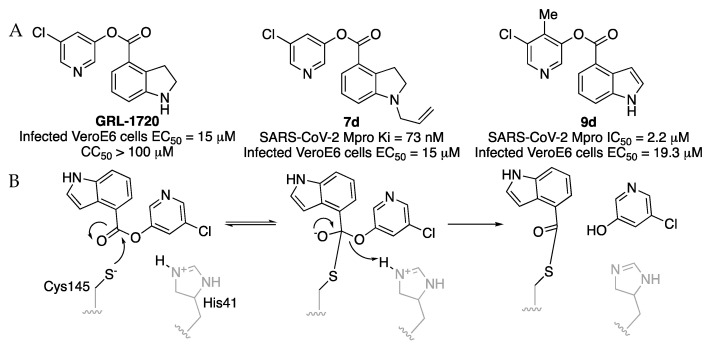
Indole Chloropyridinyl Ester-Derived SARS-CoV-2 3CLpro Inhibitors: Enzyme Inhibition, Antiviral Efficacy, Structure-Activity Relationship, and X-ray Structural Studies.吲哚氯吡啶基酯衍生的 SARS-CoV-2 3CLpro 抑制剂:酶抑制、抗病毒功效、构效关系和 X 射线结构研究。
J Med Chem. 2021 Oct 14;64(19):14702-14714. doi: 10.1021/acs.jmedchem.1c01214. Epub 2021 Sep 16.