Peng Dandan, Fu Minyang, Wang Manni, Wei Yuquan, Wei Xiawei
Laboratory of Aging Research and Cancer Drug Target, State Key Laboratory of Biotherapy, National Clinical Research Center for Geriatrics, West China Hospital, Sichuan University, No. 17, Block 3, Southern Renmin Road, Chengdu, 610041, PR, Sichuan, China.
Mol Cancer. 2022 Apr 23;21(1):104. doi: 10.1186/s12943-022-01569-x.
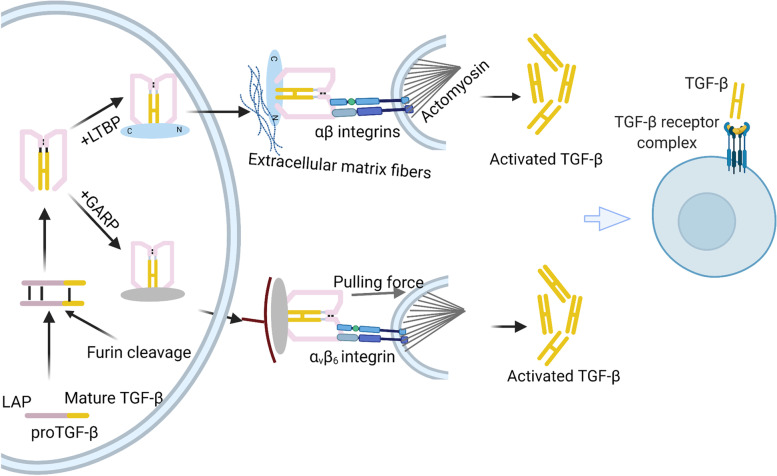
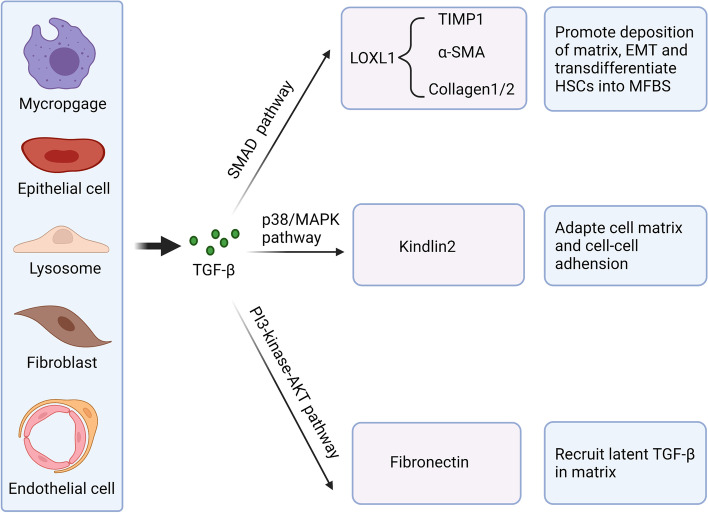
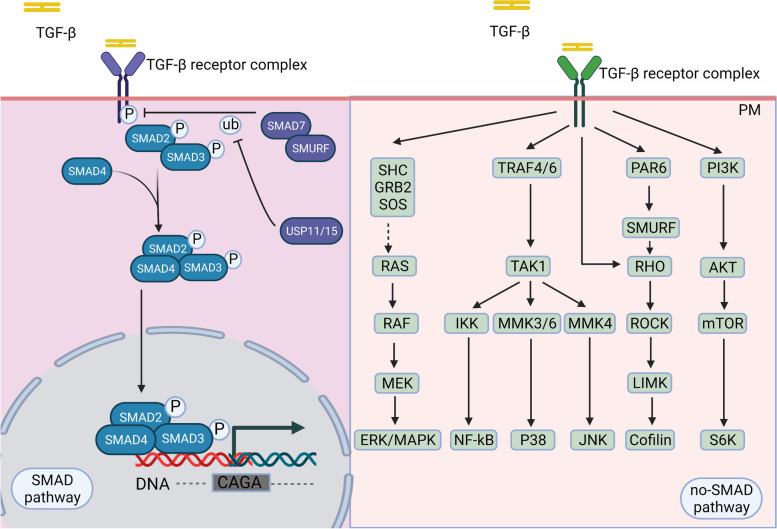
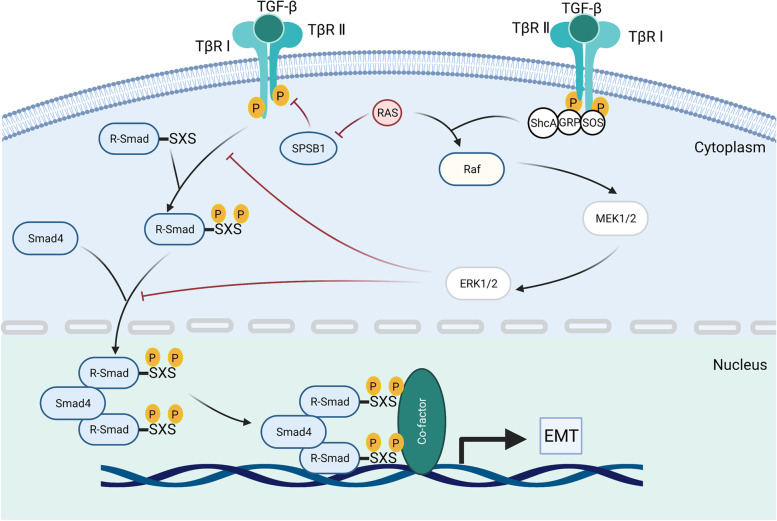
Transforming growth factor β (TGF-β) has long been identified with its intensive involvement in early embryonic development and organogenesis, immune supervision, tissue repair, and adult homeostasis. The role of TGF-β in fibrosis and cancer is complex and sometimes even contradictory, exhibiting either inhibitory or promoting effects depending on the stage of the disease. Under pathological conditions, overexpressed TGF-β causes epithelial-mesenchymal transition (EMT), extracellular matrix (ECM) deposition, cancer-associated fibroblast (CAF) formation, which leads to fibrotic disease, and cancer. Given the critical role of TGF-β and its downstream molecules in the progression of fibrosis and cancers, therapeutics targeting TGF-β signaling appears to be a promising strategy. However, due to potential systemic cytotoxicity, the development of TGF-β therapeutics has lagged. In this review, we summarized the biological process of TGF-β, with its dual role in fibrosis and tumorigenesis, and the clinical application of TGF-β-targeting therapies.
转化生长因子β(TGF-β)长期以来一直被认为深度参与早期胚胎发育和器官发生、免疫监督、组织修复以及成人内环境稳态。TGF-β在纤维化和癌症中的作用复杂,有时甚至相互矛盾,根据疾病阶段表现出抑制或促进作用。在病理条件下,过度表达的TGF-β会导致上皮-间质转化(EMT)、细胞外基质(ECM)沉积、癌症相关成纤维细胞(CAF)形成,进而导致纤维化疾病和癌症。鉴于TGF-β及其下游分子在纤维化和癌症进展中的关键作用,靶向TGF-β信号传导的治疗方法似乎是一种有前景的策略。然而,由于潜在的全身细胞毒性,TGF-β治疗药物的开发滞后。在这篇综述中,我们总结了TGF-β的生物学过程、其在纤维化和肿瘤发生中的双重作用以及靶向TGF-β治疗的临床应用。