Lei Xiaoyang, Guo Shipeng, Cui Shengnan, Pu Yin, Zhang Anni, He Dian
Department of Neurology, The Affiliated Hospital of Guizhou Medical University, Guiyang, China.
Front Neurol. 2022 Apr 6;13:830488. doi: 10.3389/fneur.2022.830488. eCollection 2022.
The clinical spectrum of myelin oligodendrocyte glycoprotein antibody-associated disease (MOGAD) is expanding over time. However, the long-term management and prognosis of this disorder are still controversial. Therefore, this study aimed to report the clinical profiles and treatment outcomes of MOGAD in our center.
This was a single-center case-series study. Clinical and para-clinical data, along with treatment outcomes of patients with MOGAD were analyzed.
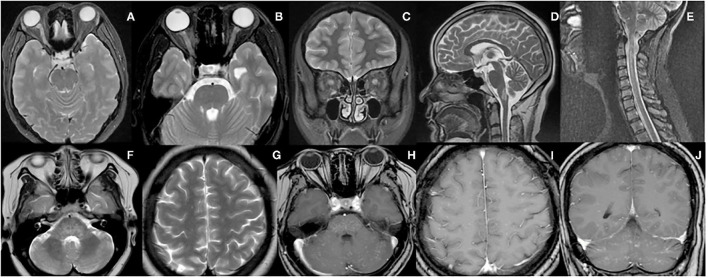
A total of 27 patients were identified, of which 19 (70%) patients were women, and the median age at disease onset was 40 years (range 20-67). A total of 47 episodes were observed, with optic neuritis (53%) being the most frequent presentation and 60% of them were unilateral. Other presentations included rhombencephalitis (RE) (17%), limbic encephalitis (9%), simultaneous optic neuritis and myelitis (9%), acute disseminated encephalomyelitis (ADEM)-like presentation (6%), myelitis (4%), and ADEM (2%). One patient presenting with RE also met the diagnostic criteria of area postrema syndrome (APS). Another patient with RE presented with imaging characteristics of chronic lymphocytic inflammation with pontine perivascular enhancement responsive to steroids (CLIPPERS). A total of 29 lumbar punctures were recorded, among which an elevated protein level was found in 34% of the samples, pleocytosis was found in 14% of the samples, and positive intrathecal oligoclonal bands were found in 19% of the patients. One patient was found to have anti-N-methyl-D-aspartate receptor antibodies both in his serum and cerebrospinal fluid. Intravenous methylprednisolone (IVMP) was administrated for 85% of the attacks while both IVMP and intravenous immunoglobulin were for 6% of the attacks. Moreover, nine patients received maintenance therapy. Among them, six patients were treated with mycophenolate mofetil, three patients were treated with prednisone, rituximab, and teriflunomide, respectively. The median follow-up period was 20 months (range 6-127). At follow-up, twelve (44%) patients experienced a relapsing course, and the median time to the first relapse was 9.5 months (range 2-120). The median Expanded Disability Status Scale score at nadir was 3.5 (range 2-8) and was 0 (range 0-3) at the last follow-up.
The clinical spectrum of MOGAD is heterogenous, wherein APS and CLIPPERS-form can occur. The long-term outcome of MOGAD seems benign. Further studies are warranted to determine the risk factors of relapse and identify the optimal steroid-sparing agents.
髓鞘少突胶质细胞糖蛋白抗体相关疾病(MOGAD)的临床谱随时间不断扩展。然而,该疾病的长期管理和预后仍存在争议。因此,本研究旨在报告我们中心MOGAD的临床特征和治疗结果。
这是一项单中心病例系列研究。分析了MOGAD患者的临床和准临床数据以及治疗结果。
共纳入27例患者,其中19例(70%)为女性,发病年龄中位数为40岁(范围20 - 67岁)。共观察到47次发作,视神经炎(53%)是最常见的表现,其中60%为单侧。其他表现包括菱形脑炎(RE)(17%)、边缘叶脑炎(9%)、同时性视神经炎和脊髓炎(9%)、急性播散性脑脊髓炎(ADEM)样表现(6%)、脊髓炎(4%)和ADEM(2%)。1例表现为RE的患者也符合最后区综合征(APS)的诊断标准。另1例RE患者表现出对类固醇有反应的桥脑周围血管增强的慢性淋巴细胞炎症(CLIPPERS)的影像学特征。共记录了29次腰椎穿刺,其中34%的样本蛋白水平升高,14%的样本有细胞增多,19%的患者鞘内寡克隆带阳性。1例患者血清和脑脊液中均发现抗N - 甲基 - D - 天冬氨酸受体抗体。85%的发作给予静脉注射甲泼尼龙(IVMP),6%的发作同时给予IVMP和静脉注射免疫球蛋白。此外,9例患者接受了维持治疗。其中,6例患者接受霉酚酸酯治疗,3例患者分别接受泼尼松、利妥昔单抗和特立氟胺治疗。中位随访期为20个月(范围6 - 127个月)。随访时,12例(44%)患者经历复发过程,首次复发的中位时间为9.5个月(范围2 - 120个月)。最低点时扩展残疾状态量表评分中位数为3.5(范围2 - 8),最后一次随访时为0(范围0 - 3)。
MOGAD的临床谱具有异质性,其中可出现APS和CLIPPERS形式。MOGAD的长期预后似乎良好。有必要进一步研究以确定复发的危险因素并确定最佳的类固醇替代药物。