Wong Germaine, Myint Thida Maung, Lee Yoon Jae, Craig Jonathan C, Axelrod David, Kiberd Bryce
Sydney School of Public Health, University of Sydney, NSW, Australia.
Centre for Kidney Research, Kids Research Institute, The Children's Hospital at Westmead, NSW, Australia.
Transplant Direct. 2022 Apr 15;8(5):e1318. doi: 10.1097/TXD.0000000000001318. eCollection 2022 May.
Screening for polyomavirus infection after kidney transplantation is recommended by clinical practice guidelines, but cost-effectiveness of this strategy is uncertain. The aim of this study was to estimate the incremental costs and benefits of routine screening for polyomavirus infection compared with no screening in kidney transplant recipients.
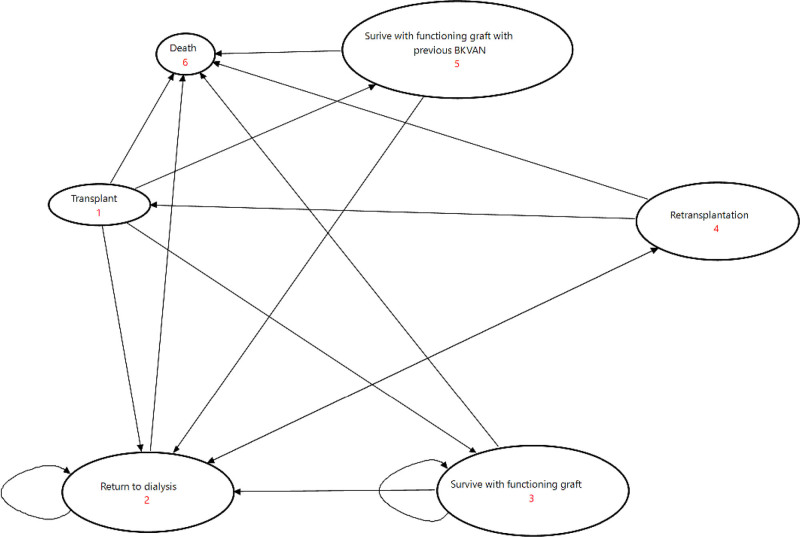
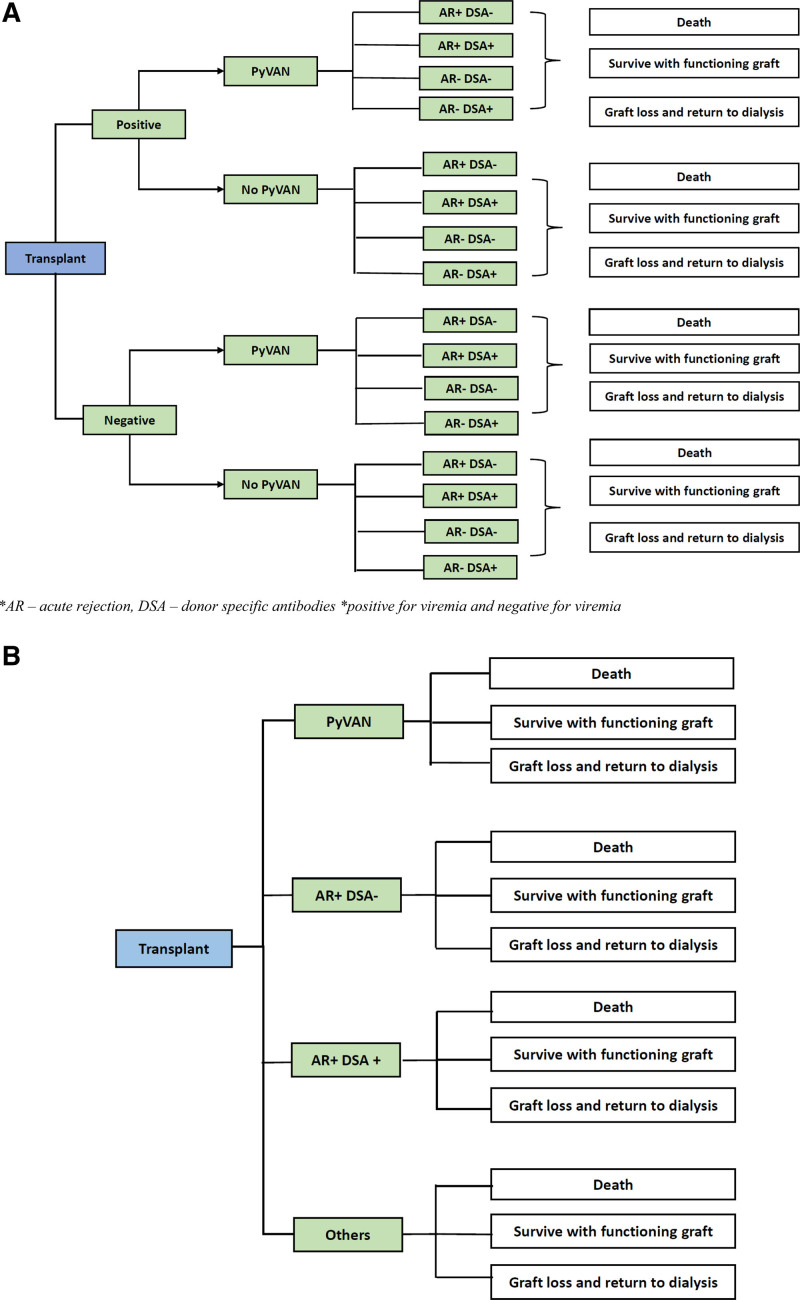
Probabilistic Markov models were constructed to compare the health and economic benefits of routine screening for polyomavirus infection using real-time polymerase chain reaction assay. A series of 1-way and probabilistic sensitivity analyses were conducted to define the most influential variables in the model.
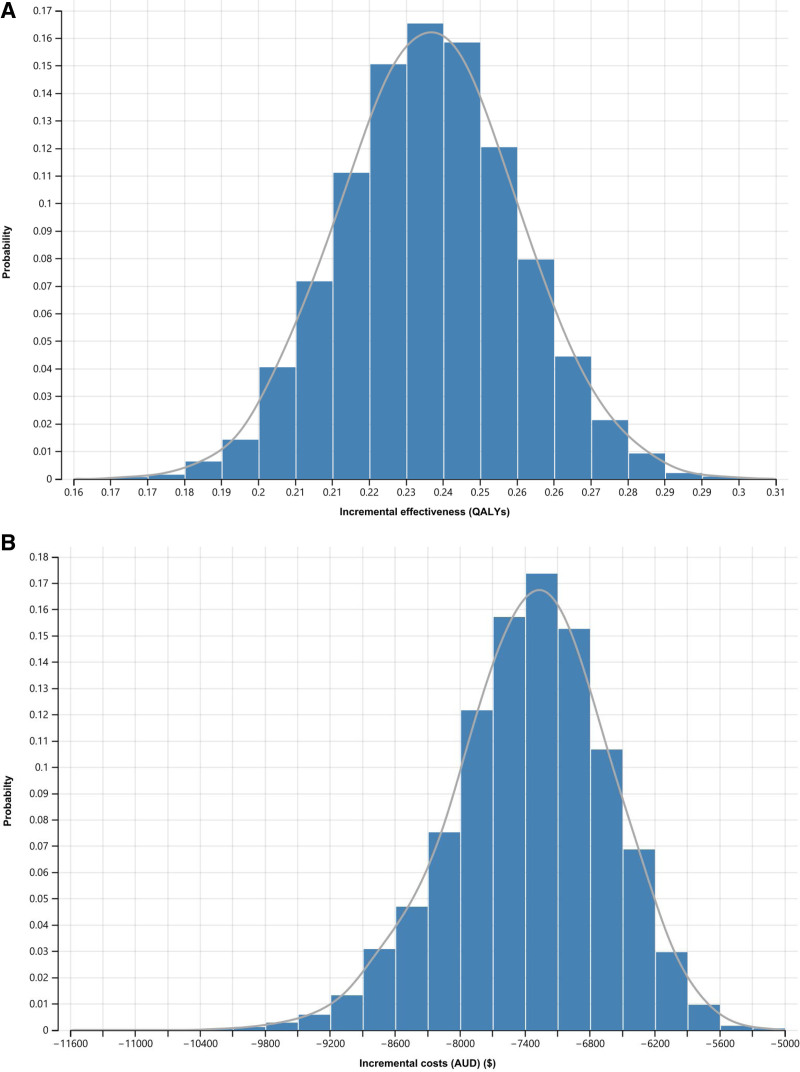
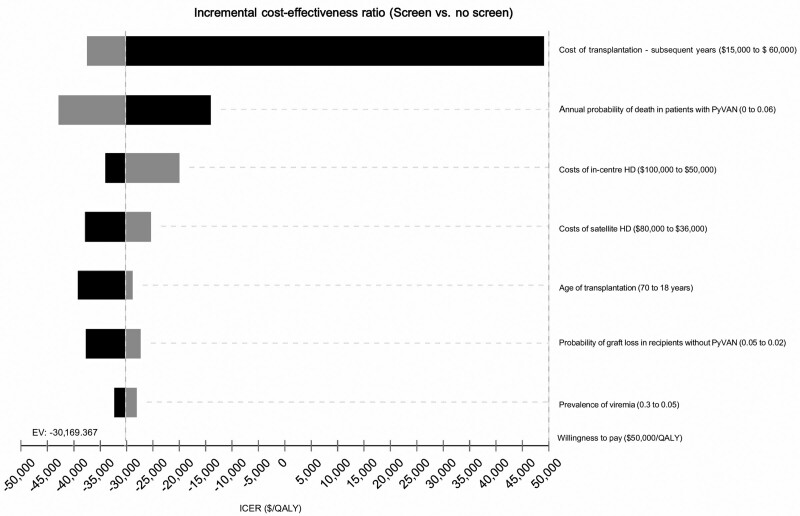
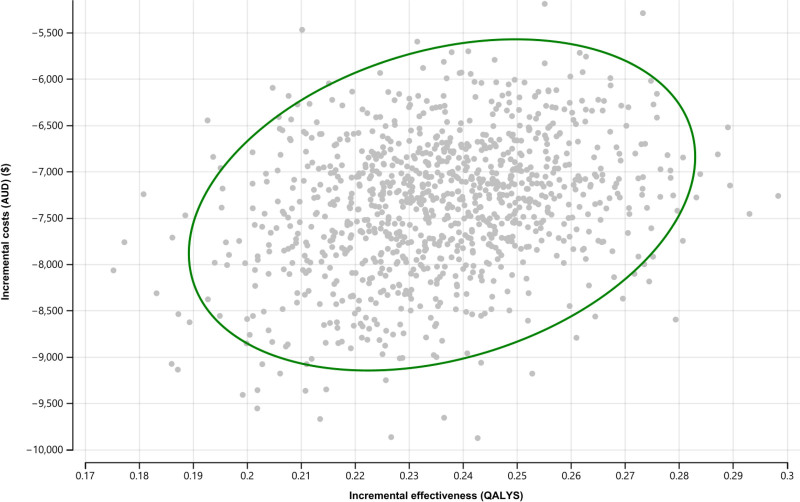
Monthly screening for 6 mo followed by 3 monthly screenings until 12 mo after transplant was dominant (lower costs and improved outcomes). Compared with no screening, the incremental benefits of screening were 0.294 life-years saved and 0.232 quality-adjusted life-years saved. Total savings from screening were $6986 Australian dollars ($5057 US dollars). The cost-effectiveness ratios were most sensitive to the costs of transplantation and dialysis, age of transplantation, prevalence of viremia, and probability of death in patients with a history of polyomavirus-associated nephropathy. Probabilistic sensitivity analysis indicated that screening (compared with no screening) was the dominant strategy across all plausible ranges of transition probabilities.
Screening for polyomavirus infections 1 year following transplantation appears to save money, improves survival, and improves quality of life in kidney transplant recipients.
临床实践指南推荐对肾移植受者进行多瘤病毒感染筛查,但该策略的成本效益尚不确定。本研究的目的是评估与不进行筛查相比,对肾移植受者进行多瘤病毒感染常规筛查的增量成本和效益。
构建概率马尔可夫模型,以比较使用实时聚合酶链反应检测法对多瘤病毒感染进行常规筛查的健康和经济效益。进行了一系列单因素和概率敏感性分析,以确定模型中最具影响力的变量。
移植后每月筛查6个月,然后每3个月筛查一次,直至移植后12个月,这种方案占主导地位(成本更低且结局更好)。与不进行筛查相比,筛查的增量效益为节省0.294个生命年和0.232个质量调整生命年。筛查的总节省费用为6986澳元(5057美元)。成本效益比最敏感于移植和透析的成本、移植年龄、病毒血症患病率以及有多瘤病毒相关性肾病病史患者的死亡概率。概率敏感性分析表明,在所有合理的转移概率范围内,筛查(与不筛查相比)是主导策略。
移植后1年筛查多瘤病毒感染似乎能节省费用,提高肾移植受者的生存率,并改善其生活质量。