• 文献检索
  • 文档翻译
  • 深度研究
  • 学术资讯
  • Suppr Zotero 插件Zotero 插件
  • 邀请有礼
  • 套餐&价格
  • 历史记录
应用&插件
Suppr Zotero 插件Zotero 插件浏览器插件Mac 客户端Windows 客户端微信小程序
定价
高级版会员购买积分包购买API积分包
服务
文献检索文档翻译深度研究API 文档MCP 服务
关于我们
关于 Suppr公司介绍联系我们用户协议隐私条款
关注我们

Suppr 超能文献

核心技术专利:CN118964589B侵权必究
粤ICP备2023148730 号-1Suppr @ 2026

文献检索

告别复杂PubMed语法,用中文像聊天一样搜索,搜遍4000万医学文献。AI智能推荐,让科研检索更轻松。

立即免费搜索

文件翻译

保留排版,准确专业,支持PDF/Word/PPT等文件格式,支持 12+语言互译。

免费翻译文档

深度研究

AI帮你快速写综述,25分钟生成高质量综述,智能提取关键信息,辅助科研写作。

立即免费体验

鸟类通过藏食灵活运用记忆

Flexible use of memory by food-caching birds.

机构信息

Mortimer B. Zuckerman Mind Brain Behavior Institute, Columbia University, New York, United States.

出版信息

Elife. 2022 Apr 25;11:e70600. doi: 10.7554/eLife.70600.

DOI:10.7554/eLife.70600
PMID:35467526
原文链接:https://pmc.ncbi.nlm.nih.gov/articles/PMC9038193/
Abstract

Animals use memory-guided and memory-independent strategies to make navigational decisions. Disentangling the contribution of these strategies to navigation is critical for understanding how memory influences behavioral output. To address this issue, we studied spatial behaviors of the chickadee, a food-caching bird. Chickadees hide food in concealed, scattered locations and retrieve their caches later in time. We designed an apparatus that allows birds to cache and retrieve food at many sites while navigating in a laboratory arena. This apparatus enabled automated tracking of behavioral variables - including caches, retrievals, and investigations of different sites. We built probabilistic models to fit these behavioral data using a combination of mnemonic and non-mnemonic factors. We found that chickadees use some navigational strategies that are independent of cache memories, including opportunistic foraging and spatial biases. They combine these strategies with spatially precise memories of which sites contain caches and which sites they have previously checked. A single memory of site contents is used in a context-dependent manner: during caching chickadees avoid sites that contain food, while during retrieval they instead preferentially access occupied sites. Our approach is a powerful way to investigate navigational decisions in a natural behavior, including flexible contributions of memory to these decisions.

摘要

动物使用记忆引导和独立于记忆的策略来做出导航决策。为了理解记忆如何影响行为输出,将这些策略对导航的贡献分离开来是至关重要的。为了解决这个问题,我们研究了雀科小鸟的空间行为,这种小鸟会把食物藏在隐蔽、分散的地方,然后再找时间取回。我们设计了一种设备,使鸟类在实验室场地中导航时,可以在多个地点藏匿和取回食物。该设备使行为变量的自动跟踪成为可能,包括藏匿物、检索物和对不同地点的调查。我们构建了概率模型,通过结合记忆和非记忆因素来拟合这些行为数据。我们发现,雀科小鸟使用一些独立于藏物记忆的导航策略,包括机会觅食和空间偏向。它们将这些策略与对包含藏物的地点和它们之前检查过的地点的空间精确记忆相结合。对地点内容的单一记忆以依赖于上下文的方式被使用:在藏匿期间,雀科小鸟会避开包含食物的地点,而在检索期间,它们则会优先访问被占用的地点。我们的方法是一种强大的方法,可以在自然行为中研究导航决策,包括记忆对这些决策的灵活贡献。
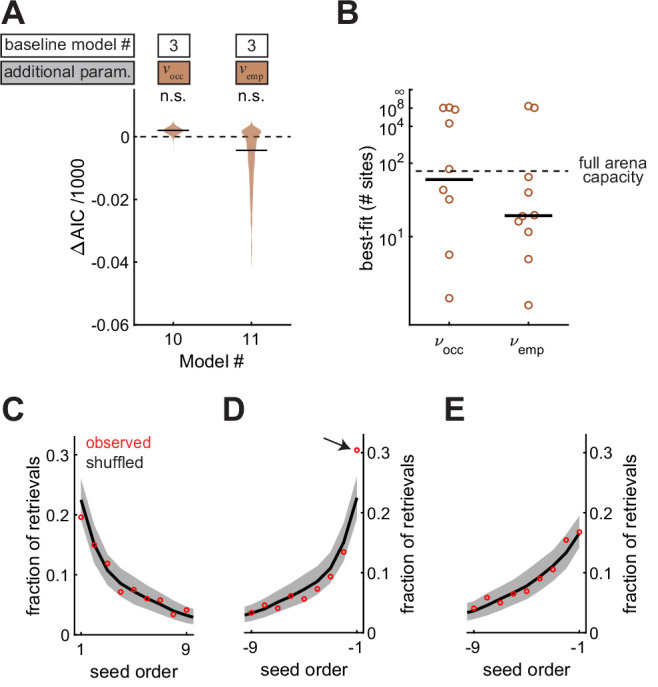
https://cdn.ncbi.nlm.nih.gov/pmc/blobs/cd97/9038193/ea06851e87fd/elife-70600-fig7.jpg
https://cdn.ncbi.nlm.nih.gov/pmc/blobs/cd97/9038193/61c70eab11f6/elife-70600-fig1.jpg
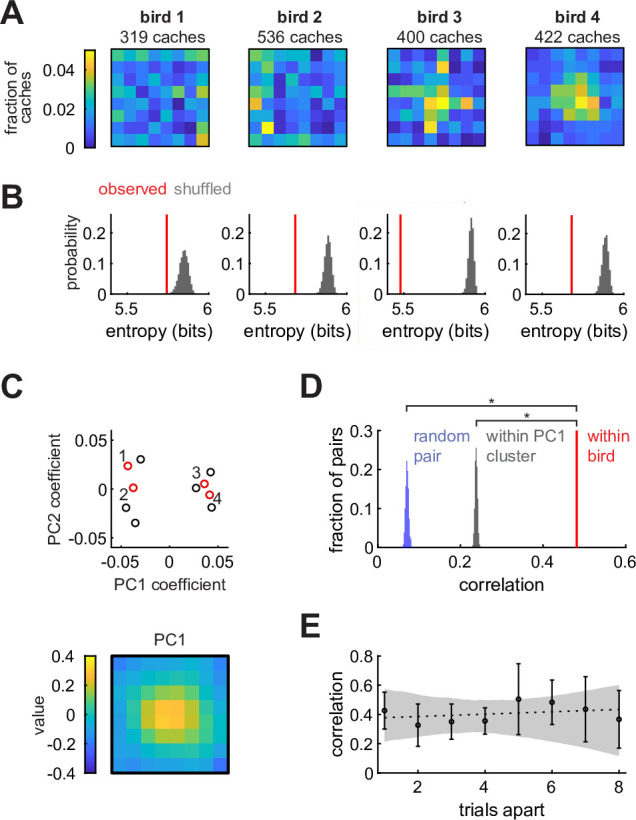
https://cdn.ncbi.nlm.nih.gov/pmc/blobs/cd97/9038193/71fd54c8aff8/elife-70600-fig2.jpg
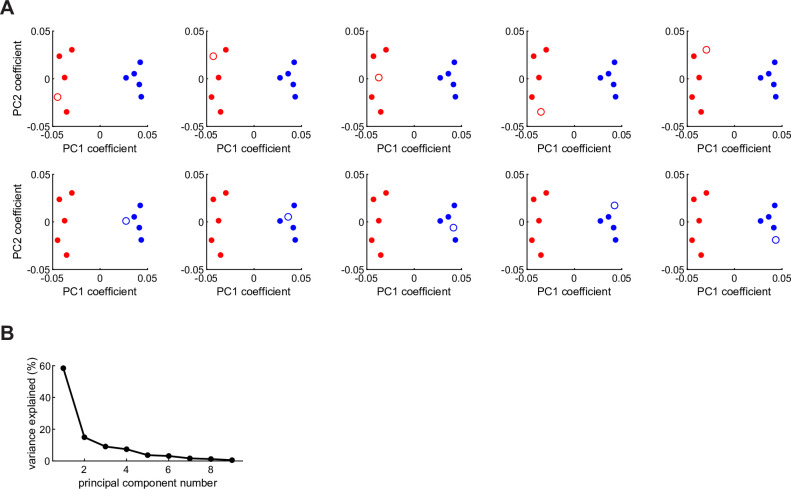
https://cdn.ncbi.nlm.nih.gov/pmc/blobs/cd97/9038193/d3c34f5ed25b/elife-70600-fig2-figsupp1.jpg
https://cdn.ncbi.nlm.nih.gov/pmc/blobs/cd97/9038193/8de4dd1edf01/elife-70600-fig2-figsupp2.jpg
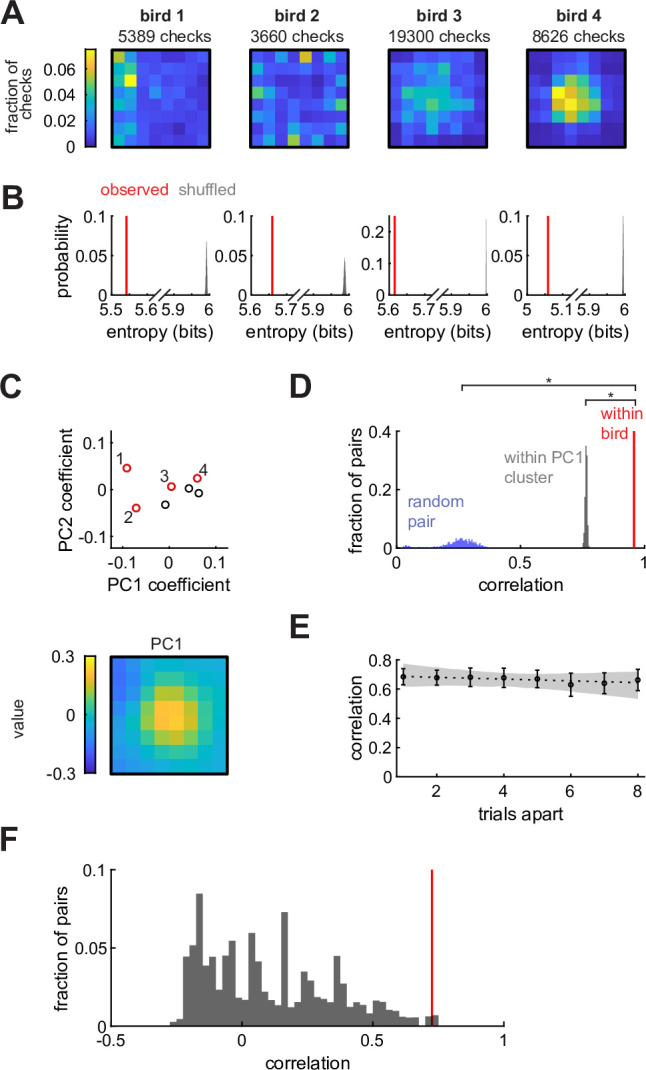
https://cdn.ncbi.nlm.nih.gov/pmc/blobs/cd97/9038193/30a68cfdd95e/elife-70600-fig3.jpg
https://cdn.ncbi.nlm.nih.gov/pmc/blobs/cd97/9038193/f9fb2486d737/elife-70600-fig3-figsupp1.jpg
https://cdn.ncbi.nlm.nih.gov/pmc/blobs/cd97/9038193/bd2f29f7b97e/elife-70600-fig3-figsupp2.jpg
https://cdn.ncbi.nlm.nih.gov/pmc/blobs/cd97/9038193/a009012492ce/elife-70600-fig3-figsupp3.jpg
https://cdn.ncbi.nlm.nih.gov/pmc/blobs/cd97/9038193/4696a9d73143/elife-70600-fig4.jpg
https://cdn.ncbi.nlm.nih.gov/pmc/blobs/cd97/9038193/5a6cff69f16a/elife-70600-fig4-figsupp1.jpg
https://cdn.ncbi.nlm.nih.gov/pmc/blobs/cd97/9038193/7d475f473e87/elife-70600-fig5.jpg
https://cdn.ncbi.nlm.nih.gov/pmc/blobs/cd97/9038193/1c34f776a544/elife-70600-fig5-figsupp1.jpg
https://cdn.ncbi.nlm.nih.gov/pmc/blobs/cd97/9038193/e36ba28830e3/elife-70600-fig6.jpg
https://cdn.ncbi.nlm.nih.gov/pmc/blobs/cd97/9038193/b844c27e65f0/elife-70600-fig6-figsupp1.jpg
https://cdn.ncbi.nlm.nih.gov/pmc/blobs/cd97/9038193/75140eba32d5/elife-70600-fig6-figsupp2.jpg
https://cdn.ncbi.nlm.nih.gov/pmc/blobs/cd97/9038193/ea06851e87fd/elife-70600-fig7.jpg
https://cdn.ncbi.nlm.nih.gov/pmc/blobs/cd97/9038193/61c70eab11f6/elife-70600-fig1.jpg
https://cdn.ncbi.nlm.nih.gov/pmc/blobs/cd97/9038193/71fd54c8aff8/elife-70600-fig2.jpg
https://cdn.ncbi.nlm.nih.gov/pmc/blobs/cd97/9038193/d3c34f5ed25b/elife-70600-fig2-figsupp1.jpg
https://cdn.ncbi.nlm.nih.gov/pmc/blobs/cd97/9038193/8de4dd1edf01/elife-70600-fig2-figsupp2.jpg
https://cdn.ncbi.nlm.nih.gov/pmc/blobs/cd97/9038193/30a68cfdd95e/elife-70600-fig3.jpg
https://cdn.ncbi.nlm.nih.gov/pmc/blobs/cd97/9038193/f9fb2486d737/elife-70600-fig3-figsupp1.jpg
https://cdn.ncbi.nlm.nih.gov/pmc/blobs/cd97/9038193/bd2f29f7b97e/elife-70600-fig3-figsupp2.jpg
https://cdn.ncbi.nlm.nih.gov/pmc/blobs/cd97/9038193/a009012492ce/elife-70600-fig3-figsupp3.jpg
https://cdn.ncbi.nlm.nih.gov/pmc/blobs/cd97/9038193/4696a9d73143/elife-70600-fig4.jpg
https://cdn.ncbi.nlm.nih.gov/pmc/blobs/cd97/9038193/5a6cff69f16a/elife-70600-fig4-figsupp1.jpg
https://cdn.ncbi.nlm.nih.gov/pmc/blobs/cd97/9038193/7d475f473e87/elife-70600-fig5.jpg
https://cdn.ncbi.nlm.nih.gov/pmc/blobs/cd97/9038193/1c34f776a544/elife-70600-fig5-figsupp1.jpg
https://cdn.ncbi.nlm.nih.gov/pmc/blobs/cd97/9038193/e36ba28830e3/elife-70600-fig6.jpg
https://cdn.ncbi.nlm.nih.gov/pmc/blobs/cd97/9038193/b844c27e65f0/elife-70600-fig6-figsupp1.jpg
https://cdn.ncbi.nlm.nih.gov/pmc/blobs/cd97/9038193/75140eba32d5/elife-70600-fig6-figsupp2.jpg
https://cdn.ncbi.nlm.nih.gov/pmc/blobs/cd97/9038193/ea06851e87fd/elife-70600-fig7.jpg

相似文献

1
Flexible use of memory by food-caching birds.鸟类通过藏食灵活运用记忆
Elife. 2022 Apr 25;11:e70600. doi: 10.7554/eLife.70600.
2
Memory for what, where, and when in the black-capped chickadee (Poecile atricapillus).黑头山雀(Poecile atricapillus)对事物、地点和时间的记忆。
Anim Cogn. 2009 Nov;12(6):767-77. doi: 10.1007/s10071-009-0236-x. Epub 2009 May 23.
3
Barcoding of episodic memories in the hippocampus of a food-caching bird.食物储存鸟类海马体中情景记忆的条形码编码
bioRxiv. 2023 Jul 3:2023.05.27.542597. doi: 10.1101/2023.05.27.542597.
4
Rapid effects of corticosterone on cache recovery in mountain chickadees (Parus gambeli).皮质酮对北美黑顶山雀(Parus gambeli)贮藏物找回行为的快速影响。
Horm Behav. 2000 Mar;37(2):109-15. doi: 10.1006/hbeh.2000.1571.
5
Barcoding of episodic memories in the hippocampus of a food-caching bird.在一种食籽鸟的海马体中对情景记忆进行条形码标记。
Cell. 2024 Apr 11;187(8):1922-1935.e20. doi: 10.1016/j.cell.2024.02.032. Epub 2024 Mar 29.
6
Effects of demanding foraging conditions on cache retrival accuracy in food-caching mountain chickadees (Poecile gambeli).苛刻觅食条件对储食型北美黑顶山雀(Poecile gambeli)取回贮藏食物准确性的影响。
Proc Biol Sci. 2001 Feb 22;268(1465):363-8. doi: 10.1098/rspb.2000.1401.
7
A test of the adaptive specialization hypothesis: population differences in caching, memory, and the hippocampus in black-capped chickadees (Poecile atricapilla).适应性特化假说的一项测试:黑头山雀(Poecile atricapilla)在贮藏、记忆和海马体方面的种群差异。
Behav Neurosci. 2002 Aug;116(4):515-22.
8
Natural Selection and Spatial Cognition in Wild Food-Caching Mountain Chickadees.自然选择与野生食籽山雀的空间认知
Curr Biol. 2019 Feb 18;29(4):670-676.e3. doi: 10.1016/j.cub.2019.01.006. Epub 2019 Feb 7.
9
Flexible cue use in food-caching birds.食物贮藏鸟类灵活的线索运用
Anim Cogn. 2009 May;12(3):419-26. doi: 10.1007/s10071-008-0201-0. Epub 2008 Nov 26.
10
Changes in spatial memory mediated by experimental variation in food supply do not affect hippocampal anatomy in mountain chickadees (Poecile gambeli).由食物供应的实验性变化介导的空间记忆变化不会影响北美黑顶山雀(Poecile gambeli)的海马体解剖结构。
J Neurobiol. 2002 May;51(2):142-8. doi: 10.1002/neu.10045.

引用本文的文献

1
Individual variation in spatial reference memory influences cache site choice in a wild bird.空间参考记忆的个体差异影响野生鸟类的贮藏地点选择。
Proc Biol Sci. 2025 Mar;292(2043):20243079. doi: 10.1098/rspb.2024.3079. Epub 2025 Mar 19.
2
Barcode activity in a recurrent network model of the hippocampus enables efficient memory binding.海马体循环网络模型中的条形码活动实现了高效的记忆绑定。
bioRxiv. 2024 Sep 18:2024.09.09.612073. doi: 10.1101/2024.09.09.612073.
3
Why might animals remember? A functional framework for episodic memory research in comparative psychology.

本文引用的文献

1
Using DeepLabCut for 3D markerless pose estimation across species and behaviors.使用 DeepLabCut 进行跨物种和行为的无标记 3D 姿态估计。
Nat Protoc. 2019 Jul;14(7):2152-2176. doi: 10.1038/s41596-019-0176-0. Epub 2019 Jun 21.
2
Sensitivity and specificity of information criteria.信息准则的灵敏度和特异性。
Brief Bioinform. 2020 Mar 23;21(2):553-565. doi: 10.1093/bib/bbz016.
3
DeepLabCut: markerless pose estimation of user-defined body parts with deep learning.DeepLabCut:基于深度学习的用户自定义身体部位无标记姿态估计。
为什么动物会有记忆?比较心理学中情景记忆研究的功能框架。
Learn Behav. 2025 Mar;53(1):14-30. doi: 10.3758/s13420-024-00645-0. Epub 2024 Sep 17.
4
Input and Output Connections of the Crow Nidopallium Caudolaterale.尾侧克劳德尼尔迪奥波勒塔尔的输入和输出连接。
eNeuro. 2024 Apr 29;11(4). doi: 10.1523/ENEURO.0098-24.2024. Print 2024 Apr.
5
Barcoding of episodic memories in the hippocampus of a food-caching bird.在一种食籽鸟的海马体中对情景记忆进行条形码标记。
Cell. 2024 Apr 11;187(8):1922-1935.e20. doi: 10.1016/j.cell.2024.02.032. Epub 2024 Mar 29.
6
Fantastic beasts and how to study them: rethinking experimental animal behavior.神奇动物及其研究方法:重新思考实验动物行为
J Exp Biol. 2024 Feb 15;227(4). doi: 10.1242/jeb.247003. Epub 2024 Feb 19.
7
Monarch butterflies memorize the spatial location of a food source.黑脉金斑蝶能记住食物源的空间位置。
Proc Biol Sci. 2023 Dec 20;290(2013):20231574. doi: 10.1098/rspb.2023.1574.
8
Challenges and advanced concepts for the assessment of learning and memory function in mice.小鼠学习与记忆功能评估的挑战及前沿概念
Front Behav Neurosci. 2023 Sep 21;17:1230082. doi: 10.3389/fnbeh.2023.1230082. eCollection 2023.
9
An entorhinal-like region in food-caching birds.食籽鸟中存在类似内嗅皮层的区域。
Curr Biol. 2023 Jun 19;33(12):2465-2477.e7. doi: 10.1016/j.cub.2023.05.031. Epub 2023 Jun 8.
10
An entorhinal-like region in food-caching birds.食物贮藏鸟类中的内嗅样区域。
bioRxiv. 2023 Jan 6:2023.01.05.522940. doi: 10.1101/2023.01.05.522940.
Nat Neurosci. 2018 Sep;21(9):1281-1289. doi: 10.1038/s41593-018-0209-y. Epub 2018 Aug 20.
4
Fronto-parietal Cortical Circuits Encode Accumulated Evidence with a Diversity of Timescales.额顶叶皮质回路以多种时间尺度编码累积证据。
Neuron. 2017 Jul 19;95(2):385-398.e5. doi: 10.1016/j.neuron.2017.06.013. Epub 2017 Jun 29.
5
Assessing Model Selection Uncertainty Using a Bootstrap Approach: An update.使用自举法评估模型选择的不确定性:最新进展。
Struct Equ Modeling. 2017;24(2):230-245. doi: 10.1080/10705511.2016.1252265. Epub 2016 Dec 5.
6
Bonsai: an event-based framework for processing and controlling data streams.盆景:一个用于处理和控制数据流的基于事件的框架。
Front Neuroinform. 2015 Apr 8;9:7. doi: 10.3389/fninf.2015.00007. eCollection 2015.
7
The evolution of episodic memory.情景记忆的演变。
Proc Natl Acad Sci U S A. 2013 Jun 18;110 Suppl 2(Suppl 2):10379-86. doi: 10.1073/pnas.1301199110. Epub 2013 Jun 10.
8
Rats and humans can optimally accumulate evidence for decision-making.老鼠和人类都可以最优地积累决策的证据。
Science. 2013 Apr 5;340(6128):95-8. doi: 10.1126/science.1233912.
9
Multisensory decision-making in rats and humans.大鼠和人类的多感觉决策。
J Neurosci. 2012 Mar 14;32(11):3726-35. doi: 10.1523/JNEUROSCI.4998-11.2012.
10
A search game model of the scatter hoarder's problem.分散囤积者问题的搜索游戏模型。
J R Soc Interface. 2012 May 7;9(70):869-79. doi: 10.1098/rsif.2011.0581. Epub 2011 Oct 19.