Xia Chao, Wen Pingping, Yuan Yaming, Yu Xiaofan, Chen Yijing, Xu Huiqing, Cui Guiyou, Wang Jun
College of Food Science and Engineering, Yangzhou University Yangzhou 225127 China
Yangzhou Fangguang Food Co. Ltd. Yangzhou 225008 China.
RSC Adv. 2021 Jun 18;11(35):21629-21641. doi: 10.1039/d1ra03151a. eCollection 2021 Jun 15.
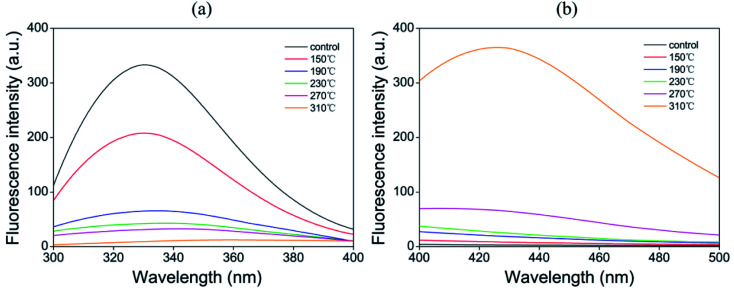
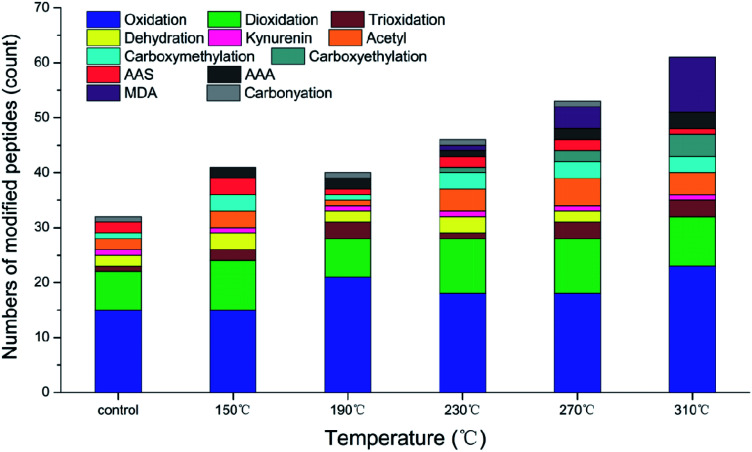
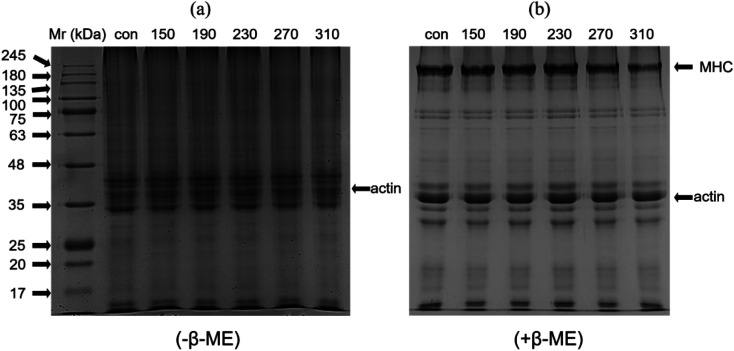
Beef is rich in nutrients and is one of the most important ingredients in the world. But in the process of cooking and heating, the nutrients of beef will change to varying degrees. How temperature affects the oxidation of lipids and proteins in beef, and the modification of amino acid residues is unclear. This study intended to heat beef at different roasting temperatures (150 °C, 190 °C, 230 °C, 270 °C, 310 °C), measure parameter including colour, peroxide value (PV), thiobarbituric acid-reactive substances (TBARS), thiol and carbonyl content, protein solubility, tryptophan and Schiff base content, protein molecular weight distribution and modification of amino acid residues to discussed the effects of different temperatures on the lipid and protein oxidation of beef patties, as well as the modification of amino acid residues. The results showed that the values of * and * increased with the temperature increased, and the values of * decreased. With the increase of temperature, the lipid oxidation indexes PV and TBARS, Schiff base and carbonyl content also increased, and the thiol content and protein solubility decreased significantly ( < 0.001). SDS-PAGE showed that the band of myosin heavy chain (MHC, 220 kDa) was significantly degraded, while the band of actin (42 kDa) was still clearly visible. The analysis of UPLC-MS/MS results found that the aromatic amino acid residues in all samples were oxidized to a certain extent, especially tryptophan. Other oxidative modifications, including α-amiooadipic acid (AAA), hydroxyethyl lysine (CEL) and malondialdehyde (MDA), were only present in roasted samples and not in raw meat. The results suggested that lipid oxidation and protein oxidation were closely related to colour parameters. The oxidation of proteins and lipids was aggravated at higher temperature. Amino acid side chains were also modified at high temperature, and this change was particularly evident in aromatic amino acids. These results provided new insights for the oxidation of proteins and lipids of beef and the modification level of amino acid residues under high temperature conditions, which will help us to improve the cooking quality of meat foods.
牛肉富含营养,是世界上最重要的食材之一。但在烹饪和加热过程中,牛肉的营养成分会发生不同程度的变化。温度如何影响牛肉中脂质和蛋白质的氧化,以及氨基酸残基的修饰尚不清楚。本研究旨在将牛肉在不同烘烤温度(150℃、190℃、230℃、270℃、310℃)下加热,测定包括颜色、过氧化值(PV)、硫代巴比妥酸反应性物质(TBARS)、巯基和羰基含量、蛋白质溶解度、色氨酸和席夫碱含量、蛋白质分子量分布以及氨基酸残基修饰等参数,以探讨不同温度对牛肉饼脂质和蛋白质氧化以及氨基酸残基修饰的影响。结果表明,和的值随温度升高而增加,而*的值降低。随着温度升高,脂质氧化指标PV和TBARS、席夫碱和羰基含量也增加,而巯基含量和蛋白质溶解度显著降低(<0.001)。SDS-PAGE显示,肌球蛋白重链(MHC,220 kDa)条带显著降解,而肌动蛋白(42 kDa)条带仍清晰可见。UPLC-MS/MS结果分析发现,所有样品中的芳香族氨基酸残基均有一定程度的氧化,尤其是色氨酸。其他氧化修饰,包括α-氨基己二酸(AAA)、羟乙基赖氨酸(CEL)和丙二醛(MDA),仅存在于烤制样品中,生肉中未检测到。结果表明,脂质氧化和蛋白质氧化与颜色参数密切相关。在较高温度下,蛋白质和脂质的氧化加剧。高温下氨基酸侧链也会发生修饰,这种变化在芳香族氨基酸中尤为明显。这些结果为高温条件下牛肉蛋白质和脂质的氧化以及氨基酸残基的修饰水平提供了新的见解,有助于我们提高肉类食品的烹饪品质。