Department of Infectious Diseases, Ruijin Hospital, Shanghai Jiao Tong University School of Medicine, Shanghai, China.
Front Immunol. 2022 Apr 12;13:772368. doi: 10.3389/fimmu.2022.772368. eCollection 2022.
BACKGROUND & AIMS: Drug-induced liver injury (DILI) is one of the leading causes of liver failure with some of the patients progressed to chronic DILI. The mechanisms underlying the severity and chronicity of DILI are poorly elucidated and the biomarkers are limited. Metabolites and gut microbiota played a crucial role in the development of various liver diseases. Herein, a systematic analysis of serum metabolites and gut microbiota was performed in DILI patients, aiming to identify metabolites correlated with the progression and clinical prognosis of DILI.
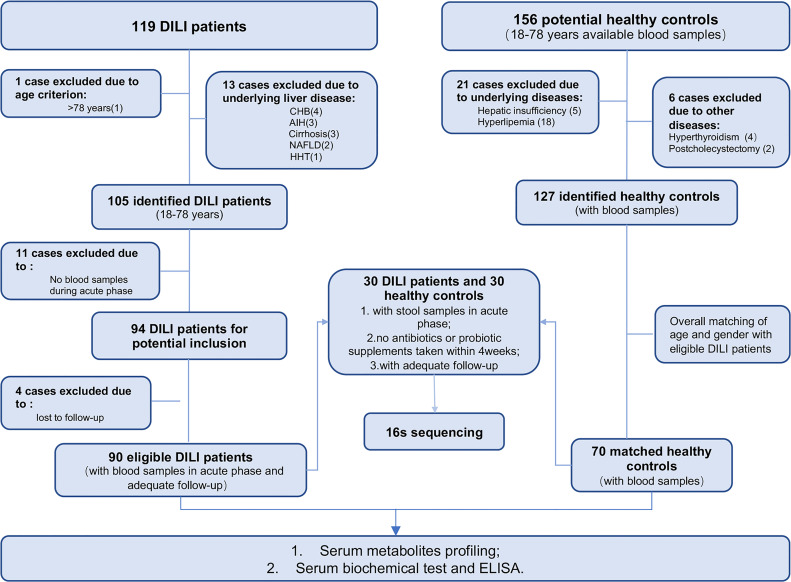
Various serum metabolites were quantitated using a metabolite array technology in this prospective study. Gut microbiome compositions and the expression profiles of liver genes were determined in patients with DILI and healthy controls.
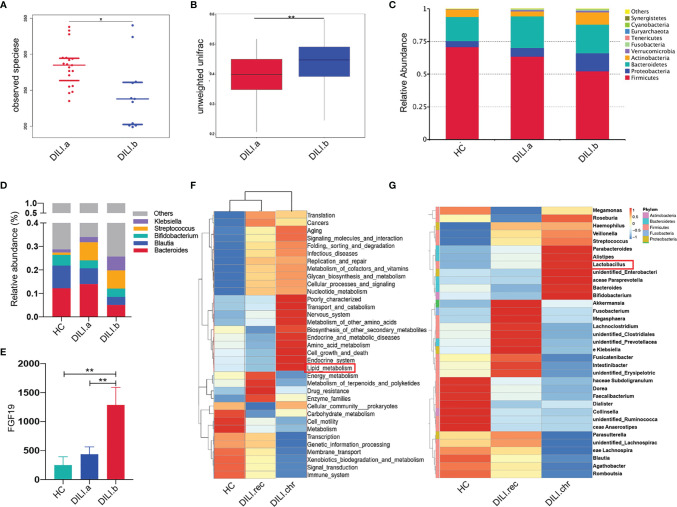
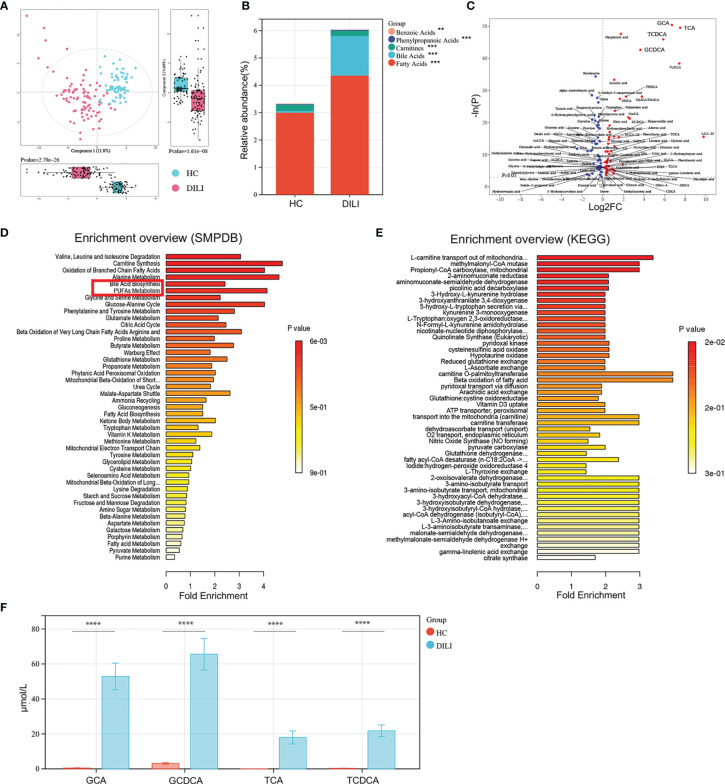
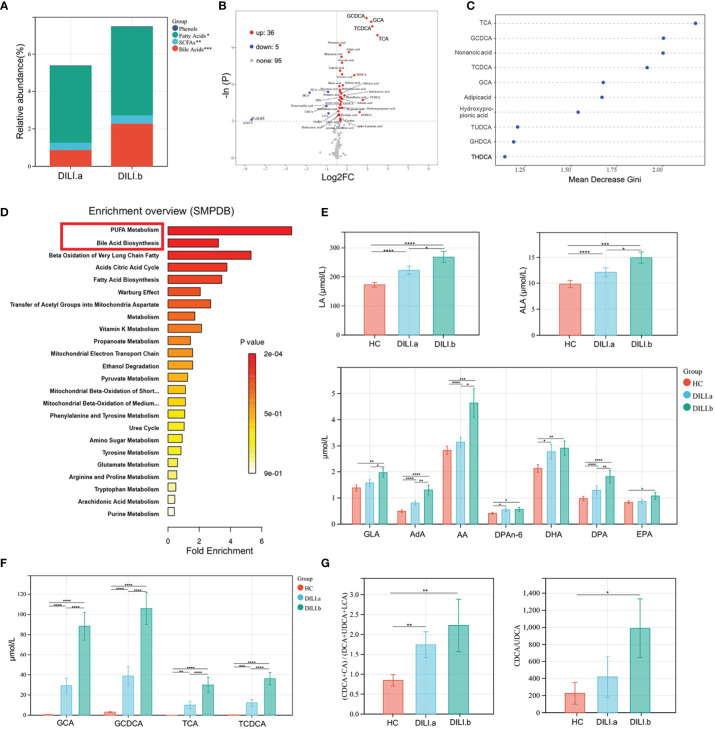
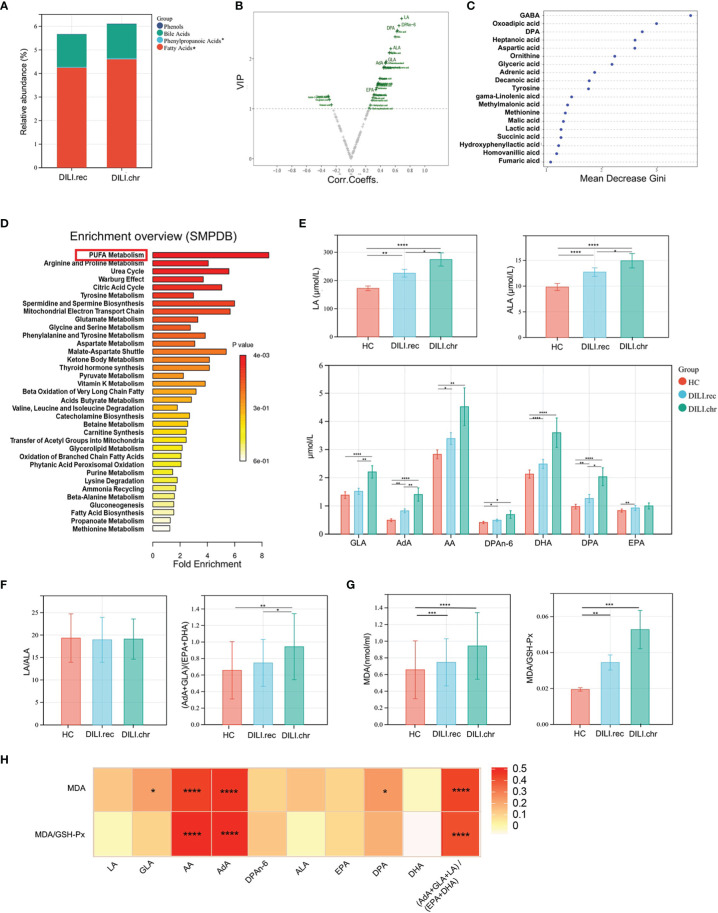
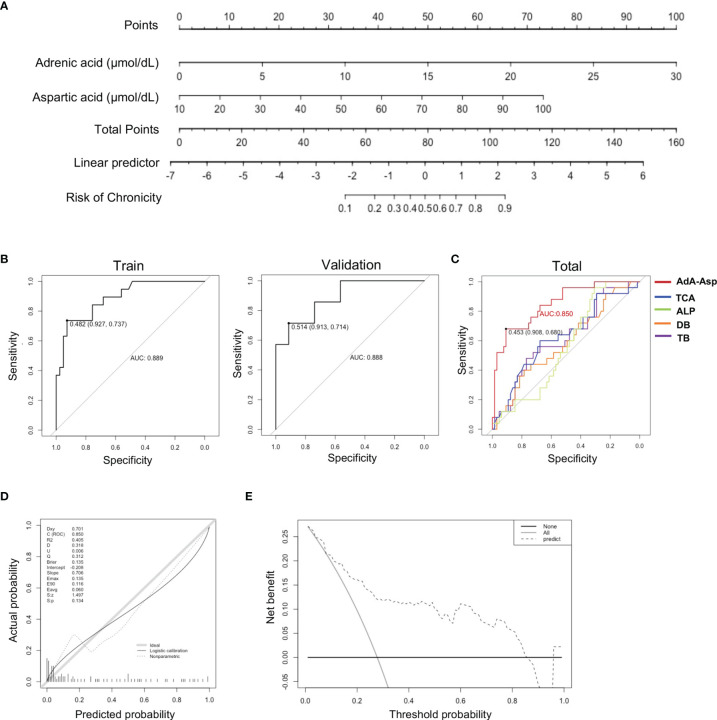
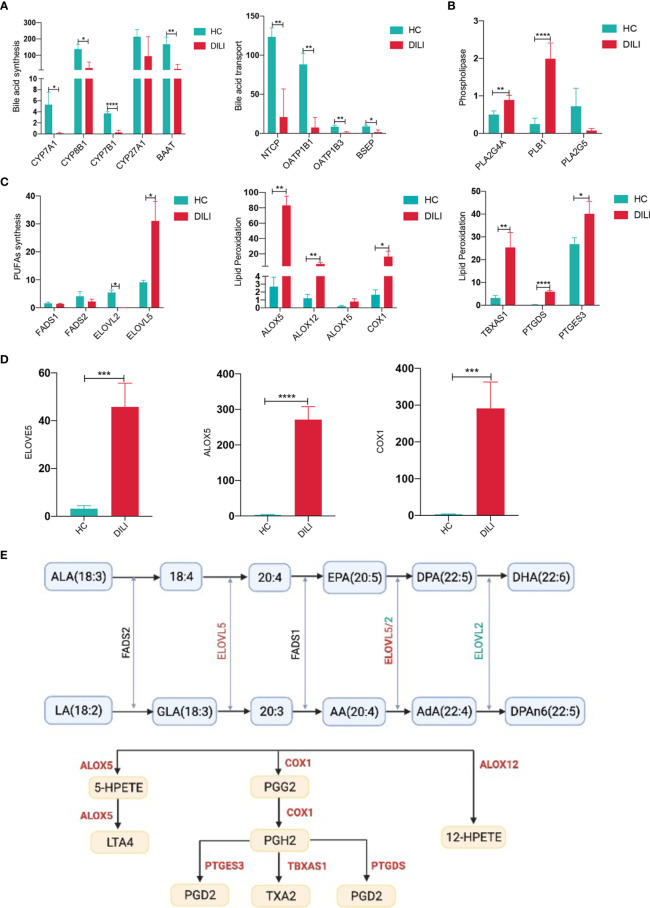
Metabolomic analysis revealed that bile acids (BAs) and polyunsaturated fatty acids (PUFAs) were closely related to DILI severity and chronicity respectively. The ratios of serum primary/secondary BAs and omega-6/omega-3 PUFAs were elevated in DILI patients. A model established by adrenic acid (AdA) and aspartic acid (Asp) exerts good performance for predicting the chronicity of DLIL. Hepatic transcriptome revealed enhanced expression of PUFA peroxidation and supressed expression of BA synthesis related genes in DILI patients. In addition, Lactic acid bacteria and BA converting bacteria were increased in gut of DILI patients. Besides, elevated serum malondialdehyde (MDA) and fibroblast growth factor 19 (FGF19) was observed in DILI patients.
BAs and PUFAs could be potent markers for the severity and chronicity of DILI respectively. The panel of AdA and Asp could be ideal predictive model for the risk of chronicity at the acute stage of DILI. Gut microbiota might act as a negative feedback mechanism to maintain the homeostasis of BAs and PUFAs FGF19 signalling and PUFA saturation, respectively. Our study revealed novel biomarkers for severe and chronic DILI and provided new therapeutic targets for DILI.
药物性肝损伤(DILI)是导致肝衰竭的主要原因之一,部分患者进展为慢性 DILI。DILI 的严重程度和慢性程度的机制尚未阐明,生物标志物也有限。代谢物和肠道微生物群在各种肝病的发展中起着至关重要的作用。在此,我们对 DILI 患者进行了血清代谢物和肠道微生物群的系统分析,旨在确定与 DILI 进展和临床预后相关的代谢物。
在这项前瞻性研究中,我们使用代谢物阵列技术定量检测了各种血清代谢物。在 DILI 患者和健康对照者中,测定了肠道微生物群组成和肝基因的表达谱。
代谢组学分析表明,胆汁酸(BAs)和多不饱和脂肪酸(PUFAs)分别与 DILI 的严重程度和慢性程度密切相关。DILI 患者血清初级/次级 BAs 和 ω-6/ω-3 PUFAs 的比值升高。由阿屈酸(AdA)和天冬氨酸(Asp)建立的模型对预测 DILI 的慢性程度具有良好的性能。肝转录组显示,DILI 患者中 PUFA 过氧化增强,BA 合成相关基因表达受抑。此外,DILI 患者肠道中的乳杆菌和 BA 转化菌增加。此外,DILI 患者血清中丙二醛(MDA)和成纤维细胞生长因子 19(FGF19)升高。
BAs 和 PUFAs 分别可作为 DILI 严重程度和慢性程度的有效标志物。AdA 和 Asp 联合模型可作为 DILI 急性阶段慢性风险的理想预测模型。肠道微生物群可能作为一种负反馈机制,分别维持 BAs 和 PUFAs 的动态平衡、FGF19 信号和 PUFA 饱和度。本研究为严重和慢性 DILI 提供了新的生物标志物,并为 DILI 提供了新的治疗靶点。