Yemata Temesgen Atnafu, Zheng Yun, Kyaw Aung Ko Ko, Wang Xizu, Song Jing, Chin Wee Shong, Xu Jianwei
Institute of Materials Research and Engineering, Agency for Science, Technology and Research (ASTAR) 2 Fusionopolis Way Singapore 138634 Republic of Singapore
Department of Chemistry, National University of Singapore 3 Science Drive 3 Singapore 117543 Republic of Singapore
RSC Adv. 2020 Jan 9;10(3):1786-1792. doi: 10.1039/c9ra07648d. eCollection 2020 Jan 7.
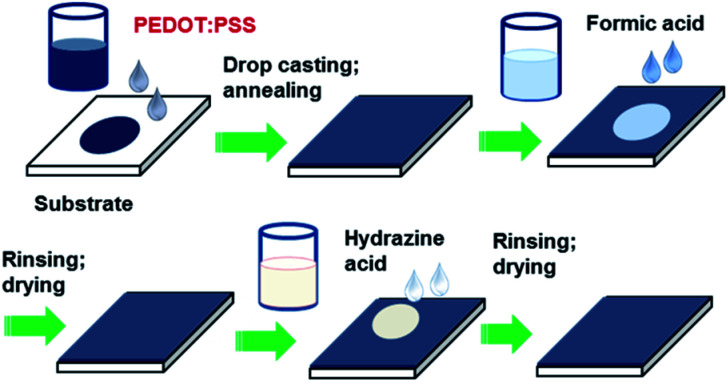
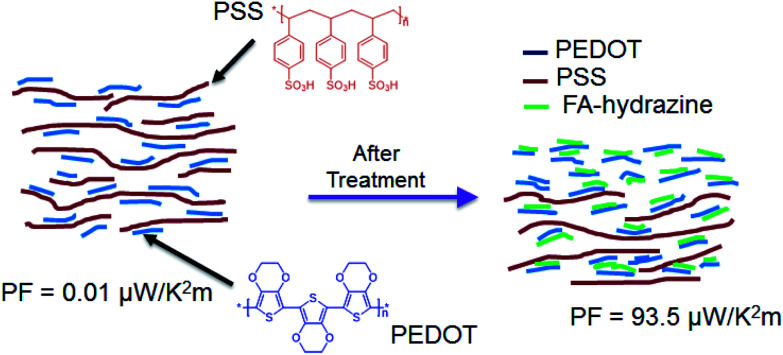
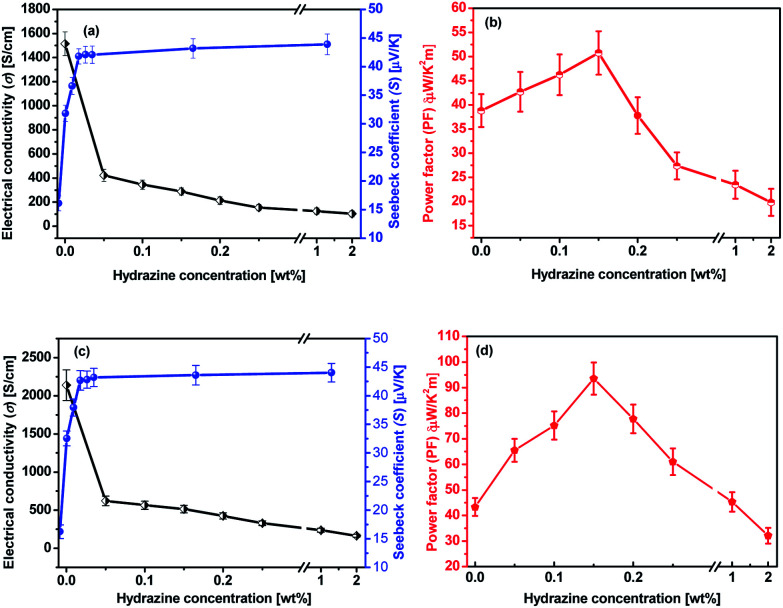
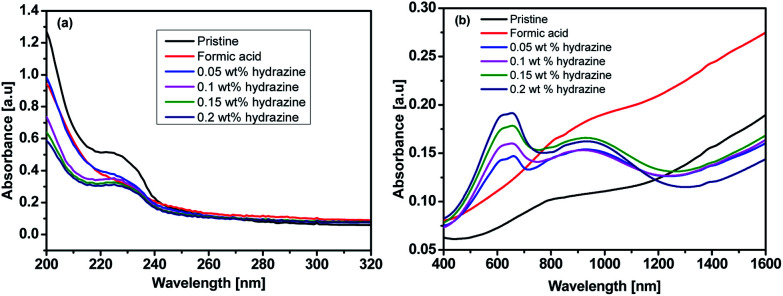
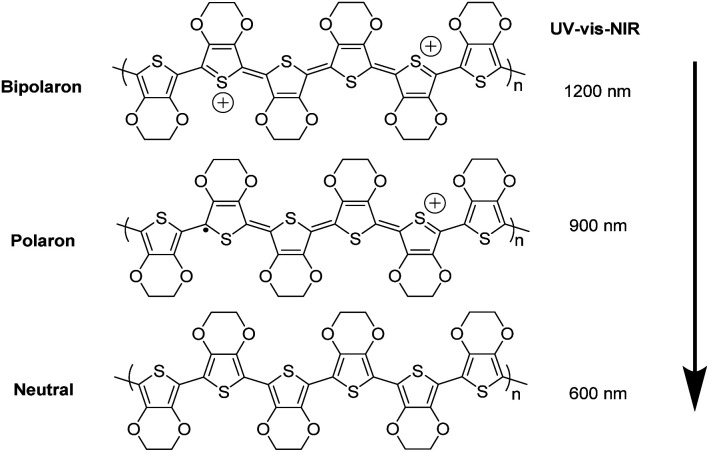
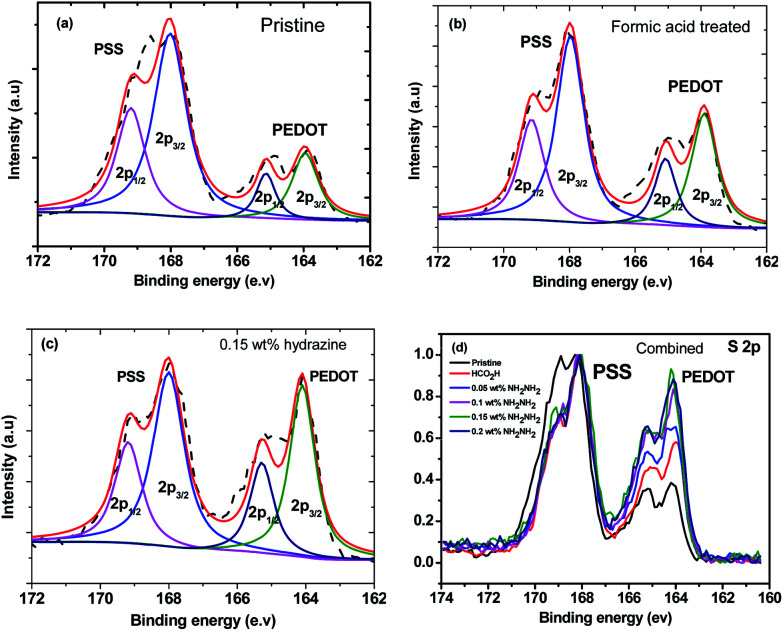
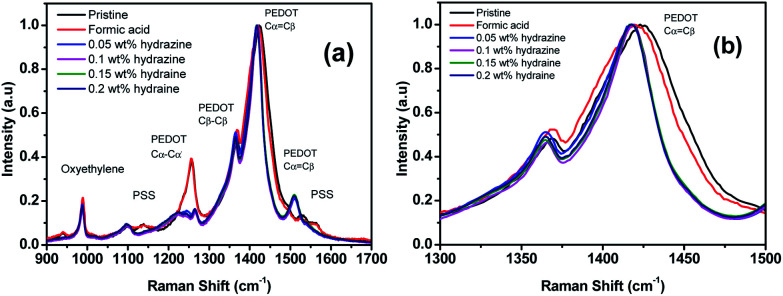
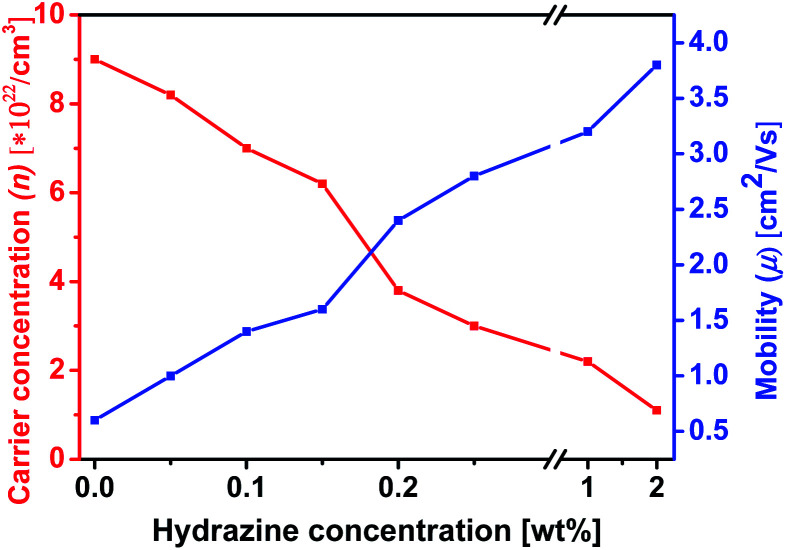
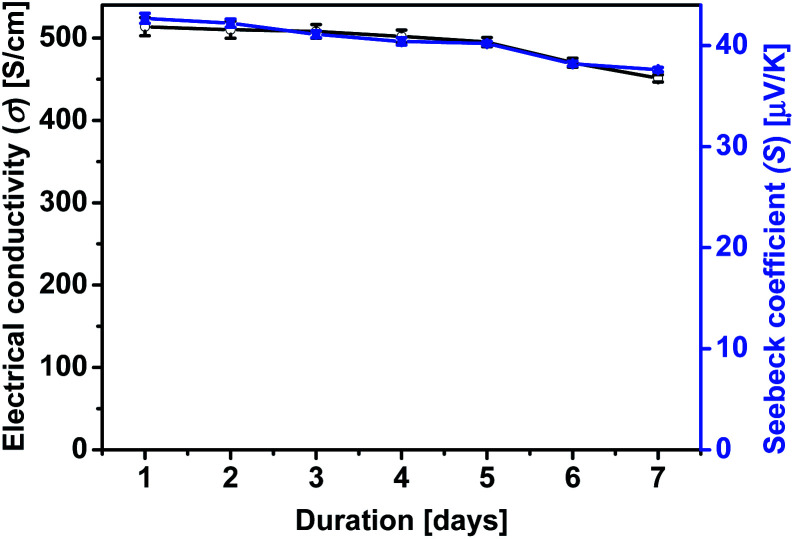
As the most popular conducting polymer, poly(3,4 ethylenedioxythiophene):poly(styrenesulfonate) (PEDOT:PSS) is widely used for a variety of applications, including thermoelectrics. This paper reports the modulation of the doping level by treatment with hydrazine to improve the Seebeck coefficient of PEDOT:PSS films. PEDOT:PSS films were first treated with formic acid followed by hydrazine, leading to a significant increase in the Seebeck coefficient from 17.5 to 42.7 μV K, about 2.5 times higher than that of the pristine film partially at the expense of electrical conductivity. An optimum power factor of 93.5 μW K m, being 2.4 times that of the one treated with only formic acid, was achieved. The substantial improvement in the Seebeck coefficient and the power factor is collectively attributed to the removal of the PSS, and more importantly, the reduction of the doping level of PEDOT by the hydrazine treatment, which is evidenced clearly by UV-vis-NIR spectroscopy, XPS and Raman spectroscopy.
作为最受欢迎的导电聚合物,聚(3,4 - 乙撑二氧噻吩):聚(苯乙烯磺酸盐)(PEDOT:PSS)被广泛应用于包括热电学在内的各种领域。本文报道了通过肼处理来调节掺杂水平以提高PEDOT:PSS薄膜的塞贝克系数。PEDOT:PSS薄膜首先用甲酸处理,然后用肼处理,导致塞贝克系数从17.5显著增加到42.7 μV K,比原始薄膜高出约2.5倍,部分是以电导率为代价。实现了93.5 μW K⁻² m⁻¹的最佳功率因数,是仅用甲酸处理的薄膜的2.4倍。塞贝克系数和功率因数的显著提高共同归因于PSS的去除,更重要的是,肼处理降低了PEDOT的掺杂水平,紫外 - 可见 - 近红外光谱、X射线光电子能谱和拉曼光谱清楚地证明了这一点。