Faiz Mas, Zahari Azeana, Awang Khalijah, Hussin Hazwan
Department of Chemistry, Faculty of Science, University of Malaya 50603 Kuala Lumpur Malaysia
Materials Technology Research Group (MaTReC), School of Chemical Sciences, Universiti Sains Malaysia 11800 Minden Penang Malaysia.
RSC Adv. 2020 Feb 12;10(11):6547-6562. doi: 10.1039/c9ra05654h. eCollection 2020 Feb 7.
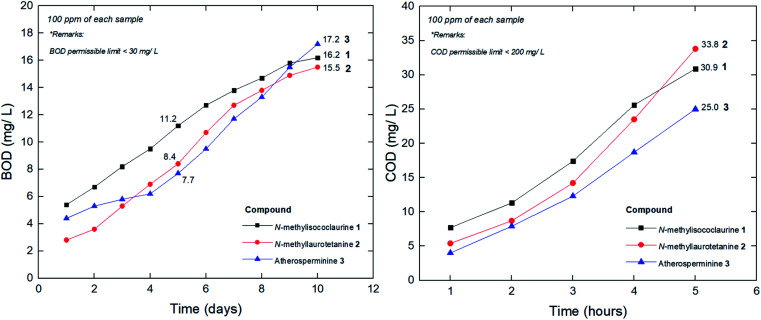
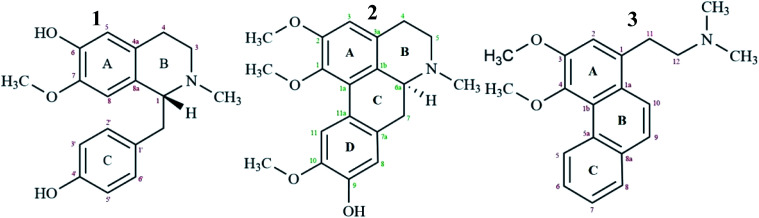
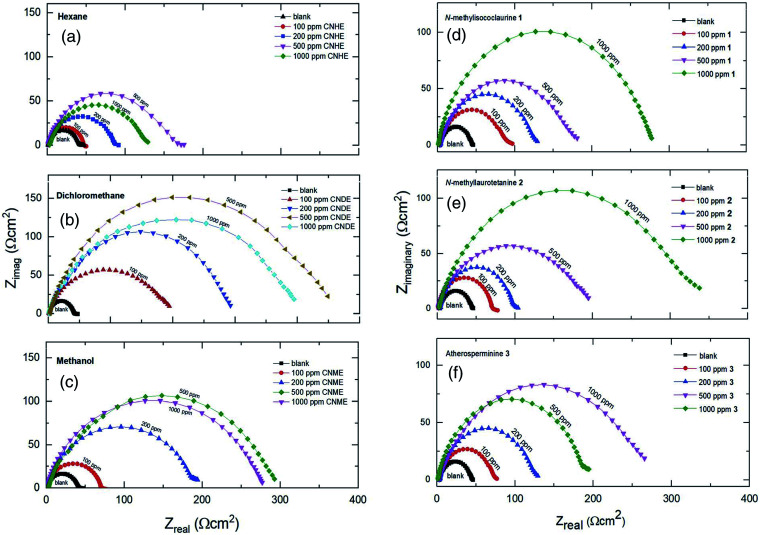
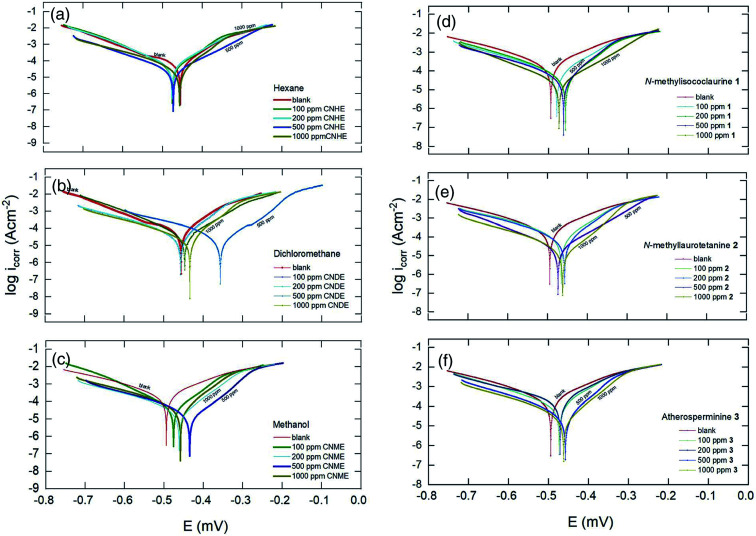
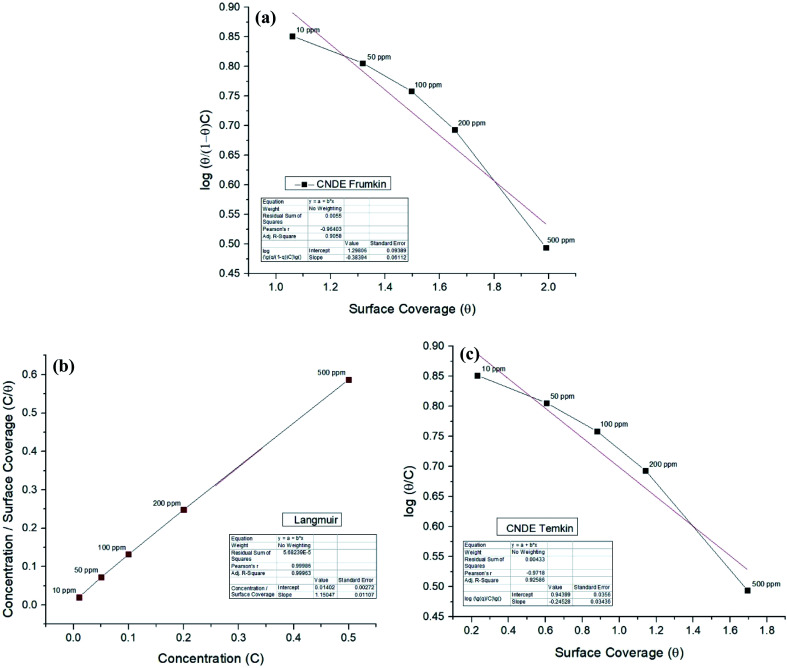
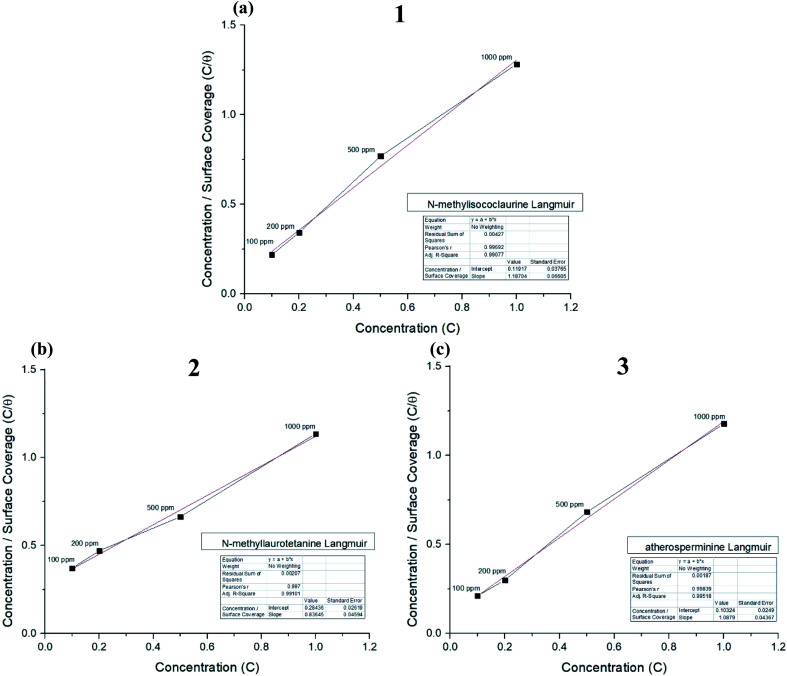
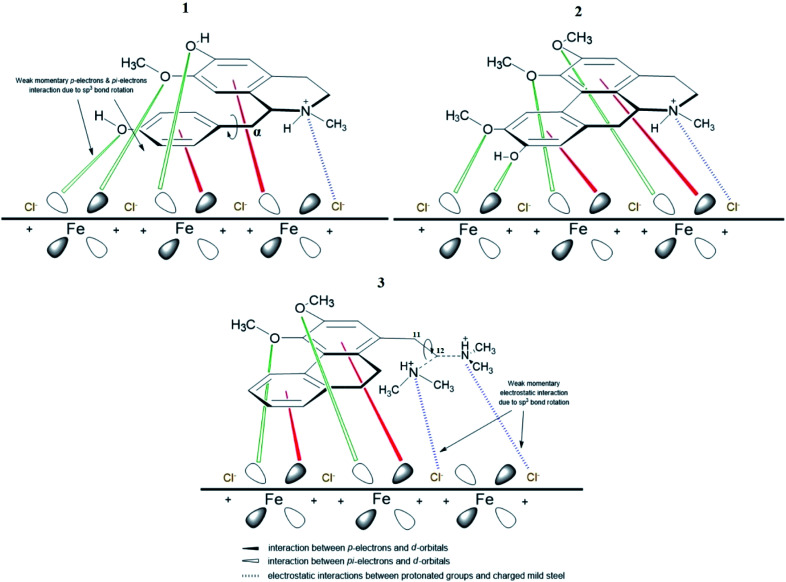
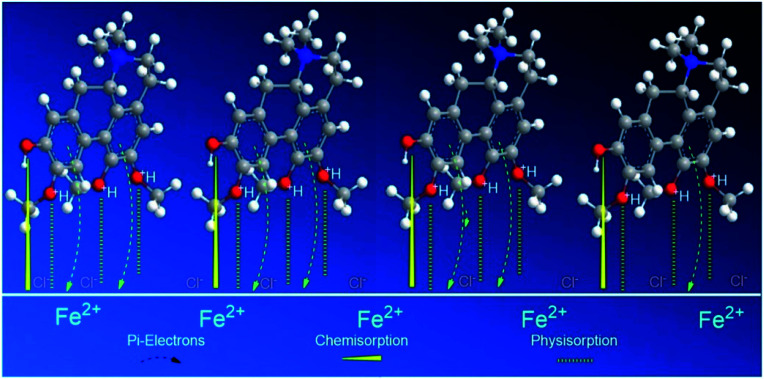
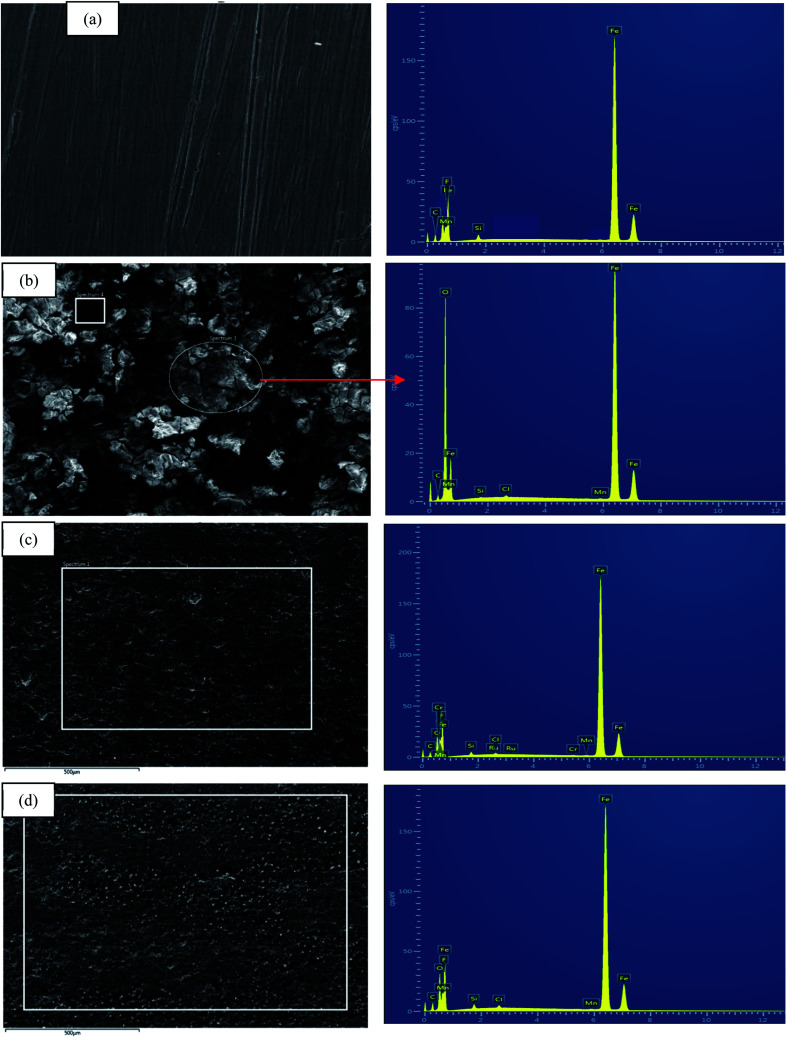
Corrosion inhibition effect of the crude extracts (hexane, dichloromethane, methanol) from the bark of and three alkaloids named -methylisococlaurine 1, -methyllaurotetanine 2 and atherosperminine 3 isolated from the dichloromethane extract (CNDE) were investigated for mild steel corrosion in 1 M HCl solution. An electrochemical impedance study showed that CNDE and 2 reduced the corrosion significantly through a charge transfer mechanism with inhibition efficiency of 91.05% and 88.05%, respectively. Potentiodynamic polarization data indicated that CNDE acted through anodic type inhibition while 2 was a mixed type inhibitor with predominant anodic effectiveness. Δ values calculated from the Langmuir adsorption isotherm plots for CNDE (-28.2 kJ mol) and 2 (-13.2 kJ mol) suggested that they adsorbed on the mild steel surface a physisorption mechanism. Scanning electron microscopy micrographs and elemental composition studies confirmed the formation of a protective film over the metal surface. Wastewater quality parameters of all the inhibitors demonstrated good biodegradability as their values were within the permissible limits to discharge for irrigation and horticultural uses.
对从[植物名称]树皮中提取的粗提物(己烷、二氯甲烷、甲醇)以及从二氯甲烷提取物(CNDE)中分离出的三种生物碱——-甲基异紫堇定1、-甲基劳罗替宁2和南美番荔枝碱3在1 M HCl溶液中对低碳钢的缓蚀作用进行了研究。电化学阻抗研究表明,CNDE和2通过电荷转移机制显著降低了腐蚀,缓蚀效率分别为91.05%和88.05%。动电位极化数据表明,CNDE通过阳极型抑制起作用,而2是一种混合型抑制剂,主要起阳极作用。根据CNDE(-28.2 kJ/mol)和2(-13.2 kJ/mol)的朗缪尔吸附等温线图计算得到的Δ值表明,它们通过物理吸附机制吸附在低碳钢表面。扫描电子显微镜图像和元素组成研究证实了金属表面形成了保护膜。所有抑制剂的废水质量参数显示出良好的生物降解性,因为它们的值在灌溉和园艺用途排放的允许范围内。