Ma Zhenchao, Wu Juanping, Sun Mengchi, Li Bingyu, Yu Xiang
Huzhou Central Hospital, Affiliated Huzhou Hospital, Zhejiang University School of Medicine, Affiliated Central Hospital Huzhou University Huzhou China
Department of Pharmacy, First Hospital of Huzhou, First Affiliated Hospital of Huzhou University Huzhou Zhejiang China.
RSC Adv. 2021 Nov 25;11(60):37988-37994. doi: 10.1039/d1ra05645j. eCollection 2021 Nov 23.
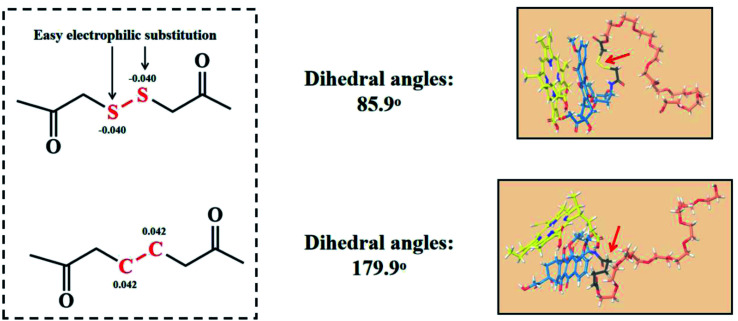
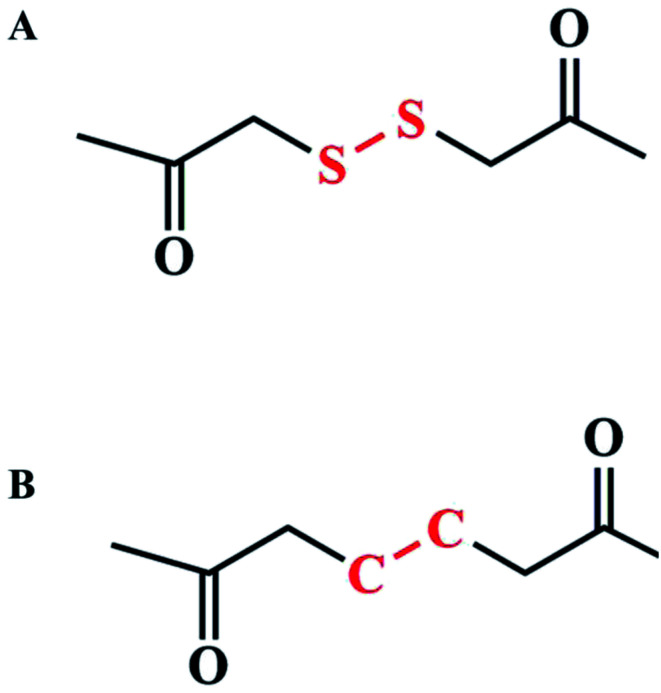
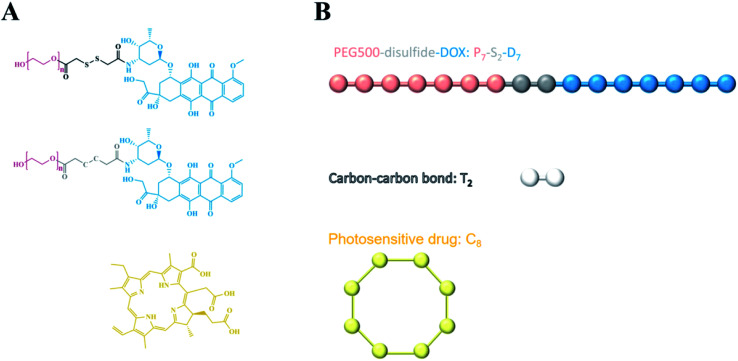
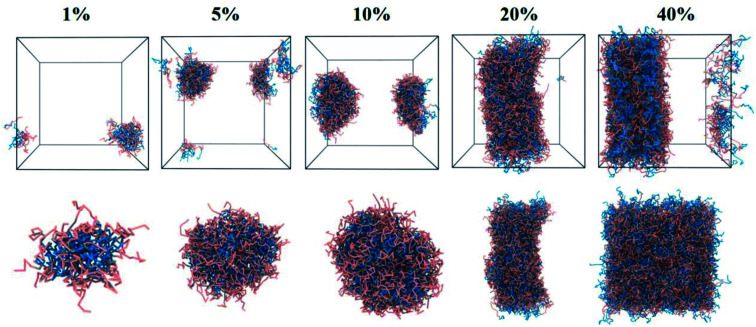
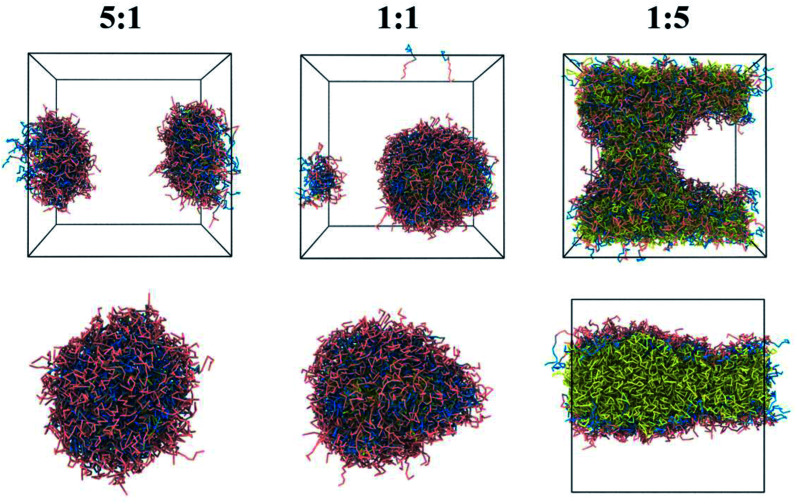
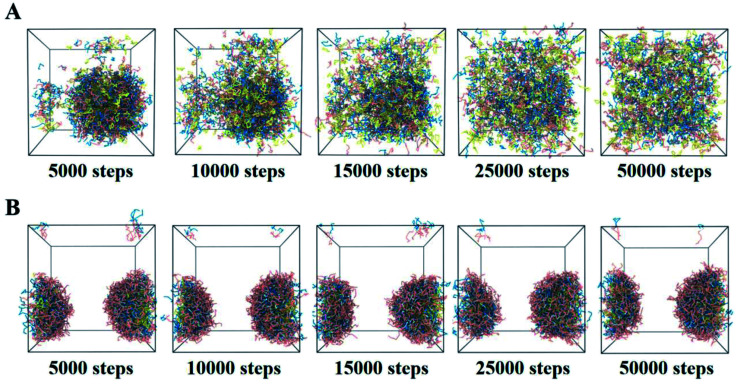
Tumor redox stimulus-responsive nanoparticulate drug delivery systems (nano-DDSs) have attracted considerable attention due to their thermodynamically stable microstructures and well-controlled drug release properties. However, drug-loading nanoparticle conformation and redox-triggered drug release mechanisms at the molecular level remain unclear. Herein, doxorubicin-conjugated polymers were constructed using disulfide bonds as linkages (PEG-SS-DOX), which loaded photosensitizer chlorin e6 (Ce6). We integrated multiple scale dynamic simulations (density functional theory (DFT) calculation, atomistic molecular dynamics (MD) simulation and dissipative particle dynamics (DPD) simulations) to elucidate the assembly/drug release dynamic processing. First, it was revealed that the emergence of the calculated bond flexible angle of disulfide bonds facilitated the assembly behavior and improved the stability of conformation. Sorted by the binding model, hydrogen bonding accounted for the major interactions between polymers and photosensitive drugs. DPD simulations were further delved into to acquire knowledge regarding the drug-free self-aggregation and Ce6-loaded assembly mechanism. The results show that nano-assembly conformation not only depended on the concentration of polymers, but also were associated with the polymer-drug ratio. Different from dicarbon bond-bridging polymers, disulfide bonds would contribute to the breakage of the polymer and the rapid release of DOX and Ce6. Our findings provide deep insights into the influence of redox-responsive chemical linkages and offer theoretical guidance to the rational design of specific stimulus-responsive nano-DDSs for cancer therapy.
肿瘤氧化还原刺激响应性纳米颗粒药物递送系统(纳米药物递送系统)由于其热力学稳定的微观结构和良好控制的药物释放特性而备受关注。然而,载药纳米颗粒的构象以及氧化还原触发的药物释放分子机制仍不清楚。在此,以二硫键为连接构建了阿霉素共轭聚合物(PEG-SS-DOX),其负载了光敏剂二氢卟吩e6(Ce6)。我们整合了多尺度动态模拟(密度泛函理论(DFT)计算、原子分子动力学(MD)模拟和耗散粒子动力学(DPD)模拟)来阐明组装/药物释放的动态过程。首先,揭示了计算得到的二硫键键柔性角的出现促进了组装行为并提高了构象稳定性。按结合模型分类,氢键占聚合物与光敏药物之间的主要相互作用。进一步深入研究DPD模拟以获取关于无药物自聚集和负载Ce6的组装机制的知识。结果表明,纳米组装构象不仅取决于聚合物的浓度,还与聚合物-药物比例有关。与二碳键桥连聚合物不同,二硫键有助于聚合物的断裂以及阿霉素和Ce6的快速释放。我们的研究结果深入了解了氧化还原响应性化学连接的影响,并为合理设计用于癌症治疗的特定刺激响应性纳米药物递送系统提供了理论指导。