
HIF 抑制剂 32-134D 与抗 PD-1 治疗联合根除小鼠肝癌。
HIF inhibitor 32-134D eradicates murine hepatocellular carcinoma in combination with anti-PD1 therapy.
机构信息
Armstrong Oxygen Biology Research Center.
Institute for Cell Engineering.
出版信息
J Clin Invest. 2022 May 2;132(9). doi: 10.1172/JCI156774.
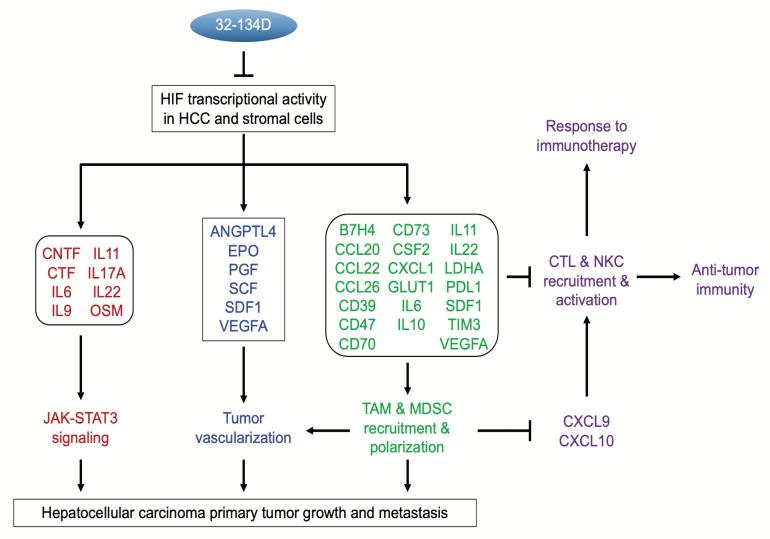
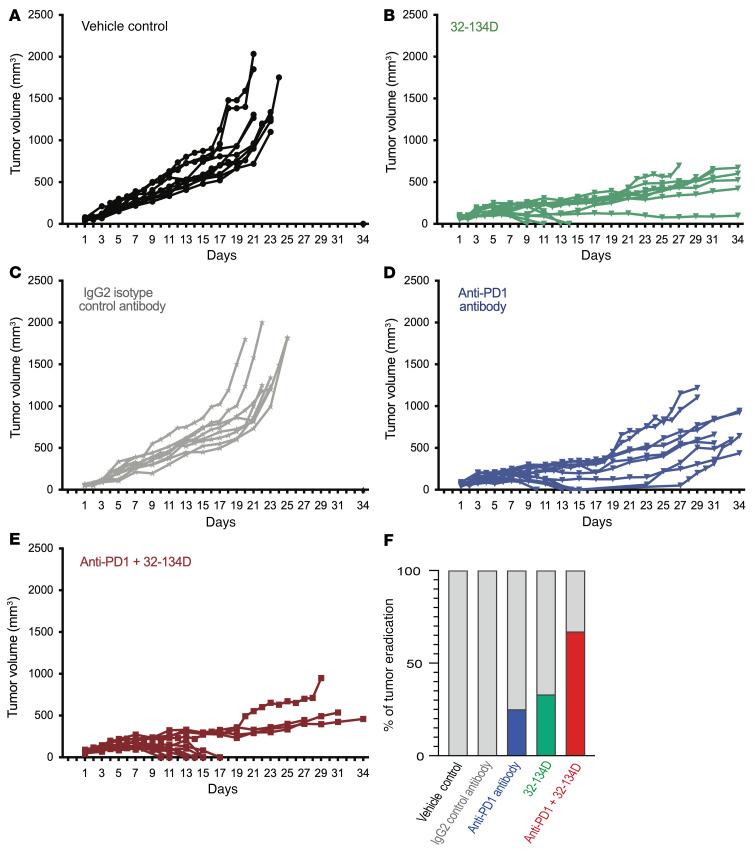
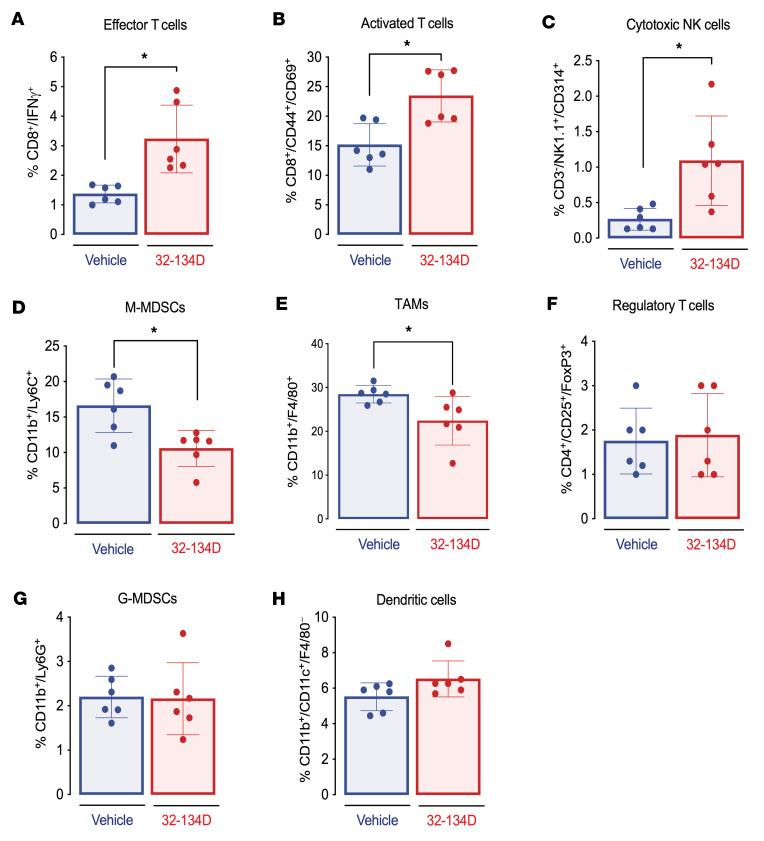
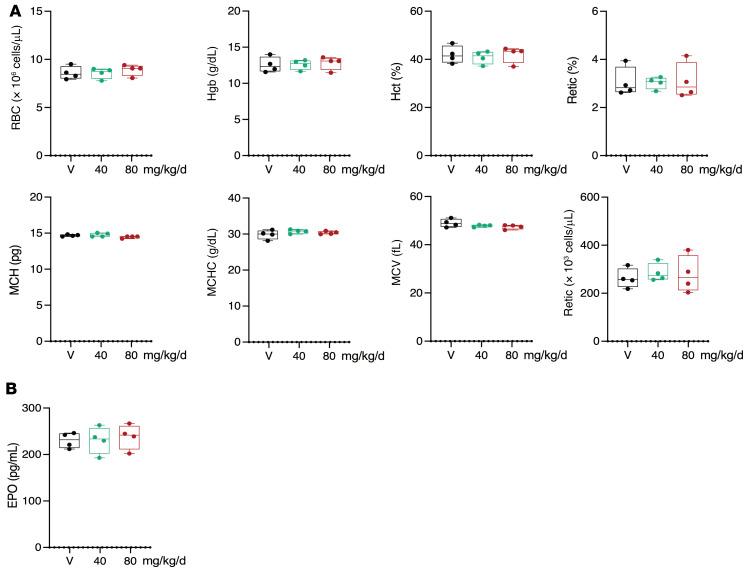
Hepatocellular carcinoma (HCC) is a major cause of cancer mortality worldwide and available therapies, including immunotherapies, are ineffective for many patients. HCC is characterized by intratumoral hypoxia, and increased expression of hypoxia-inducible factor 1α (HIF-1α) in diagnostic biopsies is associated with patient mortality. Here we report the development of 32-134D, a low-molecular-weight compound that effectively inhibits gene expression mediated by HIF-1 and HIF-2 in HCC cells, and blocks human and mouse HCC tumor growth. In immunocompetent mice bearing Hepa1-6 HCC tumors, addition of 32-134D to anti-PD1 therapy increased the rate of tumor eradication from 25% to 67%. Treated mice showed no changes in appearance, behavior, body weight, hemoglobin, or hematocrit. Compound 32-134D altered the expression of a large battery of genes encoding proteins that mediate angiogenesis, glycolytic metabolism, and responses to innate and adaptive immunity. This altered gene expression led to significant changes in the tumor immune microenvironment, including a decreased percentage of tumor-associated macrophages and myeloid-derived suppressor cells, which mediate immune evasion, and an increased percentage of CD8+ T cells and natural killer cells, which mediate antitumor immunity. Taken together, these preclinical findings suggest that combining 32-134D with immune checkpoint blockade may represent a breakthrough therapy for HCC.
肝细胞癌 (HCC) 是全球癌症死亡的主要原因,现有的治疗方法,包括免疫疗法,对许多患者都无效。HCC 的特点是肿瘤内缺氧,并且在诊断性活检中缺氧诱导因子 1α (HIF-1α) 的表达增加与患者死亡率相关。在这里,我们报告了 32-134D 的开发,这是一种低分子量化合物,可有效抑制 HCC 细胞中 HIF-1 和 HIF-2 介导的基因表达,并阻断人和小鼠 HCC 肿瘤的生长。在携带 Hepa1-6 HCC 肿瘤的免疫功能正常的小鼠中,将 32-134D 添加到抗 PD1 治疗中,将肿瘤清除率从 25%提高到 67%。接受治疗的小鼠在外观、行为、体重、血红蛋白或血细胞比容方面没有变化。该化合物改变了一组编码蛋白的基因的表达,这些蛋白介导血管生成、糖酵解代谢以及对先天和适应性免疫的反应。这种改变的基因表达导致肿瘤免疫微环境发生显著变化,包括肿瘤相关巨噬细胞和髓系来源的抑制细胞的比例降低,这些细胞介导免疫逃避,而 CD8+T 细胞和自然杀伤细胞的比例增加,这些细胞介导抗肿瘤免疫。总之,这些临床前研究结果表明,将 32-134D 与免疫检查点阻断联合使用可能是 HCC 的突破性治疗方法。





 Zotero 插件