Department of Pathology and Laboratory Medicine, Weill Cornell Medicine, 1300 York Avenue, New York, NY 10065, USA.
Department of Pathology and Laboratory Medicine, Weill Cornell Medicine, 1300 York Avenue, New York, NY 10065, USA.
Trends Cell Biol. 2022 Dec;32(12):1023-1034. doi: 10.1016/j.tcb.2022.04.002. Epub 2022 Apr 29.
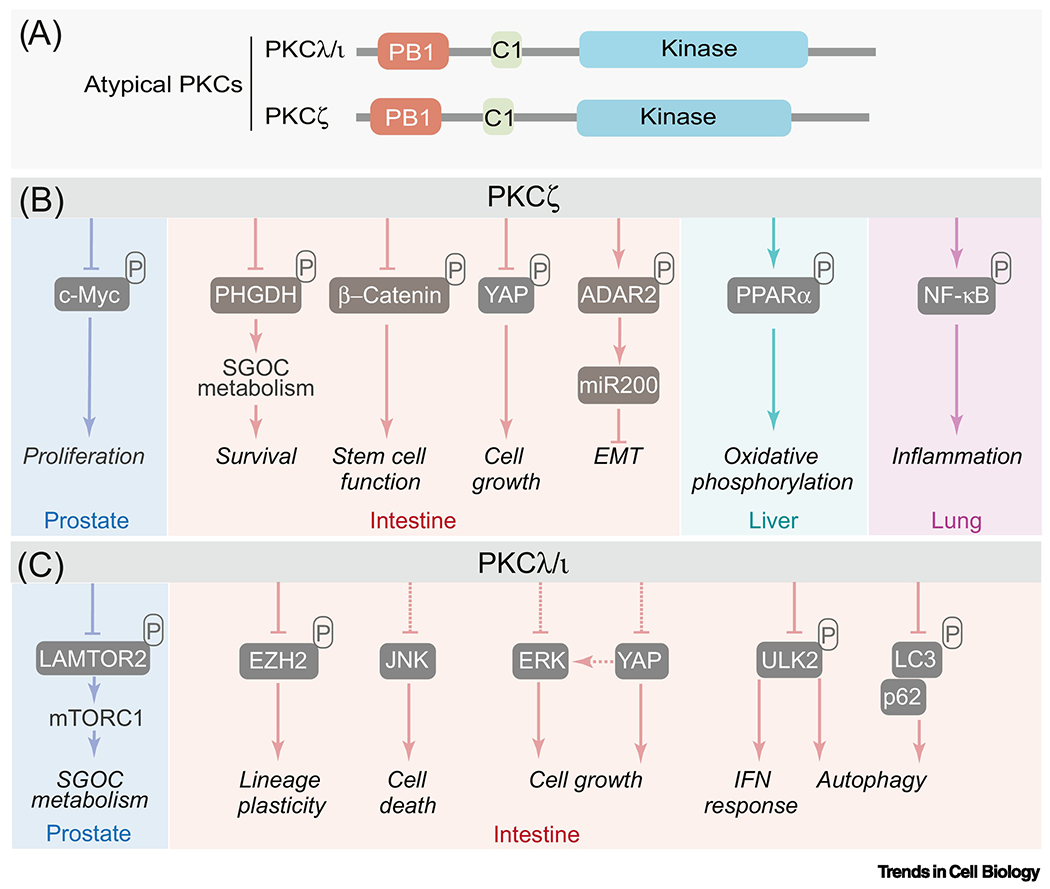
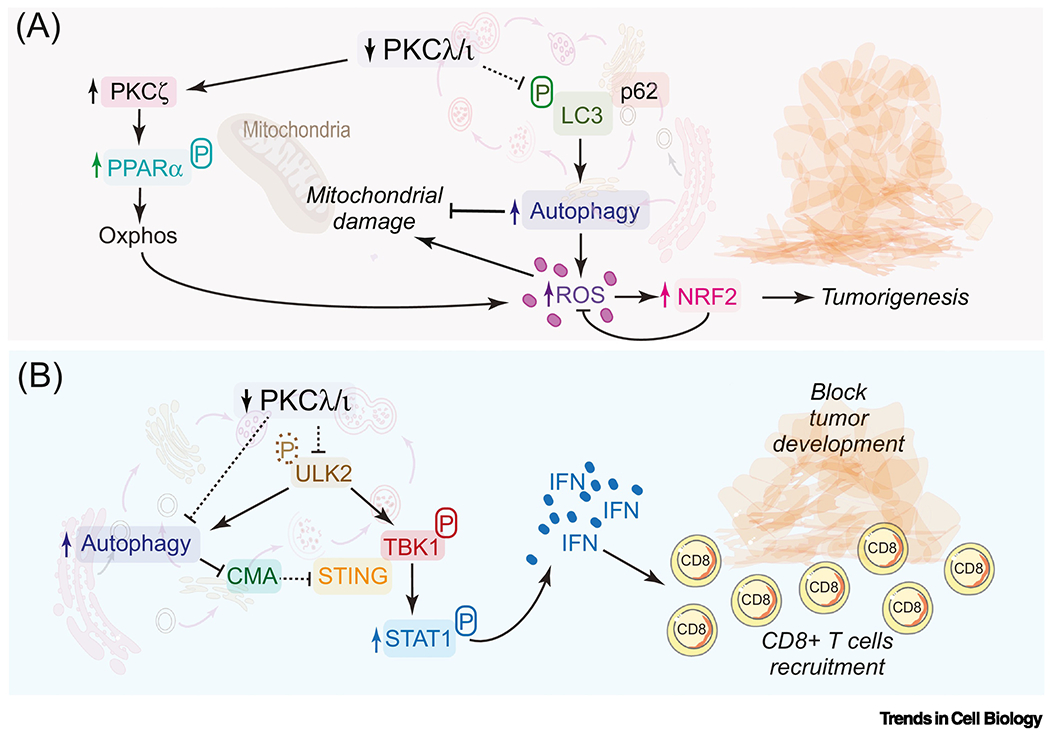
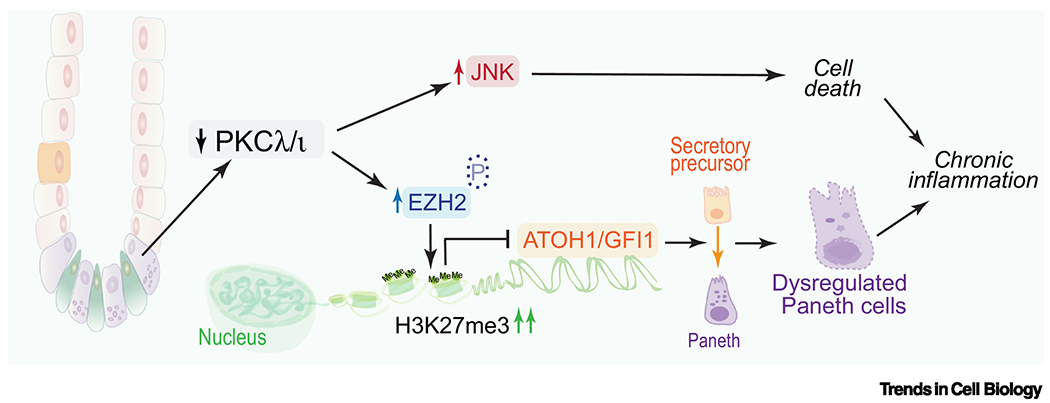
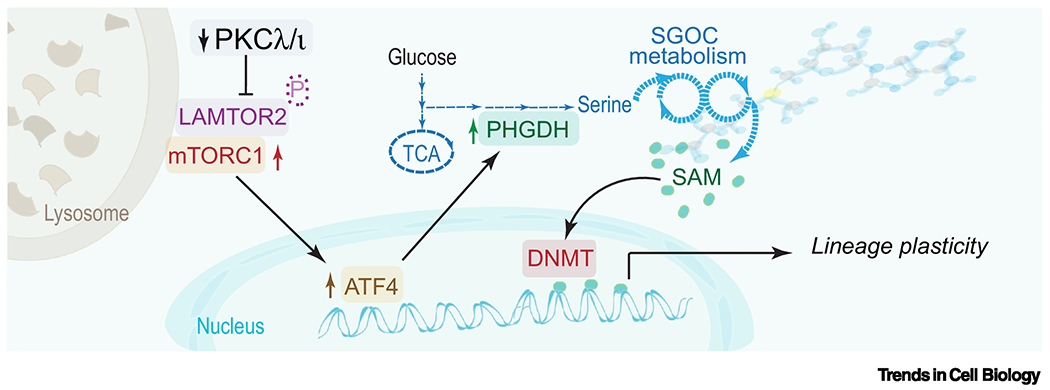
Nononcogenic cancer drivers often impinge on complex signals that create new addictions and vulnerabilities. Protein kinase Cλ/ι (PKCλ/ι) suppresses tumorigenesis by blocking metabolic pathways that regulate fuel oxidation and create building blocks for the epigenetic control of cell differentiation. Reduced levels of PKCλ/ι unleash these pathways to promote tumorigenesis, but the simultaneous activation of the STING-driven interferon cascade prevents tumor initiation by triggering immunosurveillance mechanisms. However, depending on the context of other signaling pathways, such as WNT/β-catenin or PKCζ, and timing, PKCλ/ι deletion can promote or inhibit tumorigenesis. In this review, we discuss in detail the molecular and cellular underpinnings of PKCλ/ι functions in cancer with the perspective of the crosstalk between metabolism and inflammation in the tumor microenvironment.
非致癌性癌症驱动因子经常干扰复杂信号,从而产生新的成瘾性和脆弱性。蛋白激酶 Cλ/ι(PKCλ/ι)通过阻断调节燃料氧化和为细胞分化的表观遗传控制创建构建块的代谢途径来抑制肿瘤发生。PKCλ/ι 水平降低会释放这些途径以促进肿瘤发生,但是 STING 驱动的干扰素级联的同时激活通过触发免疫监视机制来防止肿瘤起始。然而,取决于其他信号通路(例如 WNT/β-连环蛋白或 PKCζ)和时间的上下文,PKCλ/ι 的缺失可以促进或抑制肿瘤发生。在这篇综述中,我们详细讨论了 PKCλ/ι 在癌症中的分子和细胞基础,以及肿瘤微环境中代谢和炎症之间的串扰的观点。