Haematology Research, Murdoch Children's Research Institute, Melbourne, VIC, Australia.
Department of Paediatrics, University of Melbourne, Melbourne, VIC, Australia.
Nat Commun. 2022 May 2;13(1):2391. doi: 10.1038/s41467-022-29951-9.
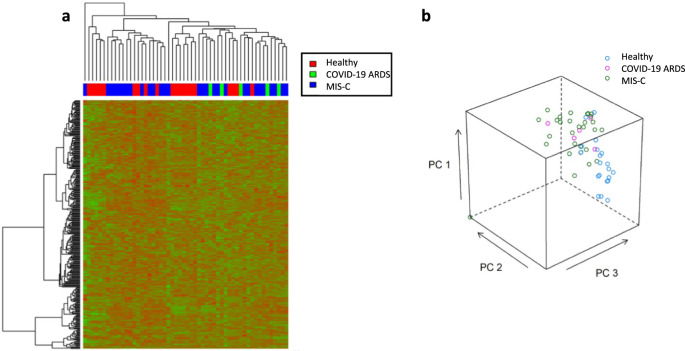
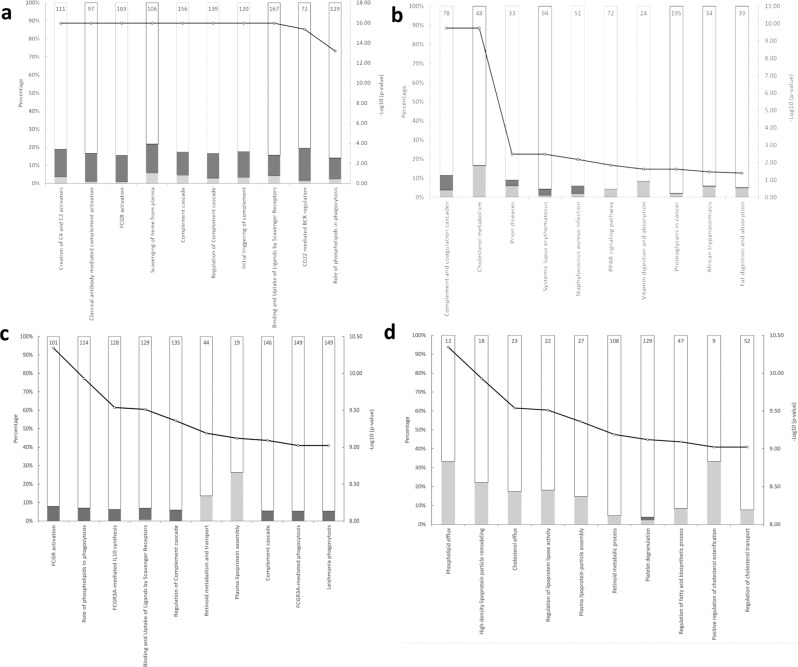
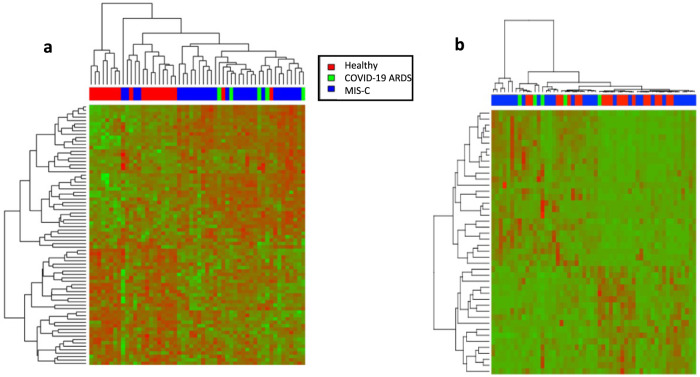
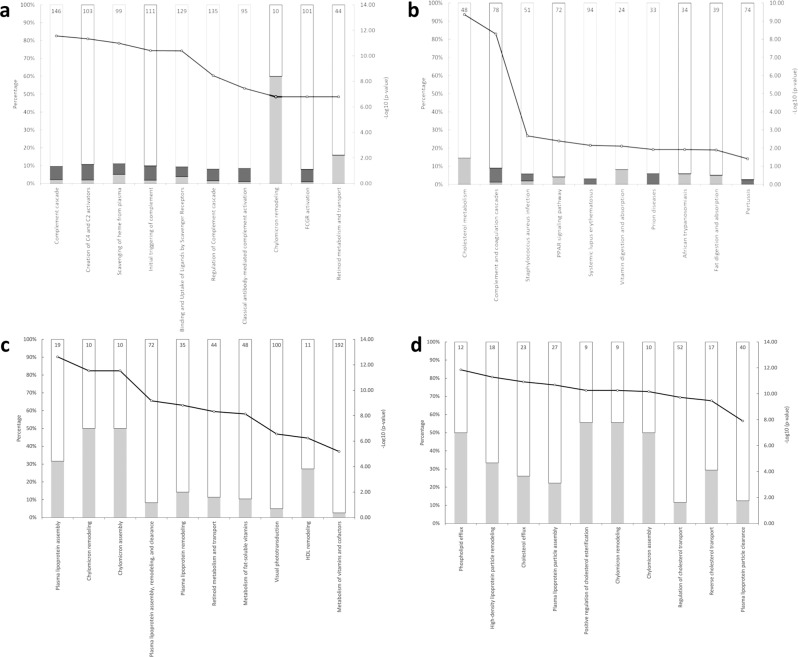
COVID-19 has infected more than 275 million worldwide (at the beginning of 2022). Children appear less susceptible to COVID-19 and present with milder symptoms. Cases of children with COVID-19 developing clinical features of Kawasaki-disease have been described. Here we utilise Mass Spectrometry proteomics to determine the plasma proteins expressed in healthy children pre-pandemic, children with multisystem inflammatory syndrome (MIS-C) and children with COVID-19 induced ARDS. Pathway analyses were performed to determine the affected pathways. 76 proteins are differentially expressed across the groups, with 85 and 52 proteins specific to MIS-C and COVID-19 ARDS, respectively. Complement and coagulation activation are implicated in these clinical phenotypes, however there was significant contribution of FcGR and BCR activation in MIS-C and scavenging of haem and retinoid metabolism in COVID-19 ARDS. We show global proteomic differences in MIS-C and COVID-ARDS, although both show complement and coagulation dysregulation. The results contribute to our understanding of MIS-C and COVID-19 ARDS in children.
截至 2022 年初,全球已有超过 2.75 亿人感染 COVID-19。儿童似乎对 COVID-19 的易感性较低,症状较轻。有描述称,儿童 COVID-19 病例出现川崎病的临床特征。在这里,我们利用质谱蛋白质组学来确定健康儿童、MIS-C 儿童和 COVID-19 诱导的 ARDS 儿童在大流行前的血浆蛋白表达。进行了途径分析以确定受影响的途径。在这些组中,有 76 种蛋白质表达存在差异,MIS-C 和 COVID-19 ARDS 分别有 85 种和 52 种蛋白质具有特异性。补体和凝血激活与这些临床表型有关,但在 MIS-C 中 FcGR 和 BCR 激活以及 COVID-19 ARDS 中血红素和类视黄醇代谢的清除作用具有重要贡献。我们显示了 MIS-C 和 COVID-ARDS 中的全局蛋白质组差异,尽管两者都显示出补体和凝血失调。这些结果有助于我们了解儿童 MIS-C 和 COVID-19 ARDS。