Fan Qingxin, Zuo Jing, Tian Hailong, Huang Canhua, Nice Edouard C, Shi Zheng, Kong Qingquan
Hospital of Chengdu Office of People's Government of Tibetan Autonomous Region (Hospital.C.T.), Sichuan University, Chengdu, 610041, China.
State Key Laboratory of Biotherapy and Cancer Center, Collaborative Innovation Center for Biotherapy, Sichuan University, Chengdu, 610041, China.
J Exp Clin Cancer Res. 2022 May 3;41(1):162. doi: 10.1186/s13046-022-02372-8.
The high postoperative recurrence rate and refractoriness of relapsed tumors are still a conundrum for the clinical management of osteosarcoma (OS). New therapeutic options are urgently needed. Depriving the nourishment of myeloid-derived suppressor cells is a novel strategy to improve the immunosuppressive tumor microenvironment for enhanced OS therapy.
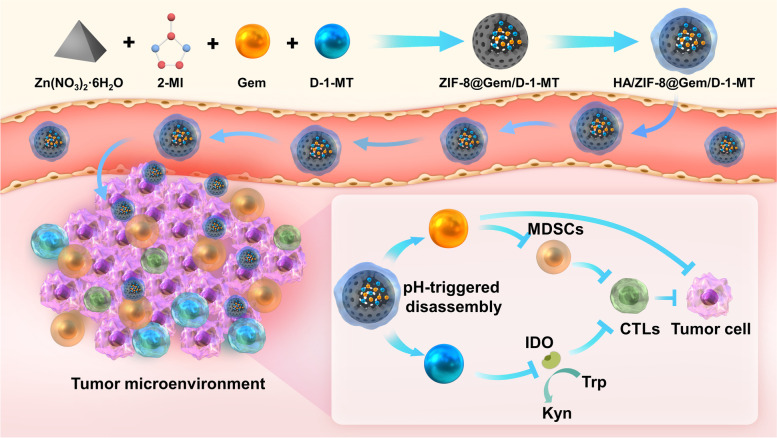
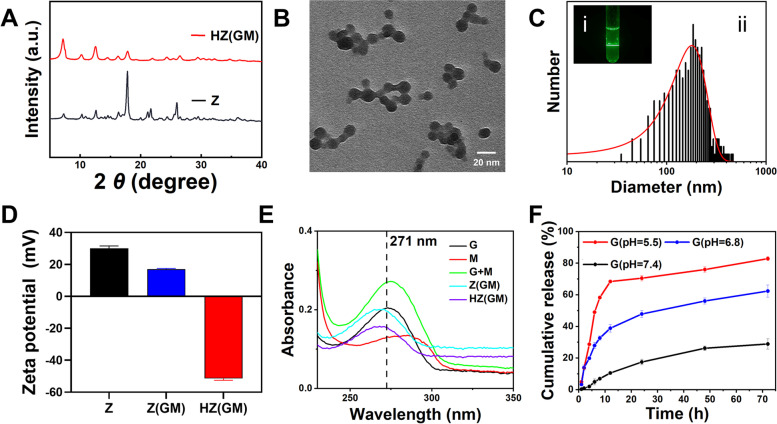
We synthesized a hyaluronic acid (HA)-modified metal-organic framework for combinational chemotherapy and immunotherapy of OS. Zeolitic Imidazolate Framework-8 (ZIF-8) was prepared by a one-pot synthetic method, Gemcitabine (Gem) and D-1-Methyltryptophan (D-1-MT) were loaded into the ZIF-8 during the synthesis process to make ZIF-8@Gem/D-1-MT nanoparticles (NPs). The end product (HA/ZIF-8@Gem/D-1-MT NPs) was obtained by HA modification on the surface of ZIF-8@Gem/D-1-MT NPs. The obtained HA/ZIF-8@Gem/D-1-MT NPs have excellent potential as a drug delivery vector for chemotherapy and immunotherapy in vitro and vivo.
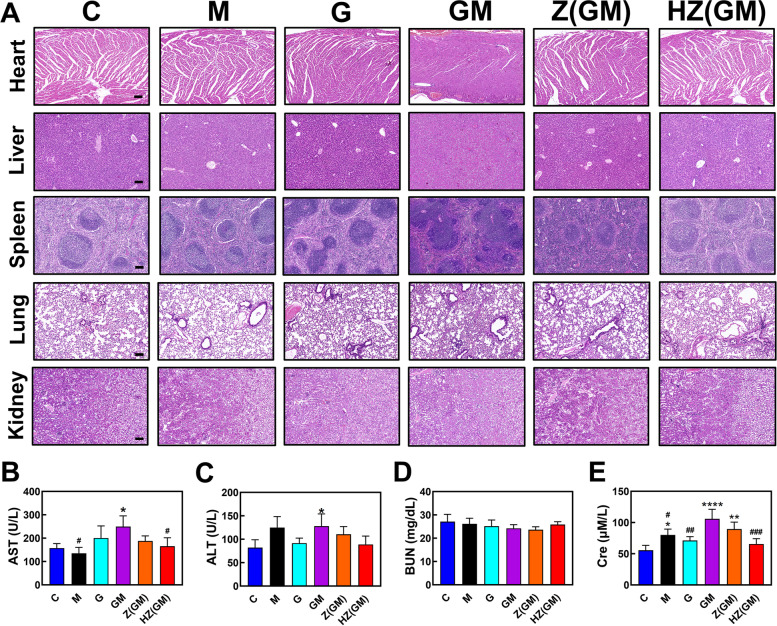
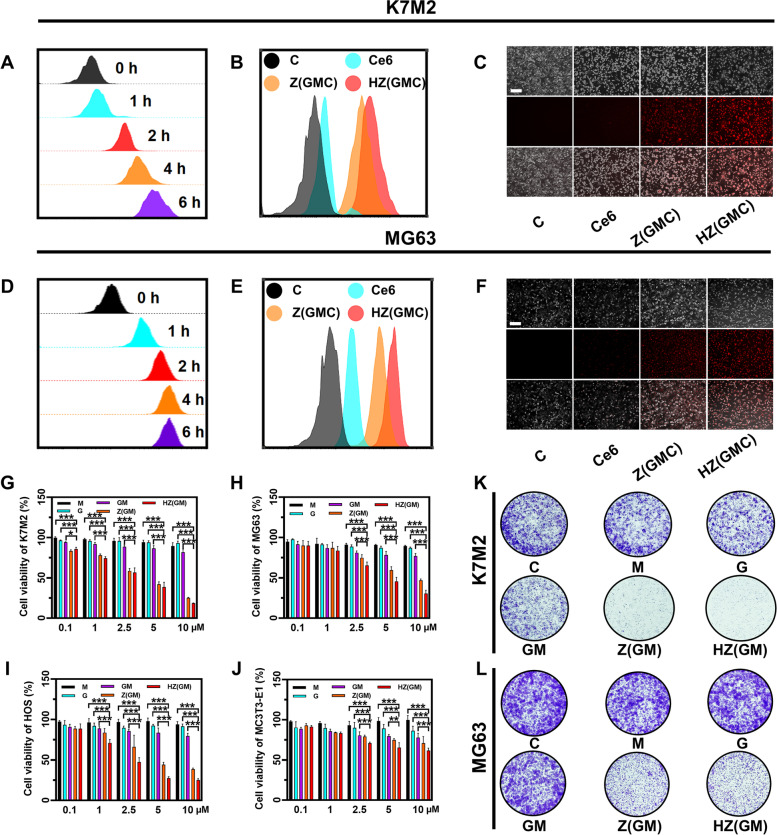
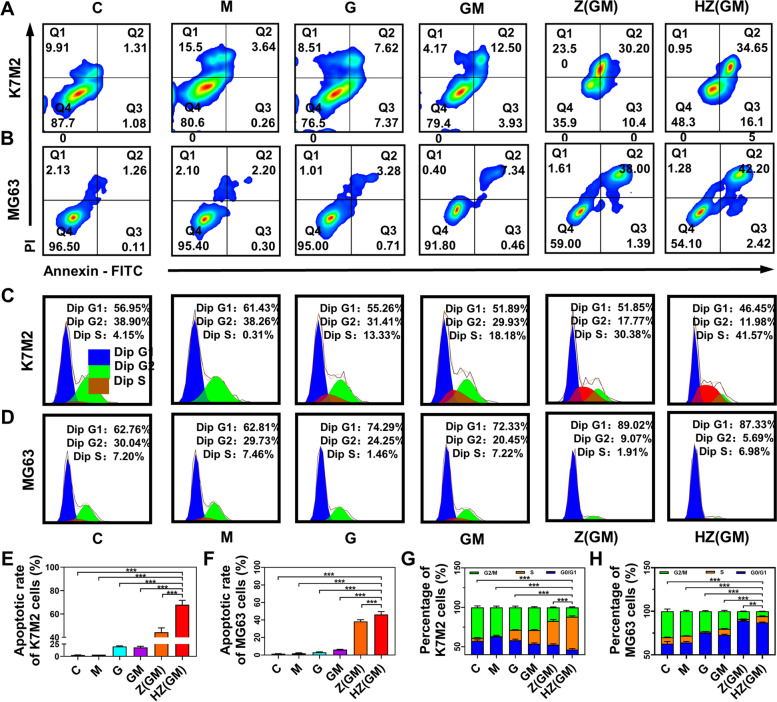
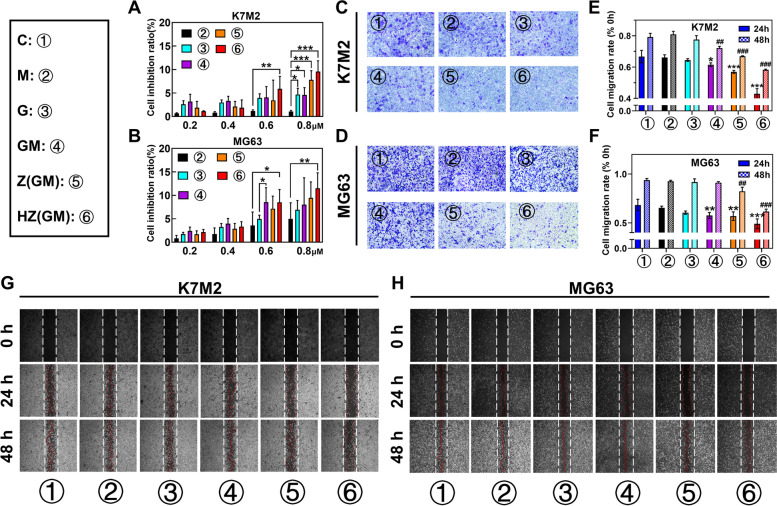
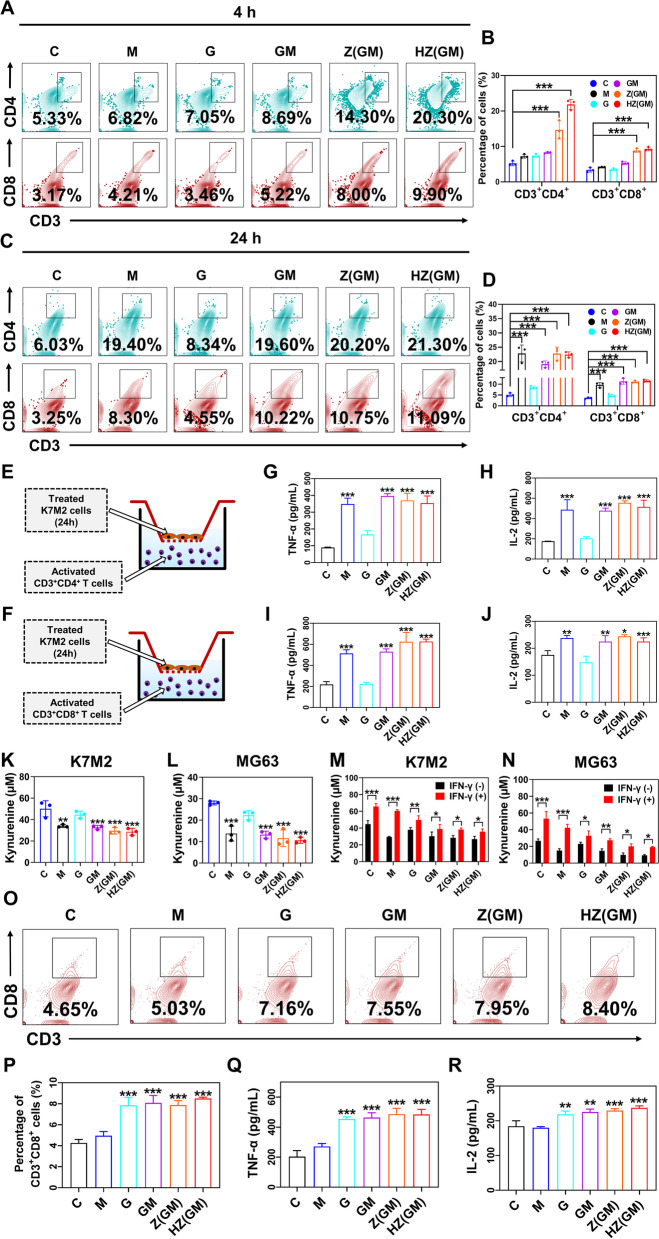
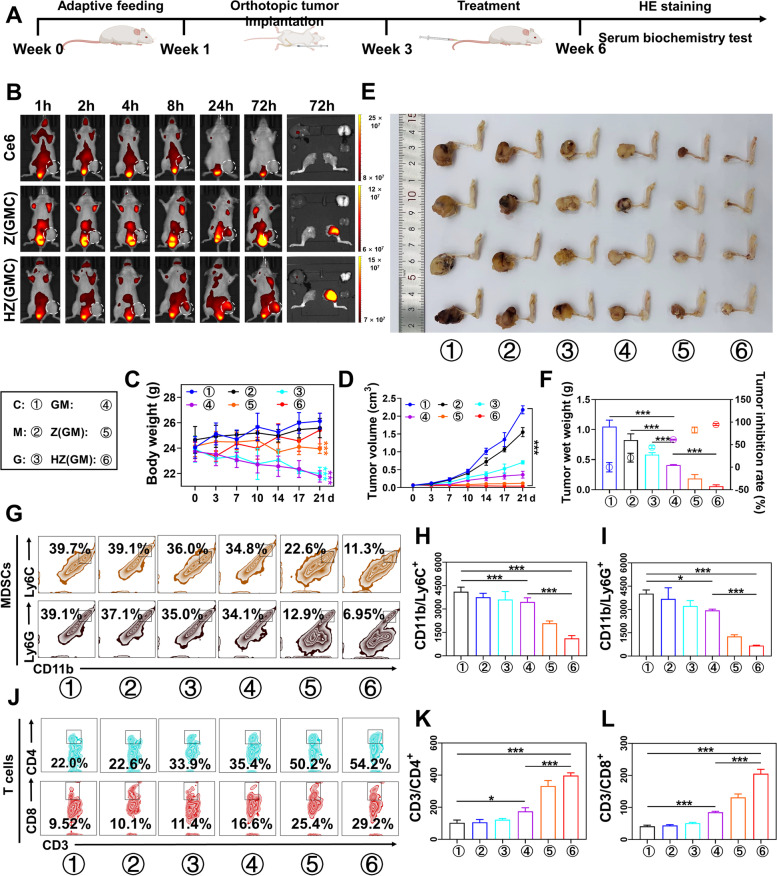
The results indicate that HA/ZIF-8@Gem/D-1-MT NPs were readily taken up by OS cells, and that the Gem and D-1-MT were effectively released into the acidic environment. The HA/ZIF-8@Gem/D-1-MT NPs could efficiently decrease OS cell viability (proliferation, apoptosis, cell cycle, migration and invasion). And HA/ZIF-8@Gem/D-1-MT NPs could reactivate antitumor immunity by inhibiting indoleamine 2,3 dioxygenase and myeloid-derived suppressor cells. Furthermore, animal experiments confirmed that HA/ZIF-8@Gem/D-1-MT NPs could induce intratumoral immune responses and inhibit tumor growth. Additionally, HA/ZIF-8@Gem/D-1-MT NPs have a good safety profile.
Our findings demonstrate that the combination of Gem with D-1-MT brings new hope for the improved treatment of OS, while the generation of the nanosystem has increased the application potential and flexibility of this strategy.
骨肉瘤(OS)术后复发率高以及复发肿瘤的难治性仍是临床治疗中的难题。迫切需要新的治疗选择。剥夺髓源性抑制细胞的营养是改善免疫抑制性肿瘤微环境以增强骨肉瘤治疗效果的一种新策略。
我们合成了一种用于骨肉瘤联合化疗和免疫治疗的透明质酸(HA)修饰的金属有机框架。采用一锅合成法制备沸石咪唑酯骨架-8(ZIF-8),在合成过程中将吉西他滨(Gem)和D-1-甲基色氨酸(D-1-MT)负载到ZIF-8中制成ZIF-8@Gem/D-1-MT纳米颗粒(NPs)。通过在ZIF-8@Gem/D-1-MT NPs表面进行HA修饰得到最终产物(HA/ZIF-8@Gem/D-1-MT NPs)。所获得的HA/ZIF-8@Gem/D-1-MT NPs在体外和体内作为化疗和免疫治疗的药物递送载体具有优异的潜力。
结果表明,HA/ZIF-8@Gem/D-1-MT NPs很容易被骨肉瘤细胞摄取,并且Gem和D-1-MT在酸性环境中能有效释放。HA/ZIF-8@Gem/D-1-MT NPs能有效降低骨肉瘤细胞活力(增殖、凋亡、细胞周期、迁移和侵袭)。并且HA/ZIF-8@Gem/D-1-MT NPs可通过抑制吲哚胺2,3-双加氧酶和髓源性抑制细胞来重新激活抗肿瘤免疫。此外,动物实验证实HA/ZIF-8@Gem/D-1-MT NPs可诱导肿瘤内免疫反应并抑制肿瘤生长。此外,HA/ZIF-8@Gem/D-1-MT NPs具有良好的安全性。
我们的研究结果表明,Gem与D-1-MT的联合为改善骨肉瘤治疗带来了新希望,而纳米系统的产生增加了该策略的应用潜力和灵活性。