Division of Human Genetics and Center for Childhood Cancer ResearchChildren's Hospital of PhiladelphiaPhiladelphiaPennsylvaniaUSA.
Departments of Pediatrics and GeneticsPerelman School of Medicine at the University of PennsylvaniaPhiladelphiaPennsylvaniaUSA.
Hepatol Commun. 2022 Aug;6(8):2132-2146. doi: 10.1002/hep4.1972. Epub 2022 May 4.
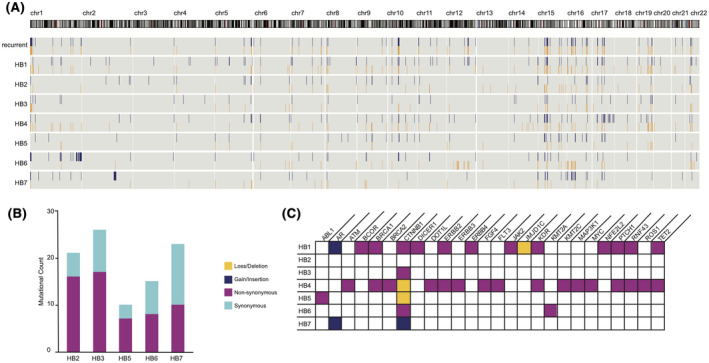
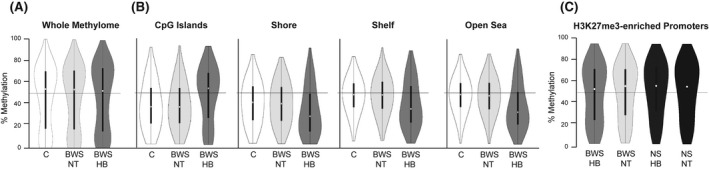
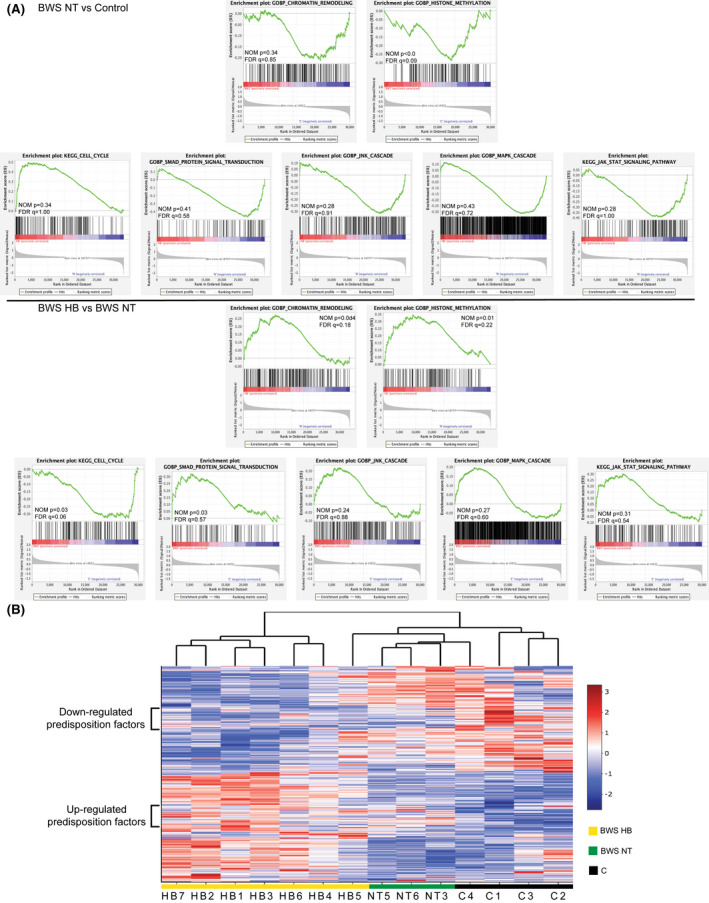
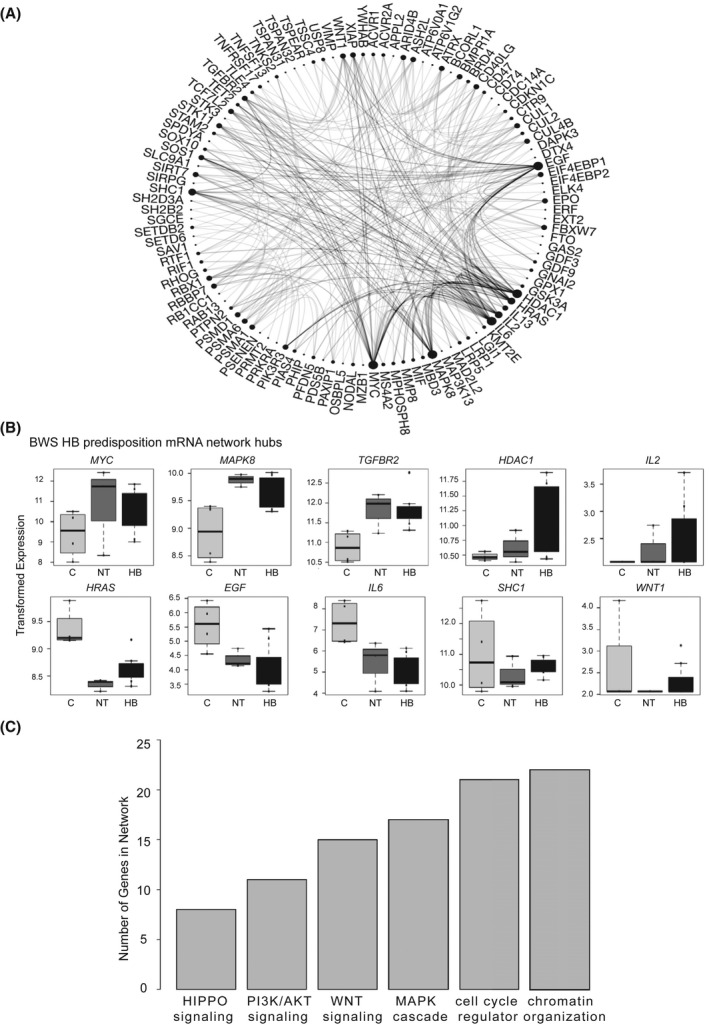
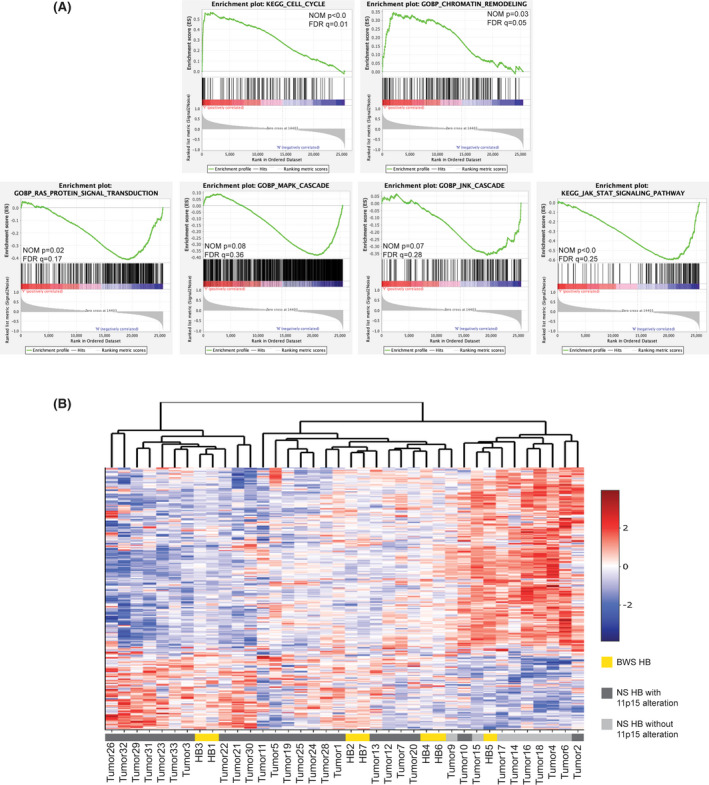
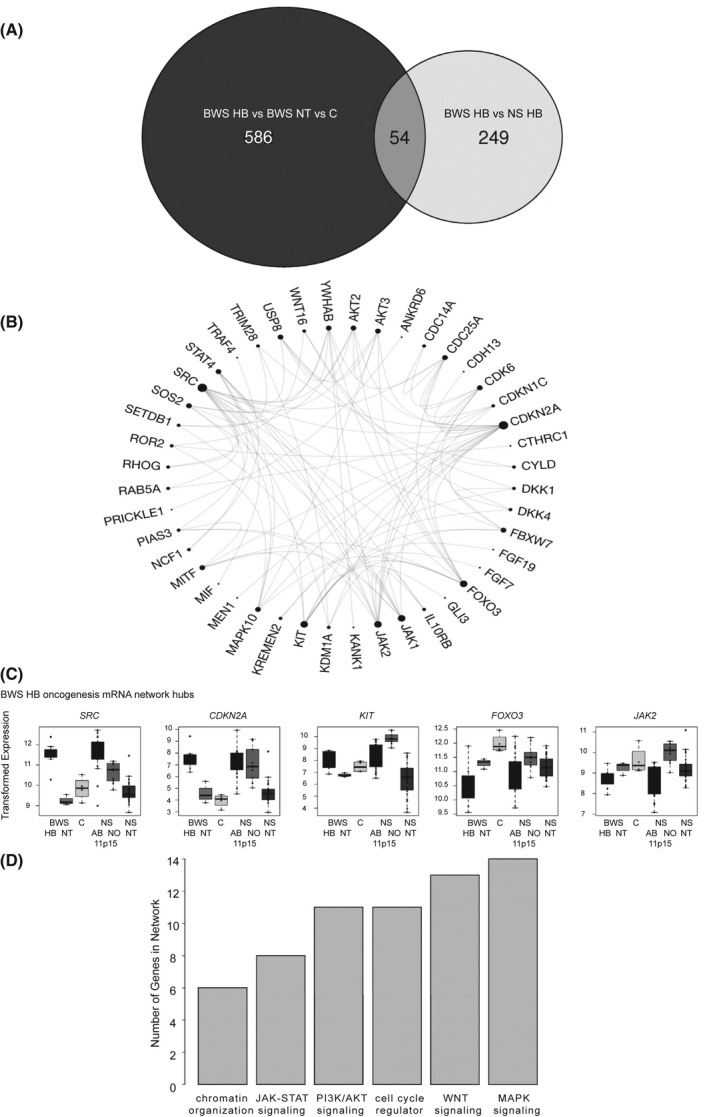
Beckwith-Wiedemann Syndrome (BWS) is the most common human overgrowth disorder caused by structural and epigenetic changes to chromosome 11p15. Patients with BWS are predisposed to developing hepatoblastoma (HB). To better understand the mechanism of HB oncogenesis in this cancer predisposition background, we performed the first multi-dimensional study of HB samples collected from patients diagnosed with BWS. This multi-omic investigation of seven BWS HB and five matched nontumor BWS liver samples from 7 unique patients included examination of whole exome sequences, messenger RNA/microRNA expression, and methylation levels to elucidate the genomic, transcriptomic, and epigenomic landscape of BWS-associated HB. We compared the transcriptional profiles of the BWS samples, both HB and nontumor, to that of control livers. Genes differentially expressed across BWS tissues were identified as BWS HB predisposition factors; this gene group included cell cycle regulators, chromatin organizers, and WNT, mitogen-activated protein kinase (MAPK), and phosphoinositide 3-kinase (PI3K)/AKT members. We also compared transcriptional changes associated with non-syndromic HB carrying BWS-like 11p15 alterations compared to those without, as well as to BWS HB. Through this analysis, we identified factors specific to 11p15-altered HB oncogenesis, termed the BWS oncogenesis network. We propose that 11p15 alterations drive HB oncogenesis by initially dysregulating cell-cycle regulators and chromatin organizers, including histone deacetylase 1 (HDAC1), ATP-dependent helicase X, and F-Box and WD repeat domain containing 7. Furthermore, we found oncogenic factors such as dickkopf WNT signaling pathway inhibitor 1 and 4, WNT16, forkhead box O3 (FOXO3), and MAPK10 are differentially expressed in 11p15-altered HB in both the BWS and non-syndromic backgrounds. These genes warrant further investigation as diagnostic or therapeutic targets.
贝克威思-威德曼综合征(BWS)是一种最常见的人类过度生长疾病,由 11p15 染色体的结构和表观遗传改变引起。BWS 患者易患肝母细胞瘤(HB)。为了更好地了解这种癌症易感性背景下 HB 致癌的机制,我们对从诊断为 BWS 的患者中收集的 HB 样本进行了首次多维研究。这项对 7 名 BWS HB 和 5 名来自 7 名独特患者的匹配非肿瘤 BWS 肝样本的多组学研究包括全外显子序列、信使 RNA/微 RNA 表达和甲基化水平的检测,以阐明 BWS 相关 HB 的基因组、转录组和表观基因组景观。我们比较了 BWS 样本(HB 和非肿瘤)的转录谱与对照肝脏的转录谱。在 BWS 组织中差异表达的基因被鉴定为 BWS HB 易感性因素;这个基因组包括细胞周期调节剂、染色质组织者和 WNT、丝裂原激活蛋白激酶(MAPK)和磷酸肌醇 3-激酶(PI3K)/AKT 成员。我们还比较了携带 BWS 样 11p15 改变的非综合征性 HB 与不携带 BWS 样 11p15 改变的 HB 以及 BWS HB 相关的转录变化。通过这项分析,我们确定了与 11p15 改变的 HB 致癌作用相关的特定因素,称为 BWS 致癌网络。我们提出,11p15 改变通过最初失调细胞周期调节剂和染色质组织者,包括组蛋白去乙酰化酶 1(HDAC1)、ATP 依赖性解旋酶 X 和 F 框和 WD 重复域包含 7,驱动 HB 致癌。此外,我们发现 Dickkopf WNT 信号通路抑制剂 1 和 4、WNT16、叉头框 O3(FOXO3)和 MAPK10 等致癌因子在 BWS 和非综合征性背景下的 11p15 改变的 HB 中表达不同。这些基因值得进一步研究作为诊断或治疗靶点。