Drago Victoria N, Devos Juliette M, Blakeley Matthew P, Forsyth V Trevor, Kovalevsky Andrey Y, Schall Constance A, Mueser Timothy C
Department of Chemistry and Biochemistry, University of Toledo, Toledo, OH, 43606, USA.
Life Sciences Group, Institut Laue-Langevin, 38000, Grenoble, France.
NPJ Microgravity. 2022 May 4;8(1):13. doi: 10.1038/s41526-022-00199-3.
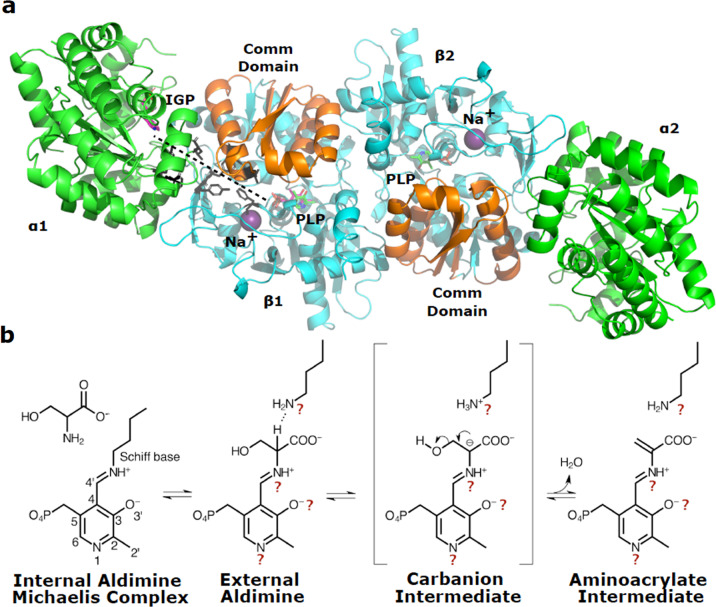
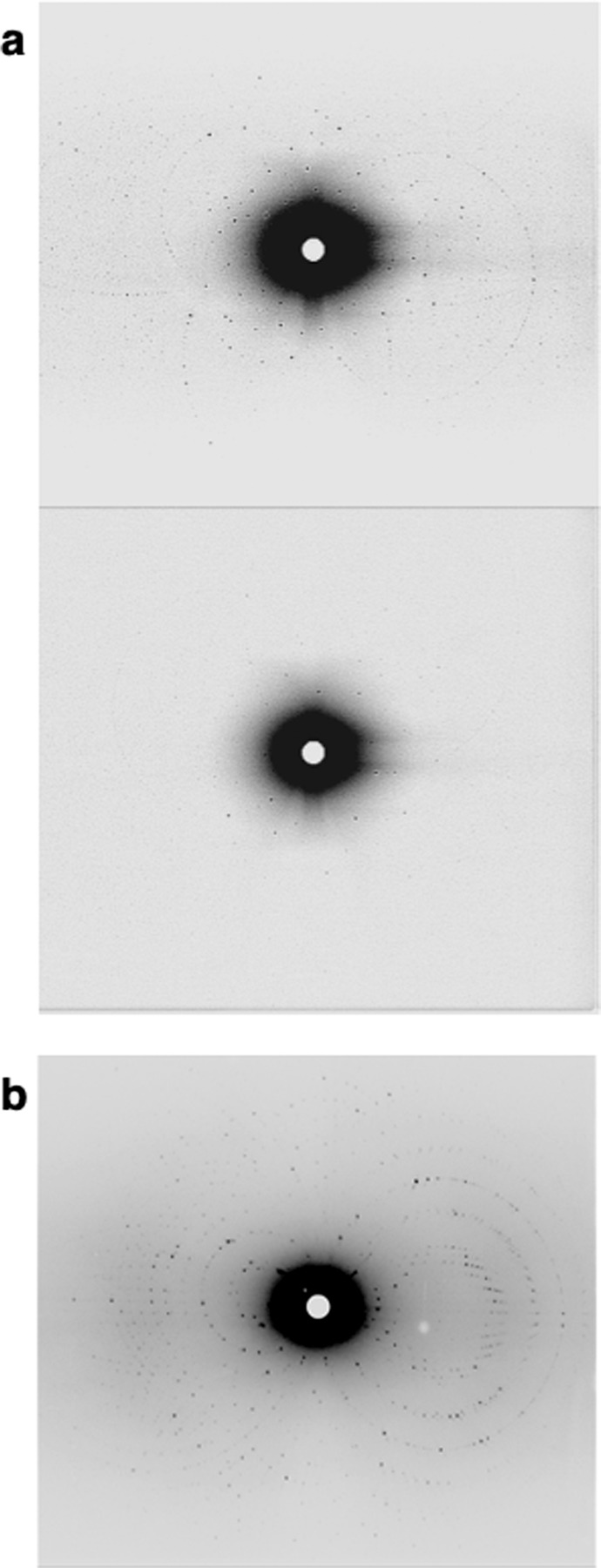
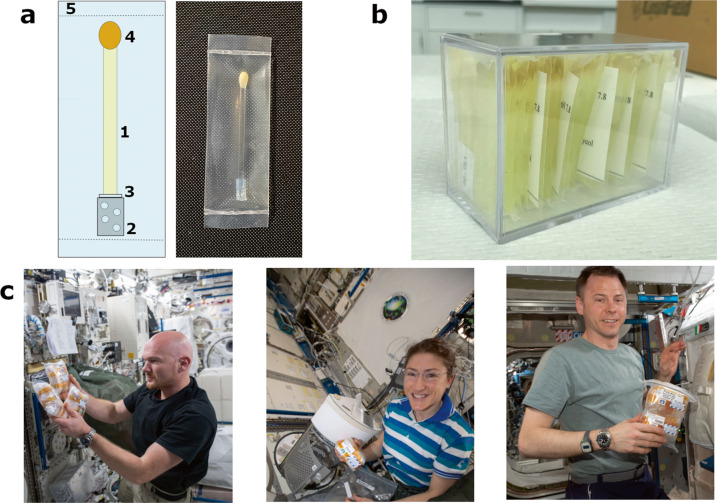
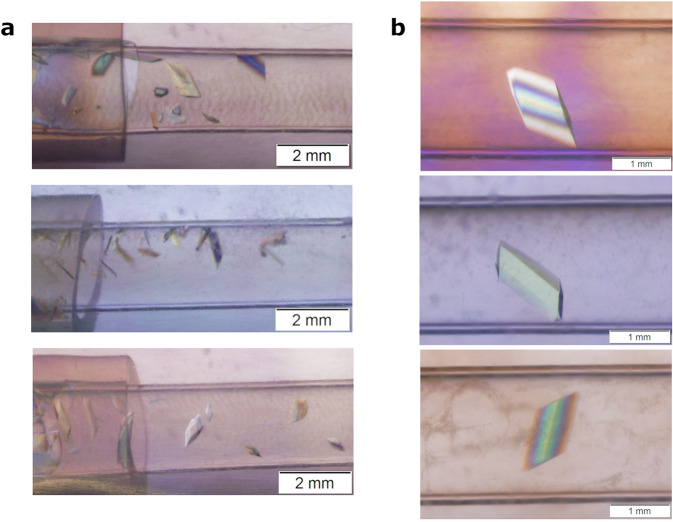
Biologically active vitamin B-derivative pyridoxal 5'-phosphate (PLP) is an essential cofactor in amino acid metabolic pathways. PLP-dependent enzymes catalyze a multitude of chemical reactions but, how reaction diversity of PLP-dependent enzymes is achieved is still not well understood. Such comprehension requires atomic-level structural studies of PLP-dependent enzymes. Neutron diffraction affords the ability to directly observe hydrogen positions and therefore assign protonation states to the PLP cofactor and key active site residues. The low fluxes of neutron beamlines require large crystals (≥0.5 mm). Tryptophan synthase (TS), a Fold Type II PLP-dependent enzyme, crystallizes in unit gravity with inclusions and high mosaicity, resulting in poor diffraction. Microgravity offers the opportunity to grow large, well-ordered crystals by reducing gravity-driven convection currents that impede crystal growth. We developed the Toledo Crystallization Box (TCB), a membrane-barrier capillary-dialysis device, to grow neutron diffraction-quality crystals of perdeuterated TS in microgravity. Here, we present the design of the TCB and its implementation on Center for Advancement of Science in Space (CASIS) supported International Space Station (ISS) Missions Protein Crystal Growth (PCG)-8 and PCG-15. The TCB demonstrated the ability to improve X-ray diffraction and mosaicity on PCG-8. In comparison to ground control crystals of the same size, microgravity-grown crystals from PCG-15 produced higher quality neutron diffraction data. Neutron diffraction data to a resolution of 2.1 Å has been collected using microgravity-grown perdeuterated TS crystals from PCG-15.
具有生物活性的维生素B衍生物磷酸吡哆醛(PLP)是氨基酸代谢途径中一种必需的辅因子。PLP依赖性酶催化多种化学反应,但是PLP依赖性酶如何实现反应多样性仍未得到很好的理解。这种理解需要对PLP依赖性酶进行原子水平的结构研究。中子衍射能够直接观察氢的位置,从而确定PLP辅因子和关键活性位点残基的质子化状态。中子束线的低通量要求晶体较大(≥0.5毫米)。色氨酸合酶(TS)是一种II型折叠的PLP依赖性酶,在单位重力下结晶时会有包体且镶嵌性高,导致衍射效果不佳。微重力提供了通过减少阻碍晶体生长的重力驱动对流来生长大尺寸、有序晶体的机会。我们开发了托莱多结晶盒(TCB),一种膜屏障毛细管透析装置,用于在微重力环境下生长全氘代TS的中子衍射质量的晶体。在这里,我们展示了TCB的设计及其在由空间科学促进中心(CASIS)支持的国际空间站(ISS)任务蛋白质晶体生长(PCG)-8和PCG-15中的应用。TCB在PCG-8上展示了改善X射线衍射和镶嵌性的能力。与相同尺寸的地面对照晶体相比,PCG-15中微重力生长的晶体产生了更高质量的中子衍射数据。使用PCG-15中微重力生长的全氘代TS晶体已收集到分辨率为2.1埃的中子衍射数据。