Muraoka Shinsuke, Takagi Reiya, Araki Yoshio, Uda Kenji, Sumitomo Masaki, Okamoto Sho, Nishihori Masahiro, Izumi Takashi, Nakamura Masanori, Saito Ryuta
Department of Neurosurgery, Kariya Toyota General Hospital, Sumiyoshi Cho 5-15, Kariya, Aichi, Japan.
Department of Mechanical Engineering, Nagoya Institute of Technology, Gokiso Cho, Showa-ku, Nagoya, Aichi, Japan.
Sci Rep. 2022 May 4;12(1):7283. doi: 10.1038/s41598-022-11321-6.
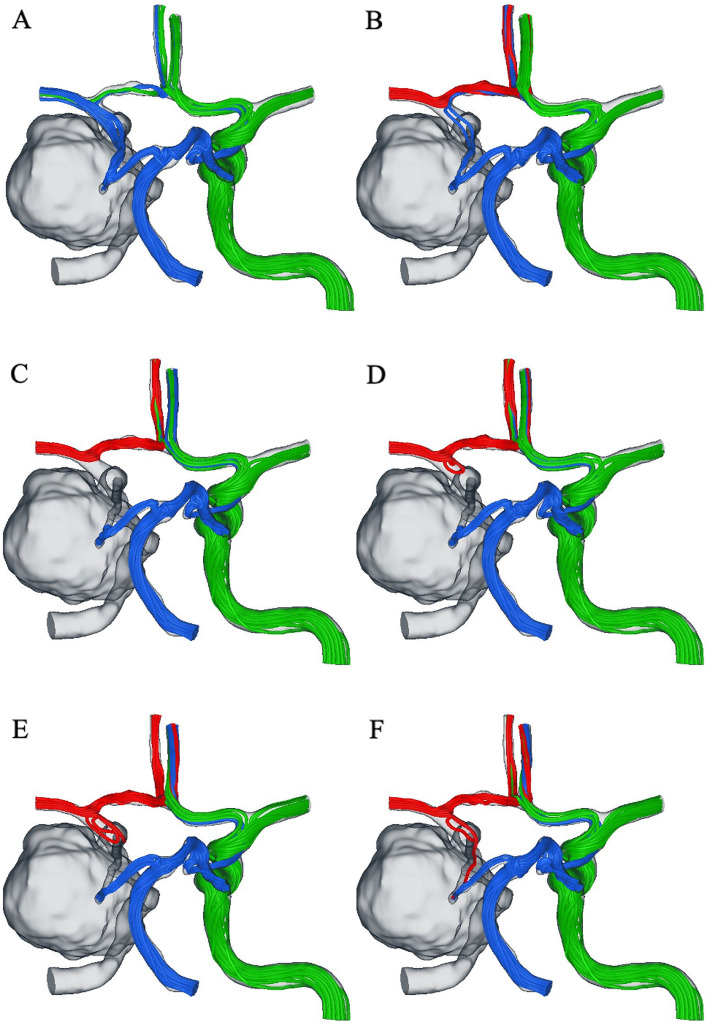
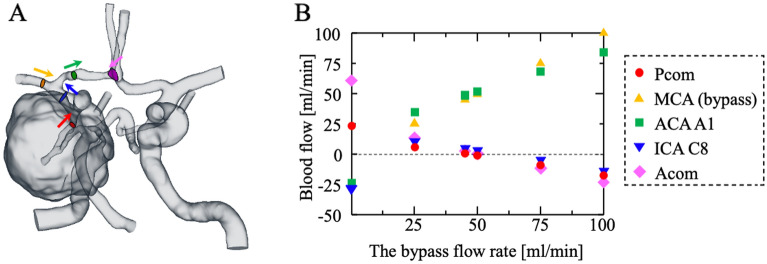
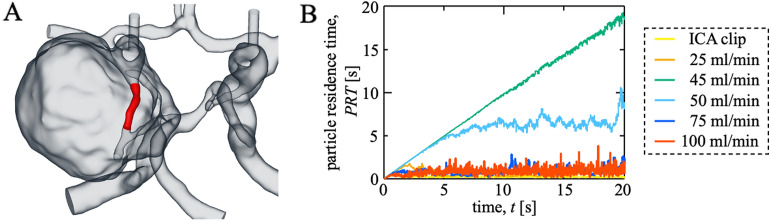
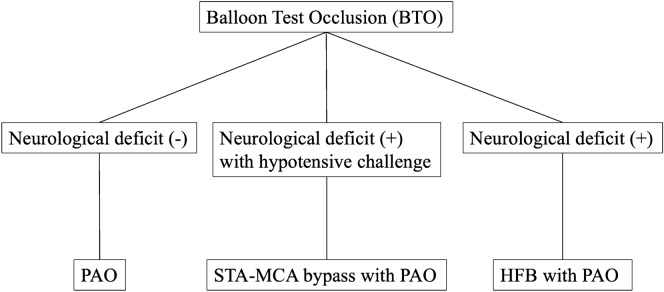
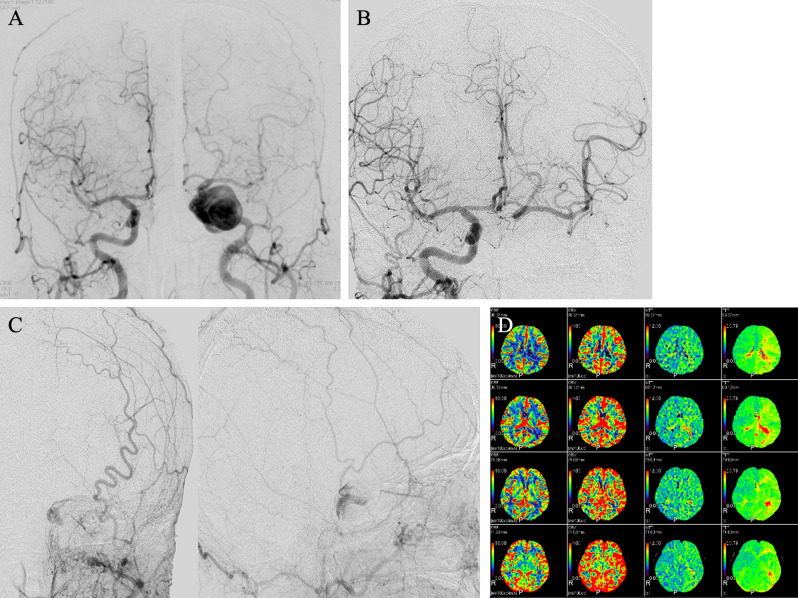
Balloon test occlusion (BTO) is an angiographic test to evaluate ischemic tolerance after permanent occlusion of an internal carotid artery (ICA). BTO can simulate ischemia caused by parent artery occlusion and can be used to select a suitable bypass surgery using specific criteria. On the other hand, a postoperative thrombus can form despite proper case selection, optimal radiological evaluation, and an appropriate surgical strategy. Postoperative ischemic complications related to perforating branches are clinically significant. This simulation study aimed to analyze postoperative flow characteristics and elucidate the cause of ischemic complications related to the perforating branch using computational fluid dynamics (CFD). An unexpected postoperative thrombus formation related to the perforating branch occurred after treating a giant aneurysm in the cavernous portion of the ICA in a patient. Three-dimensional digital subtraction angiography was used to acquire flow data and set up the CFD simulation. The flow simulations were performed at various bypass flow rates. The CFD analysis indicated flow stagnation in the ICA only when surgical treatment using a low-flow bypass graft was performed. Thrombus formation may lead to ischemic complications related to the perforating branch, such as the anterior choroidal artery. BTO did not reflect the influence of bypass blood flow. Therefore, recognizing that blood flow stagnation may occur and comprehensively deciding on the surgical strategy by CFD analysis can be helpful to prevent ischemic complications in patients with giant aneurysms.
球囊试验闭塞(BTO)是一种血管造影检查,用于评估颈内动脉(ICA)永久性闭塞后的缺血耐受性。BTO可以模拟因供血动脉闭塞引起的缺血,并可用于根据特定标准选择合适的搭桥手术。另一方面,尽管病例选择恰当、影像学评估最佳且手术策略合适,但术后仍可能形成血栓。与穿支相关的术后缺血并发症具有临床意义。本模拟研究旨在使用计算流体动力学(CFD)分析术后血流特征,并阐明与穿支相关的缺血并发症的原因。在一名患者的ICA海绵窦段巨大动脉瘤治疗后,发生了与穿支相关的意外术后血栓形成。使用三维数字减影血管造影获取血流数据并建立CFD模拟。在不同的搭桥流速下进行血流模拟。CFD分析表明,仅在使用低流量搭桥移植物进行手术治疗时,ICA中才会出现血流停滞。血栓形成可能导致与穿支相关的缺血并发症,如脉络膜前动脉。BTO未反映搭桥血流的影响。因此,认识到可能会出现血流停滞,并通过CFD分析全面确定手术策略,有助于预防巨大动脉瘤患者的缺血并发症。