Rios-Arce Naiomy D, Murugesh Deepa K, Hum Nicholas R, Sebastian Aimy, Jbeily Elias H, Christiansen Blaine A, Loots Gabriela G
Physical and Life Sciences Directorate Lawrence Livermore National Laboratory Livermore CA USA.
Department of Orthopedic Surgery UC Davis Medical Center Sacramento CA USA.
JBMR Plus. 2022 Apr 19;6(5):e10625. doi: 10.1002/jbm4.10625. eCollection 2022 May.
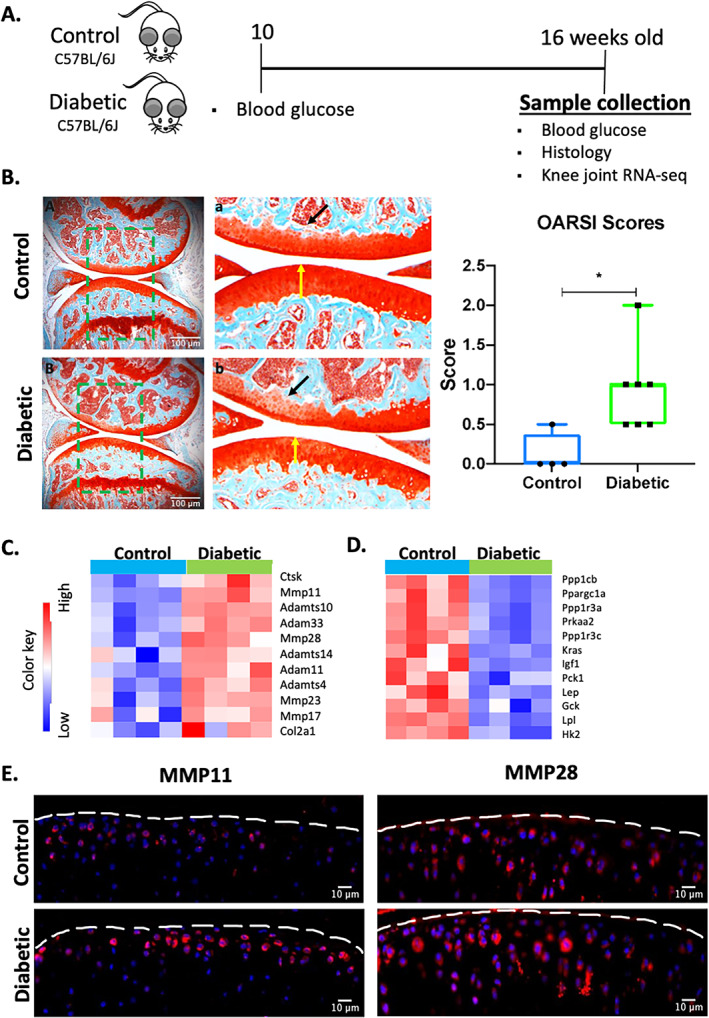
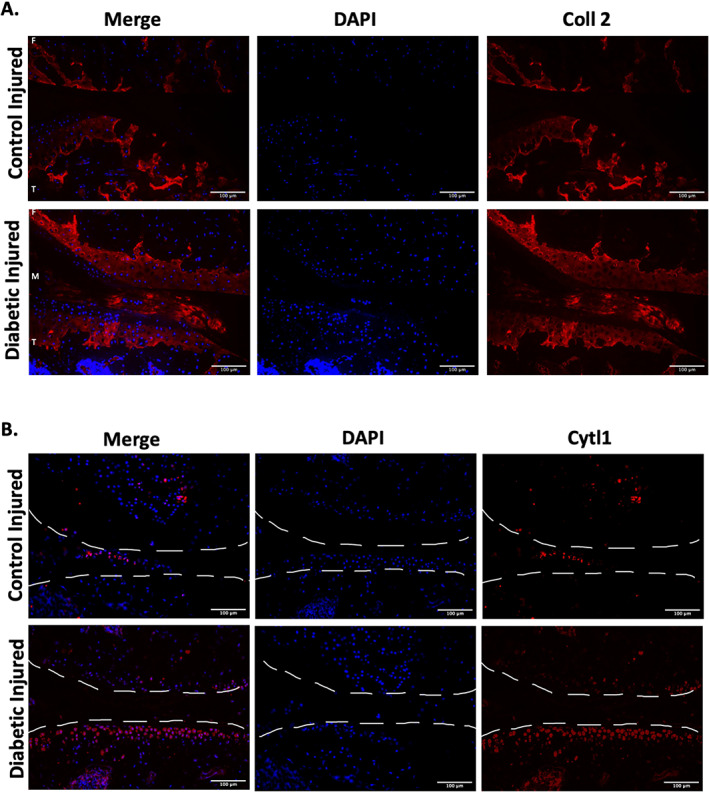
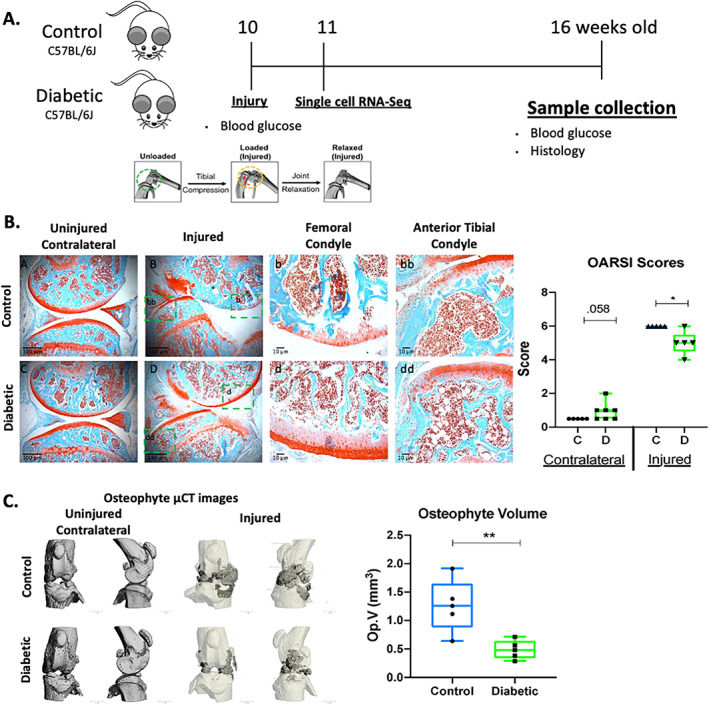
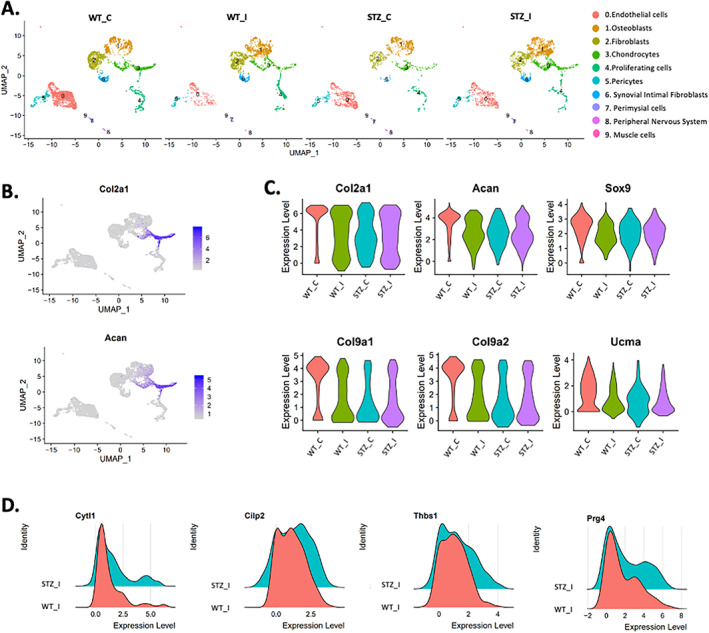
Type 1 diabetes mellitus (T1DM) affects 9.5% of the population. T1DM is characterized by severe insulin deficiency that causes hyperglycemia and leads to several systemic effects. T1DM has been suggested as a risk factor for articular cartilage damage and loss, which could expedite the development of osteoarthritis (OA). OA represents a major public health challenge by affecting 300 million people globally, yet very little is known about the correlation between T1DM and OA. In addition, current studies that have looked at the interaction between diabetes mellitus and OA have reported conflicting results with some suggesting a positive correlation whereas others did not. In this study, we aimed to evaluate whether T1DM exacerbates the development of spontaneous OA or accelerates the progression of posttraumatic osteoarthritis (PTOA) after joint injury. Histological evaluation of T1DM and control joints determined that T1DM mice displayed cartilage degeneration measurements consistent with mild OA phenotypes. RNA sequencing analyses identified significantly upregulated genes in T1DM corresponding to matrix-degrading enzymes known to promote cartilage matrix degradation, suggesting a role of these enzymes in OA development. Next, we assessed whether preexisting T1DM influences PTOA development subsequent to trauma. At 6 weeks post-injury, T1DM injured joints displayed significantly less cartilage damage and joint degeneration than injured non-diabetic joints, suggesting a significant delay in PTOA disease progression. At the single-cell resolution, we identified increased number of cells expressing the chondrocyte markers , , and in the T1DM injured group. Our findings demonstrate that T1DM can be a risk factor for OA but not for PTOA. This study provides the first account of single-cell resolution related to T1DM and the risk for OA and PTOA. © 2022 The Authors. published by Wiley Periodicals LLC on behalf of American Society for Bone and Mineral Research.
1型糖尿病(T1DM)影响9.5%的人口。T1DM的特征是严重胰岛素缺乏,导致血糖升高并引发多种全身效应。T1DM被认为是关节软骨损伤和流失的危险因素,这可能加速骨关节炎(OA)的发展。OA是一项重大的公共卫生挑战,全球有3亿人受其影响,但关于T1DM与OA之间的相关性却知之甚少。此外,目前关于糖尿病与OA相互作用的研究报告结果相互矛盾,一些研究表明存在正相关,而另一些则没有。在本研究中,我们旨在评估T1DM是否会加剧自发性OA的发展或加速关节损伤后创伤后骨关节炎(PTOA)的进展。对T1DM和对照关节的组织学评估确定,T1DM小鼠的软骨退变测量结果与轻度OA表型一致。RNA测序分析确定,T1DM中与已知促进软骨基质降解的基质降解酶相对应的基因显著上调,表明这些酶在OA发展中起作用。接下来,我们评估了预先存在的T1DM是否会影响创伤后PTOA的发展。在受伤后6周,T1DM损伤的关节比未受伤的非糖尿病关节显示出明显更少的软骨损伤和关节退变,表明PTOA疾病进展明显延迟。在单细胞分辨率下,我们发现在T1DM损伤组中表达软骨细胞标志物 、 和 的细胞数量增加。我们的研究结果表明,T1DM可能是OA的危险因素,但不是PTOA的危险因素。本研究首次阐述了与T1DM以及OA和PTOA风险相关的单细胞分辨率情况。© 2022作者。由Wiley Periodicals LLC代表美国骨与矿物质研究学会出版。