Faculty of Biochemistry, Biophysics and Biotechnology, Jagiellonian University, Gronostajowa 7, 30-387, Cracow, Poland.
Ma Chung Research Center for Photosynthetic Pigments, Ma Chung University, Villa Puncak Tidar N-01, Malang, 65151, Indonesia.
Nat Commun. 2022 May 5;13(1):2474. doi: 10.1038/s41467-022-30095-z.
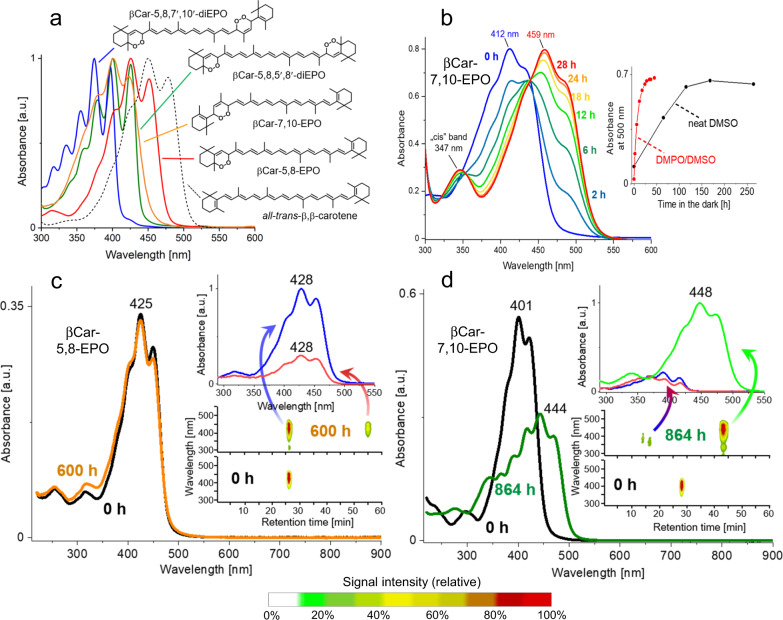
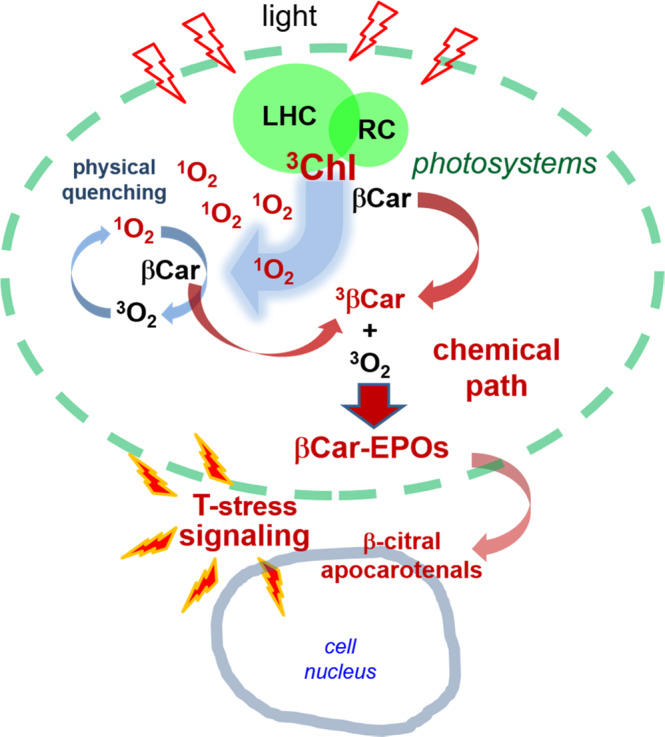
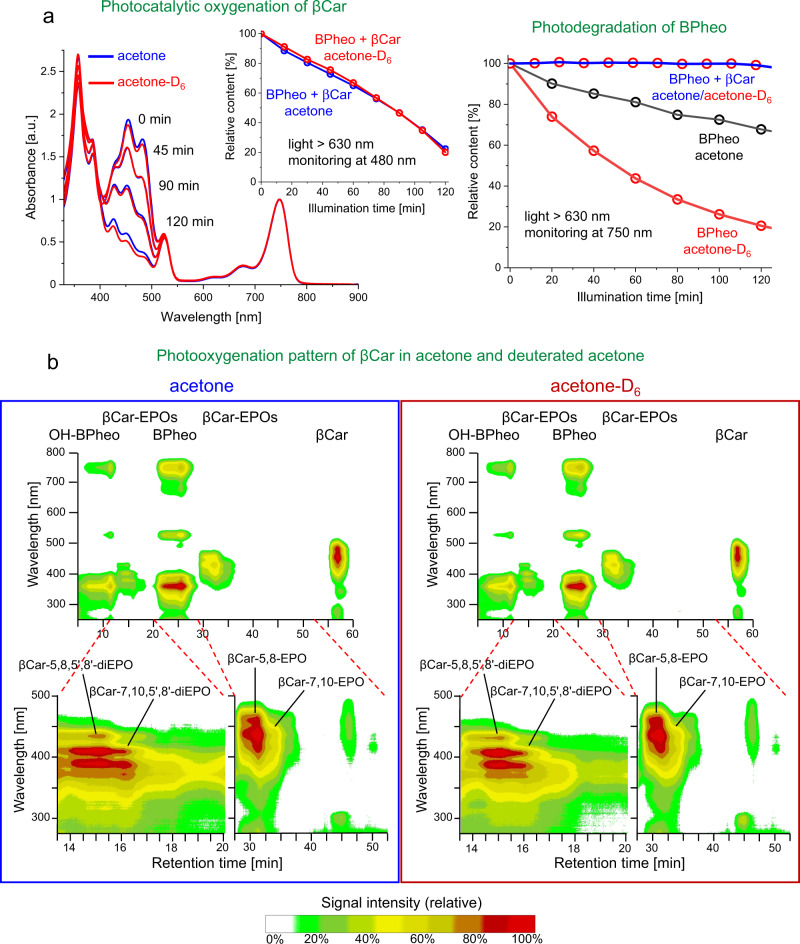
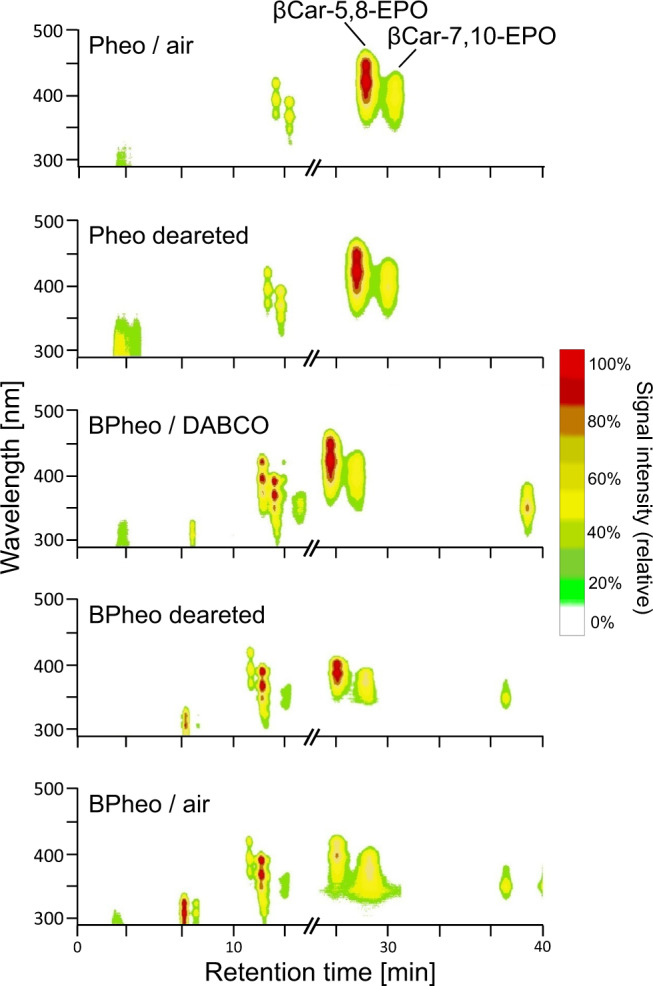
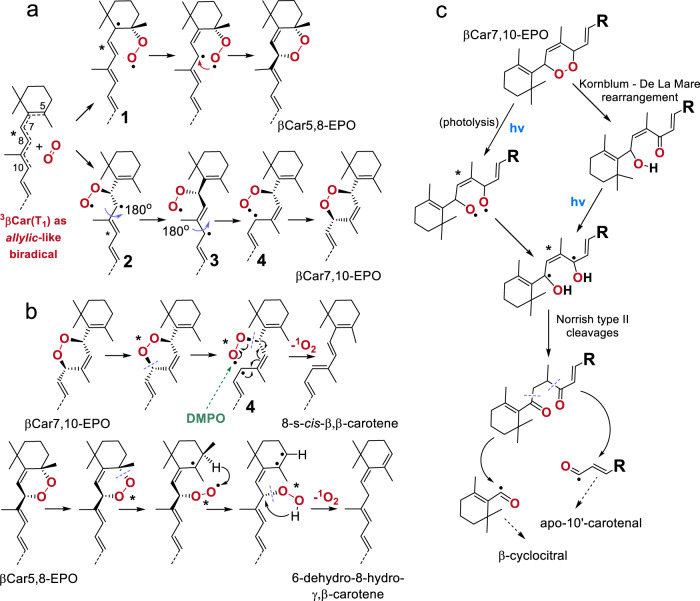
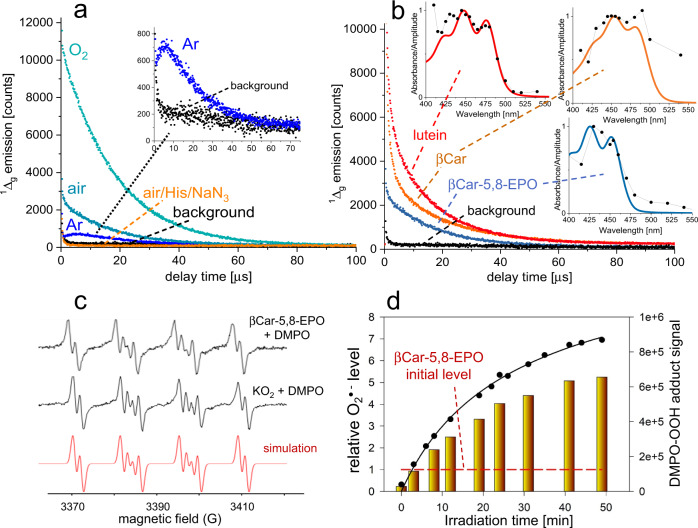
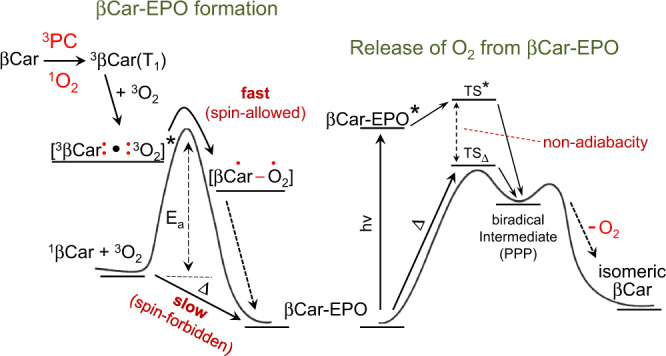
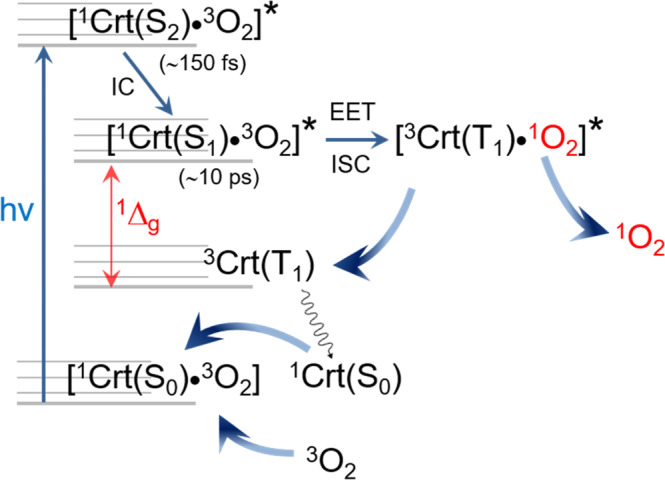
The endoperoxides of β-carotene (βCar-EPOs) are regarded as main products of the chemical deactivation of O by β-carotene, one of the most important antioxidants, following a concerted singlet-singlet reaction. Here we challenge this view by showing that βCar-EPOs are formed in the absence of O in a non-concerted triplet-triplet reaction: O + β-carotene → βCar-EPOs, in which β-carotene manifests a strong biradical character. Thus, the reactivity of β-carotene towards oxygen is governed by its excited triplet state. βCar-EPOs, while being stable in the dark, are photochemically labile, and are a rare example of nonaromatic endoperoxides that release O, again not in a concerted reaction. Their light-induced breakdown triggers an avalanche of free radicals, which accounts for the pro-oxidant activity of β-carotene and the puzzling swap from its anti- to pro-oxidant features. Furthermore, we show that βCar-EPOs, and carotenoids in general, weakly sensitize O. These findings underlie the key role of the triplet state in determining the chemical and photophysical features of β-carotene. They shake up the prevailing models of carotenoid photophysics, the anti-oxidant functioning of β-carotene, and the role of O in chemical signaling in biological photosynthetic systems. βCar-EPOs and their degradation products are not markers of O and oxidative stress but of the overproduction of extremely hazardous chlorophyll triplets in photosystems. Hence, the chemical signaling of overexcitation of the photosynthetic apparatus is based on a chlorophyll-β-carotene relay, rather than on extremely short-lived O.
β-胡萝卜素(βCar)的内过氧化物(βCar-EPOs)被认为是β-胡萝卜素这种最重要的抗氧化剂之一通过协同单重态-单重态反应化学失活 O 的主要产物。在这里,我们通过表明βCar-EPOs 在没有 O 的情况下通过非协同三重态-三重态反应形成来挑战这一观点:O + β-胡萝卜素→βCar-EPOs,其中β-胡萝卜素表现出强烈的双自由基特征。因此,β-胡萝卜素对氧的反应性受其激发三重态控制。βCar-EPOs 在黑暗中稳定,但在光化学上不稳定,是释放 O 的非芳香内过氧化物的罕见例子,同样不是协同反应。它们的光诱导分解引发自由基的级联反应,这解释了β-胡萝卜素的促氧化剂活性以及其从抗氧化剂到促氧化剂特性的令人困惑的转变。此外,我们表明βCar-EPOs 和一般的类胡萝卜素微弱地敏化 O。这些发现为三重态在确定β-胡萝卜素的化学和光物理特性方面的关键作用提供了依据。它们动摇了类胡萝卜素光物理、β-胡萝卜素抗氧化功能以及 O 在生物光合系统中化学信号传递中的作用的流行模型。βCar-EPOs 和它们的降解产物不是 O 和氧化应激的标志物,而是光合作用系统中叶绿素三重态过度产生的标志物。因此,光合作用装置过激发的化学信号传递基于叶绿素-β-胡萝卜素接力,而不是极短寿命的 O。