Beijing Key Laboratory of Tumor Systems Biology, Institute of Systems Biomedicine, School of Basic Medical Sciences, Peking University Health Science Center, Beijing, China.
School of Basic Medical Sciences, Peking University Health Science Center, Beijing, China.
Front Immunol. 2022 Apr 19;13:864314. doi: 10.3389/fimmu.2022.864314. eCollection 2022.
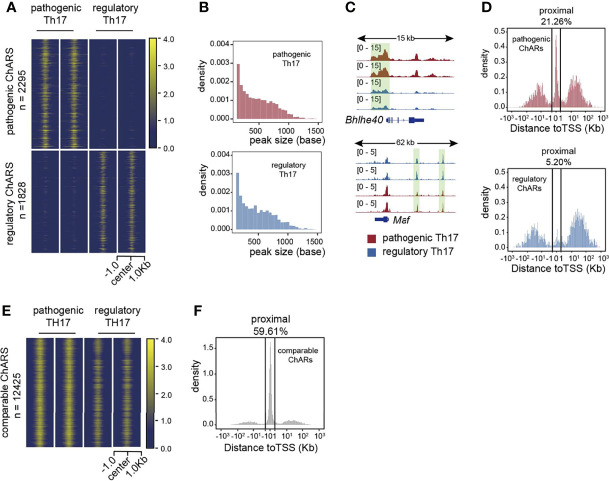
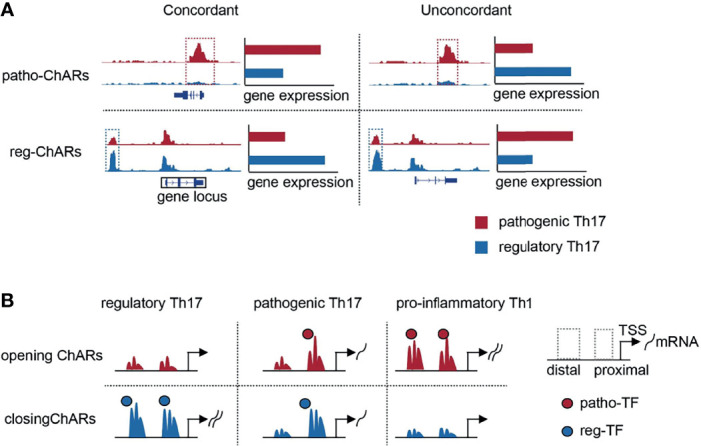
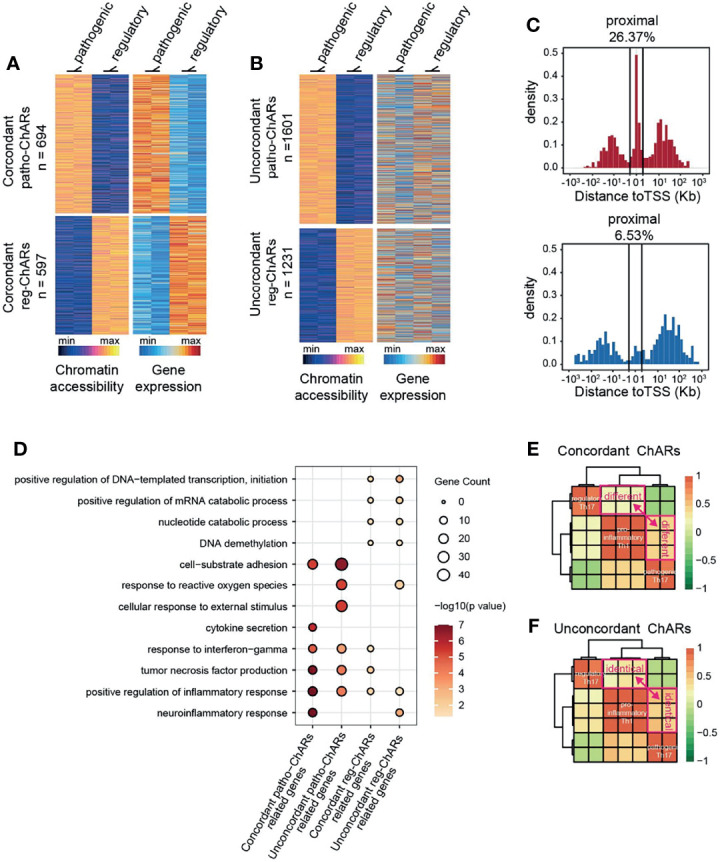
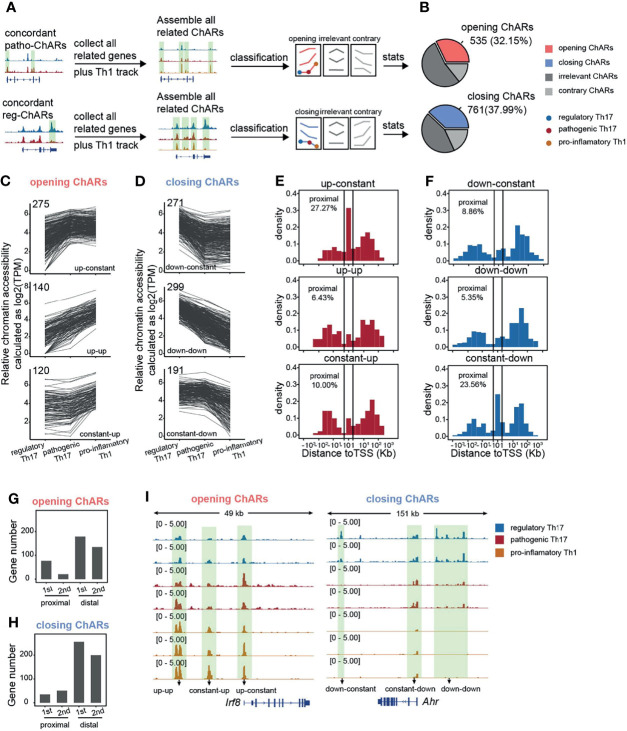
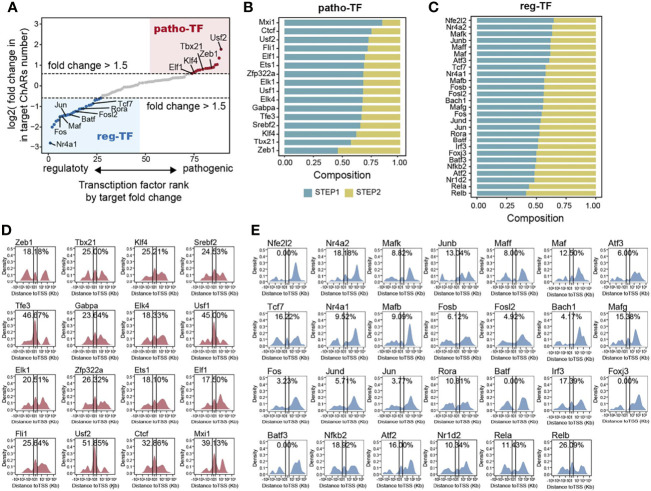
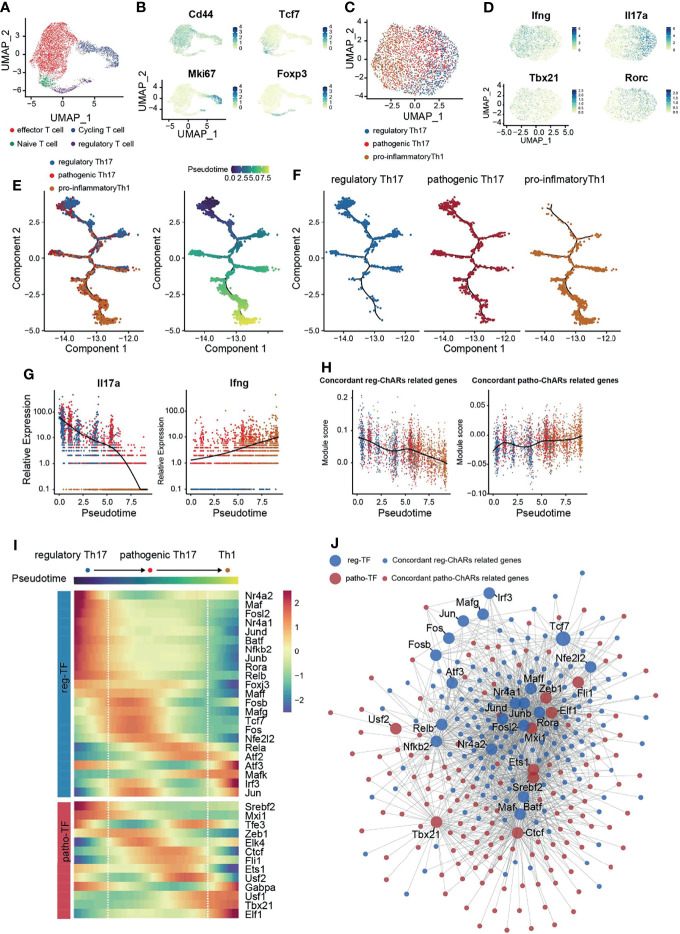
Pathogenic Th17, featured by their production of pro-inflammatory cytokines, are considered as a key player in most autoimmune diseases. The transcriptome of them is obviously distinct from that of conventional regulatory Th17. However, chromatin accessibility of the two Th17 groups have not been comprehensively compared yet. Here, we found that their chromatin-accessible regions(ChARs) significantly correlated with the expression of related genes, indicating that they might engage in the regulation of these genes. Indeed, pathogenic Th17 specific ChARs (patho-ChARs) exhibited a significant distribution preference in TSS-proximal region. We further filtered the patho-ChARs based on their conservation among mammalians or their concordance with the expression of their related genes. In either situation, the filtered patho-ChARs also showed a preference for TSS-proximal region. Enrichment of expression concordant patho-ChARs related genes suggested that they might involve in the pathogenicity of Th17. Thus, we also examined all ChARs of patho-ChARs related genes, and defined an opening ChAR set according to their changes in the Th17 to Th1 conversion. Interestingly, these opening ChARs displayed a sequential accessibility change from TSS-proximal region to TSS-distal region. Meanwhile, a group of patho-TFs (transcription factors) were identified based on the appearance of their binding motifs in the opening ChARs. Consistently, some of them also displayed a similar preference for binding the TSS-proximal region. Single-cell transcriptome analysis further confirmed that these patho-TFs were involved in the generation of pathogenic Th17. Therefore, our results shed light on a new regulatory mechanism underlying the generation of pathogenic Th17, which is worth to be considered for autoimmune disease therapy.
致病 Th17 细胞以其促炎细胞因子的产生为特征,被认为是大多数自身免疫性疾病的关键因素。它们的转录组与传统的调节性 Th17 细胞明显不同。然而,这两种 Th17 细胞群的染色质可及性尚未被全面比较。在这里,我们发现它们的染色质可及区域(ChARs)与相关基因的表达显著相关,这表明它们可能参与了这些基因的调控。事实上,致病性 Th17 特异性 ChARs(patho-ChARs)在 TSS 近端区域表现出显著的分布偏好。我们进一步基于哺乳动物之间的保守性或与相关基因表达的一致性,对 patho-ChARs 进行了筛选。在这两种情况下,筛选出的 patho-ChARs 也显示出对 TSS 近端区域的偏好。与表达一致的 patho-ChARs 相关基因的富集表明它们可能参与了 Th17 的致病性。因此,我们还检查了所有与 patho-ChARs 相关的基因的 ChARs,并根据它们在 Th17 向 Th1 转化过程中的变化定义了一个开放 ChAR 集。有趣的是,这些开放 ChARs 显示出从 TSS 近端区域到 TSS 远端区域的顺序可及性变化。同时,根据它们在开放 ChARs 中结合基序的出现,我们确定了一组 patho-TFs(转录因子)。一致地,其中一些也表现出对结合 TSS 近端区域的类似偏好。单细胞转录组分析进一步证实,这些 patho-TFs 参与了致病性 Th17 的产生。因此,我们的研究结果揭示了致病 Th17 产生的一种新的调控机制,这值得在自身免疫性疾病的治疗中加以考虑。