Li Hu, Li Xue-Gang, Xiao Wen-De
School of Chemistry and Chemical Engineering, Shanghai Jiao Tong University Shanghai 200240 China
RSC Adv. 2019 Jul 18;9(39):22327-22335. doi: 10.1039/c9ra02587a. eCollection 2019 Jul 17.
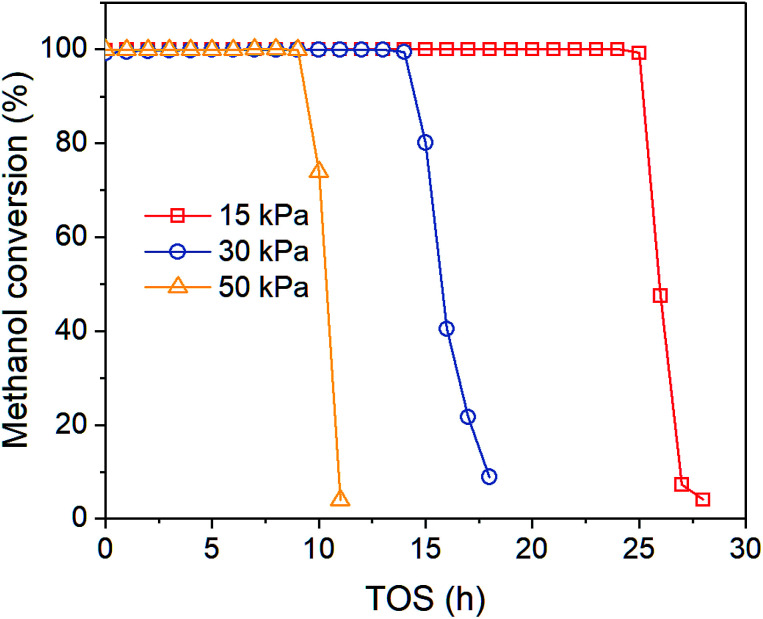
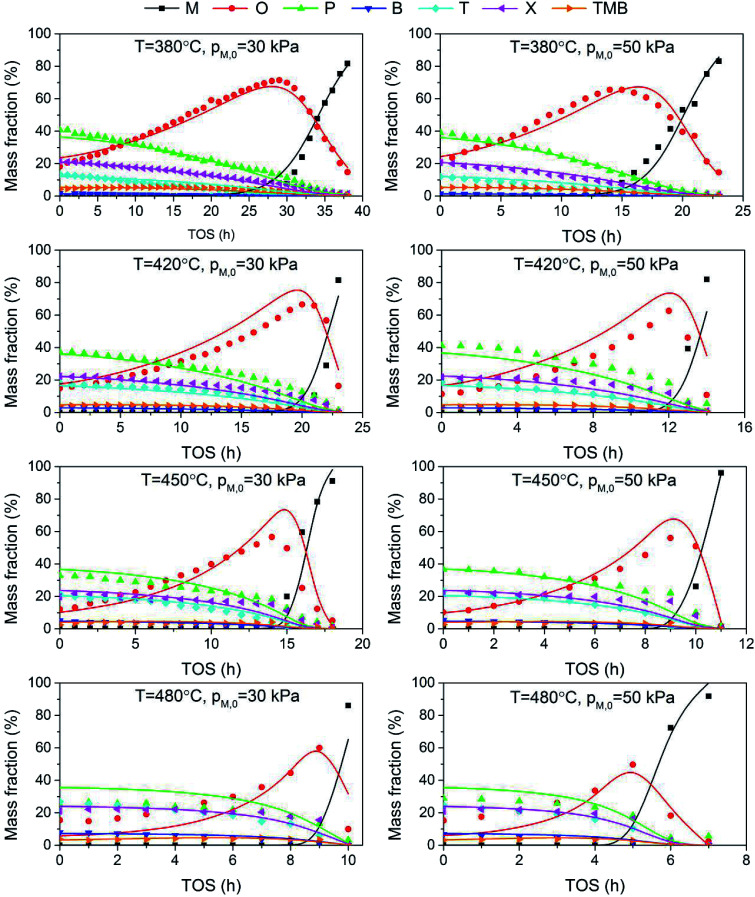
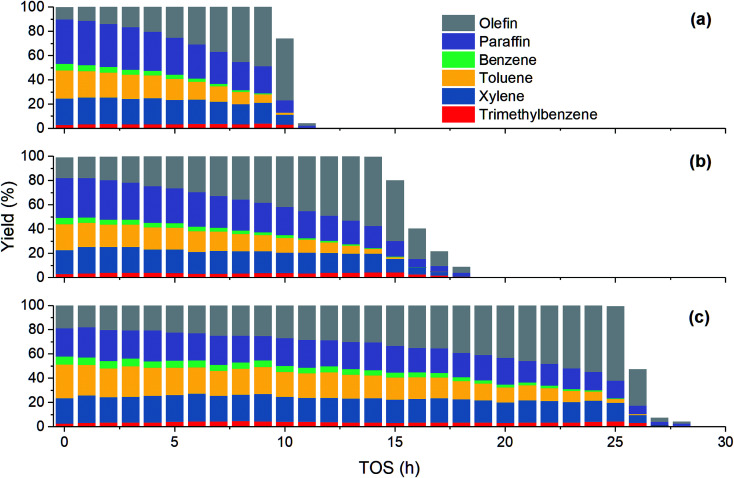
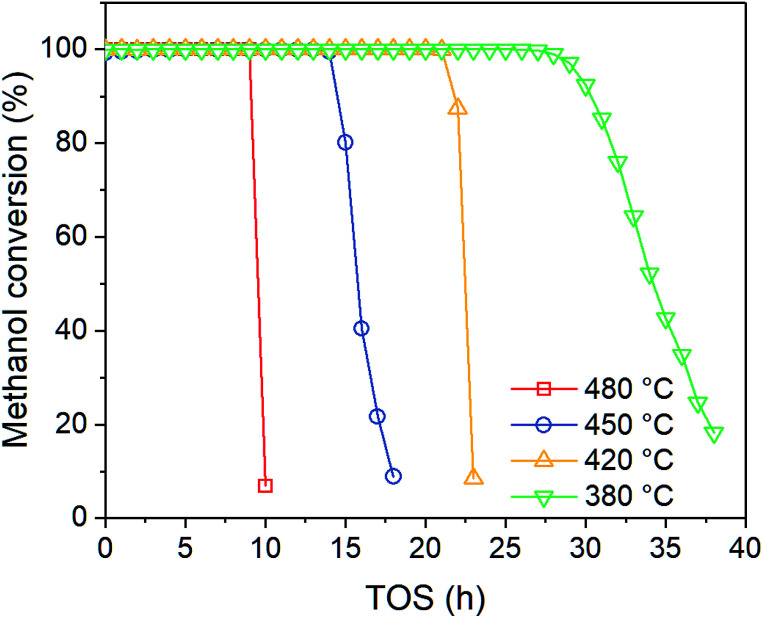
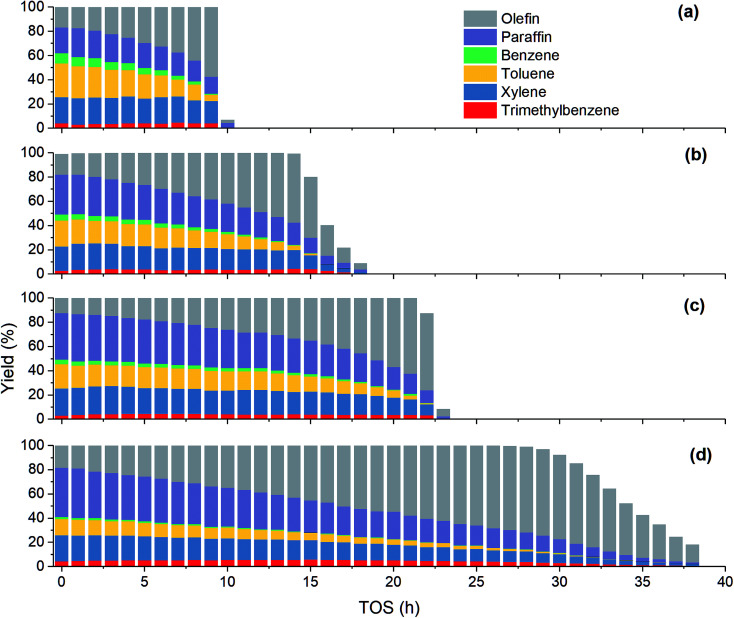
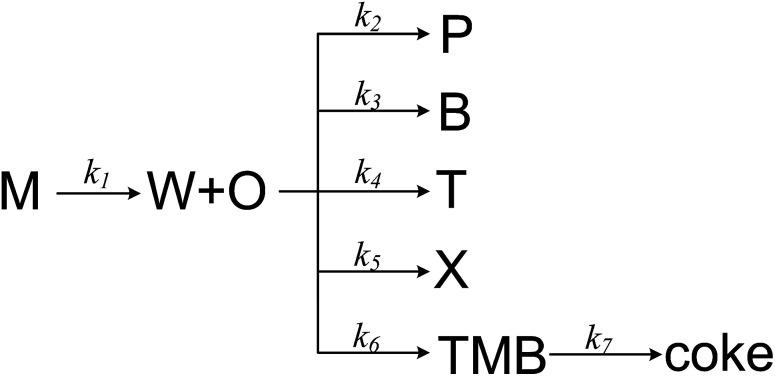
A deactivation kinetic model has been determined for the methanol to aromatic process over a HZSM-5 zeolite catalyst (SiO/AlO = 30) modified by 1.0 wt% ZnO and 2.0 wt% P, in which the generation rates of C-C aromatics are treated individually while olefins and paraffins are lumped as intermediate and byproduct, respectively. The time-dependent catalytic activity is described by a deactivation coefficient related to the concentration of both methanol and products. The established kinetic model is able to predict the product distribution along with on-stream time under various conditions and is identified to be valid by a model significance test. The effect of operating conditions on catalyst behavior was also investigated: deactivation rate increases dramatically with methanol partial pressure and temperature; higher feed methanol content leads to less aromatics and more paraffin; increasing temperature reduces paraffin generation and results in higher aromatic yield, especially benzene and toluene.
已确定了一种失活动力学模型,用于描述在经1.0 wt% ZnO和2.0 wt% P改性的HZSM-5沸石催化剂(SiO/AlO = 30)上甲醇制芳烃的过程。在该模型中,C-C芳烃的生成速率被单独处理,而烯烃和石蜡分别被归为中间体和副产物。随时间变化的催化活性通过一个与甲醇和产物浓度相关的失活系数来描述。所建立的动力学模型能够预测在各种条件下产物分布随反应时间的变化,并通过模型显著性检验确定其有效。还研究了操作条件对催化剂性能的影响:失活速率随甲醇分压和温度急剧增加;进料中甲醇含量越高,芳烃越少,石蜡越多;温度升高会减少石蜡生成并导致芳烃产率提高,尤其是苯和甲苯。