Sheveleva Nadezhda N, Markelov Denis A, Vovk Mikhail A, Mikhailova Mariya E, Tarasenko Irina I, Tolstoy Peter M, Neelov Igor M, Lähderanta Erkki
St. Petersburg State University 7/9 Universitetskaya Nab. St. Petersburg 199034 Russia
Institute of Macromolecular Compounds, Russian Academy of Sciences Bolshoi Prospect 31, V.O. St. Petersburg 199004 Russia
RSC Adv. 2019 Jun 7;9(31):18018-18026. doi: 10.1039/c9ra02461a. eCollection 2019 Jun 4.
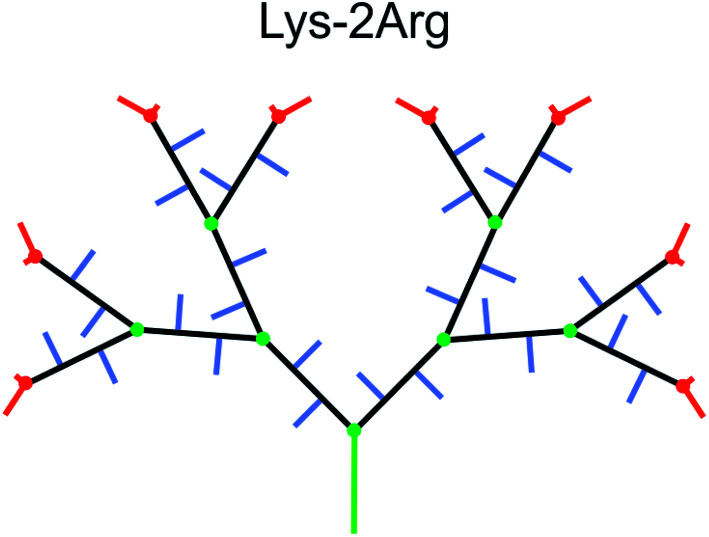
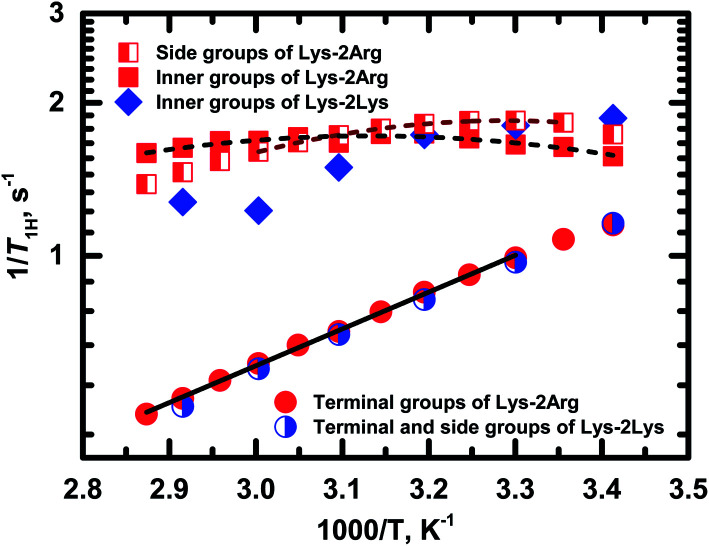
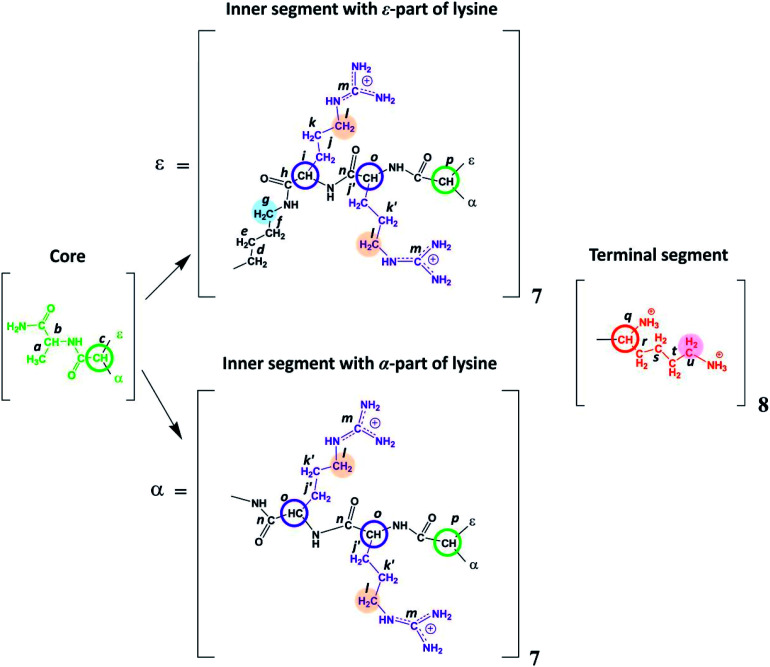
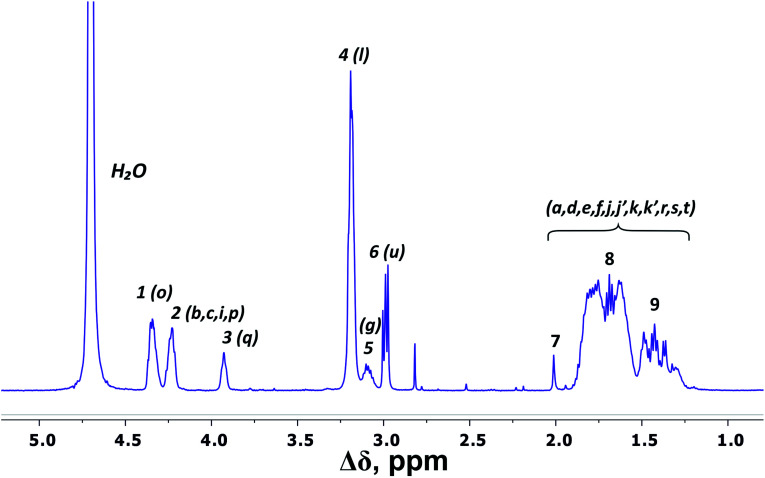
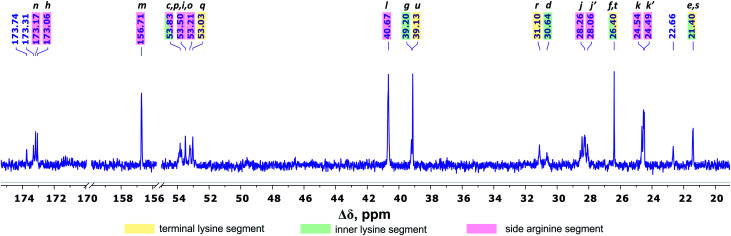
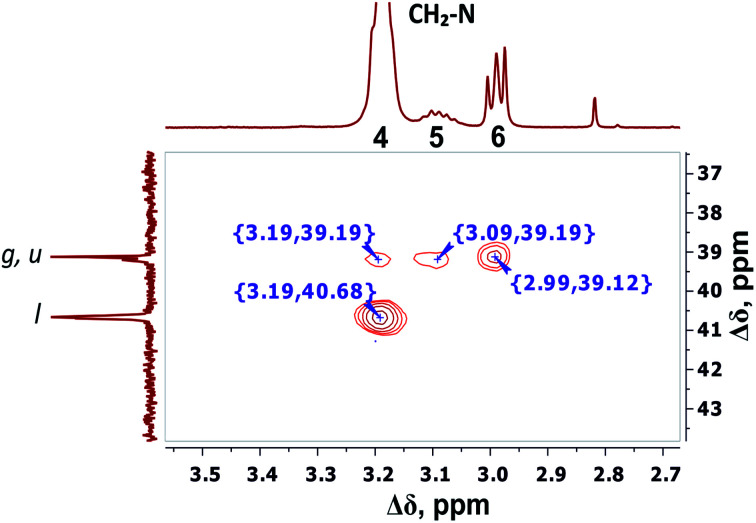
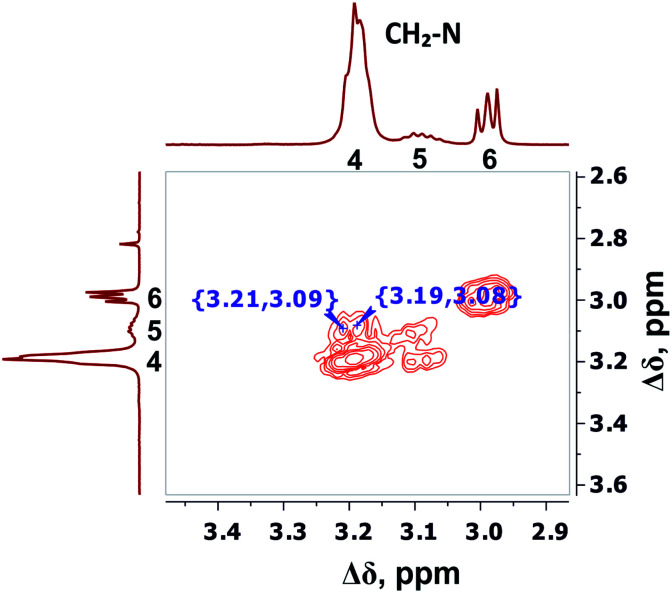
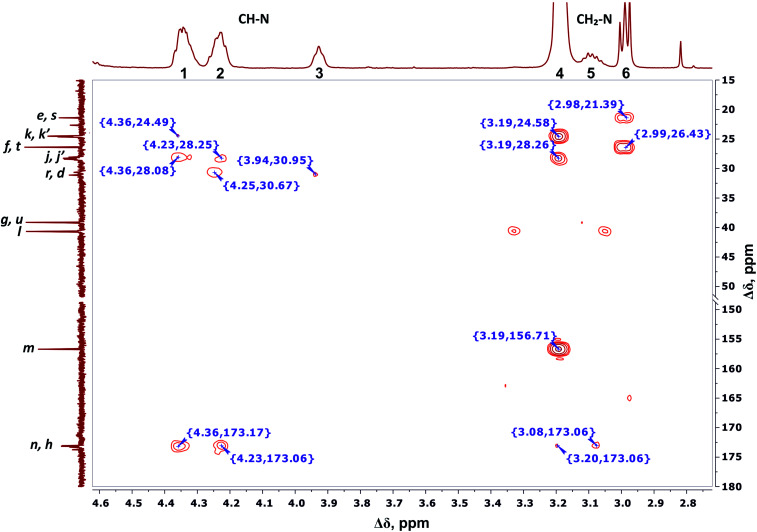
Due to their well-defined structure, multivalency, biocompatibility, and low toxicity, lysine dendrimers can be used as safe and efficient nanocarriers for drug and gene delivery. One useful strategy for improving the gene delivery properties of dendrimers is modification with arginine amino acid (Arg) residues. Incorporation of Arg residues could be favorable for the enhancement in transfection efficiency of lysine based dendrimers. In this work, we have synthesized a new second-generation poly-l-lysine dendrimer with repeating units containing two linear Arg residues between neighboring lysine branching points (Lys-2Arg dendrimer) and studied its physicochemical properties. We confirmed the structure of Lys-2Arg dendrimer using various one- and two-dimensional H and C NMR spectroscopy methods. Comparison of relaxation data for Lys-2Arg and Lys-2Lys dendrimers showed that the replacement of double Lys residues with double Arg residues resulted in a sharp decrease in the mobility of methylene groups in side segments and in the main chain of ε-Lys inner segments. We suggest that this unexpected effect is caused by a guanidine-guanidine pairing effect in water, which leads to entanglements between dendrimer branches.
由于赖氨酸树枝状大分子具有明确的结构、多价性、生物相容性和低毒性,它们可用作安全有效的药物和基因递送纳米载体。改善树枝状大分子基因递送性能的一种有用策略是用精氨酸氨基酸(Arg)残基进行修饰。引入Arg残基可能有利于提高基于赖氨酸的树枝状大分子的转染效率。在这项工作中,我们合成了一种新的第二代聚-L-赖氨酸树枝状大分子,其重复单元在相邻赖氨酸分支点之间包含两个线性Arg残基(Lys-2Arg树枝状大分子),并研究了其物理化学性质。我们使用各种一维和二维H和C NMR光谱方法确认了Lys-2Arg树枝状大分子的结构。Lys-2Arg和Lys-2Lys树枝状大分子弛豫数据的比较表明,用双Arg残基取代双Lys残基导致侧链亚甲基和ε-Lys内部片段主链中甲基的流动性急剧下降。我们认为这种意外效应是由水中胍-胍配对效应引起的,这导致树枝状大分子分支之间的缠结。