Saunders L Z
Can J Vet Res. 1987 Jan;51(1):1-26.
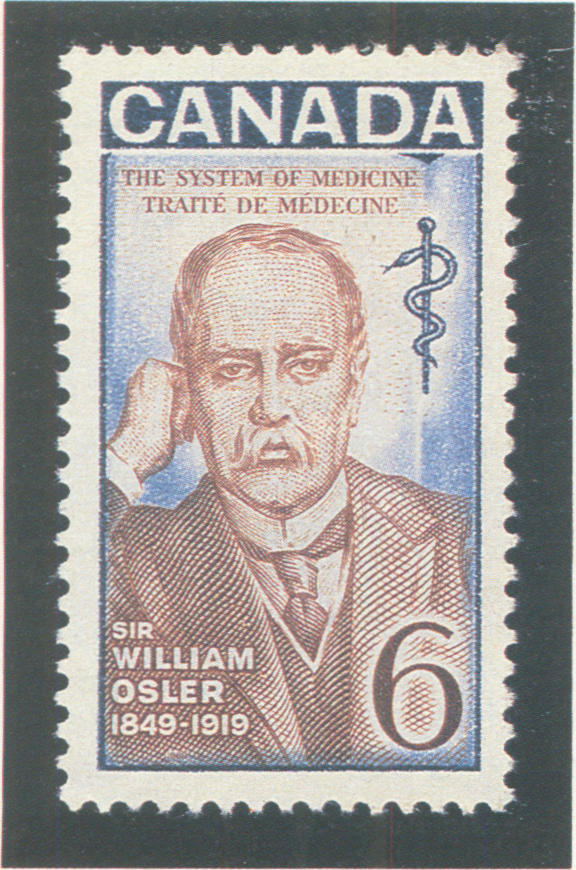
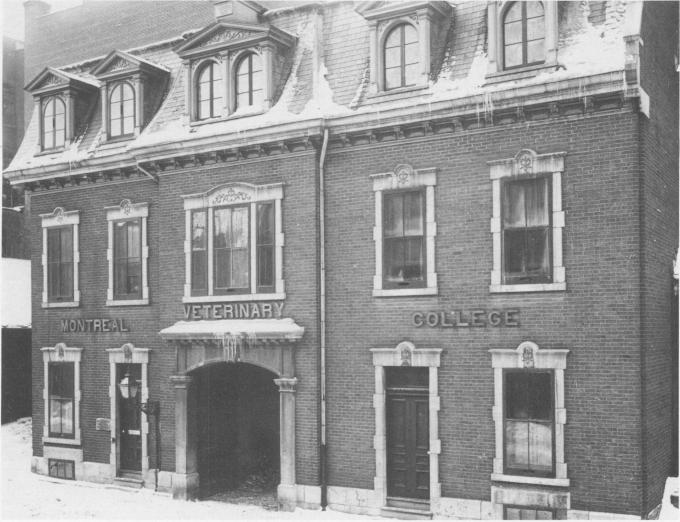
Most branches of biological science in North America developed first in the United States, and later were taught and practiced in Canada. An exception was veterinary pathology, which as a discipline taught in veterinary colleges and as a field of research, developed first in Canada, and from there crossed the border to the United States. Pathology was first taught at the Montreal Veterinary College, founded in 1866 by Duncan McEachran, a graduate of the Edinburgh Veterinary College. From the outset, he formed a close association with the medical faculty of McGill University, permitting his students to attend the same classes in the basic subjects with the medical students. Eventually, the Montreal Veterinary College became formally affiliated with McGill University, as the Faculty of Comparative Medicine and Veterinary Science. The McGill veterinary faculty was forced to close for economic reasons in 1903, but it left an enduring legacy, particularly in the field of veterinary pathology. The legacy, a novel concept in the 1870's, was that pathology was the cornerstone of a veterinary education; the place where anatomy, physiology, chemistry and botany met with the clinical subjects, and gave the latter meaning. This tradition was formed at the Montreal Veterinary College by the world renowned physician William Osler, North America's leading medical teacher, whom McEachran had invited to teach at the College in 1876 in addition to his duties in the faculty of medicine. Osler had studied with Virchow in Berlin and applied his methods of autopsy technique and of scientific inquiry to his teaching of both human and veterinary pathology at McGill. Osler also undertook investigations into various diseases of domestic animals, at the request of McEachran, who doubled as Chief Veterinary Inspector for the Dominion Department of Agriculture. Osler left McGill University in 1884. Only after that year did other North American veterinary schools adopt pathology as a discipline of instruction. However, by 1884, Osler had already left his indelible imprint on the students (both medical and veterinary) he had taught in Montreal, one of whom took over the teaching of pathology in the veterinary college. Another, who followed Osler's example and also studied in Berlin with Virchow, wrote the first book in the English language on veterinary post mortem technique in 1889.(ABSTRACT TRUNCATED AT 400 WORDS)
北美生物科学的大多数分支首先在美国发展起来,后来在加拿大进行教学和实践。兽医病理学是个例外,作为兽医学院教授的一门学科以及一个研究领域,它首先在加拿大发展起来,然后从那里跨越边境到了美国。病理学最早是在蒙特利尔兽医学院教授的,该学院由爱丁堡兽医学院的毕业生邓肯·麦克兰于1866年创立。从一开始,他就与麦吉尔大学医学院建立了密切联系,允许他的学生与医学生一起参加基础学科的相同课程。最终,蒙特利尔兽医学院正式与麦吉尔大学附属,成为比较医学与兽医学系。1903年,麦吉尔大学兽医学系因经济原因被迫关闭,但它留下了持久的遗产,尤其是在兽医病理学领域。这个遗产在19世纪70年代是一个新颖的概念,即病理学是兽医教育的基石;是解剖学、生理学、化学和植物学与临床学科交汇并赋予后者意义的地方。这个传统是由世界著名医生威廉·奥斯勒在蒙特利尔兽医学院形成的,他是北美顶尖的医学教师,麦克兰在1876年邀请他除了在医学院任职外还到该学院授课。奥斯勒曾在柏林与魏尔啸一起学习,并将他的尸检技术和科学探究方法应用于他在麦吉尔大学对人类和兽医病理学的教学中。应兼任加拿大农业部首席兽医检查员的麦克兰的要求,奥斯勒还对家畜的各种疾病进行了调查。奥斯勒于1884年离开麦吉尔大学。直到那一年之后,其他北美兽医学院才将病理学作为一门教学学科。然而,到1884年时,奥斯勒已经在他在蒙特利尔教过的学生(包括医学生和兽医学生)身上留下了不可磨灭的印记,其中一名学生接管了兽医学院病理学的教学工作。另一名学生效仿奥斯勒,也在柏林与魏尔啸一起学习,并于1889年撰写了第一本关于兽医尸检技术的英文书籍。(摘要截选至400字)