Department of Cardiovascular Medicine, Xiangya Hospital, Central South University, Changsha, Hunan, China.
Department of Cardiovascular Medicine, Zhuzhou Hospital Affiliated to Xiangya School of Medicine, Central South University, Zhuzhou, Hunan, China; and.
J Cardiovasc Pharmacol. 2022 May 1;79(5):698-710. doi: 10.1097/FJC.0000000000001254.
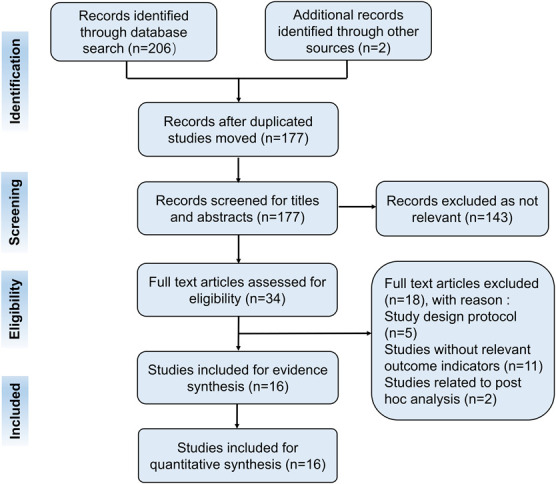
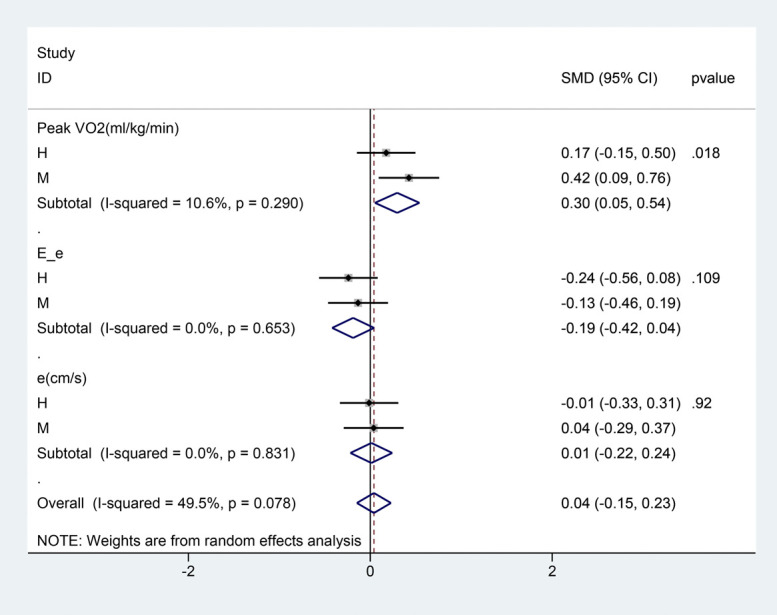
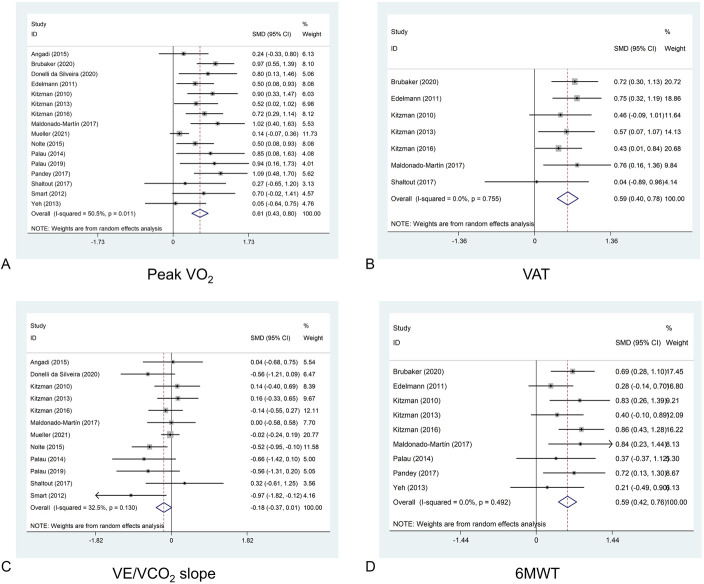
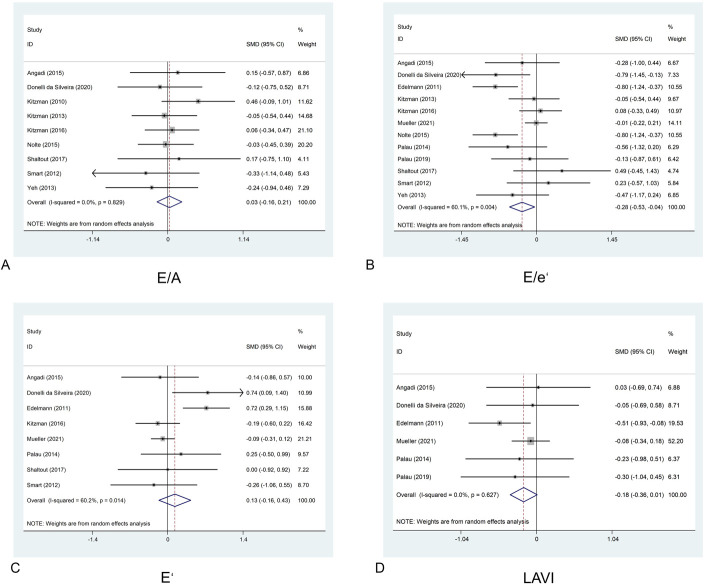
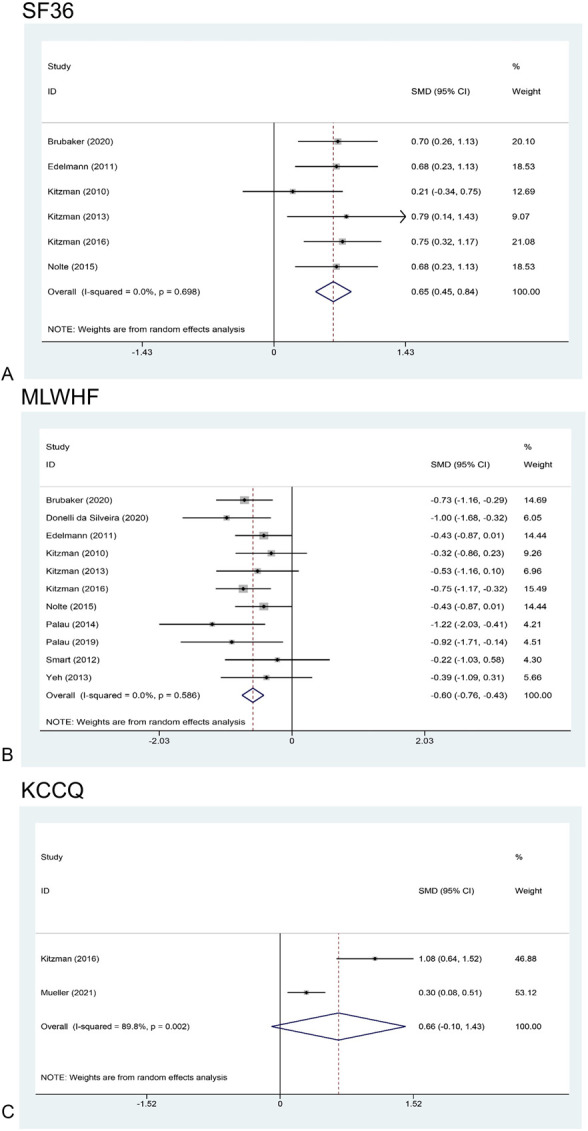
Different physical exercise modalities have been widely studied in patients having heart failure with preserved ejection fraction (HFpEF) but with variably reported findings. We, therefore, conducted a systematic review and meta-analysis to evaluate whether the efficacy of physical activity in the management of HFpEF is related to exercise modalities. PubMed and Embase were searched up to July 2021. The eligible studies included randomized controlled trials that identified effects of physical exercise on patients with HFpEF. Sixteen studies were included to evaluate the efficiency of physical exercise in HFpEF. A pooled analysis showed that exercise training significantly improved peak oxygen uptake (VO2), ventilatory anaerobic threshold, distance covered in the 6-minute walking test, the ratio of early diastolic mitral inflow to annular velocities, the Short Form 36 physical component score, and the Minnesota Living with Heart Failure Questionnaire total score. However, the changes in other echocardiographic parameters including the ratio of peak early to late diastolic mitral inflow velocities, early diastolic mitral annular velocity, and left atrial volume index were not significant. Both high-intensity and moderate-intensity training significantly improved exercise capacity (as defined by peak VO2), with moderate-intensity exercise having a superior effect. Furthermore, exercise-induced improvement in peak VO2 was partially correlated with exercise duration. Physical exercise could substantially improve exercise capacity, quality of life, and some indicators of cardiac diastolic function in patients with HFpEF. A protocol of moderate-intensity exercise training lasting a longer duration might be more beneficial compared with high-intensity training for patients with HFpEF.
不同的身体运动方式已在射血分数保留的心力衰竭(HFpEF)患者中进行了广泛研究,但报告结果差异很大。因此,我们进行了系统评价和荟萃分析,以评估身体活动在 HFpEF 管理中的疗效是否与运动方式有关。检索了 PubMed 和 Embase 数据库,截至 2021 年 7 月。合格的研究包括确定身体运动对 HFpEF 患者影响的随机对照试验。有 16 项研究评估了身体锻炼对 HFpEF 的疗效。汇总分析显示,运动训练可显著提高峰值摄氧量(VO2)、通气无氧阈、6 分钟步行试验的距离、二尖瓣早期舒张血流与环速度比、36 项简短健康状况调查简表生理成分评分和明尼苏达州心力衰竭生活质量问卷总分。然而,其他超声心动图参数的变化,包括二尖瓣早期和晚期舒张血流峰值速度比、早期舒张二尖瓣环速度和左心房容积指数,没有显著变化。高强度和中等强度训练均能显著改善运动能力(以峰值 VO2 定义),中等强度训练效果更佳。此外,运动引起的峰值 VO2 改善与运动持续时间部分相关。身体锻炼可显著改善 HFpEF 患者的运动能力、生活质量和一些心脏舒张功能指标。与高强度训练相比,HFpEF 患者进行持续时间更长的中等强度运动训练方案可能更有益。